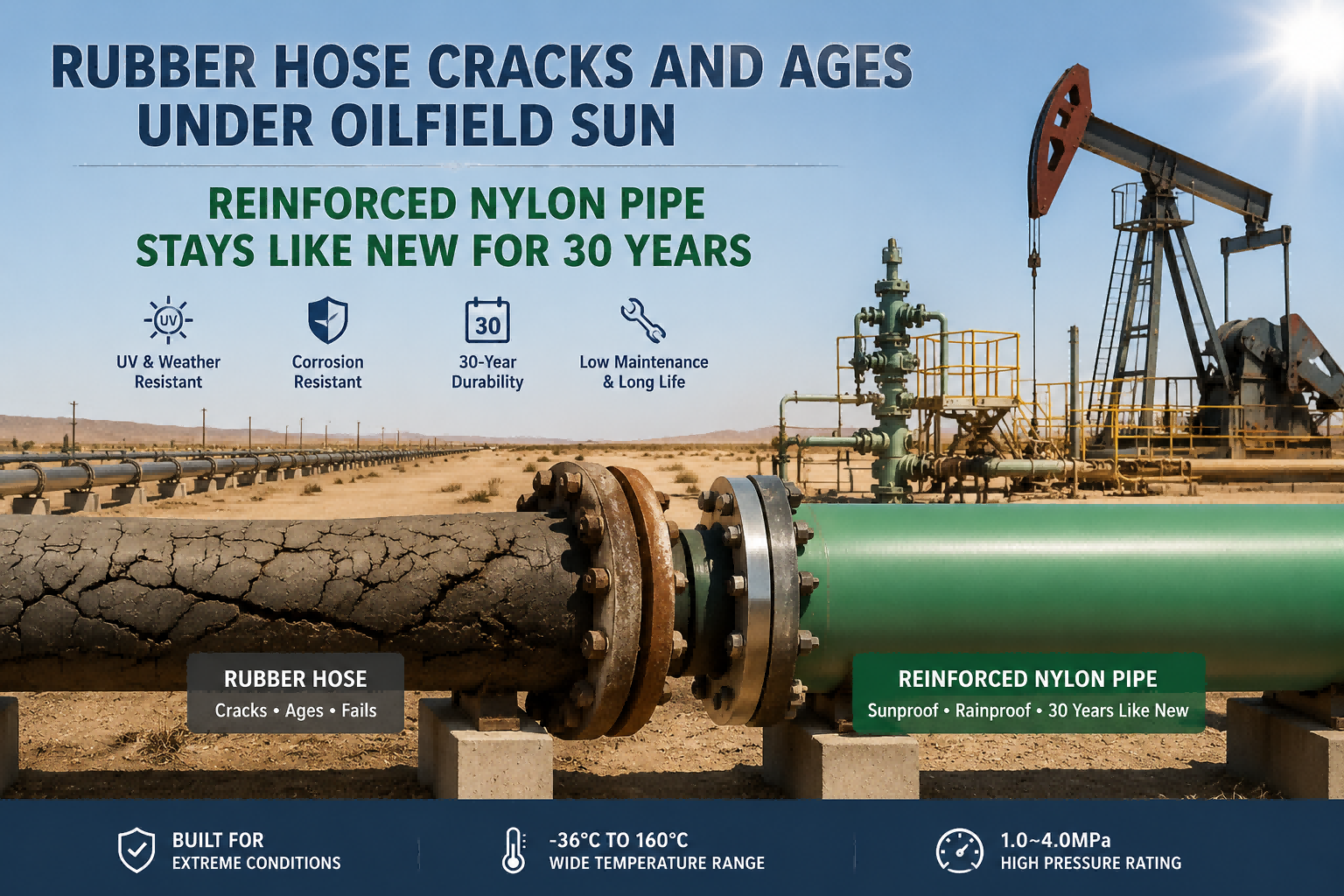
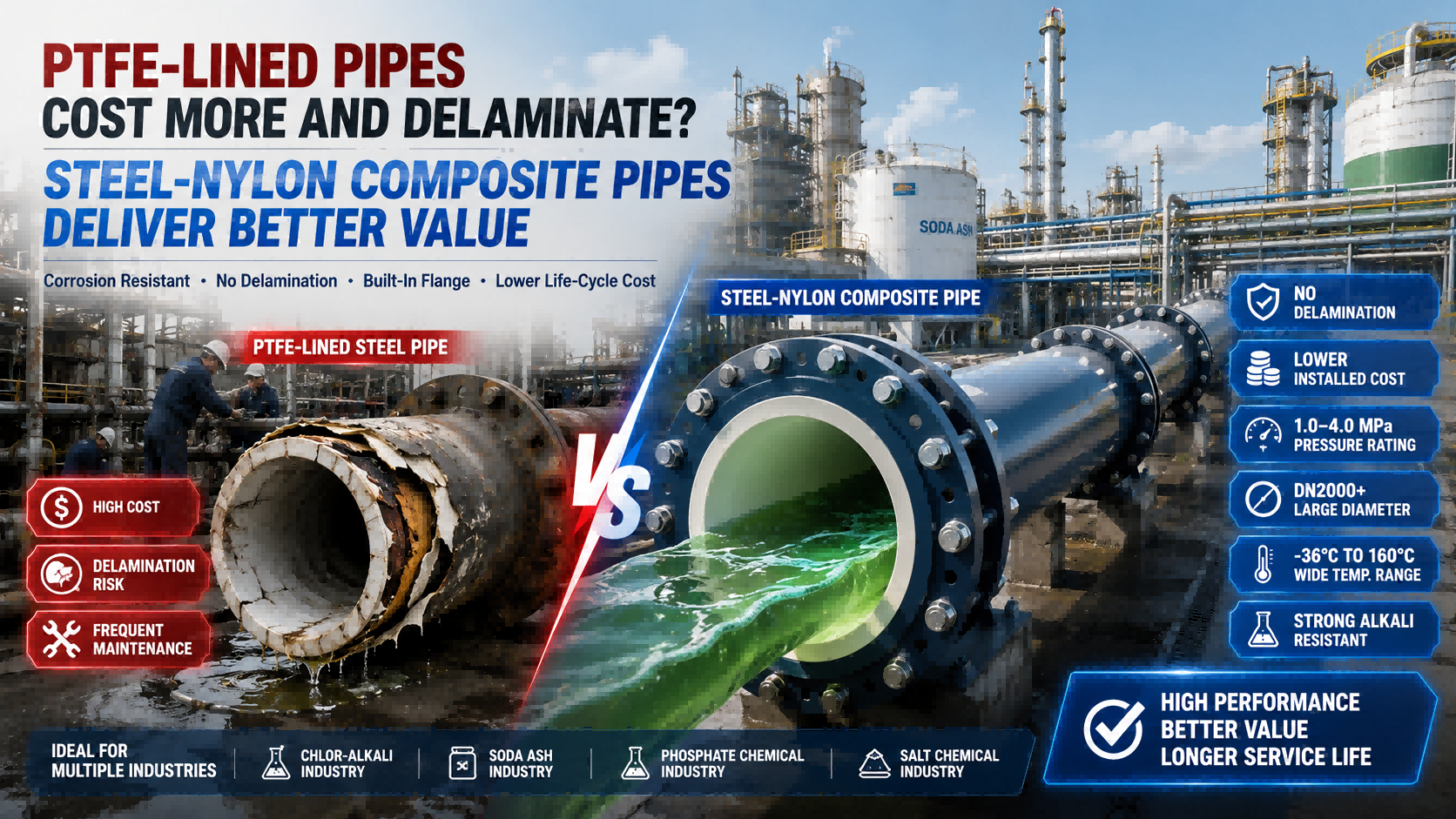
Chlor-Alkali Piping: Integrated Flanges Help Prevent Leakage
A Long-Term Solution for Corrosion Resistance, Flange Reliability, and Lower Maintenance Costs in Chlor-Alkali Piping Systems
Introduction: The Most Expensive Pipeline Problem in Chlor-Alkali Plants Is Often Not Corrosion Itself, but the Downtime It Causes
In the chlor-alkali industry, industrial piping systems play a critical role in connecting electrolysis units, brine treatment facilities, caustic soda processing equipment, storage tanks, and downstream production systems.
These pipelines are frequently required to transport sodium hydroxide (NaOH), highly concentrated brine, and other corrosive chemical media under demanding operating conditions.
For chlor-alkali manufacturers, one of the most persistent challenges is pipeline leakage.
In caustic soda transportation systems, pipes must withstand not only chemical exposure but also temperature fluctuations, pressure variations, equipment vibration, and the mechanical stresses associated with continuous industrial operation.
Many plants have attempted to address these problems by replacing conventional carbon steel pipes, applying protective coatings, installing rubber-lined steel pipes, or upgrading to stainless steel piping.
However, even when the pipe itself remains structurally sound, leakage can still develop around flange connections, gaskets, and pipe joints.
A seemingly minor flange leak can trigger a series of expensive consequences:
-
Safety hazards: Leaking caustic soda can pose serious risks to workers and surrounding equipment.
-
Production interruptions: Unexpected pipeline failures may require emergency shutdowns.
-
Higher maintenance expenses: Damaged gaskets, fittings, flanges, or entire pipe sections may require replacement.
-
Increased labor requirements: Repeated disassembly, cleaning, inspection, and reinstallation consume valuable maintenance resources.
-
Rising operating costs: Frequent repairs increase the total cost of pipeline ownership.
For modern chlor-alkali plants, the central question is no longer simply:
"Which pipe material can resist caustic soda corrosion?"
The more important question is:
"How can we build a piping system that maintains corrosion resistance, reliable connections, and cost-effective performance over the next 10 years or longer?"
Reinforced MC nylon pipes and steel–nylon composite pipes offer an alternative worth evaluating.
In particular, piping systems featuring integrally molded flanges can help reduce certain connection-related failure risks by eliminating some secondary joining operations, improving manufacturing consistency, and optimizing the pipe-end structure.
However, no piping material or flange design can guarantee completely leak-free operation under every condition. Long-term reliability depends on chemical compatibility, engineering design, proper installation, and appropriate inspection.
1. Why Do Chlor-Alkali Pipelines Face More Complex Challenges Than Conventional Industrial Pipes?
The operating environment inside a chlor-alkali facility is considerably more demanding than that of an ordinary water distribution system.
1.1 Long-Term Exposure to Highly Alkaline Chemicals
Caustic soda, also known as sodium hydroxide, is one of the principal products of the chlor-alkali industry.
Depending on the production process, pipelines may transport sodium hydroxide solutions at different concentrations.
For example, membrane-cell electrolysis typically produces caustic soda at approximately 30–33% concentration, which may subsequently be concentrated to approximately 50% for commercial applications.
Different sodium hydroxide concentrations can create different requirements for material compatibility, operating temperature, and flow management.
For carbon steel, stainless steel, and other metallic piping materials, corrosion performance must be evaluated against the actual concentration, temperature, fabrication condition, and material grade.
In certain elevated-temperature caustic soda environments, carbon steel components may experience corrosion damage or caustic stress corrosion cracking, particularly when fabrication stresses and other operating conditions are not adequately controlled.
Consequently, a metal that performs satisfactorily in room-temperature sodium hydroxide cannot automatically be considered suitable for every high-temperature or high-concentration application.
1.2 Temperature Fluctuations and Pressure Variations Increase Joint Failure Risks
Chlor-alkali production facilities generally operate continuously.
During normal production cycles, piping systems may experience:
-
Equipment startup and shutdown
-
Changes in process temperature
-
Pump discharge pressure fluctuations
-
Mechanical vibration
-
Thermal expansion and contraction
-
Changes in support loads and pipe alignment
These conditions can affect the long-term integrity of flange connections.
For example, thermal expansion may introduce additional loads on pipe joints, while temperature cycling and gasket relaxation may reduce the effective sealing force.
Even a pipe with excellent chemical resistance can eventually experience leakage if its connections are not properly designed and installed.
1.3 High-Salinity Environments and Crystallization Increase Maintenance Requirements
Chlor-alkali plants also operate extensive brine transportation and treatment systems.
In some applications, dissolved salts, suspended particles, temperature changes, and insufficient flow velocity can contribute to crystallization or deposits inside pipelines.
Over time, deposits may reduce the effective pipe diameter, increase hydraulic resistance, and create additional maintenance requirements.
When corrosion occurs simultaneously, roughened metal surfaces and corrosion products may further complicate cleaning and deposit management.
For this reason, modern chlor-alkali pipeline selection must consider more than chemical resistance alone.
Corrosion resistance, mechanical strength, internal surface characteristics, joint reliability, and long-term maintenance requirements must all be evaluated together.
2. Why Are Traditional Flange Connections Vulnerable to Leakage?
One frequently overlooked engineering reality is that the weakest point in an industrial piping system is not necessarily the pipe wall.
In many cases, leakage develops at flanges, gaskets, and mechanical connections.
Traditional piping systems commonly use welded flanges, mechanically attached flanges, or other separately manufactured pipe-end connections.
Several factors can affect their long-term sealing performance.
2.1 Damage to Flange Sealing Surfaces
During transportation, installation, maintenance, or long-term operation, flange faces can become scratched, deformed, or locally corroded.
If the sealing surfaces no longer maintain the required contact conditions, small leakage paths may develop.
2.2 Incorrect Gasket Selection
Gasket materials differ in chemical compatibility, temperature resistance, compression characteristics, and recovery performance.
If a gasket is not compatible with the sodium hydroxide concentration, operating temperature, or pressure conditions, sealing failure may occur even when the pipe material itself is suitable.
2.3 Uneven Bolt Preload
Improper tightening procedures may result in uneven compression around the flange.
Over time, gasket relaxation, thermal cycling, or external pipe stress can reduce the remaining bolt preload.
This can weaken the sealing performance of the entire connection.
2.4 Additional Risks Associated with On-Site Welding
In conventional steel piping systems, installation and modification may involve cutting, welding, weld inspection, and protective coating repair.
These operations increase installation time and create additional quality-control requirements.
In chemical processing facilities, hot work may also require strict isolation procedures, gas testing, and safety authorization.
Therefore, minimizing unnecessary field welding and improving the manufacturing consistency of pipe connections can provide significant practical benefits.
3. Integrated-Flange Reinforced Nylon Pipes: Addressing Leakage Risks Through Better Connection Design
Traditional industrial piping systems often manufacture and assemble the pipe body and flange connections as separate components.
Reinforced nylon pipes with integrally molded flanges use a different design approach.
The pipe body and flange-end structure are formed as an integrated component during manufacturing, reducing the need for certain secondary joining operations.
This design offers several potential advantages.
Advantage 1: Fewer Secondary Connections Between the Pipe and Flange
With appropriate manufacturing processes and structural design, integrally molded flanges can eliminate certain joining operations required by separately attached flange assemblies.
This may help reduce risks associated with fabrication inconsistencies, dimensional misalignment, and localized joint defects.
Compared with systems requiring separately welded or mechanically attached flanges, an integrated structure can provide greater consistency in pipe-end manufacturing.
Advantage 2: Improved Continuity of Corrosion Protection at Pipe Ends
In chlor-alkali piping systems, corrosion protection should extend beyond the main pipe body.
The pipe ends and flange sealing areas must also be considered.
For steel–nylon composite pipes, properly designed nylon protective layers can help reduce direct contact between the process medium and the steel load-bearing structure.
Important engineering considerations include:
-
Continuity of the internal protective layer at the pipe ends
-
Compatibility between the liner-end structure and gasket material
-
Flatness and dimensional accuracy of flange sealing surfaces
-
Compression behavior of the protective layer under bolt loading
-
Stability of the connection during temperature and pressure changes
These design details can significantly influence long-term sealing reliability.
Advantage 3: Reduced Requirements for On-Site Hot Work
Pre-fabricated flanged piping sections can often be installed using bolted connections.
Compared with piping systems requiring on-site welding, this approach may reduce the need for:
-
Field welding operations
-
Weld inspections
-
Local corrosion-protection repairs
-
Additional installation procedures
-
Extended construction activities
This can be particularly valuable for chlor-alkali facilities operating under limited maintenance windows.
Advantage 4: Easier Maintenance and Sectional Replacement
A properly designed flanged piping system can allow individual sections to be disconnected and replaced.
For aging chlor-alkali plants, this creates opportunities for targeted pipeline upgrades rather than complete system replacement.
High-risk sections can be identified and prioritized according to leakage history, maintenance frequency, and operating conditions.
It is important to recognize that an integrated flange does not eliminate the gasketed sealing interface between adjoining pipes.
Reliable performance still depends on compatible gaskets, correct bolt tightening, suitable flange design, appropriate supports, and routine inspection.
4. Steel–Nylon Composite Pipes: Why Combining Structural Strength and Corrosion Protection Matters
For some chlor-alkali applications, using a conventional non-metallic pipe alone may introduce limitations related to pressure rating, structural rigidity, pipe support, or large-diameter installation.
At the same time, relying entirely on metallic piping may introduce corrosion and maintenance challenges under certain operating conditions.
Steel–nylon composite pipes address these competing requirements through a multi-material design.
Their basic structure consists of:
External steel load-bearing structure + internal reinforced nylon protective layer + engineered flange connections.
4.1 Steel Structure Provides Mechanical Strength
The external steel structure helps carry internal pressure, mechanical loads, and installation-related stresses.
For large-diameter pipelines, higher-pressure applications, and systems exposed to external mechanical loads, a properly engineered steel reinforcement structure can provide important advantages.
Our steel–nylon composite pipe series can be configured for different operating pressure requirements, with selected product designs reaching pressure ratings of up to 4.0 MPa.
However, the allowable operating pressure depends on pipe diameter, temperature, construction, flange design, and the applicable engineering specifications.
The highest pressure rating available within a product series should not be interpreted as a universal rating for every pipe size.
4.2 Reinforced Nylon Lining Provides Process-Medium Isolation
Unlike conventional metallic pipes in which the process fluid directly contacts the metal wall, steel–nylon composite pipes use an internal nylon layer to separate the transported medium from the external steel structure.
When compatibility with the specific operating conditions has been verified, this protective layer can help reduce the exposure of load-bearing steel components to corrosive process media.
The engineering advantage lies in distributing different functions between different materials.
The steel structure primarily provides mechanical strength, while the nylon layer performs important protective and functional roles.
4.3 Smooth Internal Surfaces Support Efficient Fluid Transport
Internal pipe roughness is one of the factors affecting hydraulic pressure losses.
Reinforced nylon materials can provide comparatively smooth internal surfaces and avoid some of the surface roughening associated with direct corrosion of metallic pipe walls.
Potential benefits include:
-
Reduced increases in flow resistance caused by internal metal corrosion
-
Less tendency for certain deposits to accumulate on roughened surfaces
-
More stable effective flow area
-
Reduced maintenance requirements in suitable applications
However, smooth internal surfaces do not eliminate crystallization or scaling.
Caustic soda and brine transportation systems still require appropriate temperature control, flow management, and operating procedures.
4.4 Pipe Bodies and Connections Are Designed as an Integrated System
For industrial piping systems intended for long-term operation, improving the corrosion resistance of the main pipe body is only part of the solution.
Pipe ends, flanges, sealing surfaces, elbows, tees, and equipment connections also require careful engineering.
Steel–nylon composite piping allows the load-bearing structure, internal protection, and pipe-end connections to be considered together during system design.
This approach can be more effective than repeatedly repairing damaged protective coatings on aging metal pipelines.
5. Comparison of Common Piping Materials Used in Chlor-Alkali Plants
Common piping materials used in chlor-alkali facilities include carbon steel, stainless steel, rubber-lined steel, fiberglass-reinforced plastic (FRP), HDPE, reinforced nylon, and composite piping systems.
Each material has advantages and limitations.
No single material should be assumed suitable for every chlor-alkali application.
| Pipe Material | Main Advantages | Key Considerations |
|---|---|---|
| Carbon Steel | High mechanical strength, established supply chain | High-temperature caustic corrosion, fabrication stresses, internal corrosion control |
| 304/316L Stainless Steel | Good mechanical properties, established fabrication methods | Suitability for concentrated hot caustic service, material cost |
| Rubber-Lined Steel | Steel reinforcement with non-metallic protection | Lining integrity, aging, joint sealing, potential liner separation |
| FRP Pipe | Corrosion-resistant systems, relatively lightweight | Resin compatibility, impact resistance, flange and support design |
| HDPE Pipe | Lightweight, resistant to many chemical environments | Temperature and pressure limits, thermal expansion, structural rigidity |
| Reinforced MC Nylon Pipe | Integrated flange options, wear resistance, prefabricated connections | Chemical compatibility, operating temperature, long-term pressure performance |
| Steel–Nylon Composite Pipe | Combined steel strength and nylon protection | Liner compatibility, composite interfaces, flange design, quality assurance |
The value of steel–nylon composite piping is not simply that it replaces one conventional material.
Instead, it offers an additional engineering option for projects requiring a combination of structural strength, process-medium isolation, and reliable piping connections.
For large-diameter systems, continuously operating plants, and facilities with high maintenance costs, composite piping deserves consideration in a comprehensive technical and economic evaluation.
Carbon steel and stainless steel remain established solutions for many caustic soda services when their material grades, temperatures, concentrations, and fabrication requirements are properly controlled.
Similarly, nylon should not be assumed suitable for all strongly alkaline conditions without supporting test data.
6. Can Reinforced Nylon Pipes Reliably Transport 30%–50% Caustic Soda?
This is one of the most important questions that chlor-alkali engineers should ask.
A common misconception is that a material described as "alkali-resistant" can automatically be used in any sodium hydroxide application.
In reality, this assumption can lead to serious material-selection mistakes.
Nylon materials include different polymer grades, formulations, reinforcement systems, and manufacturing processes.
Their chemical resistance and mechanical properties can vary significantly.
Some cast nylon grades may demonstrate satisfactory behavior in selected alkaline environments, while other nylon formulations may have more restrictive operating limits.
Elevated temperatures, higher chemical concentrations, and long-term mechanical stresses may also affect the durability of polyamide materials.
Therefore, the suitability of reinforced MC nylon pipes and steel–nylon composite pipes must be evaluated using product-specific compatibility and performance data.
Material Selection Considerations for Different Operating Conditions
| Operating Condition | Key Selection Considerations |
|---|---|
| Room-temperature or lower-temperature caustic soda | Verify compatibility of the specific nylon formulation and long-term exposure data |
| 30%–33% NaOH transportation | Evaluate design temperature, operating pressure, and long-term chemical exposure |
| Approximately 50% NaOH transportation | Pay particular attention to combined concentration and temperature effects |
| High-temperature caustic concentration systems | Require specialized verification; evaluate suitable high-performance metallic or other specialized materials |
| High-pressure caustic soda piping | Validate material properties, composite structure, and flange pressure performance |
| Media containing available chlorine or strong oxidizers | Conduct separate chemical compatibility assessments |
Wet chlorine, sodium hypochlorite, hydrochloric acid, and sodium hydroxide must not be treated as chemically equivalent simply because they occur within the same chlor-alkali production facility.
For high-temperature or highly concentrated caustic soda systems, material suitability must be confirmed through relevant long-term performance testing and engineering evaluation.
The maximum temperature capability of a general product series should never be applied automatically to every chemical environment.
A professional piping supplier does not claim that one material works for every chemical. Instead, it provides solutions based on verified operating conditions.
7. How Integrated Flanges Can Help Reduce Maintenance Costs in Chlor-Alkali Plants
Chlor-alkali manufacturing is characterized by large-scale, continuous production.
In many facilities, the total cost of pipeline maintenance is considerably higher than the replacement pipe itself.
Additional expenses may include:
-
Production shutdown coordination
-
Equipment isolation and cleaning
-
Chemical drainage and disposal
-
Safety management procedures
-
Maintenance labor
-
Reassembly and pressure testing
-
Production restart activities
For this reason, reducing unnecessary installation and maintenance operations can create measurable economic value.
7.1 Higher Levels of Factory Prefabrication
Piping sections with integrated or factory-fitted flange connections allow more fabrication and inspection activities to be completed under controlled manufacturing conditions.
On-site work can focus on positioning, alignment, gasket installation, bolt tightening, and required system testing.
Under suitable conditions, this approach can reduce field welding and related surface protection work.
7.2 Sectional Maintenance and Replacement
For aging chlor-alkali facilities, replacing an entire piping network may not be economically practical.
A better approach may be to identify and replace the highest-risk sections first.
These may include pump discharge lines, frequently leaking flange connections, or sections located in areas with difficult maintenance access.
A phased upgrade strategy can help plant operators allocate maintenance budgets more effectively.
7.3 Simplified Spare Parts Management
Standardized pipe sections, flanges, and fittings can support more efficient spare parts planning.
When compatible replacement components are readily available, emergency maintenance may require less additional fabrication or procurement work.
Actual time savings depend on the installation environment, pipe diameter, support arrangement, and process isolation requirements.
8. Why More Chlor-Alkali Plants Are Evaluating 10-Year Pipeline Ownership Costs
One of the most common mistakes in industrial pipeline purchasing is comparing products only by their initial price per meter.
For long-term industrial applications, a more meaningful evaluation includes the total cost of ownership (TCO).
A simplified calculation is:
TCO = Initial Procurement + Installation + Maintenance + Replacement + Downtime + Leakage-Related Costs
Where:
-
Initial Procurement: Cost of pipes, fittings, and related components
-
Installation: Labor, equipment, joining, and construction costs
-
Maintenance: Routine inspection, cleaning, gasket replacement, and repairs
-
Replacement: Costs associated with replacing failed components
-
Downtime: Economic losses associated with unplanned production interruptions
-
Leakage-Related Costs: Cleanup, handling, disposal, and associated corrective measures
Illustrative 10-Year Pipeline Cost Comparison
Consider a hypothetical comparison between a conventional piping system and an optimized composite piping solution.
The following figures are illustrative cost units, not actual project quotations or verified product performance results.
| Cost Category | Conventional Piping | Optimized Composite Piping |
|---|---|---|
| Initial Procurement and Installation | 100 | 145 |
| 10-Year Maintenance and Replacement | 75 | 25 |
| 10-Year Downtime and Related Costs | 40 | 10 |
| Total 10-Year Cost | 215 | 180 |
In this hypothetical scenario, the optimized composite piping solution requires a 45% higher initial investment.
However, because the model assumes lower maintenance, replacement, and downtime expenses, its total 10-year cost is approximately 16.3% lower.
This does not mean that steel–nylon composite pipes will necessarily deliver a 16.3% saving in real-world projects.
Instead, the example demonstrates an important purchasing principle:
A piping system with a higher initial purchase price may deliver better long-term economic value when maintenance, replacement, and production downtime are considered.
For a real industrial project, the calculation should be based on the customer's maintenance records, replacement intervals, labor costs, downtime expenses, and verified product performance data.
9. How Can Aging Chlor-Alkali Plants Upgrade Their Piping Systems Without Replacing Everything?
For chlor-alkali plants that have operated for many years, replacing the entire piping network at once may require substantial investment and prolonged production interruptions.
A more practical approach is to begin with the highest-risk pipeline sections.
Step 1: Identify High-Maintenance Pipeline Sections
Review historical leakage incidents, corrosion inspection reports, maintenance records, and equipment reliability data.
Identify not only pipes experiencing corrosion, but also connections that require frequent gasket replacement or repeated repairs.
Step 2: Collect Complete Operating Data
For each pipeline section under consideration, determine:
-
Transported chemical and concentration
-
Normal operating temperature
-
Maximum operating temperature
-
Design pressure
-
Pipe diameter
-
Flow rate
-
Cleaning and flushing media
-
Startup and shutdown frequency
-
Existing flange standards
-
Pipe support and equipment connection loads
These parameters are essential for making a technically defensible material selection.
Step 3: Evaluate Material Compatibility and Structural Performance
Compare reinforced MC nylon pipes, steel–nylon composite pipes, and other suitable materials using the collected operating data.
The evaluation should include chemical compatibility, long-term pressure performance, pipe-end sealing reliability, and installation requirements.
Step 4: Begin with a Pilot Pipeline Section
When a new piping material does not have sufficient operating history under identical conditions, a pilot installation can help reduce replacement risks.
Depending on the project, this may involve a representative 100–500-meter pipeline section or a shorter critical equipment connection.
During the trial, engineers can monitor:
-
Pipe and liner condition
-
Pressure performance
-
Flange sealing behavior
-
Changes after chemical exposure
-
Maintenance requirements
-
Operational stability
The results can provide evidence for a broader implementation decision.
Step 5: Expand the Upgrade Gradually
Once a pilot section demonstrates performance that meets the project's requirements, the plant can evaluate the same solution for other pipeline sections with comparable operating conditions.
This phased approach helps reduce technical risks while providing a clearer basis for calculating return on investment.
10. Our Solution: Reinforced MC Nylon Pipes and Steel–Nylon Composite Pipes
We specialize in the development and manufacturing of corrosion-resistant and wear-resistant industrial piping products.
Our solutions serve demanding applications in chemical processing, oil and gas, mining, power generation, industrial water treatment, and related industries.
For chlor-alkali and other chemical applications, we offer two principal product categories.
10.1 Reinforced MC Nylon Pipes
Product: Reinforced MC Nylon Pipe
Our reinforced MC nylon pipes are manufactured using specialized nylon materials and production processes.
Depending on the product design, they can incorporate integrally molded flanges for prefabricated piping connections.
Key features include:
-
Integrated flange design options
-
Good wear-resistant characteristics
-
Relatively smooth internal surfaces
-
Reduced dependence on certain field joining operations
-
Lower structural weight compared with many all-steel designs
-
Customization possibilities for industrial pipeline projects
Their suitability for a specific chemical service must be confirmed through material compatibility, operating temperature, pressure, and structural performance evaluations.
10.2 Steel–Nylon Composite Pipes
Product: Steel–Nylon Composite Pipe
Our steel–nylon composite pipes combine an external steel load-bearing structure with an internal reinforced nylon functional layer.
The steel structure provides important mechanical support, while the nylon lining separates the process medium from the steel structure under validated operating conditions.
Key advantages include:
Mechanical Strength
Steel reinforcement provides structural support for applications with demanding pressure and mechanical loading requirements.
Corrosion Protection
The internal nylon layer can help isolate suitable process media from the external steel structure.
Wear Resistance
Reinforced nylon can provide wear-resistant characteristics that are useful in selected industrial fluid and slurry transportation applications.
Integrated System Design
Pipes, fittings, and flange connections can be evaluated together to improve installation compatibility and long-term reliability.
Customization Capabilities
Pipe diameter, pressure requirements, connection structures, and project-specific configurations can be reviewed according to customer needs.
More Than a Pipe Supplier: Engineering-Oriented Technical Support
For new installations, expansions, and pipeline modernization projects, we focus on understanding the customer's actual operating conditions before recommending a piping solution.
Our technical discussions typically consider:
-
Chemical composition and concentration
-
Operating and design temperatures
-
Pressure requirements
-
Pipe diameter and flow conditions
-
Installation environment
-
Flange standards and connection requirements
-
Expected service life
-
Maintenance objectives
-
Project-specific engineering constraints
For large-diameter pipelines, non-standard sizes, and custom flange or fitting requirements, we can also evaluate project-specific manufacturing and design options.
Our objective is not simply to supply industrial pipes.
It is to help customers identify piping solutions that support long-term operational reliability and economically sustainable maintenance strategies.
11. Frequently Asked Questions (FAQ)
Q1: Can reinforced nylon pipes transport 50% caustic soda continuously?
The answer depends on the specific nylon formulation, operating temperature, pressure, required service life, and verified chemical compatibility data.
A material should not be approved for 50% sodium hydroxide service solely because it is described as alkali-resistant.
High-temperature concentrated caustic applications require specialized evaluation.
Q2: Can integrated flanges completely eliminate pipeline leakage?
No flange design can guarantee absolute leak prevention under all operating conditions.
Integrated flanges can reduce certain secondary joining operations and associated fabrication risks.
However, the sealing interface between adjacent flanges still requires appropriate gaskets, bolt loading, alignment, and ongoing maintenance.
Q3: What is the difference between reinforced MC nylon pipes and steel–nylon composite pipes?
The primary difference lies in their structural design and load-bearing systems.
Reinforced MC nylon pipes rely on their engineered nylon structure to carry the applicable loads.
Steel–nylon composite pipes incorporate steel reinforcement for important mechanical load-bearing functions, while the nylon lining provides process-medium isolation and other functional benefits.
Their allowable operating pressures, temperatures, and diameters must be determined from the applicable product specifications.
Q4: Can steel–nylon composite pipes replace 316L stainless steel pipes?
In some applications, steel–nylon composite piping can be evaluated as an alternative to stainless steel.
However, direct substitution without engineering verification is not recommended.
Chemical compatibility, design pressure, temperature, flange connections, thermal expansion, support arrangements, and applicable project standards must all be reviewed.
Q5: Where should a chlor-alkali plant begin its pipeline modernization project?
A practical starting point is to identify pipeline sections with frequent leakage, high maintenance requirements, or substantial effects on production continuity.
The next steps are to collect operating data, evaluate suitable materials, and conduct pilot testing when necessary.
A phased upgrade strategy can help control project risk and investment requirements.
12. Conclusion: Reliable Chlor-Alkali Piping Requires More Than Corrosion Resistance
For modern chlor-alkali manufacturers, piping reliability directly affects operational safety, maintenance costs, production efficiency, and business continuity.
Traditional pipeline problems are not always caused solely by corrosion of the pipe wall.
In many industrial applications, flange connections, gaskets, pipe-end structures, and installation quality play equally important roles in determining long-term reliability.
Therefore, an effective piping solution must consider the entire system.
Material compatibility, structural strength, pipe-end protection, joint sealing, installation efficiency, and total cost of ownership should all be part of the selection process.
Reinforced MC nylon pipes and steel–nylon composite pipes offer alternative engineering approaches for demanding industrial piping applications.
Integrated flange designs can reduce certain pipe-end fabrication and installation operations.
Steel–nylon composite construction provides opportunities to combine metallic structural strength with non-metallic process-medium protection.
These benefits must always be supported by appropriate chemical compatibility verification, product testing, and engineering design.
For chlor-alkali plants seeking to reduce leakage risks, minimize maintenance requirements, and improve long-term pipeline economics, selecting the right material and connection structure can be more valuable than choosing the lowest initial purchase price.
The ultimate objective of pipeline modernization is not to promise zero leakage under all circumstances. It is to achieve safer, more reliable, and more cost-effective operation through better material selection and engineering design.
Contact Us: Find the Right Piping Solution for Your Chlor-Alkali Plant
Is your chlor-alkali facility experiencing frequent caustic soda pipeline maintenance, flange leakage, corrosion problems, or aging piping infrastructure?
Are you evaluating alternatives to conventional carbon steel, stainless steel, rubber-lined steel, or FRP piping systems?
We can help you assess the suitability of reinforced MC nylon pipes and steel–nylon composite pipes based on your specific operating conditions.
Provide us with your chemical concentration, operating temperature, design pressure, pipe diameter, and installation requirements.
Our team can assist with technical information, customized pipe configurations, and preliminary product selection support.
Website: //www.nylonpipeline.com
Explore more reliable industrial piping solutions through engineering-focused material selection, optimized flange connections, and lower long-term ownership costs.
Goodbye to the Temperature Limits of PE Pipes: How to Choose Industrial Piping That "Survives" Extreme Environments from -36°C to 160°C
Industrial Anti-Corrosion Piping Comparison: Why Steel-Nylon Composite Pipes Are More Cost-Effective Than 316 Stainless Steel in Strong Alkaline and Weak Acidic Environments?