Frequent Corrosion Leaks in Chlor-Alkali and Soda Ash Pipelines? Strong-Alkali & Weak-Acid Resistant Reinforced Nylon Pipe Has Become the Industry Standard

In the chlor-alkali and soda ash (sodium carbonate) industries, pipeline systems are often referred to as the "blood vessels" of the plant. However, because the process media combine high alkalinity (such as concentrated NaOH), high salinity, elevated temperatures, abrasive scaling, and weak acidity (such as $CO_2/H_2S$ gases or acidic wastewater), traditional piping systems are plagued by chronic corrosion, erosion, and unexpected leakages.
Unscheduled maintenance shutdowns, skyrocketing replacement costs, and potential environmental hazards have long been a recurring nightmare for utility and plant engineers.
In recent years, breakthroughs in materials science have introduced a game-changer: Reinforced Nylon Pipes (Reinforced PAMC Pipes). Engineered with superior dual resistance to both strong alkalis and weak acids, this advanced piping system is rapidly displacing traditional materials and establishing itself as the definitive new industry standard.
The "Three Pain Points" of Traditional Pipes in Alkali & Acid Environments
To understand why reinforced nylon pipes have become the preferred choice, we must first analyze the failure mechanisms of traditional piping materials in chlor-alkali and soda ash applications:
1. 316L Stainless Steel: Prohibitive Costs & Susceptibility to "Alkali Embrittlement"
While 316L stainless steel is widely used for general corrosion resistance, it fails miserably in high-temperature, highly alkaline environments (especially caustic soda with temperatures exceeding 80°C and concentrations above 30%), where it undergoes Stress Corrosion Cracking (SCC), commonly known as alkali embrittlement. Furthermore, stainless steel is highly sensitive to chloride ions ($Cl^-$) in chlor-alkali processes, leading to severe pitting and crevice corrosion.
2. Fiberglass Reinforced Plastic (FRP/GRP): Resin Hydrolysis & Brittle Failure
FRP is a frequent choice for acidic environments, but most resin matrices (such as epoxy or unsaturated polyester) easily hydrolyze in strong alkaline (NaOH) environments, resulting in fiber exposure, swelling, and delamination. Additionally, FRP suffers from poor impact resistance, making it prone to brittle fractures within complex chemical plant layouts.
3. Standard Plastic Pipes (PE/PP-R): Temperature Limitations & High-Temperature Creep
While standard PE or PP pipes offer good alkali resistance, their tensile strength and pressure rating drop drastically in high-temperature environments (such as 100°C to 130°C light/dense soda ash transport or steam-heat tracing lines). This susceptibility to high-temperature creep leads to pipe deformation and frequent joint leakages.
Reinforced Nylon Pipes (PAMC): The Ultimate Solution for Alkali & Acid Resistance
Reinforced Nylon Pipes (specifically, modified high-performance Polyamide Matrix Composite Pipes) are purpose-engineered to withstand these extreme industrial environments, delivering a massive upgrade in both structural integrity and material property performance.
💡 Core Technical Advantages:
-
Extreme Resistance to Caustic Alkalis and Weak Acids: The molecular chain structure of polyamide inherently provides unparalleled resistance to alkaline substances. PAMC pipes can withstand high concentrations of Sodium Hydroxide (NaOH) over the long term, while effortlessly handling high-concentration bicarbonates, sodium carbonate (soda ash), and even acidic wastewater (pH 4–6) found in downstream processes.
-
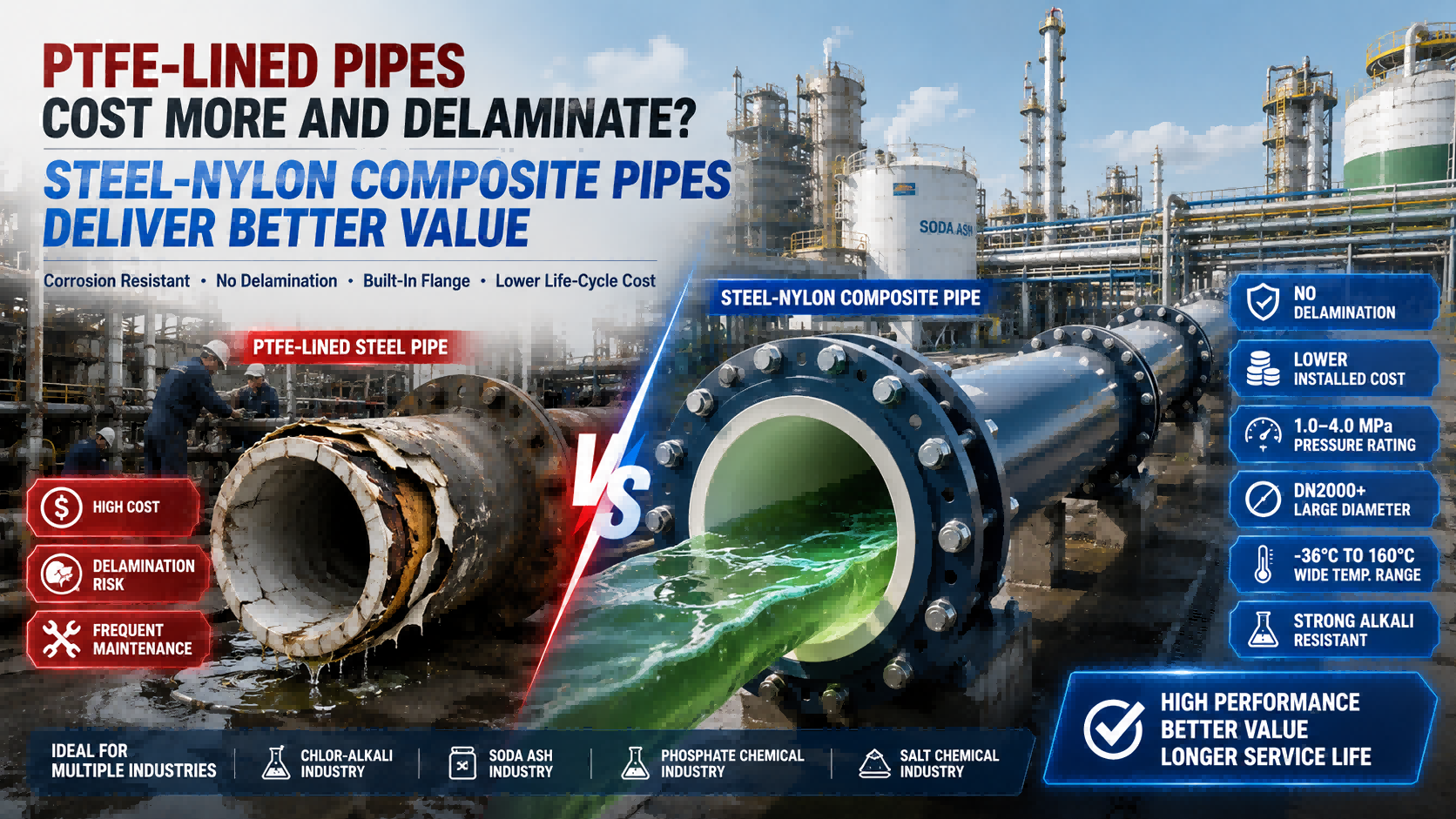
Extended Temperature and Pressure Boundaries: Through advanced modification and reinforcement, our polyamide composite material maintains an operational temperature range from -36°C to 160°C. In large-scale industrial plants, large-diameter options (up to DN2000mm and above) remain completely immune to creep and retain exceptional structural stability under high pressures of 1.0 to 4.0 MPa.
-
Unmatched Abrasion and Erosion Resistance: Soda ash production involves high concentrations of sodium carbonate crystals and abrasive solid particles. Traditional pipe walls suffer a brutal double assault from "mechanical erosion + chemical corrosion." Reinforced nylon pipes feature an abrasion resistance several times higher than PE or PP, and even outperform certain specialty metals, significantly extending the service life of slurry and crystal transport lines.
Key Technical Indicators: PAMC vs. Traditional Piping Materials
The table below illustrates the comprehensive performance comparison of various piping materials under typical chlor-alkali and soda ash processing conditions:
| Performance Metric | Reinforced Nylon Pipe (PAMC) | 316L Stainless Steel Pipe | Fiberglass Pipe (FRP) | Standard PE/PP Pipe |
| High Alkali Resistance (50% NaOH) | Excellent (Zero Degradation) | Poor (Prone to Alkali Embrittlement at High Temps) | Poor (Resin Hydrolysis) | Good |
| Chloride Ion Pitting Resistance ($Cl^-$) | 100% Immune | Very Poor (Severe Pitting Risk) | Immune | Immune |
| Operating Temperature Range | -36°C to 160°C | Extremely High (But limited by SCC temperatures) | -20°C to 90°C | 0°C to 60°C (Creeps at high temps) |
| Slurry Erosion/Wear Resistance | Excellent (Crystal Friction Resistant) | Good (But cost-prohibitive) | Poor (Erosion exposes fibers) | Fairly Poor |
| Comprehensive Service Life | 30 to 50 Years | Unpredictable due to localized corrosion | 10 to 15 Years | 5 to 10 Years (Shorter at high temps) |
40 Years of Innovation, Empowering Global Chemical Giants
As a trusted pioneer with forty years of deep expertise in specialty nylon and composite piping systems, we do not just supply pipes—we engineer complete fluid handling solutions for the global chemical and salt-chemical sectors.
Backed by our joint R&D centers with the Institute of Chemistry, Chinese Academy of Sciences and Tongji University, our reinforced nylon piping systems have been successfully deployed in multiple mega-scale national chlor-alkali projects and solvay/monohydrate soda ash plants worldwide, successfully replacing expensive stainless steel and fragile FRP lines.
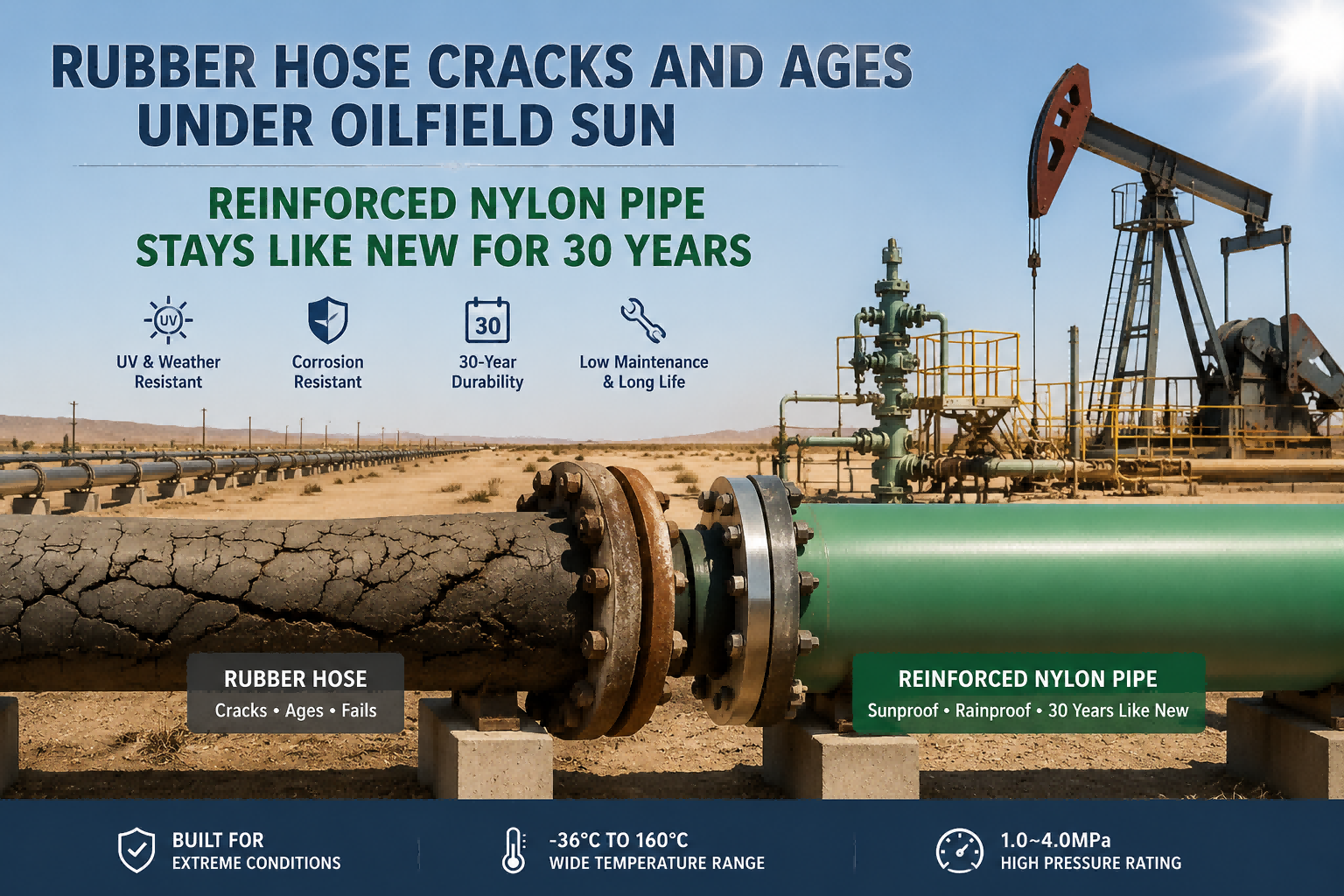
Whether you are dealing with weak acid corrosion ($H_2S/CO_2$) caused by oilfield associated gas, harsh high-temperature, high-concentration caustic alkalis in salt-chemical plants, or requiring ultra-large diameters above DN2000mm with 4.0MPa high-pressure flanged connections for core mainlines, our products hold an exceptional track record of zero leakage and zero unscheduled downtime.
Conclusion: The Inevitable Choice for Cost Reduction and Efficiency
In modern industrial upgrades driven by low-carbon footprints, high efficiency, and stringent safety standards, material selection directly determines your ROI (Return on Investment). With its dual resistance (strong alkali + weak acid), superior temperature and wear thresholds, and a maintenance-free long lifespan, the reinforced nylon pipe is revolutionizing industrial fluid transport.
If you are experiencing frequent pipeline corrosion or leaks in your chlor-alkali or soda ash production lines, or if you are seeking a highly cost-effective, innovative material solution for an upcoming project, contact our technical application experts today.
Why Do Pipes in the Soda Ash Industry Frequently Scale and Corrode? Where Does the Problem Lie?
Short Service Life of High-Pressure Oilfield Gathering Pipelines? How Steel–Nylon Composite Pipes Offer a New Solution for Wear Resistance and Pressure Performance