
Is Stainless Steel Pipe Theft Risk Zero? Switch to Non-Metallic Nylon Pipe to Completely Eliminate Theft Losses

1. A Heavily Underestimated Hidden Cost
When selecting pipe materials, engineers typically consider factors such as pressure resistance, corrosion resistance, service life, and procurement cost. However, one risk factor is often overlooked: **theft risk**.
This is no exaggeration. Recent news reports are filled with cases of stainless steel pipe theft. In July 2025, a construction site in Jinan reported the theft of 10 stainless steel pipes – worth about 600 yuan – sold as scrap for only 114 yuan. In April 2024, a site in Luopu County, Xinjiang, lost 43 stainless steel seamless pipes and 17 stainless steel plates overnight, valued at approximately 50,000 yuan. Even more shocking, a security guard at a site in Yantai stole stainless steel materials 42 times over just two months, making over 50,000 yuan in illicit profit.
These cases reveal a harsh reality: **stainless steel has high scrap value**, making it a prime target for thieves. And because pipes are often installed in poorly supervised areas – construction sites, factories, remote fields – the risk is magnified.
2. Theft Prevention: Treating the Symptoms vs. Curing the Cause
To counter stainless steel pipe theft, the industry typically resorts to measures like installing surveillance cameras, setting up patrols, erecting fences, and assigning dedicated guards. However, these are essentially **passive defenses** – they increase the difficulty and cost of theft but do not eliminate the underlying incentive.
**As long as the pipe itself has resale value, the motivation for theft remains.** As police often warn, construction sites are large, have multiple access points, and contain high-value materials – making them easy targets. Even with significant investment in security, absolute protection is nearly impossible.
So, is there a way to make pipes **“not worth stealing”** ?
3. Nylon Pipe: Making Theft Pointless
The answer lies in **changing the material properties** of the pipe.
Nylon pipe, as a high-performance engineering plastic, offers a unique advantage: **its non-recyclable nature doubles as theft deterrence**. Unlike stainless steel, nylon has virtually no scrap value in the recycling market. Even if thieves manage to steal it, they cannot profit from selling it. When thieves realize that hauling away nylon pipes yields no money, the incentive to steal disappears.
This is not just theoretical – in certain industries, “non-recyclable” is already an explicit design requirement for theft prevention. Cutting off the profit chain at its source is far more effective than chasing perpetrators after the fact.
Of course, some may worry: can nylon pipe match stainless steel in performance? The answer may exceed expectations.
4. Steel-Nylon Composite Pipe: The Best of Both Worlds
Pure nylon pipe offers theft-proof advantages but may not fully meet mechanical requirements in high-pressure, high-temperature, or high-strength industrial applications. This is precisely why **steel-nylon composite pipe** was developed.
Steel-nylon composite pipe combines the high strength and toughness of steel with the salt resistance, abrasion resistance, and corrosion protection of nylon. Its key advantages include:
**1. High Strength with Lightweight**
By integrating a high-strength steel skeleton with a nylon outer layer, the composite pipe withstands high internal and external pressures while significantly reducing overall weight. Nylon weighs only one-seventh as much as steel, making transport and installation easier.
By integrating a high-strength steel skeleton with a nylon outer layer, the composite pipe withstands high internal and external pressures while significantly reducing overall weight. Nylon weighs only one-seventh as much as steel, making transport and installation easier.
**2. Excellent Wear and Corrosion Resistance**
The wear resistance of steel-nylon composite pipe is 8–10 times that of carbon steel or stainless steel when conveying slurries. It also resists most organic and inorganic acids, alkalis, and salts, giving it a longer service life than stainless steel. In one actual case, pipes using this technology have been in continuous operation for 23 years without corrosion or leakage.
The wear resistance of steel-nylon composite pipe is 8–10 times that of carbon steel or stainless steel when conveying slurries. It also resists most organic and inorganic acids, alkalis, and salts, giving it a longer service life than stainless steel. In one actual case, pipes using this technology have been in continuous operation for 23 years without corrosion or leakage.
**3. Self-Lubricating and Non-Scaling**
Nylon’s self-lubricating properties prevent adhesion and scaling on the pipe surface. When conveying fluids, pressure loss in nylon pipes is about 30% lower than in steel pipes, allowing for a smaller diameter to achieve the same flow.
Nylon’s self-lubricating properties prevent adhesion and scaling on the pipe surface. When conveying fluids, pressure loss in nylon pipes is about 30% lower than in steel pipes, allowing for a smaller diameter to achieve the same flow.
**4. Total Cost Advantage**
Although the initial purchase cost of steel-nylon composite pipe may be slightly higher than ordinary carbon steel pipe, considering its extended service life, near-zero maintenance costs, and complete elimination of theft losses, the **life-cycle cost** is significantly lower.
Although the initial purchase cost of steel-nylon composite pipe may be slightly higher than ordinary carbon steel pipe, considering its extended service life, near-zero maintenance costs, and complete elimination of theft losses, the **life-cycle cost** is significantly lower.
5. Application Fields: From Oilfields to Construction
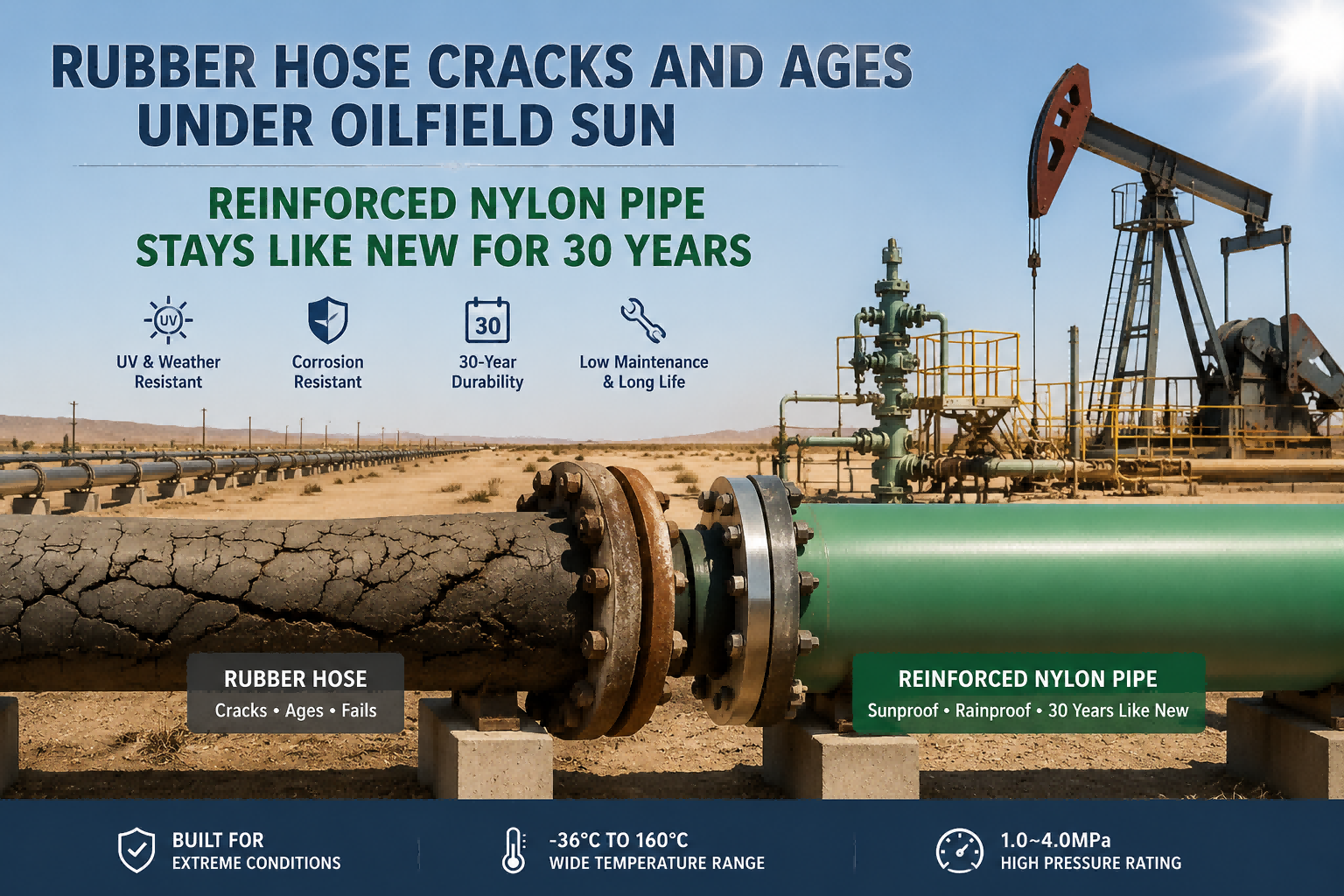
Steel-nylon composite pipe technology has been validated through large-scale industrial use. Currently, over 40,000 meters have been installed at Sinopec Shengli Oilfield and Southwest Oil & Gas Branch, and more than 10,000 meters at Qingdao Refinery and Tianjin Refinery. Products cover diameters from DN50 to DN2000 and are widely used in oil gathering, thermal power desulfurization, mining slurry transport, and chemical equipment.
In building construction, steel-reinforced nylon pipes serve as water supply and drainage lines, offering good flexibility and durability for complex installation environments. Whether for industrial or civil applications, steel-nylon composite pipes demonstrate strong replacement potential.
6. Conclusion: Redefining the Logic of Pipe Selection
For a long time, pipe selection decisions have focused primarily on two dimensions: **performance** and **cost**. However, the frequent theft of stainless steel pipes reminds us that **security risk** – specifically asset security – should also be a core consideration.
Steel-nylon composite pipe offers a fundamental solution to this problem. Rather than relying on passive measures like surveillance, patrols, or fences, it leverages the material’s **zero scrap value** to render theft meaningless. At the same time, its superior wear resistance, corrosion resistance, and light weight make it a compelling alternative to stainless steel.
**When a pipe performs excellently and is also “not worth stealing,” it delivers not only cost savings but also peace of mind.**
For any project struggling with pipe theft, switching to steel-nylon composite pipe may well be a strategic decision worth serious consideration.
Let me know if you need a shorter version, a different tone, or SEO-optimized meta descriptions to accompany this post.
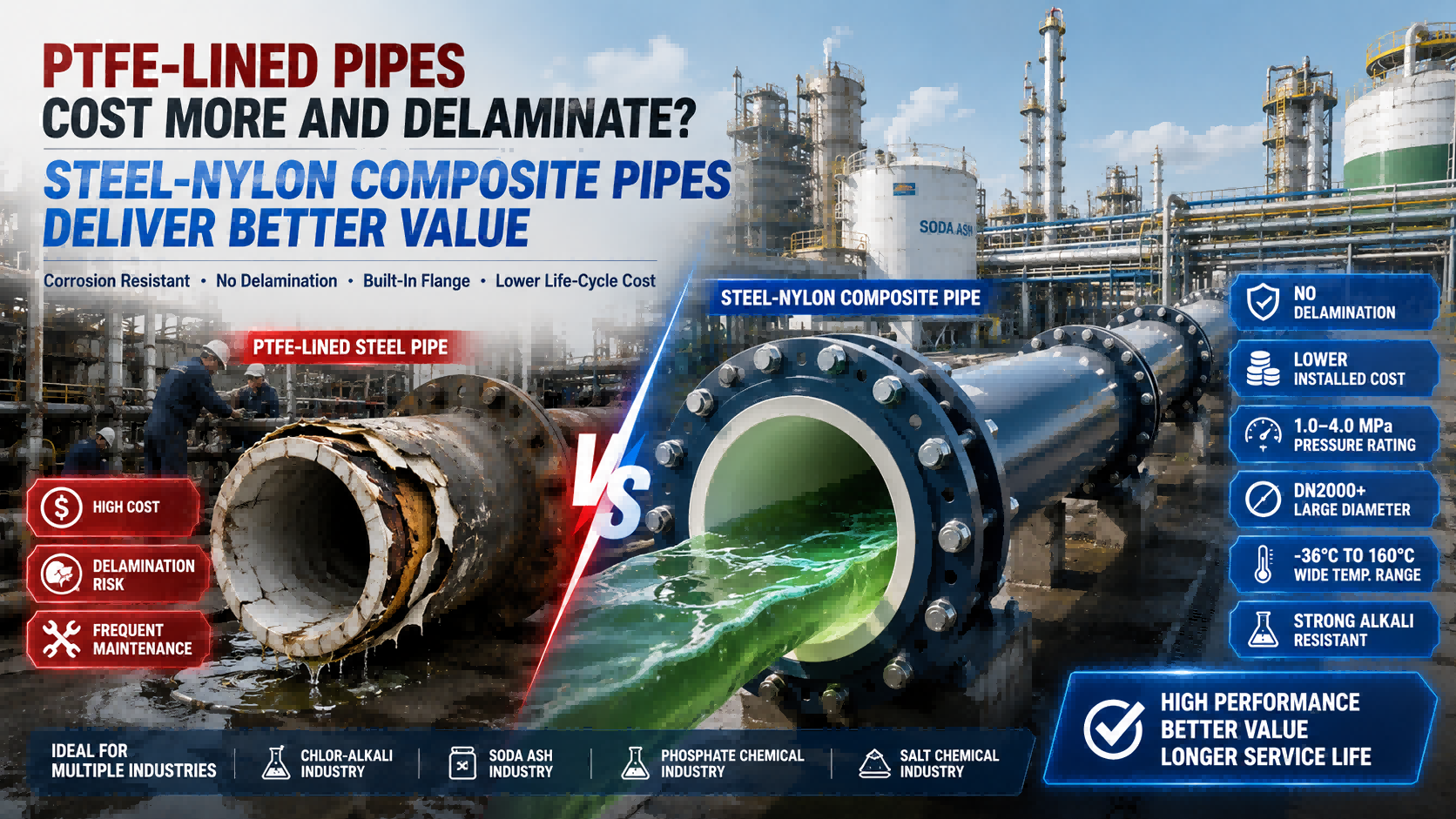
Frequent Pipe Blockage Due to Carbon Steel Pipe Lining Detachment: Integrated Steel‑Nylon Composite Pipe Never Delaminates
High-Concentration Alkaline Water Transportation: Why 304 Stainless Steel Falls Short of Steel-Nylon Composite Pipe?
Related blog


SEND MESSAGE