40 Years of Industrial Pipelines: Steel-Nylon Pipe Evolution

40 Years of Industrial Pipeline Engineering: The Evolution of Steel-Nylon Composite Pipes
A Comprehensive Review of Industrial Piping Systems from 1986 to 2026: Material Innovation, Engineering Challenges, and the Growing Role of Steel-Nylon Composite Pipes
Introduction: What Has Changed in Industrial Pipeline Engineering Over the Past 40 Years?
From 1986 to 2026, the global industrial piping industry has undergone continuous technological development.
Industrial pipelines are essential infrastructure in oil and gas production, chemical processing, mining, municipal water supply, wastewater treatment, power generation, marine engineering, and industrial manufacturing.
Their reliability directly affects operational efficiency, industrial safety, environmental protection, and long-term operating costs.
Over the past four decades, the fundamental principles of industrial pipe selection have evolved significantly.
In earlier industrial projects, engineers primarily focused on pressure resistance, material costs, and installation convenience.
Today, industrial pipeline engineering involves a much broader range of technical and economic considerations:
-
Long-term corrosion and abrasion resistance
-
Material stability under demanding operating conditions
-
Pipeline installation efficiency and connection reliability
-
Leakage prevention and operational safety
-
Maintenance requirements and replacement costs
-
Total Cost of Ownership (TCO)
-
Sustainability and resource efficiency
-
Long-term system performance and operational reliability
These evolving requirements have encouraged the development of advanced piping materials, including high-performance polymer pipes, lined steel pipes, and composite piping systems.
Among these innovations, steel-nylon composite pipes represent a promising approach to combining the mechanical strength of steel with the functional advantages of engineering nylon.
By integrating a structural steel layer with a protective nylon layer, composite pipelines offer an alternative solution for industrial applications involving corrosion, abrasion, mechanical stress, and demanding operating environments.
The most important lesson from 40 years of industrial pipeline engineering is clear: the future of industrial piping is not simply about reducing material costs. It is about improving long-term reliability, engineering efficiency, and total lifecycle value.
1. 1986–1995: Traditional Steel Pipes Formed the Foundation of Industrial Infrastructure
1.1 Carbon Steel Pipes Dominated Industrial Applications
During the late 1980s and early 1990s, carbon steel pipes remained one of the most widely used materials in industrial piping systems.
Their popularity was primarily driven by several advantages:
-
High mechanical strength
-
Established manufacturing processes
-
Reliable structural performance
-
Good pressure-bearing capability
-
Competitive initial material costs
-
Availability in large diameters
Carbon steel pipelines were extensively used in oil and gas gathering systems, industrial water transportation, chemical processing plants, thermal power stations, mining operations, and municipal infrastructure.
For large industrial projects, steel pipes offered a practical combination of structural performance and economic feasibility.
However, as operating periods increased, engineers began to recognize the limitations of conventional carbon steel piping systems.
1.2 Corrosion Became a Major Engineering Challenge
When transporting seawater, saline water, industrial wastewater, or other corrosive fluids, unprotected carbon steel pipes may experience electrochemical corrosion.
The severity of corrosion depends on various factors, including:
-
Dissolved oxygen concentration
-
Chloride content and other corrosive ions
-
Fluid pH
-
Operating temperature
-
Flow velocity
-
Sediment accumulation
-
Microbiological activity
-
External soil and environmental conditions
Over time, corrosion may cause wall thinning, localized pitting, structural deterioration, and pipeline leakage.
In continuous industrial operations, the financial consequences of pipeline failure can extend far beyond the replacement cost of the damaged pipe.
Unexpected shutdowns may result in production losses, maintenance expenses, environmental risks, and operational disruptions.
According to the IMPACT study published by NACE International in 2016, the estimated global annual cost of corrosion was approximately USD 2.5 trillion, equivalent to around 3.4% of global GDP based on 2013 economic data.
This finding demonstrated that corrosion was not merely a materials engineering issue. It was also a major economic challenge for industrial infrastructure.
1.3 Engineering Lessons from the Early Period
One of the most important lessons from this period was:
Structural strength alone does not guarantee long-term corrosion resistance.
As a result, pipeline engineers increasingly explored internal coatings, protective linings, cathodic protection, and alternative pipe materials.
These developments laid the foundation for more advanced corrosion-resistant piping solutions.
2. 1996–2005: The Expansion of Corrosion-Resistant Materials and Polymer Pipe Technology
During the late 1990s and early 2000s, rapid development in chemical processing, environmental engineering, and water treatment created demand for industrial pipelines capable of handling more diverse operating conditions.
Although conventional steel pipes remained widely used, engineers increasingly adopted stainless steel, fiberglass-reinforced plastic (FRP), and engineering polymer piping systems.
2.1 Improvements in Traditional Metallic Pipelines
Several corrosion protection technologies became increasingly important in industrial applications.
Internal Protective Coatings
Epoxy coatings and other protective layers were used to reduce direct contact between transported fluids and steel surfaces.
Rubber and Polymer Linings
Rubber-lined and polymer-lined steel pipes provided additional protection in selected corrosive and abrasive environments.
Stainless Steel Piping Systems
Stainless steel offered improved corrosion resistance under certain operating conditions through appropriate alloy selection.
However, these solutions also introduced specific engineering considerations.
Protective coatings require careful control of coating continuity, adhesion, surface preparation, and installation quality.
Lined systems require attention to bonding integrity and potential interface failures.
Stainless steel may experience localized corrosion, including pitting and crevice corrosion, under aggressive chloride conditions.
Consequently, material upgrading did not completely eliminate corrosion challenges.
Instead, it increased the importance of selecting materials according to actual operating environments.
2.2 Engineering Plastics Expanded Material Selection Options
Polymer materials such as HDPE, PVC, polypropylene, PVDF, and polyamide gradually became important alternatives in specific industrial applications.
Unlike carbon steel, compatible polymer materials do not undergo conventional electrochemical rusting.
Certain engineering plastics also offer favorable chemical resistance and relatively smooth internal surfaces.
However, non-metallic piping systems have their own technical limitations.
Important considerations include:
-
Pressure capability at elevated temperatures
-
Long-term creep behavior
-
Thermal expansion
-
Pipe support requirements
-
External mechanical loads
-
Chemical compatibility
-
Long-term dimensional stability
These limitations reinforced a fundamental engineering principle:
No single piping material can provide optimal performance under every pressure, temperature, corrosion, and abrasion condition.
This understanding encouraged the development of composite pipe structures that combine the advantages of different materials.
3. 2006–2015: Composite Pipes Emerged as an Important Engineering Solution
As industrial production expanded, pipeline systems were increasingly required to operate over longer distances and under more demanding conditions.
Mining slurry pipelines, for example, often experienced simultaneous abrasive wear and exposure to corrosive process water.
Chemical pipelines could face combinations of internal pressure, temperature variation, and chemical attack.
Under these conditions, conventional single-material solutions sometimes presented technical or economic limitations.
3.1 Why Did Composite Pipe Technology Attract Attention?
One of the key principles of composite pipe engineering is the allocation of different functions to different material layers.
For example:
-
A metallic structural layer provides pressure-bearing capacity and mechanical support.
-
A polymer layer separates the transported medium from the metal.
-
An abrasion-resistant lining reduces direct particle wear on the structural pipe wall.
-
An external protective system reduces environmental corrosion and mechanical damage.
This functional approach allows engineers to optimize the performance of each component instead of relying on a single material to satisfy every requirement.
3.2 The Engineering Value of Steel-Nylon Composite Pipes
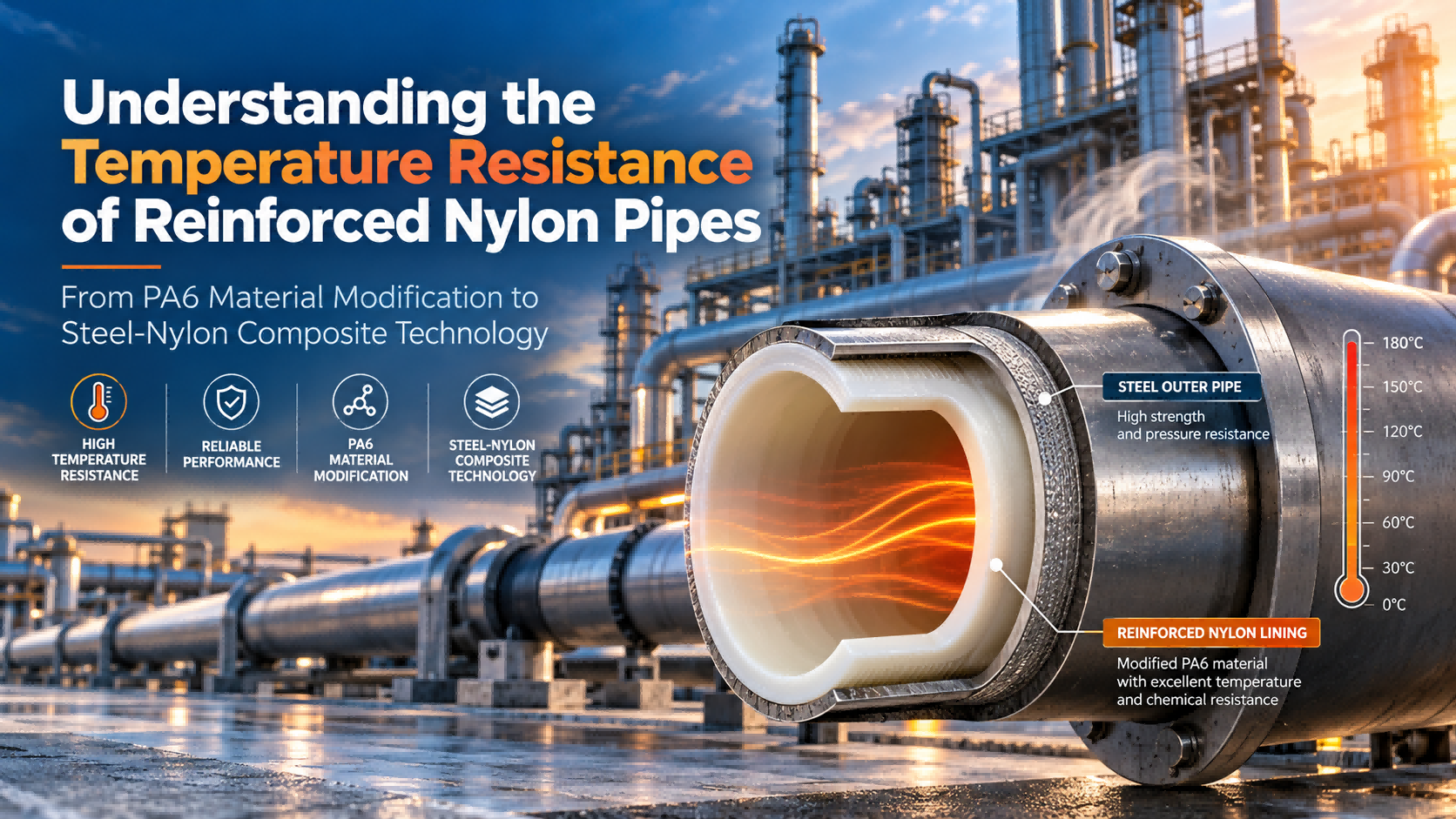
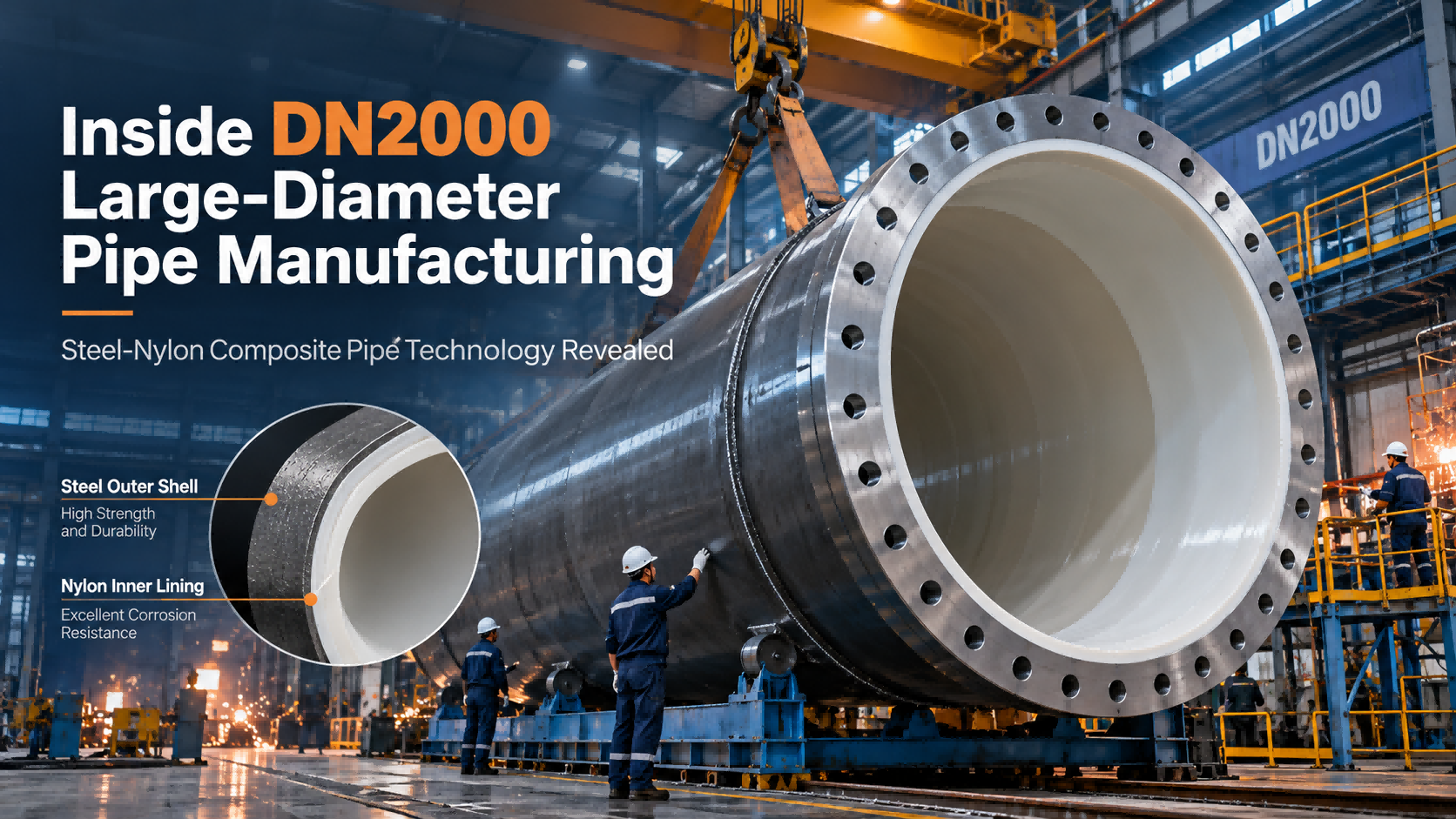
Steel-nylon composite pipes combine two materials with complementary characteristics.
The steel component provides structural support, while the nylon component serves as a functional protective layer in contact with the transported medium.
When properly engineered, the steel structure can carry the primary mechanical loads and internal pressure requirements.
The nylon layer can reduce direct contact between the transported medium and the steel surface, while providing abrasion and corrosion protection under suitable operating conditions.
This combination is particularly relevant in applications requiring:
-
Structural rigidity and pressure resistance
-
Protection against selected corrosive media
-
Resistance to abrasive particle transport
-
Reliable long-term operation
-
Reduced maintenance requirements
-
Compatibility with complex industrial piping layouts
However, the actual performance of a composite pipe depends on material selection, layer bonding, manufacturing quality, end sealing, and operating conditions.
The presence of a composite structure does not automatically guarantee a longer service life.
Engineering validation remains essential.
4. 2016–2026: Industrial Pipeline Selection Shifted Toward Lifecycle Value
Over the past decade, industrial pipeline procurement has increasingly emphasized long-term operating economics.
For large industrial projects, the initial purchase price represents only one component of the total investment.
Installation expenses, maintenance requirements, pumping energy, replacement costs, and production downtime may all influence the final economic performance of a pipeline system.
4.1 From Initial Capital Cost to Total Cost of Ownership
Capital Expenditure (CAPEX) mainly refers to the initial investment required to purchase and install equipment.
Total Cost of Ownership (TCO) considers the complete cost of using an asset throughout its operational life.
A simplified pipeline TCO model can be expressed as:
TCO = Initial Procurement Cost + Installation Cost + Maintenance Cost + Energy Cost + Replacement Cost + Downtime Losses + End-of-Life Disposal Cost
For pipelines installed in remote locations or critical production systems, maintenance-related expenses may become particularly significant.
In mining operations, for example, frequent replacement of abrasion-damaged pipes may cause additional production interruptions.
In marine engineering or large industrial facilities, repairs may require specialized labor, lifting equipment, and complex shutdown coordination.
Therefore, composite piping systems capable of reducing maintenance requirements under suitable conditions may offer lifecycle economic advantages.
However, specific savings must be calculated using actual project data rather than assumed from material characteristics alone.
4.2 Installation Efficiency and Leakage Prevention Became More Important
Conventional welded steel piping systems often require several on-site procedures:
-
Pipe positioning and alignment
-
Welding
-
Weld inspection
-
Surface preparation
-
Corrosion protection of welded joints
-
Installation quality control
For large projects with demanding construction schedules, these operations can affect installation efficiency.
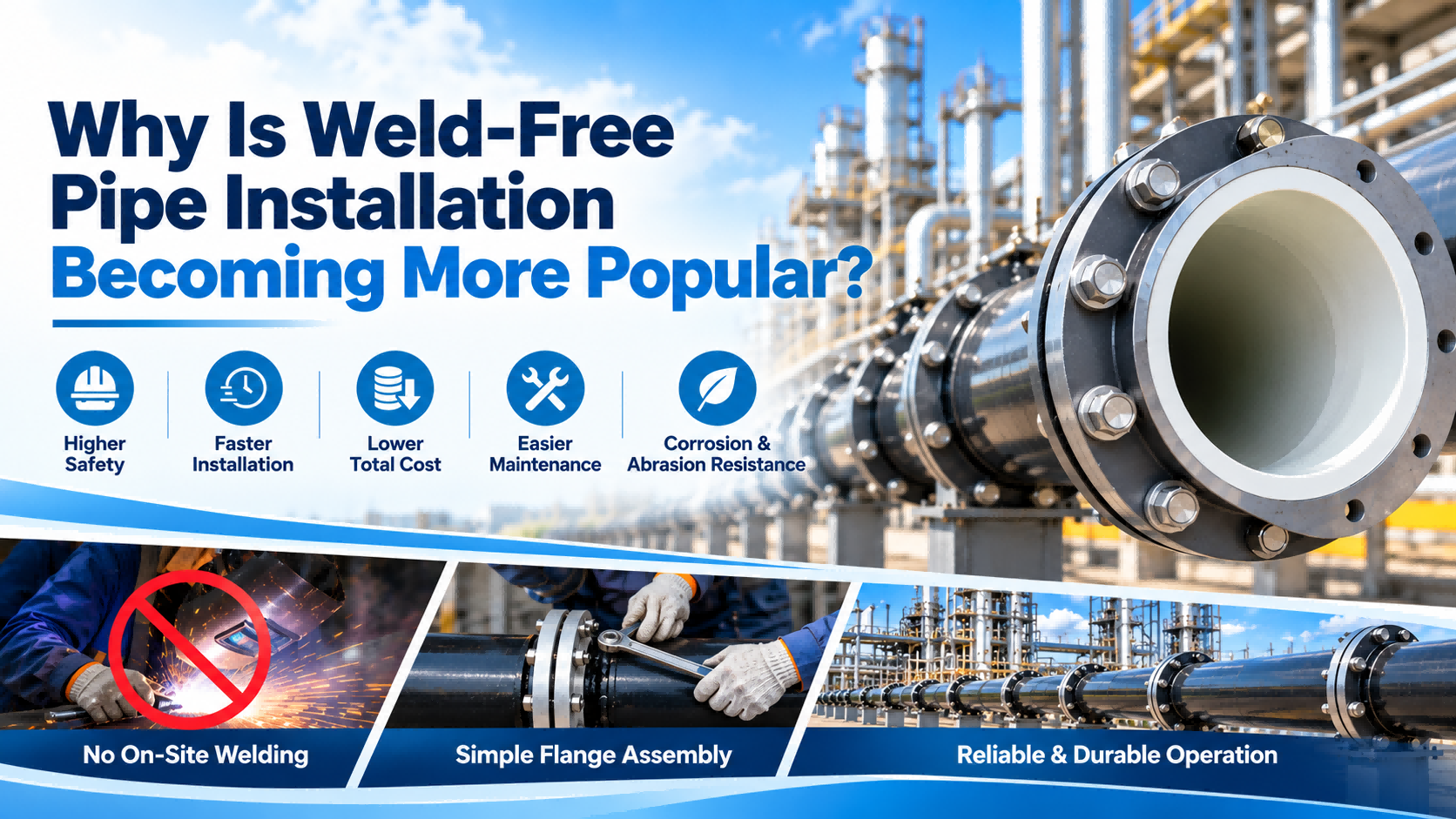
Prefabricated piping systems with flange connections may reduce the need for field welding and simplify selected installation procedures.
Nevertheless, flange reliability still depends on gasket selection, bolt preload, sealing surface quality, alignment, and operating conditions.
Reducing field welding does not eliminate leakage risk. Proper connection design and installation quality remain essential.
4.3 Verified Performance Became a Key Procurement Requirement
Modern industrial buyers increasingly require measurable and repeatable performance data.
General claims such as "high strength," "excellent abrasion resistance," or "superior corrosion resistance" are no longer sufficient for many engineering projects.
Procurement teams and engineering consultants often evaluate:
-
Hydrostatic pressure testing
-
Pressure cycling performance
-
Tensile and impact properties
-
Chemical immersion resistance
-
Slurry abrasion test results
-
Composite interface integrity
-
Flange sealing performance
-
Thermal cycling stability
These requirements encourage pipe manufacturers to provide not only products but also technical documentation and engineering support.
5. Five Major Pipeline Failure Risks Identified Through Decades of Engineering Experience
Long-term industrial experience demonstrates that pipeline failures rarely result from a single factor.
Instead, material characteristics, design conditions, manufacturing quality, operating environments, and maintenance practices interact over time.
5.1 Corrosion Failure
Carbon steel pipelines may experience uniform corrosion, localized corrosion, and other deterioration mechanisms when exposed to aggressive environments.
A compatible nylon lining can separate the transported fluid from the internal steel surface and reduce direct exposure to corrosive media.
However, external steel surfaces may still require protection against atmospheric, soil, or marine corrosion.
Therefore, internal lining and external corrosion protection must be considered separately.
5.2 Abrasive Wear
Mining slurry, tailings, and sand-containing industrial fluids may continuously erode or abrade the internal surfaces of pipelines.
Wear rates depend on several operating variables:
-
Particle hardness
-
Particle size distribution
-
Solids concentration
-
Flow velocity
-
Impact angle
-
Flow patterns
-
Pipe geometry
Elbows, tees, and flow-direction changes may experience concentrated wear because of particle impingement.
Appropriate nylon material selection, lining thickness, and fitting design may help improve abrasion performance in selected applications.
5.3 Pressure and Fatigue Failure
Industrial pipes may experience static pressure, pressure fluctuations, water hammer, and external mechanical loads.
In steel-nylon composite systems, the steel structure can be designed to carry the primary mechanical loads.
However, steel wall thickness, local stress concentrations, connection design, and fatigue resistance must still be evaluated against the specified operating conditions.
5.4 Joint and Sealing Failure
In many industrial piping systems, connections and fittings can be more vulnerable than straight pipe sections.
Potential failure locations include:
-
Flanged connections
-
Welded joints
-
Elbows
-
Tees
-
Transition fittings
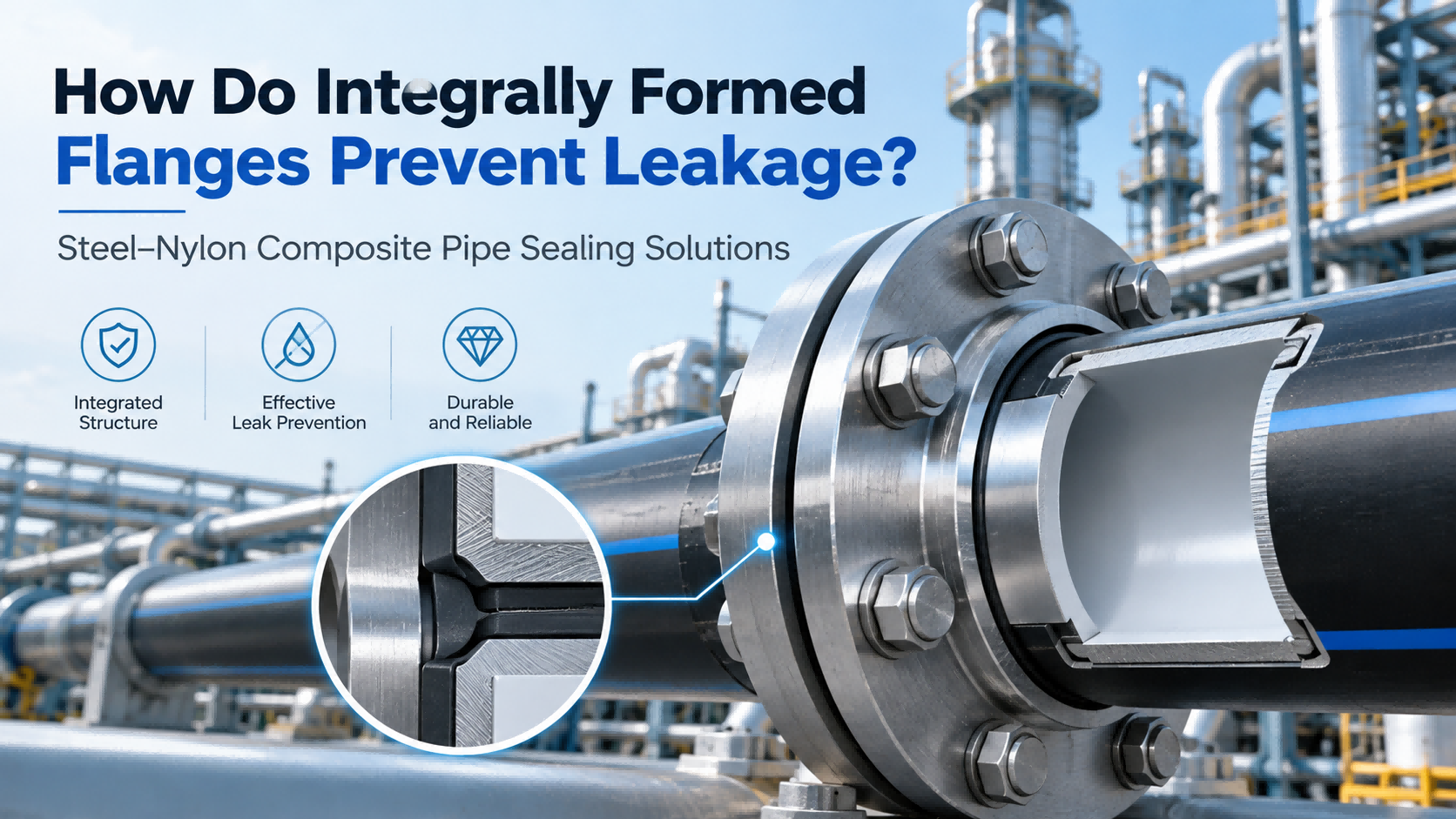
Integrated flange structures and compatible fittings can help improve dimensional consistency and simplify installation.
Nevertheless, reliable sealing requires proper engineering design, correct assembly, and regular inspection.
5.5 Material Aging and Environmental Compatibility
Different materials respond differently to temperature, ultraviolet exposure, chemicals, and sustained mechanical loading.
Polyamide materials, including PA6 (Nylon 6), may experience changes in mechanical properties depending on their moisture absorption state.
Their chemical resistance also varies with medium composition, concentration, and temperature.
Therefore, the term "corrosion resistant" should never be interpreted as universal resistance to every chemical substance.
For steel-nylon composite pipes, engineers must additionally consider differences in thermal expansion between steel and nylon and the long-term stability of their interface.
Scientific material selection must always begin with actual operating data.
6. Why Steel-Nylon Composite Pipes Are an Important Option for Modern Industrial Projects
The development of industrial piping technology over the past 40 years has demonstrated the value of combining complementary materials.
Rather than depending entirely on a single material, composite piping systems allow engineers to address multiple performance requirements through integrated structural design.
As a manufacturer specializing in steel-nylon composite pipes and reinforced nylon piping products, our company focuses on combining material engineering and manufacturing technology to provide reliable industrial fluid transportation solutions.
Our key product advantages include the following.
Advantage 1: Combining Steel Strength with Nylon Protection
Steel offers established structural design capabilities, high mechanical strength, and reliable load-bearing performance.
Nylon provides functional properties that may include abrasion resistance, corrosion protection, and reduced direct contact between the transported medium and the steel surface.
By integrating these materials, steel-nylon composite pipes can combine structural support with internal medium protection.
This design is particularly valuable for projects where a single material may struggle to meet multiple requirements simultaneously.
Advantage 2: Protection Against Internal Corrosion
When transporting seawater, saline water, and certain industrial wastewater streams, conventional unprotected carbon steel pipelines may experience corrosion.
A compatible nylon functional layer reduces direct contact between the transported medium and the internal steel surface.
This characteristic makes steel-nylon composite pipes a potential option for:
-
Coastal industrial water transportation
-
Industrial water treatment
-
Selected wastewater pipelines
-
Saline water transportation
-
Certain corrosive liquid handling applications
Actual chemical compatibility must be confirmed according to fluid composition, concentration, temperature, and operating pressure.
Advantage 3: Abrasion Resistance for Demanding Transport Applications
Nylon materials can demonstrate favorable friction and wear behavior under specific operating conditions.
In slurry, tailings, and sand-containing fluid transportation, an appropriately designed nylon lining may help protect the structural steel component against direct abrasive wear.
For high-wear components such as elbows, engineers can optimize the pipe structure according to flow patterns and particle impact conditions.
However, comparative performance against rubber, ceramic, or other abrasion-resistant linings should be established through testing under comparable conditions.
Advantage 4: Integrated Flange Design for Efficient Installation
Our steel-nylon composite piping systems feature an integrated flange connection design intended to reduce selected field welding requirements.
Potential installation benefits include:
-
Reduced on-site welding operations
-
Greater use of prefabricated pipe sections
-
Improved construction organization
-
Convenient segmented assembly
-
Easier access for maintenance and replacement
-
Reduced field coating work at certain connections
For large industrial pipeline projects, prefabricated flanged systems can offer meaningful installation advantages.
Actual installation efficiency depends on pipe diameter, site conditions, connection quantities, and construction procedures.
Advantage 5: Large-Diameter Pipes and Comprehensive Fitting Solutions
Modern industrial systems require more than straight pipe sections.
They also depend on compatible fittings and reliable connections.
Our steel-nylon composite piping solutions include:
-
Straight pipes
-
Elbows
-
Tees
-
Reducers
-
Flanged connections
-
Customized piping components
A coordinated product range allows engineering teams to evaluate complete piping systems rather than selecting individual components independently.
For large-diameter pipeline applications, additional considerations include structural design, manufacturing feasibility, transportation requirements, and installation methods.
Advantage 6: Supporting Long-Term Lifecycle Cost Optimization
The engineering value of steel-nylon composite pipes extends beyond their material composition.
Their potential economic benefits depend on their ability to perform reliably under specific operating conditions.
If a properly selected composite piping system can reduce corrosion-related maintenance, limit abrasive wear, extend inspection intervals, or decrease unplanned shutdowns, it may improve overall project TCO.
This reflects our commitment to providing more than industrial piping products.
Our goal is to help EPC contractors, engineering consultants, and industrial buyers identify piping solutions that balance technical performance, installation efficiency, and long-term economic value.
7. Steel-Nylon Composite Pipes vs. Traditional Industrial Piping Materials
Each piping material offers advantages and limitations.
The most suitable choice depends on operating pressure, temperature, transported medium, installation environment, and lifecycle requirements.
| Pipe Material | Main Advantages | Key Engineering Considerations |
|---|---|---|
| Carbon Steel Pipes | High strength, mature manufacturing, competitive initial cost | Corrosion, abrasion, protective coating, maintenance |
| Stainless Steel Pipes | Good performance in selected corrosive environments, high structural strength | Alloy selection, chloride corrosion, material cost |
| HDPE Pipes | No conventional steel-type electrochemical rusting, good compatibility with certain fluids | Temperature, creep, pressure rating, structural rigidity |
| FRP Pipes | Corrosion resistance, relatively lightweight, flexible structural design | Impact performance, connection quality, long-term behavior |
| Rubber-Lined Steel Pipes | Favorable abrasion performance in certain slurry applications | Temperature limitations, liner bonding, aging |
| Steel-Nylon Composite Pipes | Steel structural support combined with a nylon functional layer | Layer bonding, medium compatibility, thermal cycling, end sealing |
This comparison does not suggest that steel-nylon composite pipes can replace every conventional pipeline material.
Instead, they provide another engineering option for applications requiring combinations of strength, corrosion protection, and abrasion resistance.
For projects experiencing multiple operating challenges, steel-nylon composite pipes deserve consideration during material evaluation.
8. Typical Industrial Applications of Steel-Nylon Composite Pipes
8.1 Mining and Tailings Transportation
Mining slurry pipelines must frequently withstand abrasive particles, hydraulic pressure, and demanding maintenance conditions.
Steel-nylon composite pipes can be evaluated for applications involving mineral slurry, tailings, and particle-containing liquids.
The key performance indicators include abrasion behavior, structural pressure capability, and long-term maintenance economics.
8.2 Chemical Processing Pipelines
Chemical plants transport fluids with widely varying chemical compositions, concentrations, and temperatures.
Composite piping structures provide an approach to combining mechanical strength with an internal protective barrier.
However, compatibility with acids, alkalis, oxidizing chemicals, and mixed industrial fluids must be assessed individually.
8.3 Seawater and Coastal Industrial Water Transportation
Coastal pipeline systems may face internal saline water exposure and external marine corrosion.
A compatible nylon lining can separate the internal steel surface from the transported liquid.
Meanwhile, the external steel structure requires appropriate corrosion protection.
Key design considerations include chloride exposure, operating temperature, pressure requirements, and long-term connection sealing.
8.4 Industrial Circulating Water and Municipal Water Systems
Industrial circulating water systems require reliable fluid transportation, corrosion management, and manageable maintenance.
Steel-nylon composite pipes can be evaluated for suitable pressure and medium conditions.
For potable water applications, materials and finished products must meet applicable local drinking water contact and regulatory requirements.
8.5 Oilfield and Energy Infrastructure
Certain oilfield gathering systems transport fluids containing water, dissolved salts, and solid particles.
Composite pipe structures may offer a useful design approach in such environments.
However, hydrocarbon-containing fluids, gases, hydrogen sulfide, and other specialized service conditions require additional verification of permeability, chemical compatibility, pressure-temperature ratings, and relevant safety requirements.
9. How Should Modern Engineering Projects Validate New Piping Materials?
One of the most important developments in modern pipeline engineering is the growing emphasis on documented performance.
For steel-nylon composite pipes, we recommend that engineering consultants, EPC contractors, and industrial procurement teams evaluate six essential areas.
Step 1: Define the Operating Conditions
Establish the actual service requirements, including:
-
Fluid composition
-
Chemical concentration
-
Solid particle characteristics
-
Design pressure
-
Design temperature
-
Flow velocity
-
Expected operating cycles
Accurate operating data is the foundation of reliable material selection.
Step 2: Verify Nylon Material Compatibility
Evaluate the selected nylon formulation using appropriate chemical exposure or aging tests.
Important indicators may include:
-
Fluid absorption
-
Dimensional changes
-
Changes in mechanical properties
-
Chemical degradation
-
Long-term material stability
Step 3: Validate Composite Structural Integrity
The composite pipe should be evaluated as a complete engineering structure.
Important characteristics include:
-
Steel structural capacity
-
Nylon layer integrity
-
Interlayer bonding
-
Thermal cycling behavior
-
End connection stability
Step 4: Conduct Abrasion Resistance Testing
For slurry transportation, relevant abrasion testing methods, including ASTM G75 where appropriate, can help compare material responses under controlled conditions.
Laboratory results must be interpreted together with actual flow velocity, particle characteristics, and pipeline geometry.
Laboratory abrasion performance should not be directly treated as a guaranteed field service life.
Step 5: Perform Pressure and Sealing Tests
Pipeline sections, fittings, and flange connections should undergo suitable pressure and sealing verification according to project requirements and applicable standards.
Potential evaluations include hydrostatic pressure testing, pressure cycling, and joint sealing tests.
Step 6: Calculate Lifecycle Economics
Compare complete system costs, including:
-
Initial material procurement
-
Transportation
-
Installation
-
Maintenance
-
Pumping energy
-
Spare parts
-
Production downtime
-
Replacement
-
End-of-life costs
A technically sound material selection should balance engineering reliability with measurable economic value.
10. Looking Ahead: Five Industrial Pipeline Trends for the Next Decade
Based on the technological development of the past 40 years and the evolving requirements of modern industrial projects, several trends are likely to receive continued attention.
Trend 1: Greater Use of Multi-Material Composite Structures
Future piping systems will increasingly explore the combination of structural layers, functional linings, and external protective systems.
Material engineering will focus more heavily on optimizing complete system performance rather than maximizing a single property.
Trend 2: More Modular Pipeline Connection Systems
Prefabricated pipe sections, compatible flanges, and standardized fittings can improve construction organization in suitable projects.
Connection reliability will remain an essential aspect of industrial piping design.
Trend 3: Data-Driven Material Selection
Engineering decisions will increasingly rely on measurable performance information.
Material testing, computational fluid analysis, wear assessment, pressure cycling, and operational monitoring will provide stronger foundations for procurement decisions.
Unverified performance claims are unlikely to satisfy the requirements of demanding industrial projects.
Trend 4: Greater Emphasis on Total Cost of Ownership
As industrial operators seek higher equipment availability and more predictable maintenance costs, lifecycle economics will continue to influence pipeline purchasing decisions.
Manufacturers will increasingly need to demonstrate long-term value through engineering evidence rather than initial price alone.
Trend 5: A Shift from Individual Pipe Products to Complete Piping Solutions
Future competition will involve more than the manufacture of straight pipes.
Successful piping systems require coordinated engineering of elbows, tees, reducers, connections, installation methods, and quality assurance.
Manufacturers capable of supporting complete project requirements may gain an important competitive advantage.
11. Frequently Asked Questions (FAQ)
Q1: Why Are Composite Materials Becoming More Important in Industrial Pipeline Engineering?
Industrial pipelines often face multiple challenges simultaneously, including pressure, corrosion, abrasion, and maintenance requirements.
Composite structures allow engineers to combine different material properties within one piping system, creating more flexible design options.
Q2: What Is the Main Difference Between Steel-Nylon Composite Pipes and Conventional Steel Pipes?
Conventional steel pipes primarily rely on steel for structural performance and may require separate corrosion protection measures.
Steel-nylon composite pipes combine a structural steel component with a nylon functional layer.
This approach integrates mechanical support with internal medium protection under suitable operating conditions.
Q3: Are Steel-Nylon Composite Pipes Suitable for Mining Slurry Transportation?
They may be suitable for selected slurry transportation applications.
However, material selection must consider particle hardness, solids concentration, flow velocity, pressure, and temperature.
Abrasion testing and technical-economic comparisons with other wear-resistant pipe materials are recommended.
Q4: Can Steel-Nylon Composite Pipes Last for 40 Years?
A 40-year service life cannot be assumed based solely on the material type.
Actual pipeline life depends on operating conditions, structural design, manufacturing quality, installation procedures, and maintenance practices.
Four decades of industry engineering experience can inform better material selection, but it does not replace product-specific service-life validation.
Q5: Why Should Industrial Buyers Focus on TCO Instead of Only the Initial Pipe Price?
The initial purchase price represents only part of the total cost of owning and operating a pipeline.
Maintenance, replacement, energy consumption, and unplanned shutdowns can significantly influence long-term project economics.
Evaluating TCO helps engineering teams make more comprehensive purchasing decisions.
Conclusion: Forty Years of Engineering Experience Show That Long-Term Reliability Matters More Than Any Single Material Advantage
From conventional carbon steel pipes to internally protected steel pipes, engineering polymer pipes, and multi-material composite structures, the past 40 years have witnessed continuous innovation in industrial pipeline technology.
This evolution reflects increasingly demanding industrial operating conditions and the growing importance of long-term system reliability.
The industry has gradually recognized an essential principle:
The best industrial pipeline is not necessarily made from the material with the highest individual performance rating. It is the pipeline system that can operate safely, reliably, and economically under its intended service conditions.
Steel-nylon composite pipes represent an important approach to achieving this objective.
By combining the structural capabilities of steel with the functional properties of nylon, these composite systems offer a practical material solution for selected industrial fluid transportation applications.
Their potential engineering advantages include structural strength, internal corrosion protection, abrasion-resistant design, prefabricated flange connections, and lifecycle cost optimization.
As a manufacturer specializing in reinforced nylon pipes and steel-nylon composite piping systems, we remain committed to material development, composite structural engineering, manufacturing quality, and application-oriented technical support.
Our objective is to provide industrial customers worldwide with piping products and solutions that meet their actual engineering requirements.
Looking for the Right Industrial Piping Solution for Your Project?
Whether your project involves mining slurry transportation, industrial circulating water, chemical fluids, seawater pipelines, or large-diameter industrial piping systems, our technical team welcomes the opportunity to discuss your requirements.
By providing information about your transported medium, operating pressure, temperature, pipe diameter, and application conditions, you can help us evaluate suitable steel-nylon composite pipes and compatible fittings for your project.
Explore Our Products:
Steel-Nylon Composite Pipes and Fittings
Official Website: www.nylonpipeline.com
Combining Material Innovation with Engineering Reliability for the Future of Industrial Pipeline Systems.
Technical References
-
AMPP — Corrosion Management and Water/Wastewater Infrastructure
-
ASTM G75 — Slurry Abrasivity and Abrasion Response of Materials
Technical Note: This article provides a historical review of industrial piping technology and engineering practices from 1986 to 2026. It does not imply that any specific steel-nylon composite pipe product has accumulated 40 years of continuous field operation. Actual product performance, application suitability, and design service life must be confirmed through relevant technical documentation, testing, and project-specific engineering evaluation.