DN2000 Large-Diameter Pipes: Steel-Nylon Manufacturing Guide
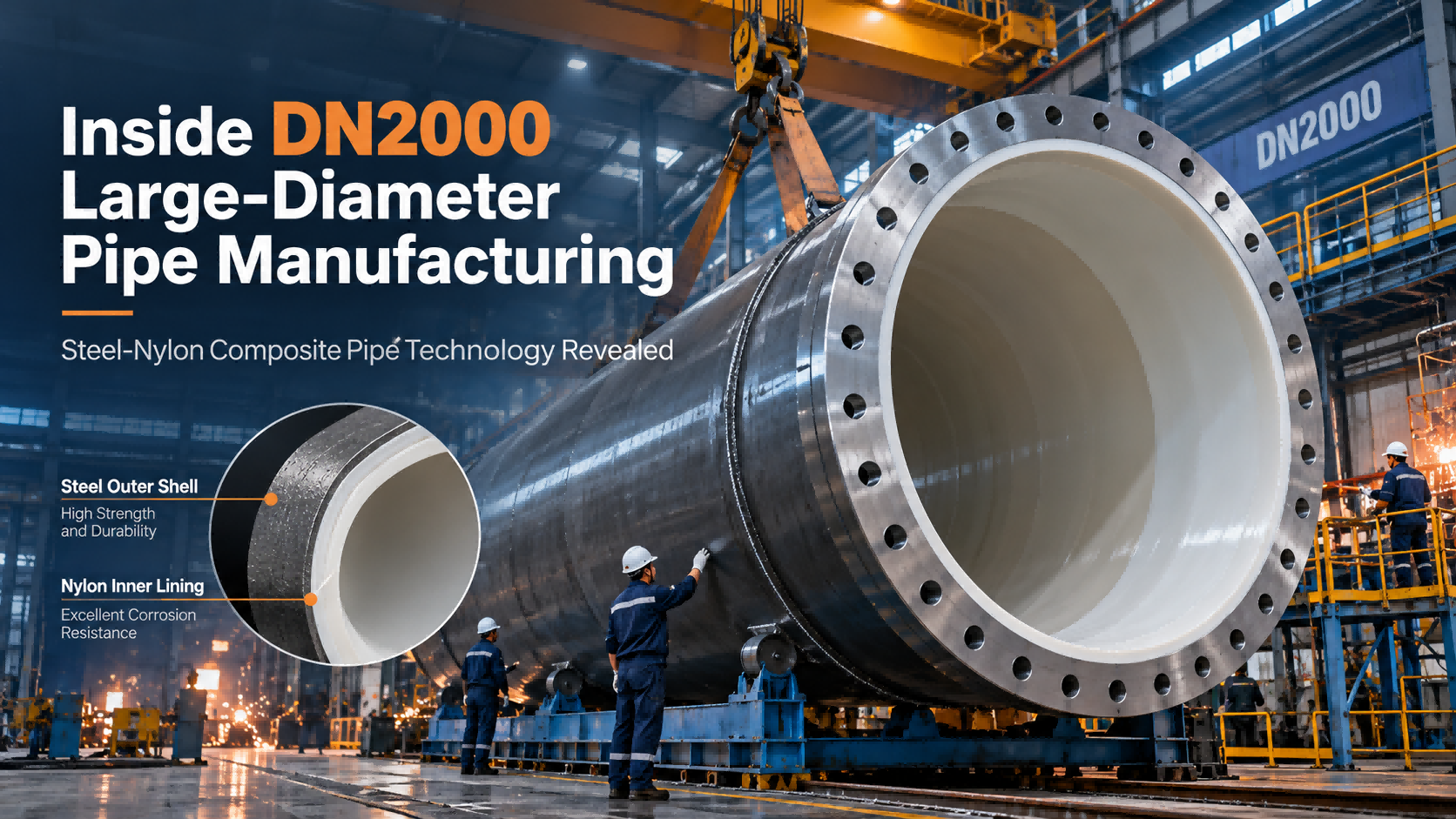
Inside DN2000 Large-Diameter Pipe Manufacturing: How Steel-Nylon Composite Pipes Push Engineering Boundaries
As global industrial infrastructure continues to expand, ultra-large-diameter pipelines are becoming increasingly important in mining operations, seawater transportation, energy development, chemical processing facilities, and municipal water supply and drainage systems.
In particular, industrial projects requiring high-volume fluid transportation are generating growing interest in large-diameter pipelines ranging from DN1200 and DN1600 to DN2000.
However, manufacturing a DN2000 industrial pipeline involves much more than simply scaling up a conventional pipe.
As pipe diameter increases, manufacturers face increasingly complex engineering challenges, including structural strength, dimensional accuracy, internal lining formation, material compatibility, thermal expansion differences, flange sealing reliability, and transportation requirements.
For projects involving corrosive liquids, abrasive slurries, industrial wastewater, or high-salinity fluids, large-diameter manufacturing capability alone is not sufficient.
The real engineering challenge is achieving structural stability, corrosion resistance, wear resistance, and reliable long-term sealing performance within a single ultra-large-diameter pipeline system.
As a manufacturer specializing in industrial nylon pipes and steel-nylon composite piping systems, we combine steel pressure-bearing structures, cast MC Nylon 6 linings, and specially designed flange connection technology to provide an advanced solution for demanding industrial pipeline applications.
This article explores the engineering principles, manufacturing processes, technical challenges, quality control requirements, and industrial advantages of DN2000 steel-nylon composite pipes.
1. What Does DN2000 Mean, and Why Is Manufacturing So Challenging?
DN2000 refers to a nominal pipe diameter designation of approximately 2,000 millimeters.
The term DN stands for "Diameter Nominal," an internationally recognized designation used to identify standardized nominal pipe sizes.
It is important to understand that DN2000 does not necessarily mean that the finished pipe has an internal diameter of exactly 2,000 mm.
The actual internal flow diameter depends on the dimensions of the steel pipe, steel wall thickness, and internal nylon lining thickness.
Compared with conventional small- and medium-diameter pipelines, DN2000 pipes introduce several significant manufacturing challenges.
1.1 Increasing Diameter Creates More Complex Structural Requirements
In a simplified thin-walled cylindrical pressure vessel model, hoop stress is approximately proportional to pipe diameter when internal pressure and wall thickness remain constant.
Therefore, as pipe diameter increases, the circumferential stress acting on the pipe wall also increases under otherwise identical conditions.
This means that DN2000 pipelines cannot simply use the same structural proportions as smaller pipes.
Instead, engineers must carefully calculate the required structural strength based on the actual design pressure and applicable engineering standards.
Additional factors include:
-
Pipe self-weight and the weight of the transported medium.
-
External loads and supporting conditions.
-
Underground installation and soil pressure.
-
Lifting and transportation stresses.
-
Pressure fluctuations and hydraulic transients.
-
Thermal expansion and operating temperature changes.
For steel-nylon composite pipelines, the steel outer structure provides the primary mechanical strength required to withstand these demanding conditions.
1.2 Maintaining Roundness and Dimensional Accuracy Becomes More Difficult
In large-diameter pipe manufacturing, relatively small percentage deviations can translate into significant absolute dimensional errors.
For example, localized ovality may affect flange alignment, internal lining thickness distribution, and installation accuracy.
Manufacturers must therefore maintain strict control over:
-
Pipe roundness and straightness.
-
Dimensional tolerances.
-
Flange concentricity.
-
End-face perpendicularity.
-
Structural deformation during welding and processing.
These requirements directly influence the quality and reliability of the complete pipeline system.
1.3 Large Internal Surface Areas Complicate Lining Formation
DN2000 pipelines have extremely large internal surface areas.
Any localized defect in the lining, such as insufficient thickness, porosity, cracking, shrinkage cavities, or interface imperfections, may affect corrosion protection and wear resistance.
Maintaining consistent internal lining quality across such a large surface requires carefully controlled manufacturing conditions.
This is one of the fundamental differences between manufacturing conventional large-diameter steel pipes and producing high-performance steel-nylon composite pipelines.
2. Why Choose Steel-Nylon Composite Pipes Instead of Single-Material Pipelines?
Traditional industrial pipelines are commonly manufactured from carbon steel, stainless steel, HDPE, fiberglass-reinforced plastic (FRP), and other engineering materials.
Each material offers specific advantages.
However, when projects simultaneously require large diameters, substantial structural strength, corrosion resistance, and abrasion resistance, single-material solutions may involve difficult performance trade-offs.
Steel-nylon composite pipes are designed to combine the advantages of two different engineering materials.
Outer Steel Structure: Mechanical Strength and Pressure Resistance
Steel provides high mechanical strength and structural rigidity.
In DN2000 applications, the external steel structure performs several essential functions:
-
Supporting internal operating pressure.
-
Maintaining overall pipeline geometry.
-
Resisting mechanical deformation.
-
Supporting large-diameter flange connections.
-
Withstanding appropriate installation and handling loads.
Through proper engineering design, the steel structure provides the primary load-bearing capacity of the composite pipeline.
Inner MC Nylon 6 Lining: Corrosion and Abrasion Protection
The internal working surface of our steel-nylon composite pipes incorporates cast MC nylon, a type of engineering nylon based on polyamide 6 (PA6).
MC Nylon 6 offers useful mechanical and tribological properties, which can be adjusted through material formulation and manufacturing conditions.
When used as an internal lining, it creates a nonmetallic protective barrier between the transported fluid and the steel pressure-bearing structure.
Depending on the operating environment, the main advantages include:
-
Corrosion protection: Reduces direct contact between compatible transported media and the steel substrate.
-
Wear resistance: Provides a protective working surface for selected abrasive fluid applications.
-
Smooth internal surface: Helps maintain favorable hydraulic conditions.
-
Reduced internal corrosion maintenance: May reduce dependence on conventional internal coating maintenance in suitable applications.
However, nylon is not universally compatible with every industrial chemical.
Material suitability must always be evaluated according to fluid composition, chemical concentration, operating temperature, pressure, and expected service conditions.
Steel provides strength. Nylon provides protection. This functional separation is the central engineering advantage of steel-nylon composite pipe technology.
3. Inside the Manufacturing Process: How Is a DN2000 Steel-Nylon Composite Pipe Produced?
Manufacturing an ultra-large-diameter steel-nylon composite pipe requires a carefully coordinated process involving mechanical design, steel fabrication, nylon casting, interface engineering, flange preparation, and quality inspection.
The following stages explain the major manufacturing considerations.
Step 1: Engineering Design Based on Operating Conditions
Manufacturing begins with engineering design rather than immediate production.
Before determining the pipe structure, engineers must evaluate:
-
Transported fluid characteristics.
-
Design and operating pressure.
-
Operating temperature.
-
Required nominal diameter.
-
Flow velocity.
-
Solid particle concentration.
-
Installation environment.
-
Expected service conditions.
For DN2000 pipes, engineers must independently determine the required steel wall thickness, nylon lining thickness, and actual internal flow diameter.
Hydraulic transients, vacuum conditions, temperature fluctuations, and support arrangements must also be evaluated where relevant.
For example, a DN2000 pipe designed for seawater transportation may require different lining and structural specifications from a DN2000 pipeline carrying highly abrasive mining slurry.
The objective is to develop a pipeline configuration that meets the actual project requirements rather than simply achieving a particular nominal size.
Step 2: Fabrication of the Large-Diameter Steel Outer Structure
The steel outer structure forms the primary load-bearing component of the composite pipe.
Depending on the design and manufacturing requirements, large-diameter welded steel pipe structures or other suitable steel constructions may be used.
During steel fabrication, particular attention is given to:
-
Plate forming accuracy.
-
Welding procedure control.
-
Weld quality.
-
Pipe roundness.
-
Dimensional stability.
-
Deformation during manufacturing.
For DN2000 pipes, even localized welding deformation can influence subsequent lining formation and flange assembly.
Therefore, the steel structure requires dimensional inspection and appropriate weld quality examinations.
Where applicable, ultrasonic testing, radiographic testing, or other nondestructive examination methods may be employed.
Only after the steel structure satisfies the required manufacturing criteria can it proceed to subsequent composite processing.
Step 3: Engineering the Steel-Nylon Interface
The interface between steel and nylon is one of the most important factors affecting the reliability of composite piping systems.
Steel and nylon are fundamentally different materials.
They exhibit different thermal expansion coefficients, elastic properties, and responses to temperature changes.
If a nylon lining is placed inside a steel pipe without adequate mechanical restraint or interface design, differential expansion and operating pressure fluctuations may create risks such as:
-
Localized lining displacement.
-
Interfacial separation.
-
Lining buckling.
-
End-section movement.
-
Instability under vacuum or temperature cycling.
To address these risks, the composite structure must incorporate appropriate dimensional coordination, mechanical restraint, and end-connection engineering.
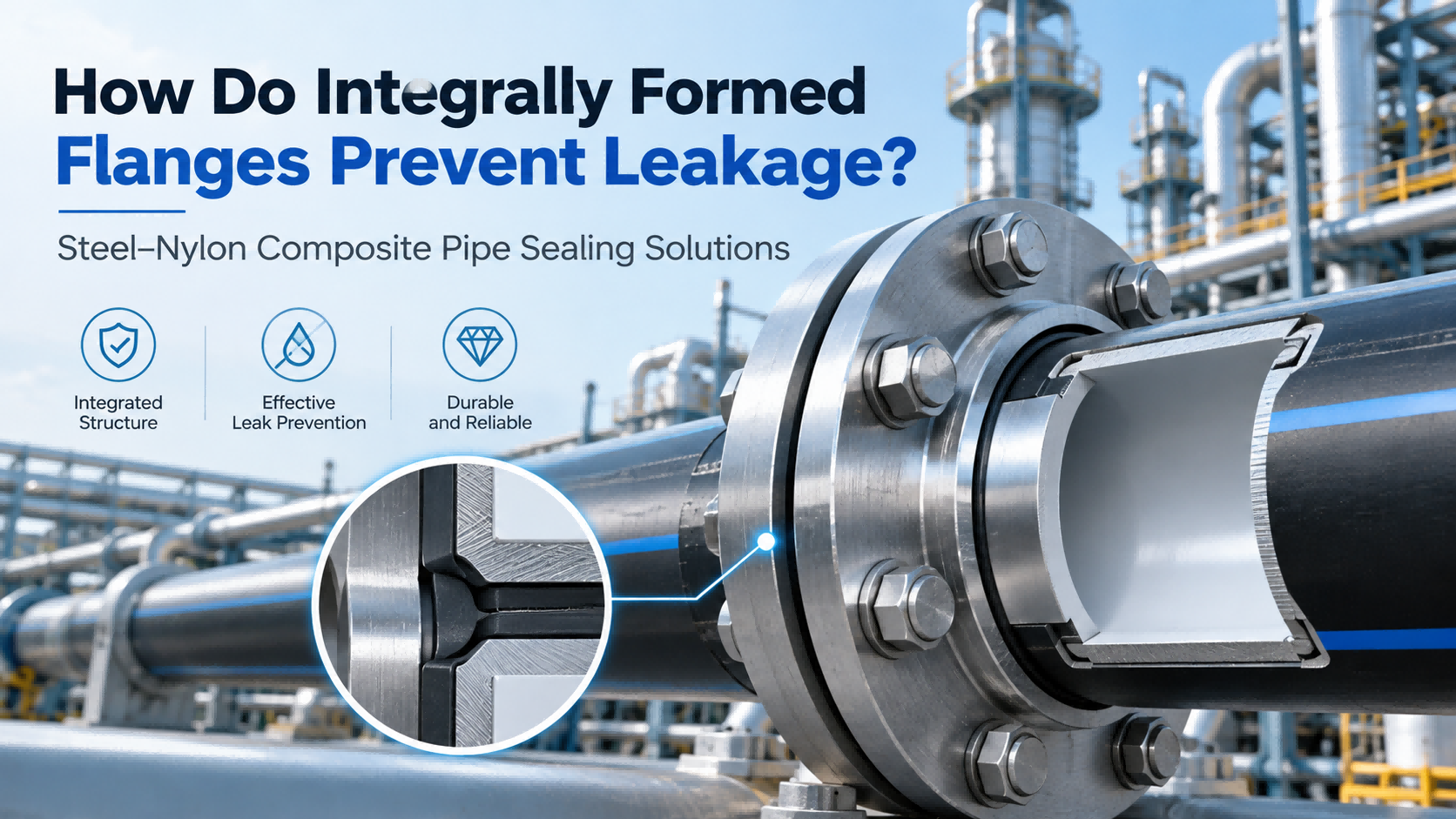
One distinguishing feature of our steel-nylon composite pipes is the specially designed mechanical interlocking groove within the steel flange structure.
During nylon formation, the material occupies the engineered groove geometry.
After solidification, the nylon and steel flange form a mechanical interlocking connection.
This construction provides additional restraint at the pipe ends and helps reduce the risk of lining displacement or separation.
Step 4: Casting and Forming the MC Nylon 6 Internal Lining
Unlike conventional thermoplastic pipes manufactured by melt extrusion, cast MC nylon can be produced using a monomer casting and polymerization process.
Under controlled conditions, nylon material forms within a specifically designed mold or confined geometry.
When this technology is applied to steel-nylon composite pipes, several manufacturing challenges must be addressed.
Lining Thickness Uniformity
The nylon lining must maintain an appropriate thickness distribution along the internal surface.
Localized thin sections may compromise the intended protective function.
Polymerization and Process Stability
Reaction conditions, temperature control, and material preparation influence the final properties of cast nylon.
The manufacturing process must provide sufficient control to achieve consistent material quality.
Shrinkage and Dimensional Stability
Nylon can undergo dimensional changes during forming and subsequent conditioning.
Mold design and process control must account for these characteristics.
Interface and End-Section Integrity
The nylon layer must cover the required internal working surface while maintaining appropriate integration with the flange-end protection and sealing structure.
For DN2000 products, these challenges become more difficult because of the significantly larger manufacturing dimensions.
Therefore, manufacturing capability is not determined solely by equipment size.
It also depends on the ability to control material formation and structural quality across the entire pipe.
Step 5: Manufacturing the Integrated Steel-Nylon Flange Connection
Flange connection technology is particularly important for ultra-large-diameter industrial pipelines.
DN2000 pipes typically require mechanical lifting equipment and precise positioning during installation.
Conventional field-welded connections may involve welding equipment, weld inspection, internal corrosion-protection repairs, and additional safety procedures.
Our steel-nylon composite pipe design combines a steel load-bearing flange with a nylon protective structure at the pipe end.
The steel flange provides the main mechanical support for the connection.
The nylon working layer extends toward the pipe-end sealing region and is mechanically restrained by the specially designed flange groove.
This arrangement combines the structural advantages of steel flanges with the protective function of nylon.
The objective is to reduce the risk of transported media reaching vulnerable steel surfaces at the pipe ends.
However, reliable sealing depends on the entire connection design.
Gasket compatibility, sealing surface geometry, bolt preload, installation accuracy, and operating conditions must all be considered.
For DN2000 flanges, bolt-hole arrangements, sealing dimensions, pressure classes, and mating components must be confirmed according to the applicable project standard or verified custom design.
Step 6: Dimensional Inspection and Quality Verification
Once composite forming is complete, the finished pipe must undergo appropriate dimensional, visual, and performance inspections.
Quality verification generally covers three critical areas.
Steel Structure
Inspection focuses on dimensional tolerances, weld quality, structural integrity, and external corrosion protection.
Nylon Lining
Inspection focuses on internal surface condition, lining thickness distribution, and identifiable manufacturing defects.
Flange Connection
Inspection focuses on flange dimensions, sealing surfaces, and the integrity of the nylon-to-steel end connection.
Depending on project specifications and applicable standards, additional verification may include hydrostatic pressure testing, connection leakage testing, or other performance evaluations.
For ultra-large-diameter composite pipes, quality assurance must be integrated throughout manufacturing rather than treated as a single final inspection.
4. A Critical Engineering Feature: Why Is the Steel Flange Interlocking Groove Important?
The pipe-end region is one of the most technically demanding sections of a large-diameter steel-nylon composite pipeline.
During operation, this region may be subjected to several interacting forces, including flange bolt preload, internal pressure, temperature changes, and mechanical movement.
Without adequate mechanical restraint, the internal lining may experience displacement or loosening under certain operating conditions.
Our steel-nylon composite pipe design incorporates a mechanical interlocking groove within the steel flange.
The principle is straightforward.
The steel flange contains an engineered recessed geometry.
During nylon formation, the material fills the relevant groove space and forms a mechanically restrained connection after solidification.
This structural feature provides several important benefits.
4.1 Improved Resistance to End-Section Displacement
The mechanical interlocking geometry helps restrain unwanted axial movement of the nylon layer near the pipe end.
This contributes to structural stability at one of the most critical locations in the composite pipeline.
4.2 Better Load Distribution Around the Sealing Region
The steel flange provides rigid structural support.
This allows connection loads to be transferred through an appropriately designed flange and sealing arrangement.
Meanwhile, the nylon layer primarily performs its fluid-isolation and surface-protection functions rather than acting as the sole structural connection component.
4.3 Better Management of Differential Material Movement
Steel and nylon respond differently to temperature changes.
A properly designed mechanical connection can help manage stresses and relative movement resulting from those differences.
Actual performance, however, must be evaluated through suitable engineering calculations and testing under relevant pressure and temperature conditions.
For DN2000 pipelines, flange-end engineering can be just as important as the manufacturing quality of the pipe body itself.
5. DN2000 Steel-Nylon Composite Pipes vs. Traditional Pipeline Materials
When selecting materials for ultra-large-diameter pipeline projects, engineers must compare more than initial purchase prices.
Important evaluation factors include structural strength, corrosion resistance, abrasion performance, installation requirements, maintenance, and total lifecycle cost.
The following table summarizes the general engineering characteristics of common industrial pipeline materials.
| Comparison Factor | Carbon Steel Pipe | HDPE Pipe | FRP Pipe | Steel-Nylon Composite Pipe |
|---|---|---|---|---|
| Primary load-bearing material | Steel | Polyethylene | Fiber-reinforced resin | Steel outer structure |
| Internal corrosion protection | Depends on coating and corrosion design | Polymer material | Depends on resin system | MC nylon lining |
| Abrasion resistance | May require protective lining | Depends on conditions | Depends on inner surface construction | Suitable for validated abrasive applications |
| Large-diameter structural rigidity | High | Requires appropriate structural design | Depends on laminate design | Primarily provided by steel |
| Typical connection methods | Welding or flanges | Fusion or mechanical joints | Flanges, couplings, or bonded joints | Factory-integrated flanges |
| Main design considerations | Corrosion and maintenance | Long-term deformation and pressure suitability | Laminate performance and joint integrity | Steel-nylon interface, temperature, and chemical compatibility |
From an engineering perspective, the major advantage of steel-nylon composite piping is its ability to combine a rigid steel support structure with a nonmetallic internal protective layer.
This makes it a potential solution for large-diameter transportation systems facing both mechanical and internal corrosion or wear challenges.
However, the best material choice always depends on the actual operating environment.
6. No Field Welding: Changing the Installation Approach for Large-Diameter Pipelines
Installing DN2000 pipelines is significantly more complicated than installing smaller-diameter piping systems.
Large sections often require heavy lifting equipment, precise positioning, specialized supports, and controlled joint assembly.
With conventional field-welded steel pipelines, installation may also involve:
-
Welding preparation.
-
On-site welding operations.
-
Weld inspection.
-
Repair of internal protective coatings.
-
Additional hot-work safety controls.
These activities can become particularly challenging in underground construction, coastal infrastructure, and operating industrial facilities.
Steel-nylon composite pipes equipped with factory-integrated flanges offer an alternative installation approach.
By completing key manufacturing and pipe-end protection operations under factory-controlled conditions, much of the specialized fabrication work can be completed before delivery.
During installation, construction teams primarily perform lifting, alignment, gasket placement, flange assembly, and controlled bolt tightening.
This can reduce the need for field welding and minimize certain internal lining repair activities.
Potential applications include:
-
Large industrial pipeline installations.
-
Coastal infrastructure projects.
-
Industrial facilities with restricted hot-work conditions.
-
Projects requiring modular pipeline assembly.
-
Pipeline construction with demanding installation schedules.
Nevertheless, proper flange installation remains essential.
Correct bolt preload, gasket selection, flange alignment, sealing surface preparation, and pipe support must be ensured.
The final connection must satisfy the project's inspection and acceptance requirements.
7. Where Can DN2000 Steel-Nylon Composite Pipes Be Used?
The engineering characteristics of steel-nylon composite pipes make them relevant to several major industrial sectors.
7.1 Large-Scale Seawater Transportation and Desalination Projects
Seawater contains chloride ions that can create significant corrosion challenges for conventional carbon steel pipelines.
A suitably evaluated nylon lining can reduce direct contact between seawater and the steel pressure-bearing structure.
Potential applications include seawater intake systems, industrial cooling water pipelines, and selected desalination-related piping networks.
For these projects, long-term chemical compatibility, operating temperature, pressure, and connection reliability must be confirmed.
7.2 Mining Slurry and Tailings Transportation
Mining slurry and tailings frequently contain solid particles that contribute to pipeline abrasion.
Wear behavior depends on particle size, solids concentration, flow velocity, impact conditions, and pipe geometry.
MC nylon provides a nonmetallic working surface with useful wear-related properties.
Combined with the strength of an outer steel structure, this creates a potential solution for slurry transportation systems.
Material selection should be supported by abrasion testing and application-specific evaluation.
7.3 Chemical Processing and Salt Chemical Industries
Some industrial chemical processes involve saline solutions, process liquors, alkaline media, and other liquids that can cause corrosion of conventional metallic pipelines.
A compatible nylon lining can function as a protective barrier between the transported medium and the steel structure.
However, chemical compatibility must be evaluated carefully, particularly where operating temperature, concentration, and process composition vary.
7.4 Industrial Water Circulation and Municipal Infrastructure
Large industrial cooling water networks and municipal transmission systems often require stable, high-volume fluid transportation.
These projects must consider not only initial structural requirements but also long-term corrosion, sediment accumulation, maintenance, and operational interruption risks.
Steel-nylon composite pipes may be considered among the available material options where their properties match the project requirements.
For drinking water applications, the materials and finished products must also satisfy relevant potable-water contact and hygiene requirements.
8. Understanding the Technical Specifications of DN2000 Composite Pipes
Our steel-nylon composite straight pipe product range covers nominal diameters from DN100 to DN2000.
Specific configurations can be evaluated according to individual project requirements.
The published product-series parameters include the following:
| Technical Parameter | Published Product Information |
|---|---|
| Product type | Steel-nylon composite straight pipe |
| Nominal diameter range | DN100–DN2000 |
| Nominal pressure range | 0.25–2.5 MPa |
| Primary load-bearing structure | Steel outer pipe |
| Internal lining material | Cast MC nylon |
| Connection method | Integrated flange connection |
| Available pipe length | Up to 6,000 mm, subject to manufacturing confirmation |
| Published temperature range | -36°C to +160°C, subject to application-specific verification |
Important engineering note: The maximum nominal diameter, maximum pressure, and maximum published temperature are product-series parameters. They do not imply that DN2000 pipes can operate at all these limits simultaneously.
The permissible operating pressure, lining design, temperature limits, and flange configuration for a specific DN2000 installation must be confirmed through project-specific engineering evaluation.
For industrial buyers, application-based selection is more reliable than choosing pipe products solely according to maximum advertised specifications.
9. How Can Buyers Evaluate a DN2000 Composite Pipe Manufacturer?
Selecting an ultra-large-diameter pipeline manufacturer requires more than reviewing product brochures.
For EPC contractors, engineering consultants, and industrial project owners, manufacturing capability must be supported by appropriate technical documentation and verifiable quality procedures.
9.1 Review Structural Design Documentation
Manufacturers should be able to provide clear product drawings indicating:
-
Steel pipe dimensions.
-
Steel wall thickness.
-
Internal nylon lining thickness.
-
Flange configuration.
-
Sealing surface design.
-
Relevant dimensional tolerances.
9.2 Evaluate Large-Diameter Manufacturing Capability
Manufacturing capability should be assessed through equipment suitability, fabrication procedures, dimensional control methods, and inspection arrangements.
For DN2000 products, buyers should pay particular attention to pipe roundness, structural stability, and lining formation accuracy.
9.3 Examine Steel-Nylon Interface Engineering
The long-term behavior of the steel-nylon interface is a critical design consideration.
Depending on service conditions, buyers may request technical evidence relating to:
-
Mechanical interlocking structures.
-
Temperature cycling.
-
Pressure cycling.
-
Vacuum resistance.
-
Lining stability.
9.4 Verify Quality Records and Material Traceability
Relevant manufacturing and inspection records may include material documentation, dimensional reports, weld examination results, and pressure or leakage test reports.
The exact documentation requirements should be agreed upon before production.
9.5 Assess Technical Support Capabilities
A reliable manufacturer should understand the customer's operating conditions and provide technically justified product recommendations.
This includes reviewing fluid chemistry, pressure, temperature, hydraulic conditions, installation requirements, and other relevant factors.
A capable DN2000 composite pipe manufacturer should provide more than a large pipe. It should deliver a technically justified pipeline solution supported by appropriate manufacturing and quality evidence.
10. Why the True Cost of DN2000 Pipelines Goes Beyond Purchase Price
DN2000 pipelines are commonly associated with large industrial infrastructure systems.
For these projects, a single pipeline failure may result in costs far exceeding the price of repairing or replacing the damaged pipe section.
Potential consequences include:
-
Interruption of mining slurry transportation.
-
Reduced industrial cooling water availability.
-
Production losses in chemical facilities.
-
Unplanned equipment shutdowns.
-
Additional maintenance and emergency repair expenses.
For this reason, industrial pipeline procurement is increasingly evaluated from a total cost of ownership perspective.
Total Cost of Ownership (TCO) includes more than the initial pipe purchase price.
It can also include:
-
Transportation and handling.
-
Lifting and installation.
-
Corrosion protection.
-
Inspection and maintenance.
-
Repair and replacement.
-
Operational downtime.
-
End-of-service activities.
Steel-nylon composite pipes are designed to address certain corrosion, abrasion, and installation-related risks through their combined material structure.
The steel outer shell provides structural support, the nylon lining performs protective functions, and factory-integrated flanges simplify selected installation activities.
However, actual lifecycle savings must be evaluated using project-specific data.
A meaningful comparison should consider the same nominal diameter, pressure rating, operating conditions, and intended design life.
For ultra-large-diameter infrastructure, the lowest initial pipe price does not necessarily represent the lowest long-term project cost.
11. Why Choose Our Steel-Nylon Composite Pipe Solutions?
We specialize in the development and manufacturing of industrial nylon pipes and steel-nylon composite pipeline systems.
For large-diameter industrial applications, our approach focuses on the performance of the entire pipeline structure rather than relying on a single material property.
Several engineering characteristics distinguish our product concept.
Steel Strength Combined with MC Nylon Protection
Our composite structure combines the mechanical load-bearing properties of steel with the protective functions of cast MC Nylon 6.
This allows the steel and nylon components to perform complementary roles within the pipeline system.
Structural Design for Large-Diameter Applications
Ultra-large-diameter manufacturing requires attention to pipe geometry, lining formation, structural integrity, and installation conditions.
Our product development approach recognizes these requirements as essential aspects of large-diameter composite pipeline engineering.
Mechanical Interlocking Flange Technology
The specially designed steel flange groove provides mechanical restraint for the nylon layer in the pipe-end region.
This design helps improve structural stability at an important connection interface.
Factory-Integrated Flange Connections
Preconfigured flange connections can reduce field-welding requirements and certain associated internal corrosion-protection repair operations.
This is particularly relevant to projects involving complex installation conditions.
Application-Specific Engineering Support
We recognize that successful pipeline selection depends on more than nominal size.
Our technical approach considers transported media, operating pressure, temperature, flow characteristics, and installation requirements.
Through these combined capabilities, we aim to provide suitable composite piping solutions for chemical processing, mining, energy, seawater transportation, and industrial water treatment projects.
12. The Future of Ultra-Large-Diameter Industrial Pipe Manufacturing
The future of large-diameter pipe manufacturing will not be determined solely by increasing pipe size.
As industrial projects demand higher reliability and better lifecycle economics, manufacturers will need to focus on several important areas.
Advanced Composite Material Structures
Combining different materials according to their functional strengths will remain an important approach to pipeline design.
Steel-nylon composite pipes demonstrate how structural strength and internal surface protection can be integrated within one piping system.
Greater Factory Prefabrication
Factory-controlled manufacturing allows more fabrication, inspection, and connection preparation to be completed before delivery.
This may reduce certain construction risks and support more efficient installation.
Improved Manufacturing Quality Control
Dimensional accuracy, material formation consistency, interface integrity, and traceable inspection documentation will become increasingly important.
More Application-Specific Engineering
Future industrial projects will require pipeline systems designed around actual operating conditions rather than generalized product specifications.
Chemical compatibility, hydraulic performance, thermal behavior, and installation constraints will remain central engineering considerations.
Greater Emphasis on Verified Long-Term Performance
Ultimately, manufacturers will increasingly be evaluated not only on whether they can produce DN2000 pipes, but also on whether their products demonstrate suitable performance under relevant service conditions.
The future competitive advantage of ultra-large-diameter composite pipes will depend on manufacturing quality, structural engineering, and verified operational reliability.
Conclusion: DN2000 Manufacturing Is About More Than Pipe Diameter
Manufacturing a DN2000 ultra-large-diameter pipeline represents far more than achieving a larger physical dimension.
It requires integrated expertise in structural engineering, materials technology, nylon casting, interface design, flange sealing, dimensional control, and manufacturing quality assurance.
Steel-nylon composite pipe technology combines the pressure-bearing capability of steel with the protective functions of MC nylon.
Through properly engineered composite structures and mechanical interlocking flange connections, this technology offers another potential solution for demanding industrial fluid transportation systems.
For industrial buyers, however, the most important consideration is not the nominal pipe diameter itself.
It is whether the selected pipe can perform reliably under the project's specified pressure, temperature, fluid composition, and installation conditions.
We believe the future of ultra-large-diameter industrial pipelines will be defined by the combination of manufacturing capability, intelligent structural design, and proven long-term engineering performance.
Looking for a DN2000 Large-Diameter Industrial Pipe Manufacturer?
Are you planning a project involving DN1200, DN1600, or DN2000 large-diameter pipelines?
Do you need to address corrosion, abrasion, or complex installation challenges in an industrial fluid transportation system?
Our technical team can help evaluate the suitability of steel-nylon composite pipes for your application.
To discuss your project, please provide the transported medium, operating temperature, pressure requirements, nominal pipe diameter, required pipe length, and relevant engineering drawings.
We can then review the technical requirements and discuss an appropriate composite piping configuration.
Explore Our Steel-Nylon Composite Pipe Solutions:
Steel-Nylon Composite Straight Pipe – Product Details
Website: //www.nylonpipeline.com
Industrial Nylon Pipe & Steel-Nylon Composite Pipeline Manufacturer
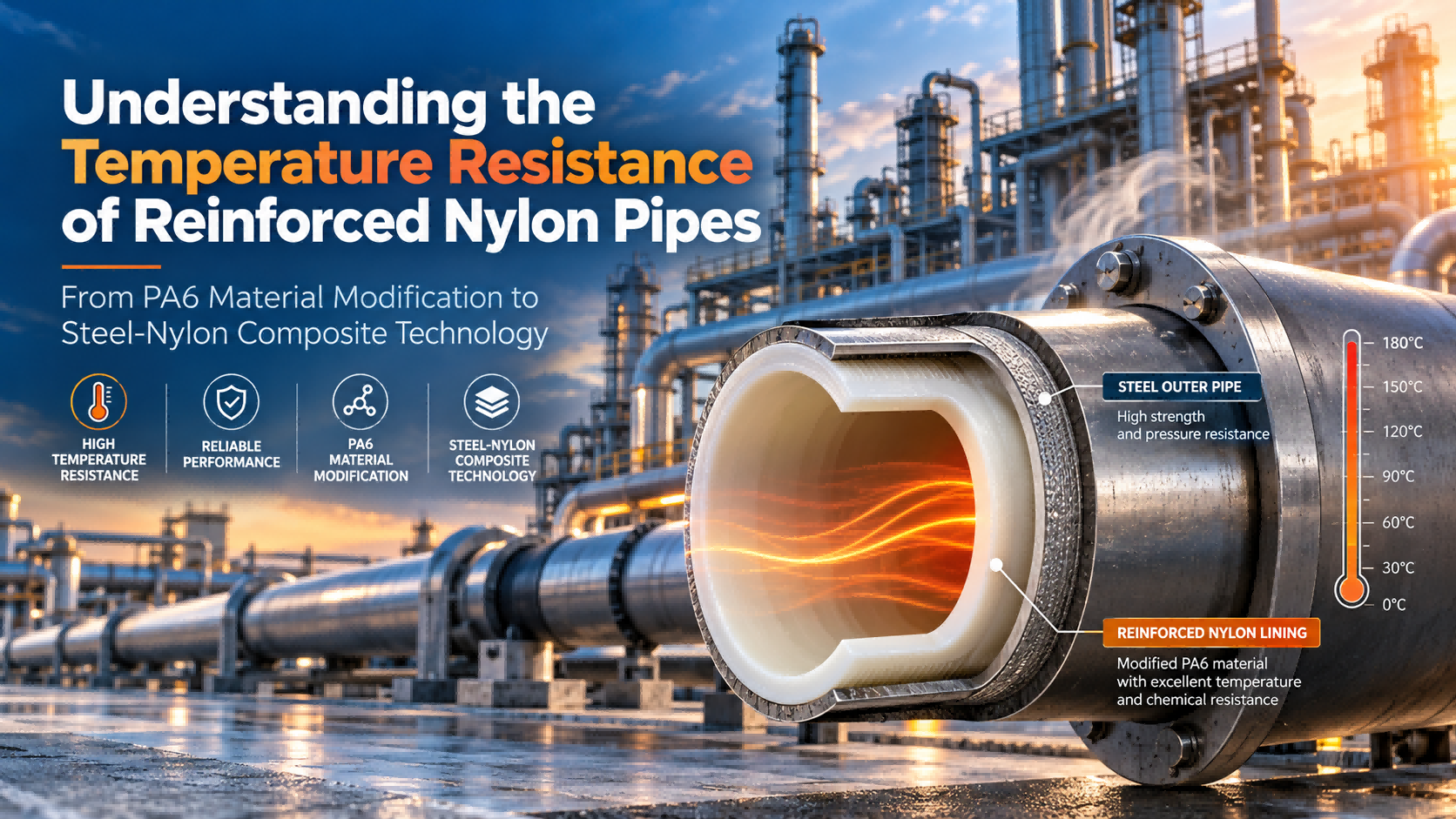
Reinforced Nylon Pipe Temperature Resistance: PA6 Pipe Guide
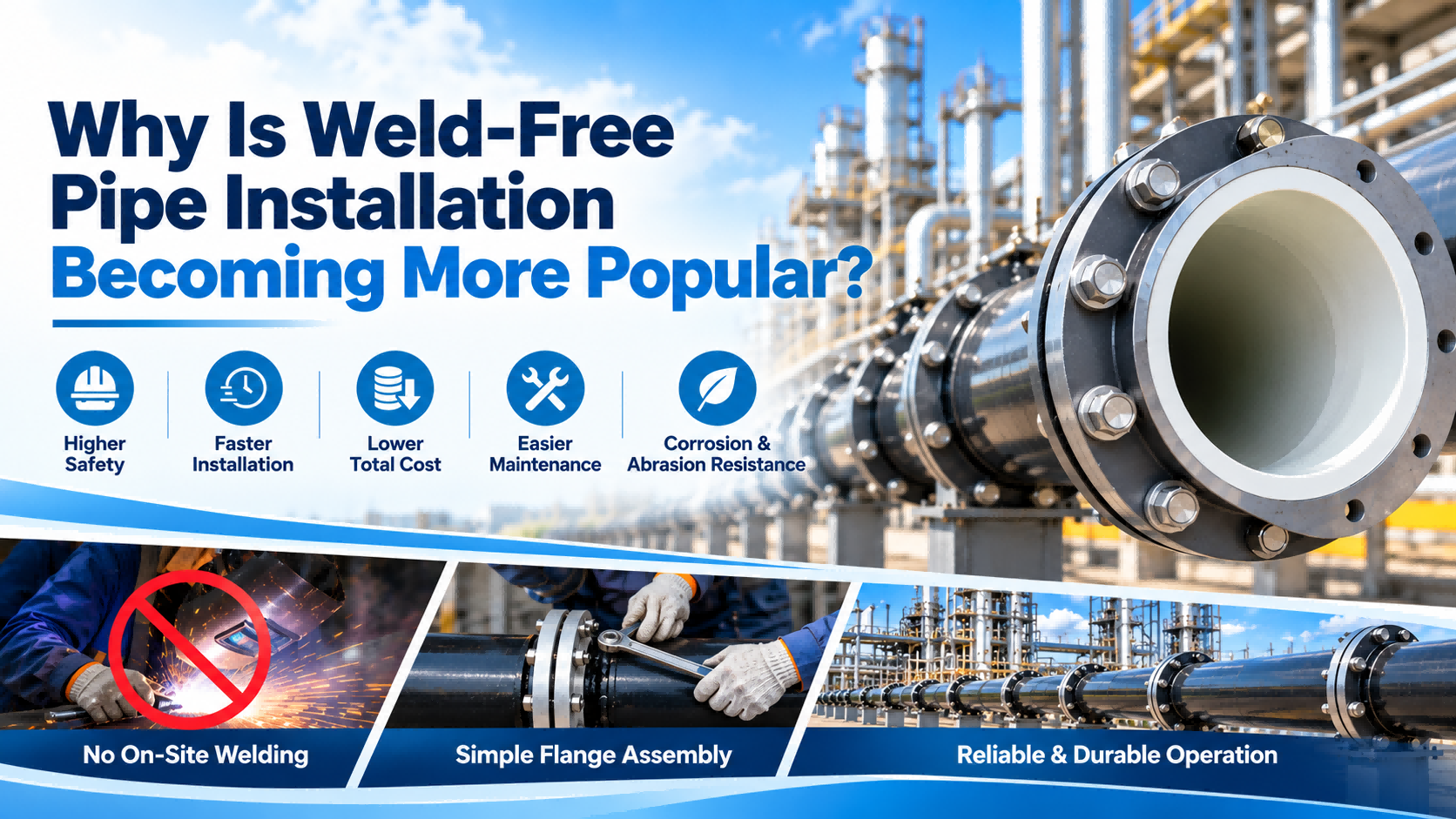
Weld-Free Pipe Installation | Steel-Nylon Composite Pipes