Industrial Pipes with Integrated Flanges: 8 Major Advantages

What Are the Advantages of Industrial Pipes with Integrated Flanges? A Complete Guide to Installation Efficiency and Long-Term Cost Savings
Introduction: Why Is the Pipe Connection Method Becoming Increasingly Important?
In industrial piping projects, engineers and procurement professionals typically focus on pipe materials, operating pressure, corrosion resistance, abrasion resistance, and service life.
However, one important factor is often overlooked: the pipe connection method can significantly affect installation schedules, construction costs, operational reliability, and long-term maintenance expenses.
Traditional industrial piping systems commonly rely on field welding, mechanical joints, or separately installed flange assemblies. Although these technologies are well established, they may present practical challenges in complex industrial environments.
Common challenges include:
-
Field welding requires qualified technicians and specialized equipment.
-
Hot work activities are strictly controlled in chemical plants, oilfields, and other hazardous industrial environments.
-
Welded connections may require additional inspection, corrosion protection, and quality control.
-
Large-diameter pipeline installation can involve complicated alignment and assembly procedures.
-
Pipeline maintenance may require cutting, rewelding, or replacing relatively long pipe sections.
-
Corrosion, sealing failures, and maintenance problems at pipe connections can result in unexpected downtime.
As industrial projects increasingly emphasize construction efficiency and total cost of ownership, industrial pipes with factory-integrated flanges are attracting greater attention.
In particular, steel-nylon composite pipes with integrated flanges combine the structural strength of steel, the corrosion and abrasion resistance of nylon, and the installation convenience of flanged connections.
This integrated design offers an attractive piping solution for industrial fluid transportation systems where mechanical strength, corrosion protection, installation efficiency, and maintainability are important considerations.
1. What Are Industrial Pipes with Integrated Flanges?
Industrial pipes with integrated flanges are pipes manufactured with flange connection structures already incorporated into their ends.
Instead of welding flanges onto pipes at the installation site, the flange connections are prepared during the manufacturing process.
Adjacent pipe sections can then be assembled using compatible flanges, gaskets, bolts, and nuts.
For steel-nylon composite pipes, the integrated structure generally consists of three major functional components.
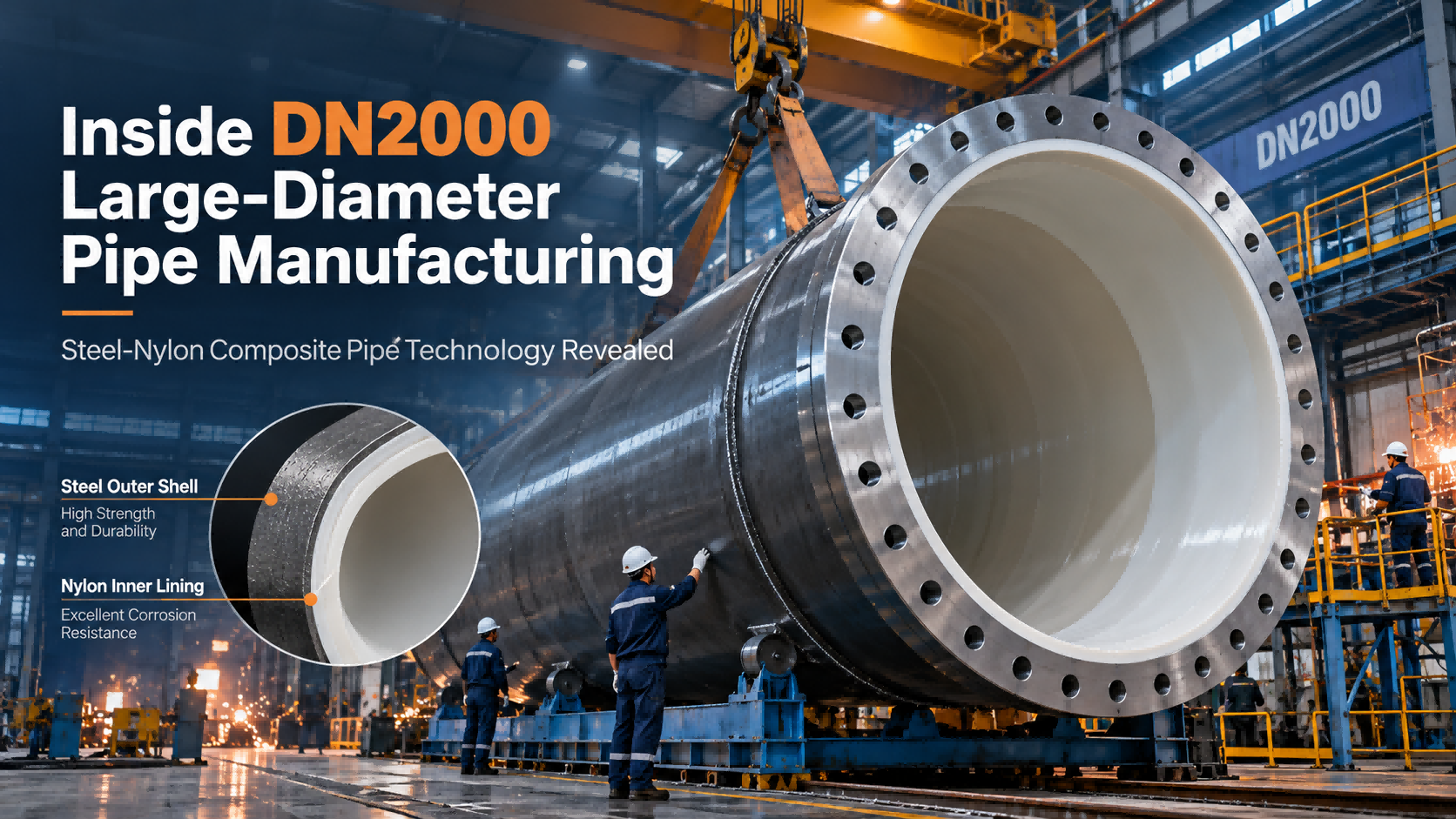
1.1 External Steel Structure: Mechanical Strength and Pressure Resistance
The steel structure provides the primary mechanical support required to withstand internal pressure, external loads, and installation-related stresses.
A properly engineered steel structure helps the pipeline maintain:
-
Mechanical strength
-
Pressure resistance
-
Structural stability
-
Rigidity
-
Resistance to external loading
These characteristics are particularly important for large-diameter pipelines, elevated piping systems, and industrial installations where structural performance is a critical design consideration.
1.2 Internal Nylon Lining: Corrosion and Abrasion Protection
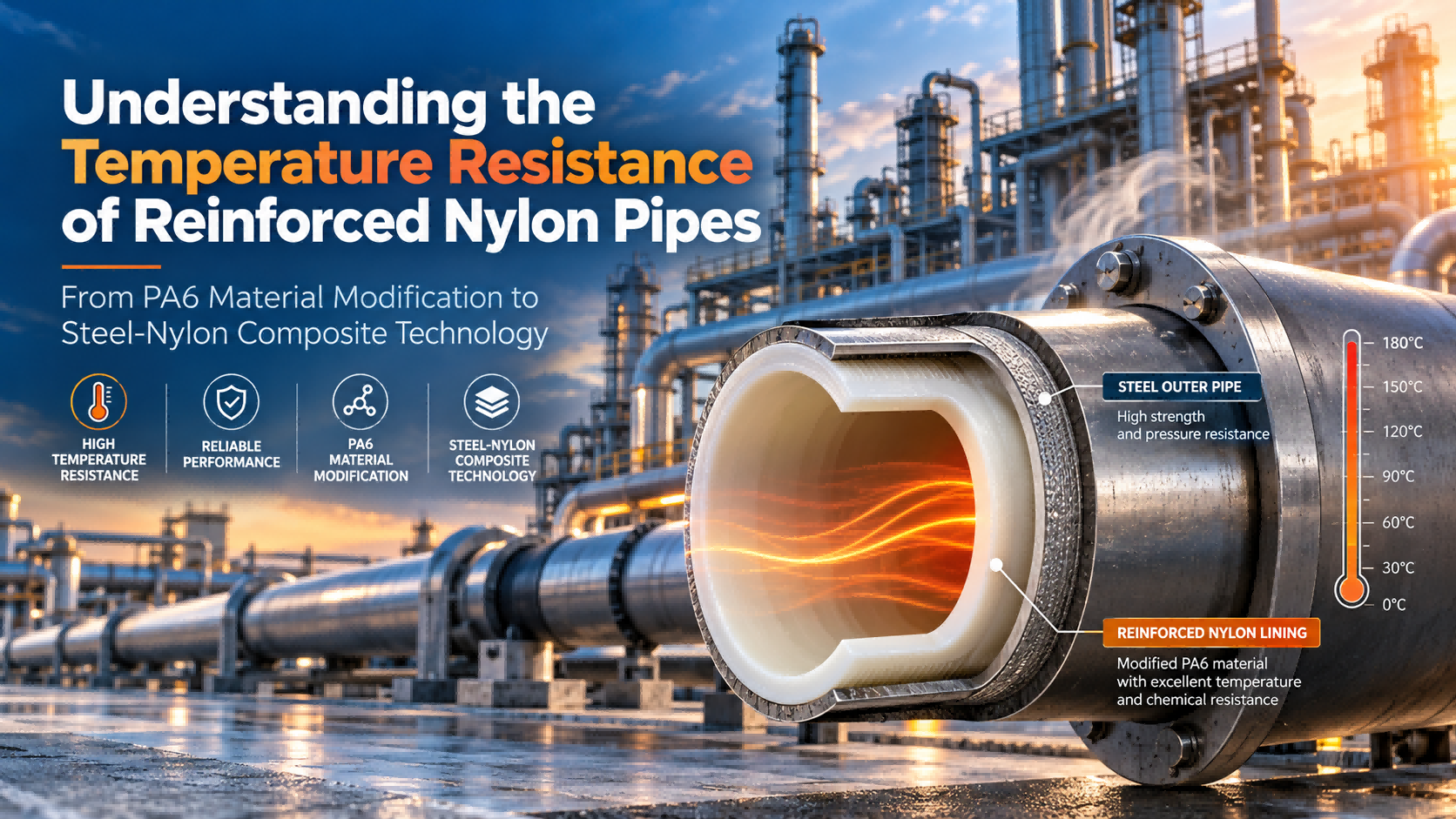
Steel-nylon composite pipes incorporate an internal functional layer primarily made from Nylon 6 (PA6).
When appropriately formulated, manufactured, and validated for the intended operating conditions, the nylon lining can provide several advantages:
-
Reduced direct contact between transported fluids and the internal steel surface
-
Improved corrosion protection against compatible industrial media
-
Enhanced abrasion resistance in certain particle-containing fluid applications
-
A relatively smooth internal surface
-
Reduced risks of certain forms of corrosion, wear, and material accumulation
However, the performance of Nylon 6 depends on the chemical composition of the transported medium, temperature, pressure, moisture absorption, exposure duration, and other operating conditions.
Material compatibility must therefore be evaluated for each application.
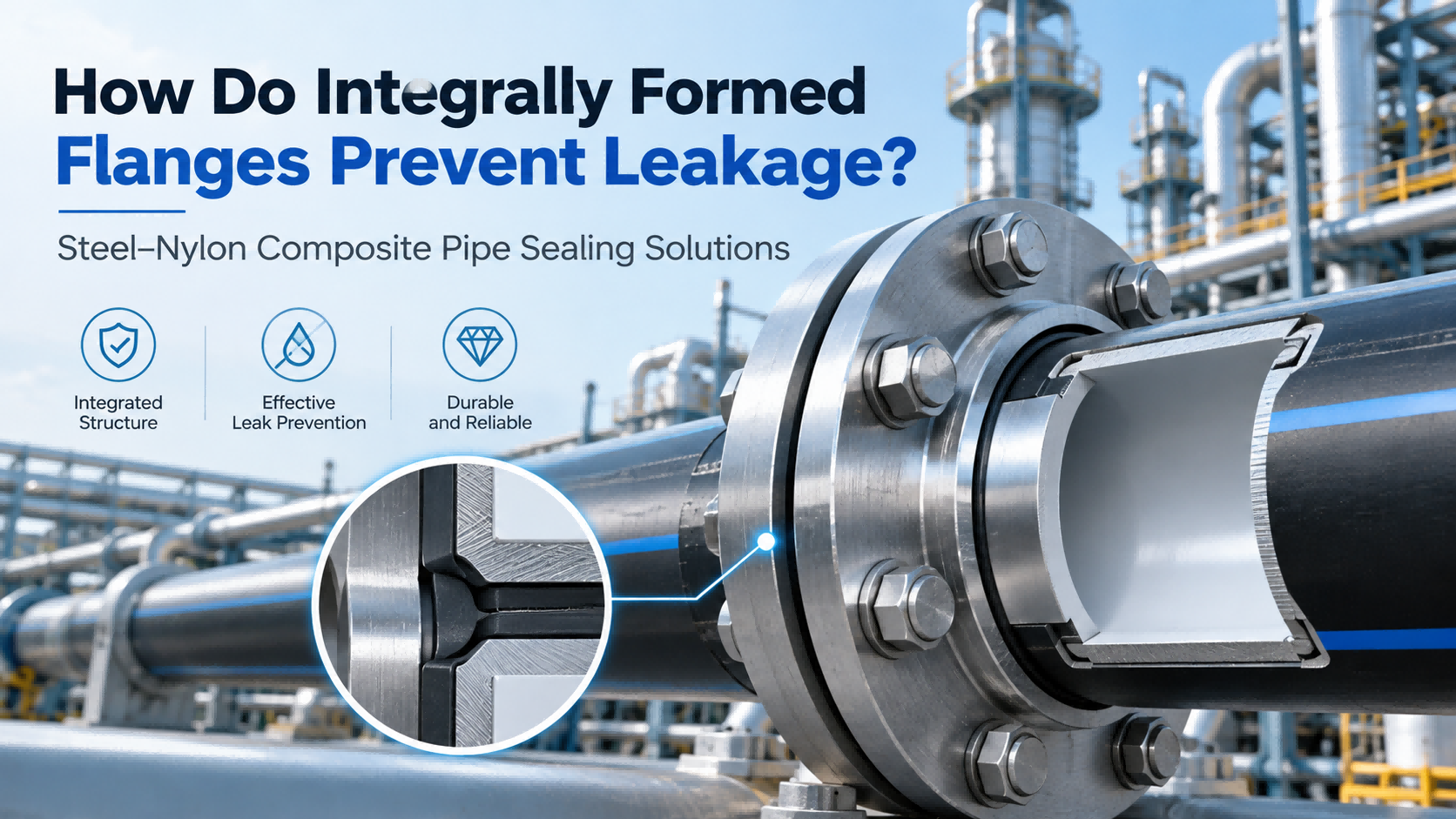
1.3 Integrated Flange Connections: Simplified On-Site Assembly
Steel-nylon composite pipes can be manufactured with integrated flange structures designed to match project specifications.
During installation, pipe sections are connected using compatible flange assemblies and sealing components.
This approach transfers a significant portion of connection manufacturing and dimensional control from the construction site to the factory.
The key advantage is not simply eliminating certain field fabrication steps.
It is the ability to design the steel pipe structure, nylon lining, and flange connection as an integrated piping system.
For corrosive applications, the transition between the nylon lining and the flange sealing surface requires particular attention.
A properly engineered connection should minimize the possibility of transported media reaching vulnerable metallic surfaces or entering unintended interfaces.
2. Eight Major Advantages of Industrial Pipes with Integrated Flanges
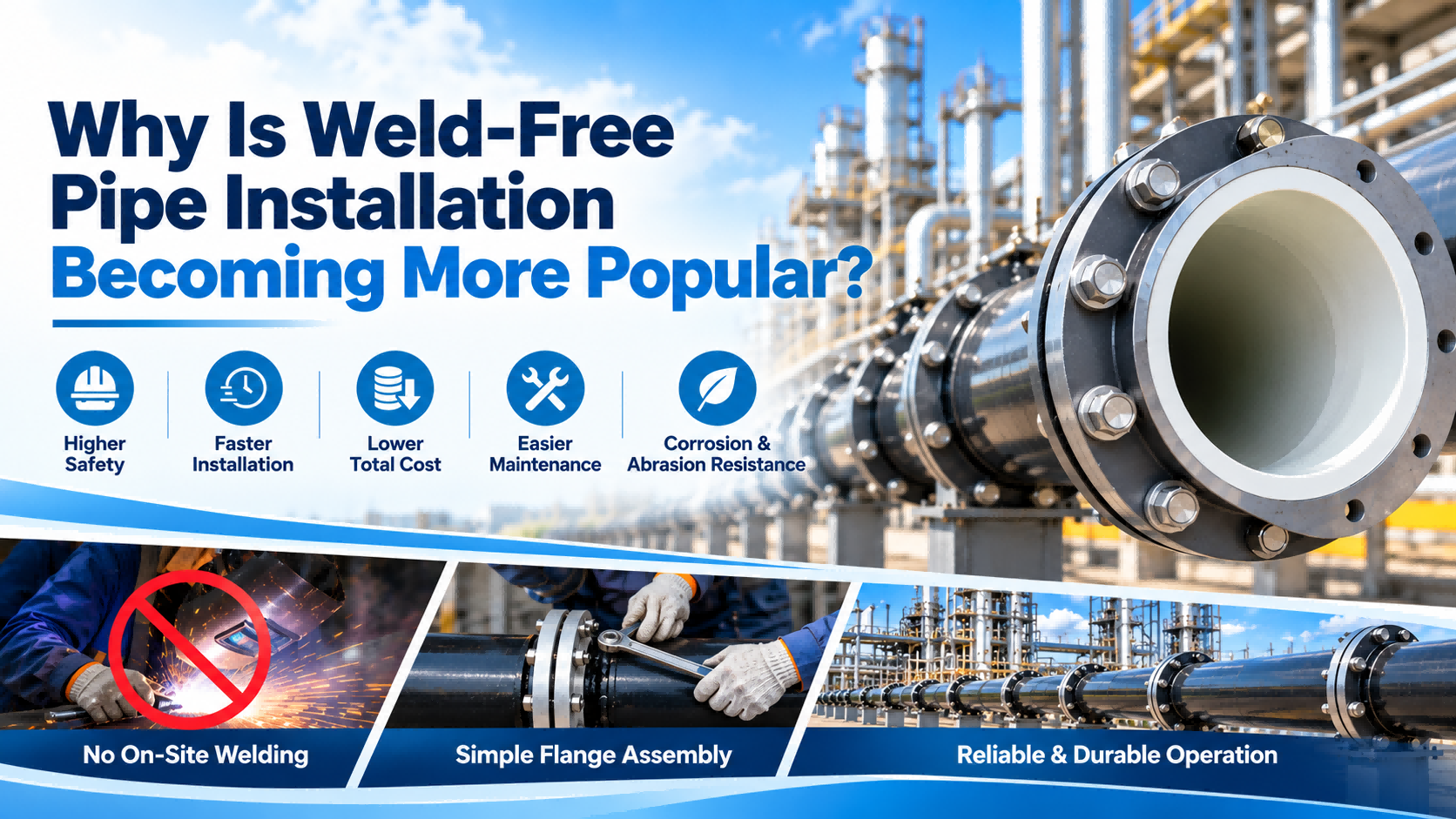
Advantage 1: Reduced Field Welding and Faster Pipeline Installation
Traditional carbon steel pipeline installation often involves several operations:
-
Pipe cutting
-
End preparation and beveling
-
Pipe alignment
-
Field welding
-
Weld inspection
-
Localized corrosion protection
-
Final installation verification
For large industrial projects, these activities can require considerable labor, equipment, and construction time.
Factory-prefabricated pipes with integrated flanges can simplify this process.
Instead of welding every applicable connection on-site, workers can assemble prefabricated pipe sections using bolted flange connections.
Reduced On-Site Fabrication
Factory-prepared flange connections minimize the need for installing separate flanges at the construction site.
Lower Dependence on Specialized Welding Labor
Construction teams can focus more on positioning, alignment, gasket installation, bolt tightening, and final inspection.
Improved Installation Planning
Factory-controlled fabrication makes it easier to organize production, delivery, and installation schedules.
Reduced Risk of Damage to Protective Linings
For composite pipes with polymer linings, minimizing field welding can also help avoid potential heat damage to the internal protective layer.
It is important to recognize that integrated flange connections do not necessarily eliminate all welding activities from an industrial project.
Supporting structures, special connections, and other site facilities may still require welding.
Nevertheless, reducing the number of field-welded pipe joints can provide meaningful installation advantages.
Advantage 2: Fewer Hot Work Operations in Hazardous Industrial Environments
In oil and gas facilities, petrochemical plants, chemical processing units, and certain mining operations, hot work is subject to strict safety procedures.
Conventional field welding may require:
-
Hot work permits
-
Gas detection and atmospheric monitoring
-
Fire prevention measures
-
Isolation of nearby equipment
-
Dedicated safety supervision
-
Post-welding inspection
Factory-integrated flange connections can reduce the need for hot work at applicable pipeline joints.
This is especially valuable for:
-
Existing plant modifications
-
Pipeline replacement projects
-
Industrial facility expansions
-
Maintenance shutdowns
-
Restricted construction areas
For example, consider a chemical processing plant replacing a corroded pipe section.
If the replacement pipe is manufactured with matching flange dimensions and installation length, the old section can be removed and the new prefabricated section installed after completing the necessary isolation, depressurization, drainage, and safety procedures.
Compared with a solution requiring extensive cutting and rewelding, this approach may simplify construction and reduce the number of high-risk operations.
The benefit extends beyond installation speed.
Reducing selected hot work activities can improve construction planning, safety management, and operational flexibility.
Advantage 3: Better Manufacturing Consistency and Connection Quality Control
The long-term reliability of a pipeline depends not only on the pipe material but also on the quality of its connections.
For flanged piping systems, sealing performance is influenced by several factors:
-
Flange dimensional accuracy
-
Bolt-hole positioning
-
Flange-face flatness
-
Parallel alignment of mating flanges
-
Gasket material and design
-
Bolt preload
-
Tightening sequence
-
External loading
-
Temperature fluctuations
When flanges are incorporated during factory manufacturing, the supplier can inspect important connection dimensions under controlled production conditions.
This can improve manufacturing consistency and reduce dimensional variations associated with certain forms of field fabrication.
However, integrated flanges do not automatically guarantee leak-free operation.
Reliable sealing still requires proper flange design, appropriate gasket selection, controlled bolt tightening, accurate installation, and compatibility with operating conditions.
For pressure piping systems, relevant flange standards and bolted-joint assembly guidelines, including ASME PCC-1 where applicable, should be considered.
Advantage 4: Improved Protection of Composite Pipe End Connections
One of the most important engineering challenges in composite piping systems is protecting the pipe ends.
A corrosion-resistant internal lining does not automatically ensure that every connection surface is adequately protected.
If corrosive fluids reach exposed steel at a pipe end or flange connection, localized corrosion and other forms of deterioration may occur.
For steel-nylon composite pipes, connection engineering should address several critical questions:
-
How does the nylon lining transition into the flange connection?
-
Does the sealing surface require additional protection?
-
Does the gasket adequately isolate vulnerable metallic surfaces?
-
How do thermal expansion and pressure cycling affect the connection?
-
How can fluid penetration into unintended interfaces be prevented?
A properly designed integrated flange system allows these issues to be considered during manufacturing rather than left entirely to field installation.
This is an important advantage when evaluating steel-nylon composite pipes for corrosive industrial environments.
A reliable corrosion-resistant piping system must protect not only the pipe body but also its fittings, end connections, and sealing interfaces.
Advantage 5: Combining Steel Strength with Nylon Corrosion and Abrasion Resistance
No single pipe material is ideal for every industrial operating condition.
Carbon steel provides strong mechanical performance but may require additional protection in corrosive environments.
Polymer pipes can offer excellent corrosion resistance in compatible media, but their pressure, temperature, stiffness, and structural limitations must be considered.
Steel-nylon composite pipes use a different engineering approach.
They combine materials with complementary functions:
Steel Structure
Provides the primary mechanical support and pressure-containing framework.
Nylon 6 Functional Layer
Provides an internal barrier between the transported medium and the steel structure, with corrosion and abrasion resistance characteristics that depend on the operating environment.
Integrated Flange Connections
Provide mechanical connections that support prefabrication, assembly, inspection, and maintenance.
This combination can be particularly useful in the following applications.
Large-Diameter Industrial Pipelines
The steel structure helps provide the rigidity and load-bearing capacity required for many large-diameter applications.
Corrosive Industrial Water Systems
A compatible nylon lining can reduce direct exposure of the internal steel surface to transported fluids.
Particle-Containing Fluid Transportation
A properly selected nylon lining may improve abrasion performance under certain operating conditions.
Actual wear resistance must be evaluated according to particle hardness, concentration, velocity, and impact angle.
Long-Distance Pressure Pipelines
Steel-nylon composite pipes can be assessed as part of an integrated design that considers pressure resistance, hydraulic performance, corrosion protection, and field connections.
The primary value of composite piping is not simply the combination of two materials.
It is the ability to assign different engineering functions to materials selected for their respective strengths.
Advantage 6: Easier Maintenance, Disassembly, and Section Replacement
Industrial pipelines frequently require inspection, maintenance, and modification during their operating life.
Typical activities may include:
-
Routine inspection
-
Replacement of worn elbows
-
Pump or valve replacement
-
Installation of additional instruments
-
Process modifications
-
Replacement of locally corroded sections
-
Pipeline rerouting
For continuously welded piping systems, replacing a damaged section can require cutting, welding, and additional inspection.
By contrast, properly designed flanged pipe sections can generally be separated at their mechanical joints.
This allows maintenance teams to replace individual components without necessarily removing longer sections of the pipeline.
The advantage can be particularly useful in areas where wear or maintenance demands are concentrated, such as:
-
Pipeline elbows
-
Pump discharge lines
-
High-velocity sections
-
Equipment connection points
-
Frequently serviced process areas
Flanged connections also make it easier to incorporate maintenance accessibility into the original pipeline design.
However, all maintenance work must follow appropriate isolation, depressurization, drainage, support, and safety procedures.
The long-term benefit of a detachable connection is its potential to reduce the complexity of selected maintenance operations.
Advantage 7: Greater Compatibility with Prefabrication and Modular Construction
Industrial engineering projects increasingly use factory prefabrication to reduce on-site construction activities.
For EPC contractors, prefabrication can help transfer manufacturing, dimensional inspection, and certain assembly operations into controlled production environments.
Steel-nylon composite pipes with integrated flanges are well suited to this approach.
Depending on project requirements, manufacturers can prepare piping components such as:
-
Straight pipe sections
-
Elbows
-
Tees
-
Reducers
-
Specially designed pipe fittings
-
Matching flanged connections
Several advantages can result from this approach.
Modular Supply
Pipeline components can be manufactured and delivered according to installation zones, modules, or construction stages.
Simplified Mechanical Assembly
Flanged connections support the assembly of prefabricated piping sections and equipment interfaces.
Improved Quality Traceability
Materials, manufacturing dimensions, inspection results, and identification numbers can be documented for individual pipe sections.
Greater Flexibility for Retrofit Projects
Where connection dimensions and operating requirements match, prefabricated pipe sections may be integrated into existing piping systems.
For international engineering projects, factory prefabrication may also reduce dependence on certain specialized construction resources at the destination site.
However, transportation length, packaging, lifting requirements, installation tolerances, and available site space must be considered during the design stage.
The optimal level of prefabrication depends on the project rather than simply maximizing the number of factory-completed components.
Advantage 8: Potentially Lower Total Cost of Ownership
Industrial pipeline procurement is increasingly focused on more than the initial purchase price.
A broader evaluation considers the Total Cost of Ownership (TCO) over the expected operating life of the system.
A simplified TCO model can be expressed as:
TCO = Material and Component Costs + Installation Costs + Inspection Costs + Maintenance Costs + Downtime Costs + Replacement and Disposal Costs
Steel-nylon composite pipes with integrated flanges may offer economic advantages through several mechanisms.
Reduced Installation Costs
Factory-prepared flange connections may reduce selected welding, fabrication, and inspection activities.
Lower Maintenance Requirements
A properly selected nylon lining may reduce corrosion-related or abrasion-related maintenance under suitable operating conditions.
Simplified Component Replacement
Detachable flange connections can reduce the complexity of certain repair and replacement operations.
Reduced Downtime Exposure
Where maintenance work can be completed more efficiently, the system may experience shorter planned maintenance interruptions.
Improved Lifecycle Economics
Potential savings in installation, maintenance, and replacement can help offset differences in initial material costs.
Consider a simplified example.
An industrial facility plans to install a pipeline with an expected operating period of 20 years.
The project team is comparing conventional welded carbon steel piping with steel-nylon composite pipes featuring integrated flanges.
A meaningful comparison should include:
-
Initial pipe and fitting costs
-
Installation labor
-
Welding and inspection requirements
-
Expected maintenance frequency
-
Replacement component costs
-
Planned and unplanned downtime
-
End-of-life replacement and disposal
If the composite piping system reduces maintenance frequency or maintenance duration under verified operating conditions, it may deliver a lower lifecycle cost even when the initial purchase price is higher.
However, actual savings must be demonstrated through project-specific data and realistic cost assumptions.
3. Integrated Flange Steel-Nylon Composite Pipes vs. Traditional Industrial Piping
Different pipe materials and connection methods have their own advantages and limitations.
The following table provides a general engineering comparison.
| Comparison Factor | Welded Carbon Steel Pipes | Conventional Plastic Pipes | Steel-Nylon Composite Pipes with Integrated Flanges |
|---|---|---|---|
| Primary structure | Metallic | Polymeric | Steel structure with nylon lining |
| Typical connections | Welding | Fusion, socket, or mechanical joints | Factory-prepared flanged joints |
| Field hot work | Often required at welded joints | Generally avoids steel pipe welding | Can reduce field welding at pipe joints |
| Structural rigidity | Generally high | Depends on material and design | Primarily provided by steel |
| Internal corrosion resistance | Depends on medium and protective system | Depends on polymer compatibility | Depends on nylon compatibility and end protection |
| Maintenance disassembly | Welded sections can be difficult to remove | Depends on connection method | Designed for detachable sections |
| High-temperature capability | Depends on steel grade and design | Limited by polymer properties | Limited by nylon lining and composite structure |
| Lifecycle cost | Depends on corrosion and maintenance | Depends on application conditions | Requires combined evaluation of installation and long-term operation |
It is important to recognize that flanged connections are not exclusive to steel-nylon composite pipes.
Traditional steel pipes can also be supplied with factory-installed flanges.
The distinctive value of steel-nylon composite piping lies in the integrated engineering of its steel structural body, nylon functional lining, and connection system.
4. Which Industrial Applications Benefit Most from Steel-Nylon Composite Pipes with Integrated Flanges?
4.1 Chemical Processing Plants and Industrial Retrofits
Chemical processing facilities often face challenges related to internal corrosion, plant modifications, and restricted construction conditions.
For chemical media compatible with the selected nylon material, steel-nylon composite pipes can provide internal isolation while retaining the mechanical advantages of a steel structure.
Integrated flange connections may also simplify selected installation and maintenance operations.
This solution is particularly worth evaluating for facilities where hot work restrictions and maintenance accessibility are important considerations.
4.2 Mining and Slurry Transportation
Mining pipelines must often withstand pressure while transporting fluids containing abrasive solid particles.
Steel-nylon composite pipes can combine a supporting steel structure with an internal nylon wear-resistant layer.
Potential applications include:
-
Mineral slurry pipelines
-
Tailings transportation
-
Certain particle-containing industrial fluids
-
Mining process water systems
Integrated flanged connections can also make it easier to replace pipe sections and fittings exposed to concentrated wear.
However, severe abrasive applications require appropriate wear testing or reliable operating data to confirm material suitability.
4.3 Oilfield Gathering and Transportation Systems
Oilfield gathering systems may encounter several operational challenges:
-
High water content
-
Internal corrosion
-
Suspended particles
-
Pressure fluctuations
-
Difficult maintenance conditions
Steel-nylon composite piping provides a material configuration that may address selected combinations of these challenges.
Integrated flange connections can support the installation of prefabricated pipe sections and equipment interfaces.
For oilfield applications, material selection should account for fluid composition, pressure, temperature, aging, and possible hydrocarbon or gas permeation effects.
4.4 Industrial Cooling Water and Water Supply Systems
Industrial cooling water and water distribution pipelines often operate continuously and may involve relatively large pipe diameters.
Maintenance access, pressure resistance, and corrosion protection can therefore become significant design considerations.
Steel-nylon composite pipes with integrated flanges may be suitable candidates for projects requiring a combination of:
-
Mechanical strength
-
Internal corrosion protection
-
Modular installation
-
Accessible maintenance connections
For potable water applications, additional drinking-water-contact certifications and local regulatory requirements must be satisfied.
4.5 Coastal Industrial Facilities and Seawater Transportation
Coastal industrial environments can expose pipelines to chlorides, humidity, and demanding operating conditions.
A suitable nylon lining may provide internal fluid isolation in compatible seawater applications.
However, seawater pipeline engineering must also address:
-
External steel corrosion
-
Flange-face protection
-
Bolt and nut corrosion
-
Gasket material selection
-
Marine environmental exposure
-
Long-term sealing integrity
An effective corrosion management strategy should protect the entire piping system rather than focusing exclusively on the internal lining.
5. How to Select the Right Industrial Pipe with Integrated Flanges
Although integrated flanges can simplify certain installation activities, they do not eliminate the need for careful engineering.
Industrial buyers, consulting engineers, and EPC contractors should evaluate at least eight key factors.
5.1 Pipe Diameter and Dimensions
Confirm the required nominal diameter, internal diameter, wall thickness, pipe length, and installation space.
The selected pipe dimensions must satisfy both hydraulic and mechanical design requirements.
5.2 Design and Operating Pressure
Evaluate:
-
Design pressure
-
Normal operating pressure
-
Pressure fluctuations
-
Transient pressure
-
Applicable pressure testing requirements
The entire composite pipe assembly, including its flanges and connections, must be suitable for the intended pressure conditions.
5.3 Operating Temperature
Temperature has a significant influence on polymer performance.
For steel-nylon composite pipes, the allowable operating temperature must be determined based on the selected Nylon 6 formulation and the validated performance of the complete composite structure.
The steel structure alone does not determine the temperature capability of the finished pipe.
5.4 Fluid Characteristics
Provide accurate information regarding:
-
Chemical composition
-
Concentration
-
pH
-
Operating temperature
-
Solids content
-
Particle size
-
Flow velocity
-
Other relevant fluid properties
These factors influence corrosion resistance, abrasion performance, and long-term material compatibility.
5.5 Flange Standards and Dimensions
Flange connections should be designed according to the requirements of the project.
Depending on the application, relevant standards may include applicable ASME, EN, or other recognized flange specifications.
Important parameters include:
-
Nominal size
-
Pressure class
-
Bolt-hole arrangement
-
Flange-face type
-
Gasket dimensions
-
Connection compatibility
5.6 Gasket Selection and Sealing Design
Gasket material and flange assembly procedures must be compatible with the transported medium and operating conditions.
Appropriate bolt tightening methods and gasket compression are essential for reliable sealing.
5.7 Pipe Supports and External Loads
Engineers must consider:
-
Pipe support spacing
-
Lifting and installation loads
-
Thermal expansion
-
Vibration
-
Equipment nozzle loads
-
External mechanical stress
Proper support and alignment help prevent excessive loading on flange connections.
5.8 Manufacturing and Inspection Documentation
Depending on project requirements, buyers should request appropriate technical documents, such as:
-
Material certificates
-
Dimensional inspection records
-
Flange inspection documentation
-
Pressure test reports
-
Leakage or sealing test reports
-
Corrosion and abrasion testing data
-
Product drawings
-
Quality control records
Integrated flange pipes reduce certain field fabrication requirements, but they place greater importance on factory dimensional accuracy, flange alignment, and sealing surface quality.
6. Why We Focus on Steel-Nylon Composite Pipes with Integrated Flange Connections
As a manufacturer specializing in steel-nylon composite piping solutions, we believe that industrial pipeline performance should not be evaluated using material properties alone.
A dependable piping system requires the combined consideration of:
Material Performance + Pipe Structure + Connection Design + Installation Efficiency + Long-Term Maintenance
This engineering philosophy guides our approach to steel-nylon composite pipes with integrated flanges.
6.1 Combining the Strengths of Steel and Nylon
Our steel-nylon composite piping solutions combine the mechanical support of steel with the functional advantages of a Nylon 6 lining.
The steel structure provides mechanical strength, while the nylon lining helps protect the internal surface in compatible operating environments.
This combination is designed to address applications where corrosion resistance, abrasion performance, and structural stability must be considered together.
6.2 Emphasizing Reliable End-Connection Design
We recognize that pipe connections are essential components of the entire piping system.
Therefore, our product design approach emphasizes not only the pipe body but also:
-
Flange connection configuration
-
Dimensional consistency
-
End-connection protection
-
Gasket compatibility
-
Installation requirements
By considering these elements together, we aim to provide piping solutions that can be evaluated as complete engineering systems.
6.3 Supporting Different Industrial Project Requirements
Steel-nylon composite piping solutions can be evaluated for a wide range of industrial applications, including:
-
Chemical processing
-
Mining and slurry transportation
-
Oilfield gathering
-
Industrial water treatment
-
Municipal infrastructure
-
Coastal industrial facilities
Depending on project requirements, piping solutions may incorporate straight pipe sections, elbows, tees, reducers, and compatible flange connections.
System-level configuration can help improve consistency between pipeline components and installation requirements.
6.4 Focusing on Long-Term Customer Value
Our objective is not simply to supply industrial pipes.
We aim to support customers in addressing practical engineering challenges such as:
-
Internal corrosion
-
Abrasive wear
-
Installation complexity
-
Maintenance difficulties
-
Long-term operating expenses
By combining steel-nylon composite construction with integrated flange connection options, we provide a piping solution worth considering for industrial projects that prioritize mechanical strength, internal protection, installation convenience, and lifecycle value.
7. Frequently Asked Questions (FAQ)
Q1: Do industrial pipes with integrated flanges require field welding?
When prefabricated pipe sections have compatible flange connections, the joints between those sections can generally be assembled using bolts and gaskets without field welding.
However, other parts of the project, including supports, special connections, or adjacent facilities, may still require welding.
Q2: Are integrated flange connections more reliable than welded joints?
Not necessarily.
Both welded joints and flanged connections can provide reliable service when properly designed, manufactured, installed, and inspected.
The main advantages of integrated flanges are factory prefabrication, mechanical assembly, and convenient disassembly.
Long-term sealing reliability depends on flange design, gasket selection, installation quality, and operating conditions.
Q3: Why are flange connections suitable for steel-nylon composite pipes?
Steel-nylon composite pipes contain both metallic and polymeric components.
Factory-prepared flange connections can reduce the need for field welding near the protective lining, helping avoid potential heat-related damage.
They also support prefabricated installation and sectional maintenance.
Q4: Can Nylon 6 withstand all corrosive industrial fluids?
No.
Nylon 6 offers useful abrasion and chemical resistance characteristics in many applications, but it is not universally compatible with all industrial chemicals.
Strong acids, strong oxidizing agents, certain high-temperature fluids, and other aggressive environments may be unsuitable.
Moisture absorption can also influence Nylon 6 dimensions and mechanical properties.
Material compatibility and long-term operating conditions must be verified before selection.
Q5: Are industrial pipes with integrated flanges always cheaper?
No.
Initial product costs may vary depending on pipe dimensions, materials, flange design, and manufacturing requirements.
The more meaningful comparison includes material costs, installation labor, inspection, maintenance, replacement, and downtime expenses over the expected operating life.
Q6: Can large-diameter steel-nylon composite pipes be manufactured with integrated flanges?
Yes, integrated flange structures can be engineered for large-diameter composite pipes, subject to manufacturing capability and design requirements.
Important considerations include:
-
Flange stiffness
-
Bolt loading
-
Sealing surface accuracy
-
Internal pressure
-
Pipe support arrangements
-
Installation alignment
The final configuration must be verified against the specific project requirements.
8. Future Trends: Industrial Piping Is Moving Toward Integrated System Solutions
Industrial piping technology is evolving beyond the selection of individual pipe materials.
Project owners and engineering companies are increasingly concerned with the performance of the complete piping system.
Several important trends deserve attention.
8.1 Greater Use of Factory Prefabrication
More manufacturing, dimensional control, and quality inspection activities can be completed before components arrive at the construction site.
This can improve construction planning and reduce selected field operations.
8.2 Standardized Connection Systems
Consistent connection dimensions and assembly requirements can improve compatibility between pipes, valves, pumps, and other industrial equipment.
Standardization can also support maintenance planning and spare parts management.
8.3 Increased Use of Functional Composite Materials
Composite materials allow different components to perform different engineering functions.
For steel-nylon composite pipes, this means combining the mechanical properties of steel with the internal protective characteristics of nylon.
8.4 More Modular Pipeline Maintenance
Pipeline systems can be designed to support the replacement of individual sections and fittings.
Detachable connections offer additional flexibility when maintenance accessibility is part of the original engineering strategy.
8.5 Greater Focus on Lifecycle Costs
Industrial procurement decisions are increasingly influenced by operating reliability, maintenance requirements, installation costs, and long-term economic performance.
The purchase price of the pipe is only one part of the overall investment.
For steel-nylon composite pipes, integrated flange connections represent an important step toward providing more complete industrial piping solutions.
Conclusion: The Real Value of Integrated Flanges Goes Beyond Faster Installation
The advantages of industrial pipes with integrated flanges extend far beyond reducing a few welding operations.
When properly engineered and installed, these systems can offer several valuable benefits:
-
Reduced field fabrication and selected hot work activities
-
Improved prefabrication and installation efficiency
-
Greater factory control over important connection dimensions
-
Easier inspection, disassembly, and replacement of pipe sections
-
Better compatibility with modular construction and retrofit projects
-
Potential reductions in long-term maintenance complexity and total ownership costs
When integrated flange connections are combined with steel-nylon composite construction, additional benefits become possible.
The external steel structure provides mechanical strength, while the internal nylon lining offers corrosion and abrasion protection in suitable operating environments.
Together, these features support a piping solution designed around structural performance, internal protection, installation efficiency, and maintenance accessibility.
For industrial projects that require a balance of corrosion resistance, abrasion resistance, mechanical strength, installation convenience, and long-term operational value, steel-nylon composite pipes with integrated flanges are an engineering solution worth serious consideration.
Looking for a Reliable Steel-Nylon Composite Pipe Manufacturer?
We specialize in steel-nylon composite pipes and industrial fluid transportation solutions.
Our focus is on helping customers evaluate piping systems that combine mechanical strength, internal corrosion and abrasion protection, and practical connection designs.
Whether your project involves chemical processing, mining, oilfield operations, industrial water transportation, or large-scale infrastructure, we can help assess suitable pipe configurations based on your operating conditions.
Contact us to discuss your project requirements and request technical information, flange connection solutions, or a customized quotation.
Visit our website: //www.nylonpipeline.com
How Integrated Flanges Prevent Leakage in Steel-Nylon Pipes?