Reinforced Nylon Pipe Temperature Resistance: PA6 Pipe Guide
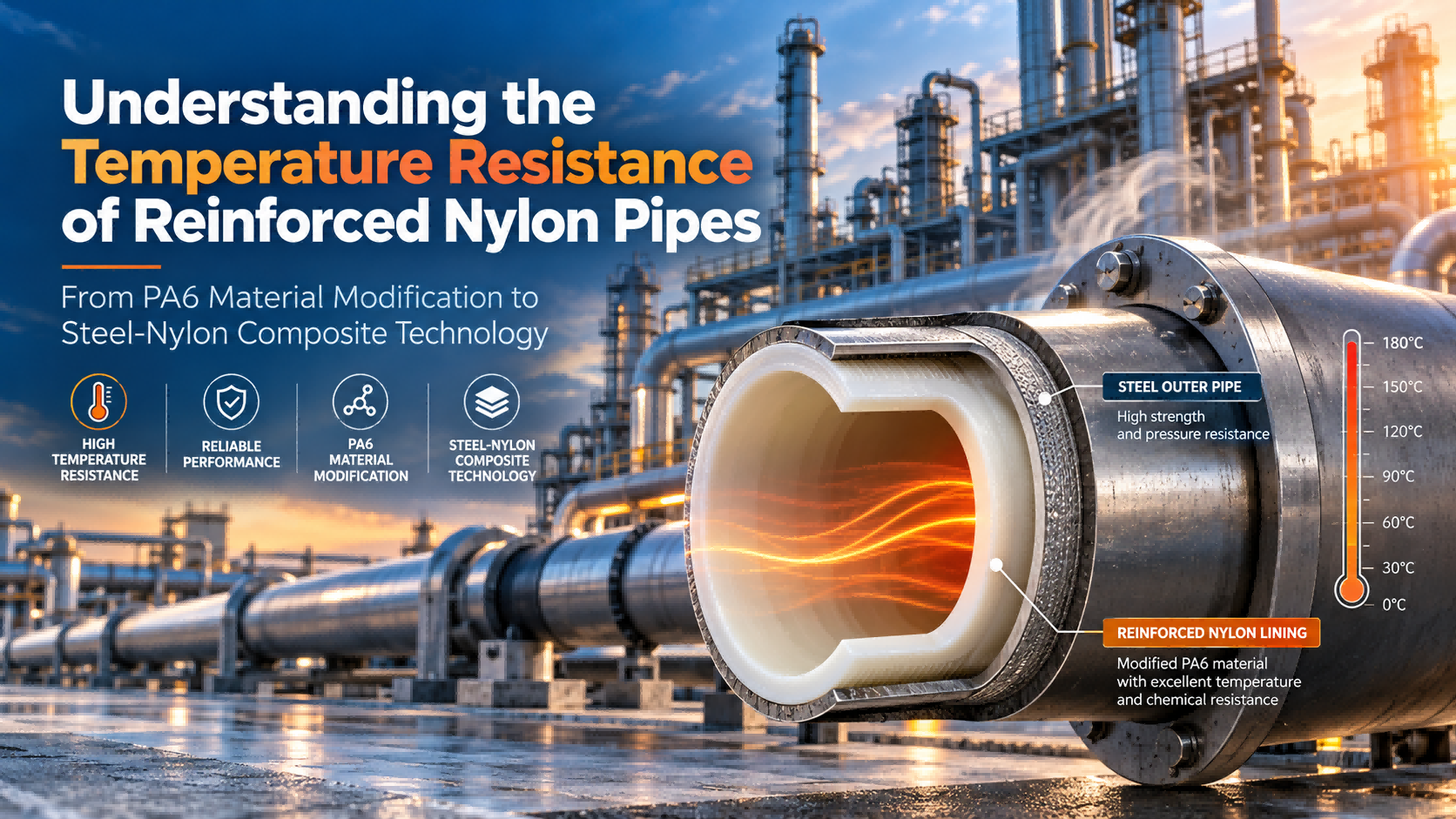
Understanding the Temperature Resistance of Reinforced Nylon Pipes: From PA6 Material Modification to Steel-Nylon Composite Technology
Introduction: Why Is Temperature Resistance Becoming a Critical Factor in Industrial Pipe Selection?
In the chemical processing, oil and gas, mining, power generation, water treatment, and industrial fluid transportation industries, selecting the right piping material has become increasingly complex.
Traditionally, industrial pipe selection focused primarily on pressure resistance, corrosion resistance, and initial purchasing costs. However, as industrial operating conditions become more demanding, the influence of temperature on the long-term reliability of piping systems is receiving greater attention.
In many chemical processing applications, for example, pipelines must transport corrosive fluids while simultaneously withstanding:
-
Continuous exposure to elevated operating temperatures
-
Repeated temperature and pressure fluctuations
-
Long periods of uninterrupted operation
-
Thermal expansion and the resulting mechanical stresses
-
Abrasion caused by suspended solid particles
-
Changes in sealing performance under elevated temperatures
For conventional non-metallic pipes, increasing temperature can reduce material stiffness, accelerate creep deformation, decrease pressure-bearing capability, and affect dimensional stability.
This raises an important engineering question:
How can industrial piping systems maintain the corrosion and abrasion resistance of nylon while improving structural stability under demanding temperature conditions?
Reinforced nylon materials and steel-nylon composite pipe technology offer two important approaches to addressing this challenge.
This article examines the temperature resistance of reinforced nylon pipes from the perspectives of material science, structural engineering, performance verification, and industrial applications.
1. What Is Reinforced Nylon Pipe, and How Does It Differ from Conventional Nylon Pipe?
Reinforced nylon pipe generally refers to an industrial piping product whose mechanical strength, rigidity, dimensional stability, or performance under specific operating conditions has been improved through material modification or structural reinforcement.
Nylon belongs to the polyamide family of engineering thermoplastics, commonly abbreviated as PA.
Common industrial polyamide materials include PA6, PA66, and various specialty polyamides.
Among these materials, Polyamide 6 (PA6) has become an important option for industrial piping applications because of its combination of mechanical properties, abrasion resistance, processing characteristics, and cost efficiency.
1.1 Key Advantages of Conventional PA6 Nylon
PA6 offers several properties that make it suitable for industrial fluid transportation.
Good Abrasion Resistance
Under suitable operating conditions, PA6 can resist friction and certain types of erosive wear caused by suspended particles. This makes it a potential material for slurry pipelines, sand-containing liquids, and selected industrial suspensions.
Chemical Resistance in Compatible Environments
PA6 provides resistance to various oils, salt solutions, and certain industrial chemicals.
When used as a protective lining, it can help prevent direct contact between transported fluids and the underlying metal structure.
However, PA6 is not universally resistant to all acids, alkalis, solvents, or oxidizing chemicals. Chemical compatibility becomes especially important at elevated temperatures.
Impact Resistance
Nylon possesses a degree of toughness that allows it to withstand mechanical impacts encountered during normal operation.
Relatively Smooth Internal Surface
The comparatively smooth internal surface of nylon can help reduce certain types of deposits and material accumulation, potentially supporting more stable hydraulic performance.
Despite these advantages, conventional nylon also has limitations.
As temperatures increase, sustained mechanical loads and prolonged exposure to hot liquids can cause softening, creep deformation, and gradual changes in material properties.
These limitations create opportunities for reinforced nylon technology.
1.2 Two Main Approaches to Reinforcing Nylon Pipes
Industrial nylon reinforcement technologies can generally be divided into two categories.
Approach One: Material Reinforcement and Modification
This involves modifying PA6 with materials such as glass fibers, mineral fillers, thermal stabilizers, impact modifiers, or other functional additives.
The primary objectives include improving:
-
Stiffness retention at elevated temperatures
-
Resistance to deformation
-
Thermal dimensional stability
-
Thermal aging performance under specified conditions
Approach Two: Structural Composite Reinforcement
This approach combines a nylon functional layer with a load-bearing material, such as steel, to create a composite piping structure in which different materials perform different functions.
The steel component primarily carries mechanical loads, while the nylon layer provides the surface in contact with the transported fluid.
Rather than focusing exclusively on the thermal properties of nylon, this approach improves the mechanical behavior of the overall piping system through structural design.
Steel-nylon composite pipes represent an important application of this engineering concept.
2. How Much Temperature Can Reinforced Nylon Pipe Withstand?
This is one of the most common questions asked by industrial pipe buyers and engineers.
It is also one of the areas where misunderstandings frequently occur.
When discussing the temperature resistance of nylon materials, three different concepts must be distinguished:
Melting Temperature, Heat Deflection Temperature, and Long-Term Allowable Operating Temperature.
These values describe different material characteristics and should never be treated as interchangeable.
2.1 Melting Temperature Is Not the Operating Temperature
PA6 is a semi-crystalline thermoplastic polymer.
Typical PA6 materials have a melting temperature of approximately 220°C, although the exact value depends on material formulation and testing conditions.
The melting temperature describes the transition at which the crystalline regions of the polymer melt.
It does not mean that a pipe manufactured from PA6 can operate continuously at temperatures approaching 220°C.
In fact, significant changes in stiffness, strength, and long-term creep behavior may occur well below the melting temperature.
2.2 Heat Deflection Temperature (HDT)
Heat Deflection Temperature is an important indicator of a plastic material's ability to resist deformation under a specified load while temperature increases.
It represents the temperature at which a standardized test specimen reaches a defined amount of deformation under controlled testing conditions.
Certain glass-fiber-reinforced PA6 formulations can achieve substantially higher heat deflection temperatures than unreinforced grades.
For example, some reinforced PA6 compounds can exhibit heat deflection temperatures around 200°C or higher under specified testing conditions.
However, an essential distinction must be made:
A heat deflection temperature of 200°C does not mean an industrial pipe can safely operate at 200°C under continuous internal pressure and exposure to corrosive fluids.
Standardized material specimens and complete industrial piping systems differ significantly in loading conditions, operating duration, chemical exposure, and potential failure mechanisms.
2.3 Long-Term Operating Temperature: The More Important Engineering Parameter
For industrial fluid transportation, the long-term allowable operating temperature is generally more meaningful than an isolated HDT value.
The allowable operating temperature must consider multiple factors:
-
Fluid temperature
-
Design pressure
-
Continuous operating duration
-
Material aging
-
Creep deformation
-
Chemical compatibility
-
Joint and sealing performance
-
Applicable safety factors
For example, a reinforced PA6 formulation may demonstrate good performance during short-term thermal testing.
However, the same material may behave differently when continuously exposed to hot liquids while carrying sustained mechanical loads.
Therefore, industrial pipe temperature ratings must be supported by performance evaluations that reflect the actual temperature, pressure, and intended operating life.
3. Why Does Increasing Temperature Affect the Mechanical Properties of Nylon Pipes?
Understanding the temperature resistance of reinforced nylon requires an understanding of how polyamide materials respond to heat.
3.1 Increased Molecular Mobility Reduces Stiffness
As temperature increases, the molecular chains within PA6 gain mobility.
This can reduce the elastic modulus and change the material's resistance to deformation.
For piping systems exposed to sustained internal pressure, these changes may result in:
-
Increased pipe wall deformation
-
Accelerated long-term creep
-
Redistribution of localized mechanical stresses
-
Dimensional changes around joints and sealing areas
Reinforcing materials such as glass fibers can improve stiffness retention at elevated temperatures.
However, reinforcement cannot completely eliminate the temperature sensitivity of the polymer matrix.
3.2 Moisture Absorption Changes Material Performance
PA6 is a hygroscopic polymer, meaning it can absorb moisture from its surroundings.
Moisture absorption can produce a plasticizing effect within the material, changing its stiffness, strength, and dimensional behavior.
This characteristic is particularly important for water transportation applications.
For example, the same reinforced PA6 compound may exhibit significantly different mechanical properties when tested in dry and moisture-conditioned states.
As a result, long-term water pipeline reliability should not be evaluated using only dry laboratory test results.
For hot water, industrial wastewater, and salt solution transportation, the combined effects of moisture absorption, temperature, and sustained mechanical loading are especially important.
3.3 Long-Term Thermal Aging Can Reduce Material Performance
Prolonged exposure to elevated temperatures may cause oxidation, molecular changes, and other aging processes within polymer materials.
In the presence of water or certain chemical media, hydrolysis or chemical degradation may also occur.
Over time, these mechanisms can affect:
-
Tensile strength
-
Impact toughness
-
Elongation at break
-
Fatigue resistance
Therefore, temperature resistance is not simply a matter of whether a material maintains its shape at elevated temperatures.
The more important question is whether it can retain the required engineering properties throughout its specified service period.
3.4 Thermal Expansion Affects Joint Reliability
Polymer materials and steel have different thermal expansion characteristics.
When a composite pipe experiences repeated heating and cooling, differences in thermal expansion may create stresses between the materials.
If the composite interface, end restraints, or connection system is not properly designed, potential problems may include:
-
Localized stress concentration
-
Interfacial debonding
-
Liner buckling or blistering
-
Sealing failure
Consequently, an effective temperature-resistant composite piping system requires more than an appropriate material formulation.
It also requires reliable interface engineering and proper thermal stress management.
4. How Does Nylon Reinforcement Improve Temperature Resistance?
Improving the thermal performance of reinforced nylon pipes involves several technologies rather than a single modification.
Material formulation and manufacturing processes must work together.
4.1 Glass Fiber Reinforcement
Glass fiber reinforcement is one of the most widely used approaches to modifying PA6.
Adding an appropriate proportion of glass fibers can improve stiffness, resistance to deformation, and certain high-temperature mechanical properties.
Its main advantages include:
Improved Structural Rigidity
Glass fibers can carry part of the applied mechanical load, helping reduce deformation of the polymer matrix.
Enhanced Heat Deflection Performance
Reinforced nylon can generally retain stiffness at higher temperatures than comparable unreinforced material grades.
Reduced Thermal Expansion in Certain Directions
Fiber reinforcement can restrict the thermal expansion of the polymer matrix.
However, the actual improvement depends on fiber content, orientation, and processing conditions.
It is important to recognize that increasing glass fiber content does not automatically result in a better piping material.
Excessive reinforcement may increase processing difficulty and adversely affect impact toughness, surface integrity, or abrasion performance.
For nylon liners directly exposed to abrasive fluids, engineers must also consider fiber exposure, interfacial wear, and fluid penetration.
4.2 Thermal Stabilization Technology
Appropriate thermal stabilizer systems can slow certain oxidation and degradation processes during exposure to elevated temperatures.
Their primary purpose is to improve thermal aging stability under defined operating conditions.
However, thermal stabilizers cannot completely eliminate hydrolysis, chemical attack, or long-term creep under sustained mechanical loading.
4.3 Multi-Functional Material Modification
In practical material development, temperature resistance, abrasion resistance, impact strength, and processing performance often involve trade-offs.
For example:
Increasing stiffness may reduce toughness.
Increasing filler content may change melt processing characteristics.
Improving abrasion resistance may influence long-term thermal aging behavior.
Therefore, engineering nylon compounds should be optimized according to the intended fluid, operating environment, and mechanical requirements rather than maximizing a single laboratory property.
4.4 Manufacturing Process Control
Even when the same PA6 material is used, manufacturing processes can significantly influence the final product.
Critical factors include:
-
Raw material moisture content
-
Processing temperature
-
Material uniformity
-
Crystalline structure
-
Residual stresses
-
Liner thickness consistency
-
Composite interface quality
For industrial pipelines, manufacturing consistency is just as important as material reinforcement.
5. What Do Material Test Results Reveal About Temperature Resistance?
One useful way to understand reinforced nylon performance is to examine published material data.
For example, technical documentation for BASF's Ultramid B3WG6, a glass-fiber-reinforced PA6 grade, provides the following typical properties:
| Property | Typical Value |
|---|---|
| Material type | PA6-GF30 |
| Melting temperature | 220°C |
| Heat deflection temperature at 1.8 MPa test stress | 210°C |
| Tensile modulus, dry | 9,500 MPa |
| Tensile modulus, moisture-conditioned | 6,200 MPa |
| Tensile stress at break, dry | 185 MPa |
| Tensile stress at break, moisture-conditioned | 115 MPa |
Source: BASF Ultramid B3WG6 technical data, September 2026 edition.
These values illustrate two important engineering principles.
First, reinforced PA6 can exhibit relatively high heat deflection temperatures.
Second, moisture conditioning can significantly affect the mechanical properties of reinforced polyamide materials.
It is essential to note that these figures describe a specific injection-molding material grade, not the tested performance of our steel-nylon composite pipes.
These material properties must not be used directly to establish the continuous operating temperature, pressure rating, or expected service life of an industrial pipeline.
Reliable industrial pipe selection requires material-level testing to be combined with complete piping system verification.
6. How Do Steel-Nylon Composite Pipes Improve Structural Stability Under Elevated Temperatures?
Improving the properties of nylon through material reinforcement alone still has limitations.
Industrial piping systems must withstand not only temperature, but also internal pressure, external mechanical loads, corrosion, abrasion, and long-term creep.
This is one of the key reasons we focus on developing and manufacturing steel-nylon composite pipes.
Our products combine a steel structure with a functional nylon layer.
The fundamental engineering concept is straightforward:
The steel structure provides the primary mechanical strength and load-bearing support, while the modified PA6 nylon layer provides the fluid-contacting protective surface.
This structural approach differs significantly from conventional single-material plastic piping.
6.1 Steel Reinforcement Provides Strong Mechanical Support
In conventional non-metallic pipes, the pipe wall material generally carries most of the internal pressure load.
As operating temperature increases, changes in polymer mechanical properties can influence long-term pressure-bearing performance.
Steel-nylon composite pipes use a combination of metallic and polymer components.
The steel structure primarily provides:
-
Mechanical strength
-
Pressure-bearing capability
-
Resistance to external mechanical loads
-
Structural rigidity for large-diameter pipes
-
Mechanical support for the nylon functional layer
With appropriate structural engineering, the composite design can reduce dependence on nylon alone for carrying primary mechanical loads.
Compared with certain all-plastic pipe systems, steel-nylon composite structures therefore offer important engineering advantages for large-diameter, pressurized, and temperature-variable applications.
However, the presence of steel does not eliminate the operating temperature limitations of the nylon lining.
The maximum allowable temperature of the complete composite pipe must still account for the liner, composite interface, seals, steel structure, and connection system.
6.2 PA6 Lining Provides Corrosion Protection
In many industrial fluid transportation systems, increasing temperature can accelerate chemical corrosion reactions.
Traditional carbon steel pipelines may experience internal corrosion, localized pitting, or wall thickness reduction when exposed to certain salt solutions and corrosive fluids.
Our steel-nylon composite pipes use a nylon internal layer to separate the transported medium from the underlying steel structure.
When chemical compatibility has been verified, this design can help:
-
Reduce direct corrosive attack on the steel structure
-
Limit corrosion-related wall thickness loss in suitable applications
-
Improve the reliability of long-term industrial fluid transportation
-
Reduce dependence on the exposed corrosion resistance of carbon steel
The key advantage is not simply increasing a nominal temperature rating.
Instead, it is allowing steel and nylon to perform the functions for which they are best suited.
6.3 Combining Abrasion Resistance and Corrosion Protection
In industrial applications, elevated temperatures may affect fluid rheology, corrosion reactions, and particle erosion mechanisms.
This is particularly relevant to systems transporting mineral slurry, industrial crystal suspensions, sand-containing fluids, and certain oilfield production liquids.
Such fluids may expose piping systems to abrasion and corrosion simultaneously.
By combining a load-bearing steel structure with a protective nylon layer, steel-nylon composite pipes can provide mechanical support and internal surface protection under suitable operating conditions.
This is especially valuable for industrial facilities where frequent pipeline replacement can result in significant downtime costs.
6.4 Structural Advantages for Large-Diameter Pipelines
As pipe diameter increases, hoop stress, external loading, installation deformation, and thermal expansion require increasingly careful engineering evaluation.
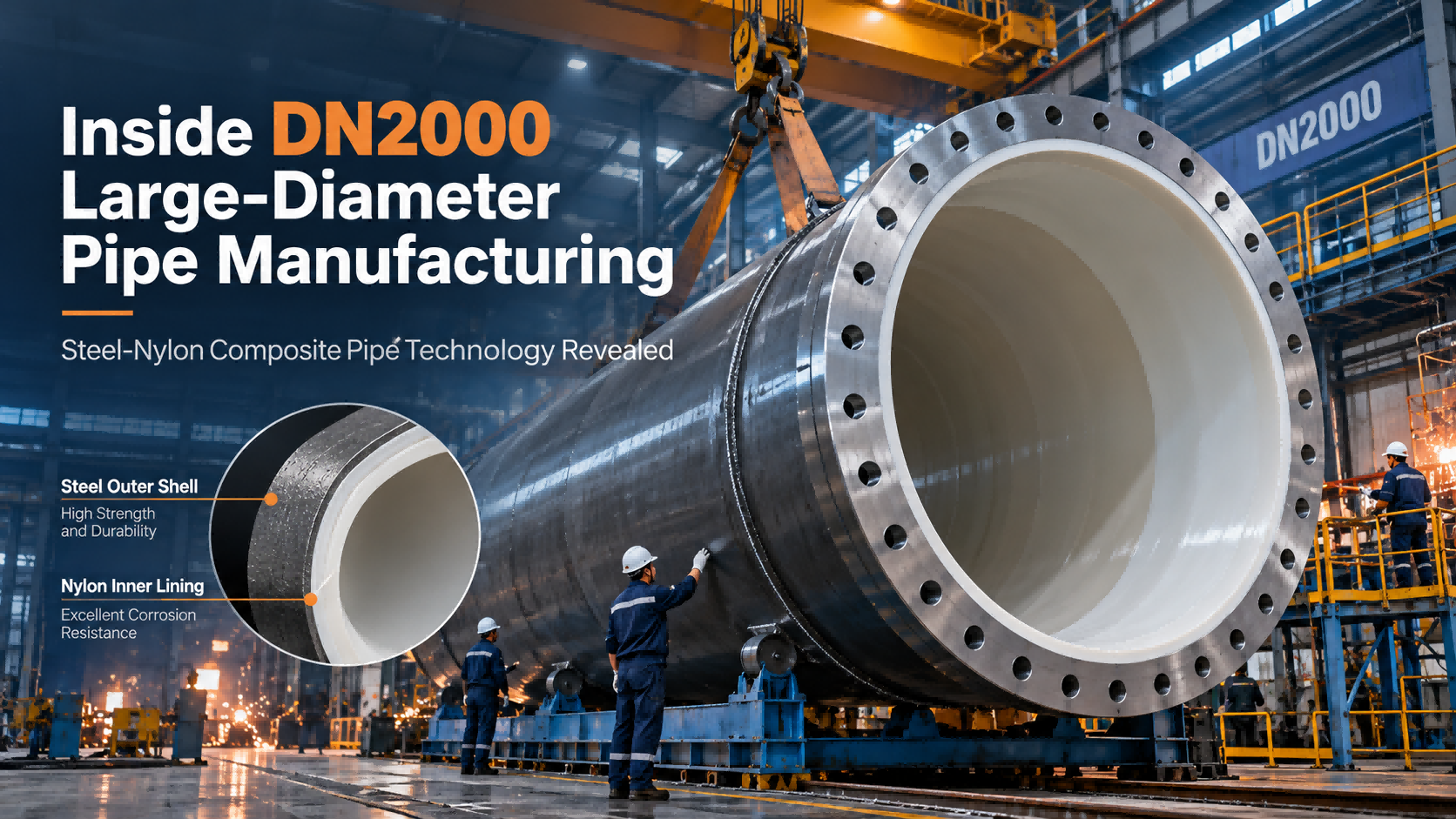
For pipelines with nominal diameters such as DN800, DN1200, DN1600, and DN2000, single-material non-metallic pipes may face demanding structural requirements under certain pressure and support conditions.
Our steel-nylon composite pipe solutions offer large-diameter manufacturing capabilities and can be engineered according to specific project requirements.
The rigidity and mechanical support provided by the steel structure make composite piping an important option for large-diameter industrial fluid transportation.
7. Why Are Flange Connections Important in Temperature-Variable Piping Systems?
The temperature resistance of an industrial piping system depends on more than the pipe body itself.
Connections are equally important to long-term reliability.
Temperature fluctuations can cause:
-
Axial thermal expansion of the pipeline
-
Changes in flange bolt preload
-
Stress relaxation in sealing gaskets
-
Differential thermal deformation between materials
-
Additional mechanical loads around pipe joints
Therefore, connection design must receive particular attention in elevated-temperature and thermal-cycling applications.
Our Advantage: Integrated Flange Connection Design
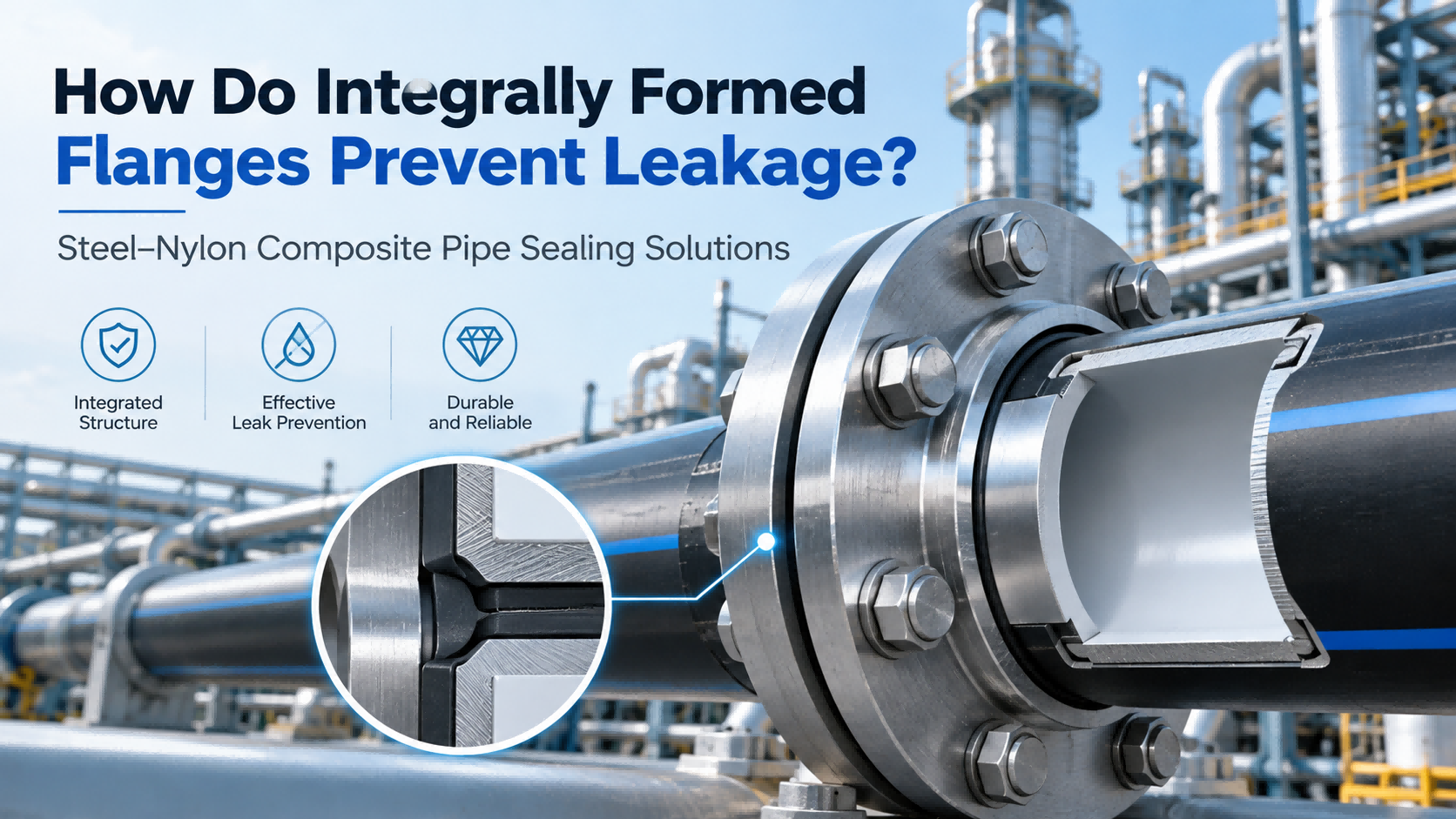
Our steel-nylon composite pipes can be manufactured with integrated flange connection structures.
Compared with conventional piping installations that require extensive on-site welding, this design offers several potential advantages.
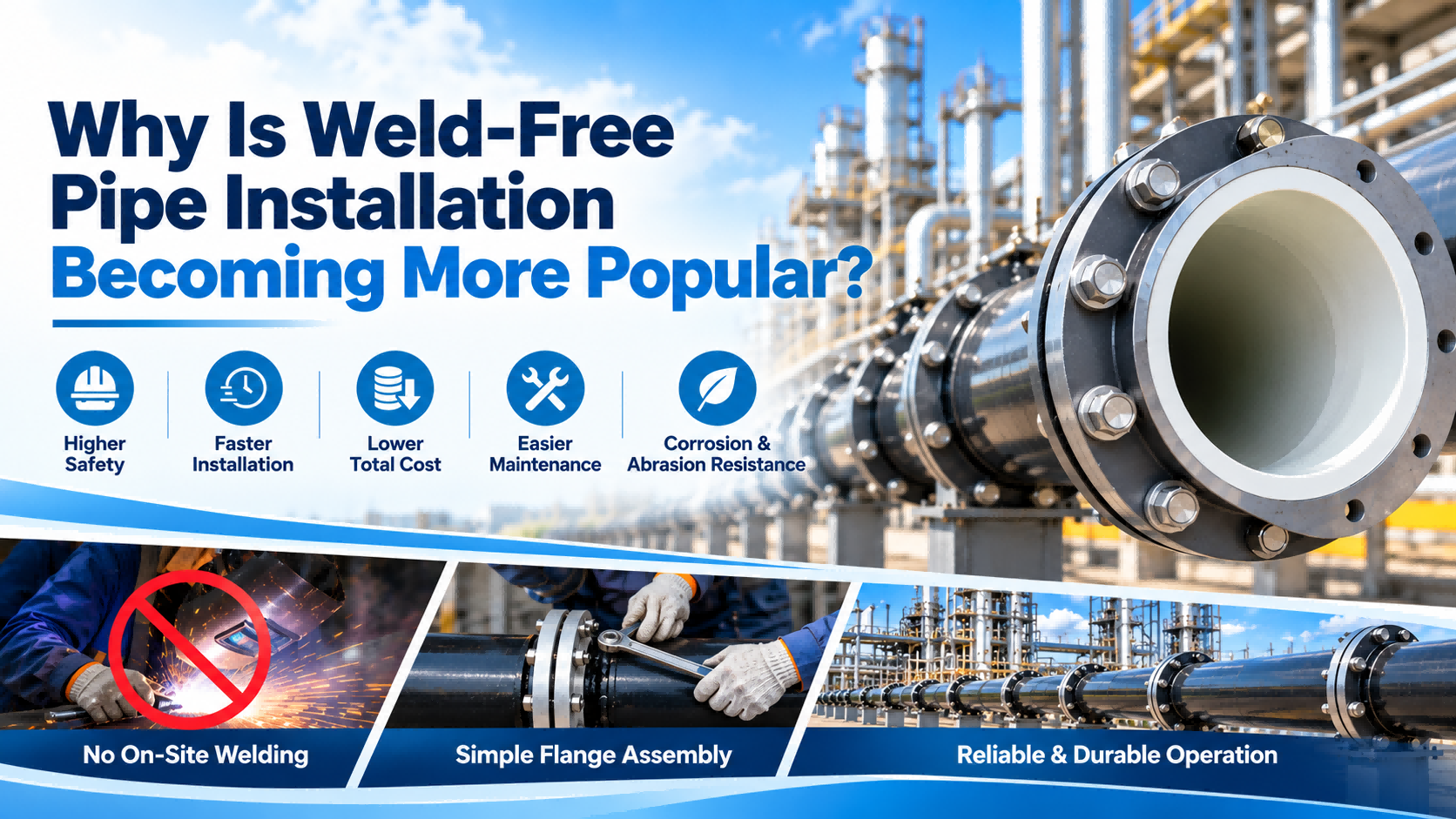
Reduced On-Site Welding
Manufacturing connection structures under controlled factory conditions can reduce certain field welding operations and associated hot-work requirements.
More Standardized Installation
Flanged connections facilitate sectional installation and connection to industrial valves, pumps, and other equipment.
Improved Maintenance Accessibility
Flanged joints can provide convenient access when inspecting, replacing gaskets, or maintaining individual pipeline sections.
Reduced Risk of Installation-Related Lining Damage
Reducing certain field welding and lining repair operations can help limit the risk of damage to protective layers during installation.
However, flange temperature performance still depends on gasket selection, bolt preload, thermal cycling behavior, and sealing surface design.
This is why we emphasize complete piping system engineering rather than focusing exclusively on pipe material properties.
8. Reinforced Nylon Pipe vs. Carbon Steel Pipe vs. Steel-Nylon Composite Pipe
No single piping material offers the best solution for every industrial application.
Material selection should be based on actual operating requirements.
| Comparison Factor | Carbon Steel Pipe | Reinforced PA6 Nylon Pipe | Steel-Nylon Composite Pipe |
|---|---|---|---|
| Primary mechanical strength | Relatively high | Depends on formulation and temperature | Primarily provided by steel |
| Structural stability at elevated temperatures | Generally favorable within design limits | Influenced by polymer property changes | Benefits from steel structural support |
| Corrosion resistance | Depends on the medium and protective measures | Good for compatible chemicals | Nylon layer can isolate fluid from steel |
| Abrasion resistance | Depends on fluid conditions and steel surface properties | Depends on nylon formulation | Can be optimized through nylon lining design |
| Large-diameter applications | Established engineering solution | Requires careful stiffness and creep evaluation | Suitable for consideration in large-diameter pressure applications |
| Thermal expansion design | Mainly considers steel expansion | Must account for polymer deformation | Must account for differential expansion of steel and nylon |
| Installation | Commonly welded or flanged | Depends on pipe construction | Integrated flange connections available |
| Long-term maintenance | Depends on corrosion conditions | Depends on temperature, pressure, and aging | May reduce corrosion-related maintenance in suitable applications |
From an engineering perspective:
Traditional steel pipe may remain an appropriate choice for applications requiring elevated temperatures and established metallic piping design practices.
Reinforced nylon pipes may provide advantages in lower-pressure applications where the transported medium is compatible with the material.
For projects requiring a combination of mechanical strength, corrosion protection, abrasion resistance, large diameter, and structural stability, steel-nylon composite pipes deserve careful evaluation.
The value of composite piping lies in combining the functional advantages of different materials to achieve a more balanced engineering solution.
9. How Should Steel-Nylon Composite Pipes Be Tested for Elevated-Temperature Applications?
For EPC contractors, engineering design institutes, and large industrial buyers, general material descriptions are rarely sufficient.
Successful qualification requires reliable and traceable technical verification.
9.1 Thermal Material Performance Testing
Material evaluation may include:
-
Heat deflection temperature
-
Mechanical properties after thermal aging
-
Dimensional changes caused by heat exposure
-
Retention of stiffness and strength
The ISO 75 series provides methods for determining the temperature of deflection under load for plastics.
ISO 2578 describes methods for evaluating changes in plastic material properties following prolonged exposure to elevated temperatures.
However, material-level testing cannot replace engineering verification of a complete industrial composite pipe.
9.2 Combined Temperature and Pressure Testing
Industrial pipelines must be evaluated for pressure performance at their intended operating temperatures.
For applicable thermoplastic piping materials and systems, ISO 1167-1 provides procedures for determining resistance to internal pressure.
ISO 9080 provides statistical extrapolation methods for estimating the long-term hydrostatic strength of thermoplastic pipe materials.
These standards have specific scopes of application.
They should not automatically be treated as complete certification methods for steel-nylon composite piping without confirming their applicability.
Composite pipes require an appropriate verification program based on the relevant product standards, structural design, and potential failure mechanisms.
9.3 Thermal Cycling and Interface Stability Testing
Steel and nylon respond differently to temperature changes.
Consequently, composite piping systems should be assessed under repeated heating and cooling cycles.
Important observations include:
-
Whether the nylon lining separates locally from the steel
-
Whether displacement occurs at liner ends
-
Whether flange sealing performance changes
-
Whether permanent deformation develops after repeated thermal cycles
For pipelines exposed to rapid depressurization or vacuum conditions, additional liner stability evaluations may be necessary.
9.4 High-Temperature Chemical Compatibility Testing
Identical operating temperatures do not necessarily produce identical chemical effects.
For example, hot water, salt solutions, oilfield production fluids, industrial alkaline solutions, and acidic media may interact with PA6 in different ways.
Chemical concentration, temperature, exposure duration, and operating pressure must all be considered.
Compatibility at room temperature should never be assumed to guarantee long-term performance at elevated temperatures.
9.5 Complete Connection System Verification
In industrial projects, failures can occur at flanges, elbows, tees, reducers, or equipment connections.
Temperature performance evaluation should therefore extend beyond straight pipe specimens.
A comprehensive qualification program should include representative fittings and connections used in the actual piping system.
10. Typical Industrial Applications of Steel-Nylon Composite Pipes
10.1 Chemical Processing and Industrial Fluid Transportation
Some chemical processing fluids combine elevated temperature, pressure, and corrosive characteristics.
Piping systems must maintain mechanical integrity while reducing the risk of fluid-induced corrosion.
After appropriate chemical compatibility and structural verification, steel-nylon composite pipes can be considered for selected chemical processing pipelines.
10.2 Oilfield Production and Gathering Systems
Oilfield production fluids may contain combinations of:
-
Oil
-
Water
-
Dissolved salts
-
Gas
-
Suspended solids
-
Corrosive chemical components
Under certain temperature conditions, these factors can interact and influence pipeline service life.
The mechanical support provided by steel and the protective function of nylon lining offer an alternative approach for demanding gathering and transportation systems.
Applications involving hydrogen sulfide, carbon dioxide, rapid depressurization, or high-temperature aqueous environments require dedicated compatibility and engineering verification.
10.3 Mining Slurry and Tailings Transportation
Mining pipelines frequently operate under demanding conditions involving abrasive particles, high flow rates, and long transportation distances.
Certain process fluids may also involve temperature variations or chemical corrosion.
Steel-nylon composite structures can provide an opportunity to combine the required mechanical strength with improved internal surface protection.
For high-wear components such as elbows, material selection must also account for particle size, solids concentration, flow velocity, and erosion angle.
10.4 Industrial Wastewater and Circulating Water Systems
Industrial cooling water and wastewater systems can expose pipelines to variations in temperature, dissolved salts, chemical additives, and operating cycles.
Steel-nylon composite pipes can be evaluated as an option for selected long-term fluid transportation systems.
For elevated-temperature water applications, the moisture absorption, hydrolysis behavior, and long-term mechanical performance of PA6 require particular attention.
10.5 Large-Diameter Industrial Pipeline Upgrades
Industrial pipeline modernization projects often face several requirements simultaneously:
-
Large pipe diameters
-
Compatibility with existing equipment connections
-
Limited shutdown and installation windows
-
Long-term corrosion protection
-
Convenient future maintenance
Steel-nylon composite pipes combine large-diameter structural capabilities with flange connection designs, making them a potential option for complex industrial pipeline upgrades.
11. Six Critical Parameters to Confirm Before Purchasing Reinforced Nylon Pipes
For international industrial buyers, we recommend confirming the following information during technical evaluation and quotation.
1. Maximum Continuous Operating Temperature
Distinguish between normal operating temperature, short-term maximum temperature, and abnormal operating conditions.
Short-term thermal performance should not be confused with continuous operating capability.
2. Design Pressure at the Specified Temperature
The pipe pressure rating must be evaluated alongside design temperature, intended operating life, and applicable safety factors.
3. Transported Fluid and Chemical Concentration
Provide the chemical composition, concentration, pH, and potential presence of solvents, oxidizing agents, or other additives.
4. Operating Duration and Thermal Cycling
Identify the intended operating life, startup and shutdown frequency, heating and cooling rates, and expected number of thermal cycles.
5. Diameter, Installation Conditions, and Mechanical Loads
Specify nominal diameter, pipe support spacing, external loads, vacuum exposure, vibration, and thermal movement requirements.
6. Testing Documentation and Quality Requirements
Buyers should request supporting technical documentation, structural calculations, relevant test reports, and quality records for the actual product being purchased.
For steel-nylon composite pipes, particular attention should be given to compatibility among the nylon functional layer, steel structure, composite interface, and connection system.
This approach provides a more reliable basis for pipe selection than simply asking, "What is the maximum temperature nylon pipe can withstand?"
12. Why Does the Value of Steel-Nylon Composite Pipe Extend Beyond Temperature Resistance?
Industrial pipeline purchasing decisions increasingly focus on long-term economic performance rather than initial material costs alone.
The actual cost of an industrial piping system includes several components.
Total Cost of Ownership (TCO) = Initial Purchase Cost + Installation Cost + Operating and Maintenance Cost + Downtime Losses + Replacement Cost + End-of-Life Disposal Cost
Conventional steel pipes offer established manufacturing and installation advantages.
However, in certain corrosive environments, they may require additional protective measures and maintenance.
All-plastic piping systems can address some corrosion challenges, but certain combinations of temperature, pressure, and large diameter may demand more conservative structural designs.
Steel-nylon composite pipes offer an alternative engineering approach.
The steel structure provides mechanical support.
The nylon functional layer improves protection against compatible transported media.
Appropriate connection systems contribute to installation and maintenance efficiency.
When selected correctly, this combination has the potential to reduce certain corrosion-related repairs, pipe replacements, and unplanned shutdowns.
For industrial facilities requiring continuous production, extending maintenance intervals and reducing unexpected downtime can be more valuable than achieving the lowest initial pipe price.
However, economic advantages must ultimately be demonstrated through realistic service-life assessments, operating records, and project-specific cost calculations rather than unsupported lifetime guarantees.
13. Frequently Asked Questions About Reinforced Nylon Pipe Temperature Resistance
Q1: Is reinforced nylon pipe always more temperature-resistant than conventional nylon pipe?
Not necessarily.
Appropriate glass fiber reinforcement can improve stiffness retention and heat deflection performance at elevated temperatures.
However, long-term thermal aging, chemical compatibility, creep, and fatigue behavior must still be evaluated separately.
Different reinforced nylon formulations should not be assumed to have identical performance.
Q2: If PA6 melts at approximately 220°C, can it transport fluids at 200°C?
No such conclusion can be drawn from the melting temperature.
Melting temperature is not a continuous operating temperature rating.
Long-term suitability must be determined using the actual material, temperature, pressure, fluid composition, and operating duration.
Q3: Why are steel-nylon composite pipes worth considering for demanding temperature conditions?
Because the steel structure provides the primary mechanical support, while the nylon functional layer provides corrosion and abrasion protection for suitable transported media.
This structure reduces reliance on a single polymer material to perform every function.
However, the complete piping system still requires appropriate design verification to establish its operating temperature limits.
Q4: Can reinforced nylon pipes be used for high-temperature chemical transportation?
It depends on the specific application.
Suitability is determined by the PA6 formulation, chemical composition, concentration, temperature, pressure, and exposure duration.
Long-term elevated-temperature chemical transportation should be supported by appropriate compatibility and aging tests.
Q5: Are steel-nylon composite pipes suitable for large-diameter industrial pipelines?
Steel-nylon composite structures use the mechanical strength and rigidity of steel to support larger pipe diameters.
We can evaluate large-diameter piping solutions, including DN2000-class applications, according to specific project requirements.
Available dimensions, pressure ratings, operating temperatures, and connection configurations must be confirmed through the final engineering design.
Q6: How can buyers determine whether a reinforced nylon pipe is suitable for long-term operation?
The most reliable approach is to review the material data, design calculations, temperature-pressure testing, thermal aging results, and chemical compatibility evidence.
Buyers should also confirm that these documents apply to the specific pipe construction and operating conditions being considered.
Conclusion: Reliable Temperature Performance Requires the Integration of Materials, Structure, and System Engineering
Advances in reinforced nylon technology have created additional opportunities to improve the high-temperature stiffness, dimensional stability, and performance of PA6 materials under selected operating conditions.
However, industrial pipeline temperature resistance cannot be defined by a single heat deflection temperature value.
A reliable industrial piping system must provide an appropriate combination of:
Temperature compatibility, structural strength, chemical resistance, long-term stability, and connection reliability.
This is one of the key reasons we continue to develop steel-nylon composite piping solutions.
By combining the mechanical support of steel with the protective properties of modified PA6 nylon, our products are designed to deliver a balanced combination of mechanical strength, corrosion resistance, abrasion resistance, and installation convenience.
From chemical processing pipelines and oilfield gathering systems to mining slurry transportation and large-diameter industrial networks, our engineering approach focuses on more than initial installation.
We aim to help customers select piping systems that can maintain reliable performance under their actual operating conditions.
Looking for a Temperature-Resistant Industrial Piping Solution?
If your project involves reinforced nylon pipes, corrosion-resistant industrial pipelines, or steel-nylon composite piping systems, our team can discuss suitable solutions based on your engineering requirements.
Please share the following project information:
-
Pipe diameter and design pressure
-
Normal and maximum operating temperatures
-
Transported fluid and chemical composition
-
Expected operating life
-
Installation environment and connection requirements
We can use this information to explore a more targeted steel-nylon composite pipe solution for your application.
Explore Our Steel-Nylon Composite Pipe Solutions
Website: //www.nylonpipeline.com
Contact Us for Technical Consultation and Project Inquiries