Best Pipe Materials for Strong Alkali Applications: How to Choose Industrial Piping with Corrosion Resistance, Wear Resistance, and Pressure Performance

Strong alkaline media, such as sodium hydroxide (NaOH) and potassium hydroxide (KOH), place significant demands on the chemical stability of piping materials. Under complex operating conditions involving high temperatures, elevated pressures, suspended solids, and continuous operation, these media may also accelerate material degradation, corrosion, wear, and joint failure.
For chemical processing plants, the consequences of pipeline failure extend far beyond the cost of replacing damaged pipes.
A pipeline leak may result in production interruptions, equipment corrosion, personnel safety risks, environmental contamination, and substantial maintenance expenses.
Therefore, selecting the right pipe material for strong alkali applications requires more than simply determining whether a material is alkali-resistant. Engineers must consider chemical concentration, operating temperature, pressure, mechanical strength, abrasion resistance, and long-term operating costs.
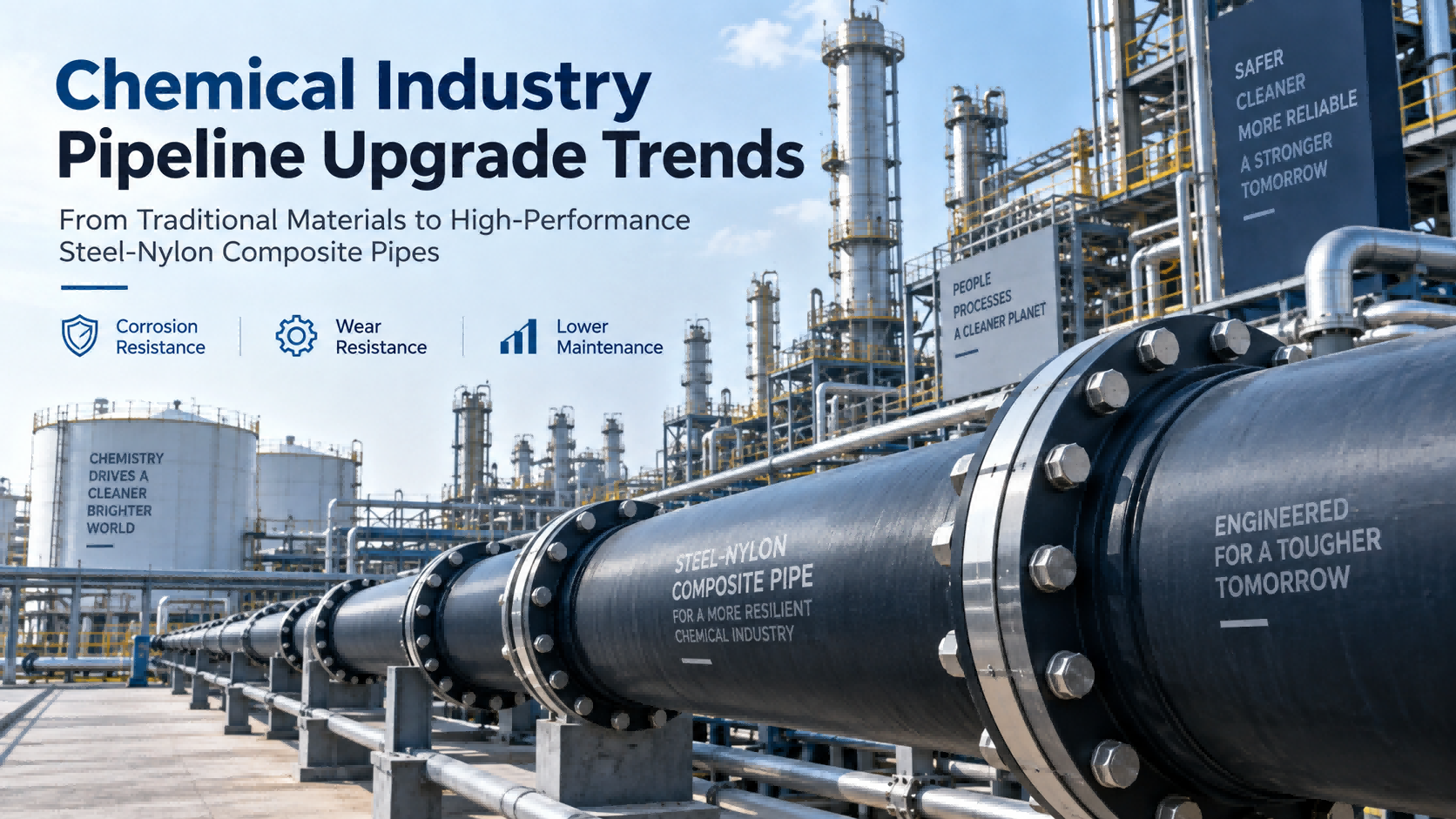
Steel-nylon composite pipes combine the structural strength of steel with the chemical resistance and wear resistance of a nylon lining, offering a practical engineering solution for selected alkaline media transportation systems.
This article examines the requirements that strong alkaline environments impose on industrial piping, compares the suitability of different pipe materials, and explains the engineering advantages of steel-nylon composite pipes in complex chemical processing applications.
1. Why Do Strong Alkali Applications Place Higher Demands on Industrial Piping?
A strong alkali application is not simply an operating environment with a high pH value.
In actual chemical production, even when the transported medium is sodium hydroxide, differences in concentration, temperature, and pressure can create significantly different risks of material failure.
1.1 Alkali Concentration Directly Affects Material Compatibility
Sodium hydroxide is used at different concentrations across industrial processes.
Some production systems transport relatively dilute alkaline solutions, while chlor-alkali production, caustic soda concentration, and storage systems may involve sodium hydroxide solutions with concentrations of 50% or higher.
The effects of these solutions on metals, plastics, and composite materials vary considerably.
For example, chemical resistance data published by UNITIKA indicate that conventional Nylon 6 demonstrates relatively good chemical resistance to a 10% sodium hydroxide solution, while its compatibility rating decreases significantly at a sodium hydroxide concentration of 50%.
This demonstrates that a material's general resistance to alkaline solutions does not necessarily mean it is suitable for every concentration of strong alkali.
For steel-nylon composite pipes, the applicable concentration range must be determined according to the actual nylon formulation, manufacturing process, and operating conditions.
1.2 High Temperatures and Strong Alkalis Can Accelerate Material Degradation
Industrial alkaline media transportation often involves elevated temperatures and temperature fluctuations.
As temperatures increase, piping materials must withstand continuous mechanical loads while potentially experiencing more complex chemical attack and thermal aging.
For certain metallic materials, high-temperature concentrated alkaline environments may increase the risk of caustic embrittlement and stress corrosion cracking.
For certain polymer materials, prolonged exposure to hot alkaline solutions may cause moisture absorption, dimensional changes, deterioration of mechanical properties, or chemical degradation.
A 2026 study published in the Journal of Materials Research and Technology examined the long-term aging behavior of polypropylene and Nylon 6 in water and saline-alkaline solutions.
The study found that Nylon 6 may undergo hydrolysis and lose mechanical strength in certain elevated-temperature saline-alkaline environments. These findings highlight the importance of evaluating the combined effects of temperature and alkaline media when assessing the long-term reliability of nylon materials.
However, the study examined specific experimental materials and saline-alkaline environments. Its findings cannot be directly applied to every modified MC nylon formulation or steel-nylon composite pipe.
The maximum operating temperature of a pipeline must therefore be consistent with the material's demonstrated long-term performance in the specific transported medium. A material's maximum temperature rating under other conditions should not be applied directly to strong alkali service.
1.3 The Combination of Solid Particles and Strong Alkalis Increases Pipe Wear
In certain chemical production processes, alkaline media are not completely clean liquids.
For example, transportation systems used in soda ash production, mineral processing, and industrial wastewater treatment may carry alkaline components, salts, crystalline particles, and other suspended solids.
As these particles move through the pipeline, they can continuously abrade the internal pipe surface.
Wear may become particularly severe at elbows, tees, reducers, and pump outlets, where changes in flow direction and velocity increase localized particle impact.
If material selection focuses exclusively on chemical compatibility while overlooking abrasion resistance, premature wall thinning, leakage, and pipe replacement may still occur.
For alkaline slurries containing solid particles, corrosion resistance and abrasion resistance must therefore be evaluated together.
1.4 Pressure and Temperature Fluctuations Increase Structural Risks
Industrial chemical pipelines may experience continuous internal pressure, frequent startup and shutdown cycles, and operating temperature fluctuations.
Large-diameter pipelines must also accommodate pipe weight, the weight of the transported medium, support spacing, and external loads.
Insufficient structural rigidity can result in excessive deformation, stress concentrations near supports, or flange connection failures.
For non-metallic piping, engineers must additionally evaluate creep and changes in long-term mechanical strength under sustained pressure and elevated temperature.
These considerations explain why chemical resistance alone is insufficient when selecting piping systems for complex chemical processing environments.
2. Which Pipe Materials Are Suitable for Strong Alkali Applications?
Common piping materials used in alkaline media transportation include carbon steel, stainless steel, HDPE, polypropylene, fluoropolymer-lined steel, fiberglass-reinforced plastic, and steel-nylon composite pipes.
Each material offers different advantages and operating limitations.
| Pipe Material | Main Advantages | Key Selection Limitations | Suitable Applications |
|---|---|---|---|
| Carbon steel | High structural strength, relatively low cost, and established manufacturing and installation methods | Corrosion or caustic embrittlement may occur under certain alkaline concentrations and high-temperature conditions | Caustic soda transportation systems where material compatibility has been verified |
| 304/316L stainless steel | Good mechanical properties and established manufacturing technology | Potential stress corrosion risks in high-temperature concentrated alkalis; relatively high procurement costs | Chemical applications with verified material compatibility |
| HDPE | Lightweight, resistant to many chemical media, and relatively easy to install | Long-term strength and creep must be considered under elevated temperature and sustained pressure | Alkaline media transportation within the material's temperature and pressure limits |
| Polypropylene (PP) | Good chemical resistance to many alkaline solutions | Long-term structural performance must be evaluated for high temperatures, external loads, and large-diameter applications | Low- to medium-pressure alkaline transportation at suitable temperatures |
| Fluoropolymer-lined steel | Certain fluoropolymers provide resistance to a wide range of chemicals | Material costs, lining integrity, and connection design require careful evaluation | Highly corrosive applications or processes requiring high media purity |
| Fiberglass-reinforced plastic (FRP) | Relatively lightweight, with resin systems that can be selected according to the transported medium | Long-term alkali resistance of the resin, reinforcement fibers, and laminate structure must be verified | Alkaline transportation systems where the resin formulation and structural design meet operating requirements |
| Steel-nylon composite pipe | Combines the structural strength of steel with the wear resistance and chemical resistance of a nylon lining; supports flanged connections | Nylon lining compatibility depends on chemical concentration, temperature, and exposure duration | Alkaline media and particle-containing slurry transportation where material compatibility has been verified |
Engineering note: Polypropylene, polyethylene, and other polymer materials provide good chemical resistance to many alkaline media. However, their temperature limitations and long-term pressure capabilities vary.
For example, polypropylene is suitable for many high-pH applications, while PVDF is not compatible with every strong alkaline environment.
For clean alkaline solutions transported at ambient temperatures and relatively low pressures, PP and HDPE piping should be evaluated based on their technical and economic suitability.
For applications involving higher structural loads, larger diameters, and simultaneous corrosion and abrasion, composite piping systems such as steel-nylon composite pipes deserve further consideration.
For high-temperature, high-concentration caustic soda applications, engineers should evaluate suitable metallic materials, special alloys, or proven chemical-resistant lining systems rather than assuming that conventional nylon linings will provide adequate resistance.
3. Why Should Steel-Nylon Composite Pipes Be Considered for Strong Alkali Transportation?
The fundamental design concept of steel-nylon composite pipes is to separate structural load-bearing requirements from media protection requirements through the use of different materials.
Conventional single-material pipes must withstand both the chemical effects of the transported medium and external mechanical loads.
Steel-nylon composite pipes assign these functions to different materials within a composite structure.
A typical steel-nylon composite pipe consists of:
An outer steel pipe that provides structural strength, an inner nylon lining that directly contacts the transported medium, and an integrated flange structure at the pipe ends for connection.
When the lining has been verified to be compatible with the transported alkaline medium, this structure offers several important engineering advantages.
3.1 The Nylon Lining Isolates the Transported Medium from the Steel Substrate
In conventional carbon steel pipelines, the transported medium directly contacts the metallic internal surface.
In corrosive environments where carbon steel is unsuitable for long-term exposure, the internal pipe wall may gradually deteriorate.
Steel-nylon composite pipes incorporate a continuous nylon lining that separates the transported medium from the steel substrate.
When the lining material demonstrates suitable chemical compatibility and the lining and end-sealing structures remain intact, direct contact between the corrosive medium and the steel pipe can be reduced.
This design can help reduce the risk of localized wall thinning caused by internal metallic corrosion.
However, corrosion protection depends on the actual chemical resistance of the lining and the integrity of the entire piping system.
For high-concentration or high-temperature caustic soda applications, the long-term compatibility of the nylon material must be verified before use.
The presence of a protective lining alone does not guarantee sufficient corrosion resistance.
3.2 The Outer Steel Pipe Provides Mechanical Support
Compared with single-material non-metallic pipes, steel-nylon composite pipes retain the structural advantages of steel.
Under appropriate design conditions, the outer steel pipe can carry the primary internal pressure loads while improving overall pipeline rigidity.
This structure is particularly valuable for long-distance pipe racks, large-diameter main pipelines, and equipment connections in large chemical processing facilities.
When pipelines must withstand their own weight, the weight of the transported medium, and support reactions, the steel structure provides stable external support for the inner lining.
The outer steel pipe can also receive an appropriate protective coating to withstand humid environments, salt spray, and other external corrosion conditions.
However, the pressure rating of a composite pipeline depends not only on the steel pipe itself but also on the flanges, sealing structures, lining stability, and overall piping system design.
3.3 Nylon Linings Help Address Abrasion from Particle-Containing Alkaline Media
In soda ash production and certain alkaline slurry transportation systems, pipelines may be exposed to both chemical attack and particle erosion.
As an engineering plastic, nylon can offer good friction and wear resistance under appropriate operating conditions.
A properly designed abrasion-resistant nylon lining can reduce direct contact between abrasive particles and the steel substrate while providing an additional protective barrier for complex media transportation.
This advantage is particularly relevant to the following applications:
-
Pump outlets and high-velocity pipeline sections.
-
Elbows where the flow direction changes significantly.
-
Tees and reducers subject to localized particle impact.
-
Alkaline slurry pipelines containing crystalline salts or other suspended particles.
-
Localized pipeline sections requiring frequent maintenance.
For these applications, abrasion performance should be evaluated according to particle size, particle hardness, solids concentration, flow velocity, and impact angle.
Abrasion resistance must be considered together with chemical compatibility. Even if a nylon material demonstrates good wear resistance, it should not be selected solely on that basis if significant chemical degradation occurs in the alkaline medium.
3.4 Smooth Internal Surfaces Help Improve Flow Conditions and Reduce Certain Deposition Risks
Some chemical transportation systems handle media containing components that can crystallize or form deposits.
Rough internal surfaces, excessively low flow velocities, and stagnant flow regions can contribute to particle accumulation.
A relatively smooth nylon lining can help reduce friction losses associated with internal surface roughness and may reduce the tendency of certain particles to adhere to the pipe wall.
For long-distance transportation systems, this characteristic can contribute to improved hydraulic performance.
However, actual scaling behavior depends strongly on chemical concentration, temperature, supersaturation, flow velocity, and medium composition.
A smooth internal surface cannot completely eliminate crystallization or scaling. Appropriate process control and pipeline velocity design remain essential.
4. What Are the Advantages of Steel-Nylon Composite Pipes in Large-Diameter and Higher-Pressure Applications?
Modern chemical processing facilities are increasingly adopting larger production units, continuous operating systems, and centralized transportation networks.
For projects requiring pressure resistance, corrosion protection, and abrasion resistance simultaneously, pipeline structural design plays an increasingly important role.
Our company specializes in manufacturing reinforced MC nylon pipes and steel-nylon composite pipes, providing piping and fittings in various specifications for complex industrial media transportation.
The main technical parameters of our steel-nylon composite pipe series are summarized below.
| Technical Parameter | Product Specification or Structural Feature |
|---|---|
| Product type | Steel-Nylon Composite Pipe |
| Main structure | Outer steel pipe + inner reinforced nylon lining |
| Nominal diameter | DN100–DN2000+ design capability |
| Largest diameter manufactured to date | DN1600 |
| Product pressure classes | 1.0–4.0 MPa |
| Product series temperature range | −36°C to 160°C, subject to medium compatibility and specific design conditions |
| Connection method | Integrated flange connection |
| Available fittings | Elbows, tees, reducers, pump outlet spools, pre-valve and post-valve pipe spools, and customized fittings |
| Main applications | Chemical media, salt chemical mother liquor, oilfield produced water, and other industrial media with verified material compatibility |
Important note: These specifications represent the product series' dimensions and design capabilities. They do not mean that every combination of diameter, pressure, temperature, and chemical concentration can be achieved simultaneously.
The applicable product design and material configuration must be determined according to the specific medium, operating temperature, pressure, pipe diameter, and required service life.
4.1 Large-Diameter Pipelines Require Greater Attention to Structural Stability
For DN500, DN800, DN1200, and larger industrial pipelines, structural stability is a critical engineering consideration.
Large-diameter pipelines must withstand internal pressure, the weight of the transported medium, pipe self-weight, and additional loads caused by thermal expansion.
For certain non-metallic piping systems, increasing the pipe diameter may introduce design challenges related to wall thickness, long-term deformation, and pipeline supports.
Steel-nylon composite pipes use steel as the primary load-bearing structure, allowing wall thickness, reinforcement structures, support spacing, and connection details to be designed according to project requirements.
For main process pipelines, pipe rack systems, and equipment connection lines in large chemical plants, the composite structure offers greater design flexibility when balancing mechanical strength and internal media protection.
4.2 Higher-Pressure Systems Require an Integrated Pressure Design
For chemical transportation systems operating at elevated pressures, internal corrosion resistance alone is insufficient.
The piping system must also accommodate long-term pressure loads, pressure fluctuations, temperature changes, and sealing requirements at connection points.
Our steel-nylon composite pipe series covers pressure classes from 1.0 to 4.0 MPa.
Suitable product specifications can be selected according to the actual project conditions within the applicable design range.
However, when elevated temperatures and strong alkaline media are present simultaneously, the long-term stability of the nylon lining and the reliability of the composite structure must be verified.
A product's nominal pressure rating should not be interpreted as its allowable operating pressure under every temperature and chemical exposure condition.
5. Integrated Flange Design: Simplifying Installation and Maintenance in Strong Alkali Piping Systems
For corrosive chemical transportation systems, the design of pipe connections is just as important as the pipe material itself.
Many pipeline leakage problems occur not in straight pipe sections but at flanges, valves, fittings, and other connection points.
In continuously operating chemical plants, the reliability of these connections directly affects the safety and stability of the entire piping system.
Our steel-nylon composite pipes feature an integrated flange connection design.
5.1 Reducing On-Site Welding Requirements
Conventional welded metallic piping typically requires on-site cutting, alignment, welding, and subsequent inspection.
In operating chemical plants, hot work activities may involve strict safety management requirements.
Steel-nylon composite pipes with prefabricated flange connections can reduce on-site welding requirements under appropriate installation conditions.
This approach is particularly valuable for localized pipeline replacement, existing chemical plant upgrades, and equipment connection pipe spools.
However, flanged installation does not eliminate the need for other safety procedures.
Appropriate isolation, flushing, depressurization, and other safety measures must still be implemented according to the hazards associated with the transported medium and the specific installation conditions.
5.2 Supporting Standardized Fittings and Faster Replacement
Pump outlets, pipe sections upstream and downstream of valves, elbows, and other locations exposed to severe erosion may require periodic maintenance or localized replacement.
Standardized flange connections simplify fitting prefabrication and localized pipe replacement.
For example, steel-nylon composite fittings can be manufactured in advance according to the dimensions and connection requirements of the existing pipeline.
During scheduled shutdowns, localized pipeline sections can be replaced through flange disassembly and reassembly, reducing the amount of fabrication required on-site.
5.3 Ensuring Continuous Media Protection at Connection Points
For steel-nylon composite pipes, integrated flange design must address more than mechanical connection requirements.
The extension and sealing of the nylon lining at the pipe ends are equally important.
If the transported medium passes through gaps at the pipe ends and contacts the steel substrate, localized corrosion may occur.
Therefore, the flange sealing surface, lining termination structure, gasket material, and bolt preload must be designed according to actual operating conditions.
For strong alkaline transportation systems, the chemical compatibility and long-term compression performance of sealing materials must also be verified.
6. How Can Steel-Nylon Composite Pipes Be Applied in Different Alkaline Environments?
Although steel-nylon composite pipes offer structural advantages, the characteristics of alkaline media vary significantly between chemical production processes.
Material selection should therefore be based on the specific operating conditions of each application.
Application 1: Alkaline Solution Transportation in Chlor-Alkali Plants
The chlor-alkali industry involves sodium hydroxide production, alkaline solution transportation, storage, and related processing pipelines.
In certain transportation stages, piping systems must provide alkali resistance, pressure-bearing capacity, and reliable long-term operation.
For alkaline concentrations and temperatures where material compatibility has been verified, steel-nylon composite pipes can be considered as a candidate material.
The outer steel pipe provides structural support, the nylon lining protects against direct contact with the transported medium, and the flange connection system facilitates prefabricated installation and subsequent maintenance.
However, for caustic soda concentration, evaporation, and other high-temperature concentrated alkali processes, the suitability of ordinary nylon piping should not be assumed based on experience with less demanding alkaline environments.
Engineers should evaluate suitable metallic materials or specialized chemical-resistant lining systems according to the actual temperature, concentration, and continuous operating duration.
Application 2: Mother Liquor Transportation in Soda Ash Production
Soda ash production is one of the industrial sectors in which steel-nylon composite pipes have accumulated practical application experience.
Unlike the transportation of a single sodium hydroxide solution, certain mother liquor systems in soda ash production contain multiple chemical components, including ammonia, chlorides, and carbonates.
These media may also contain suspended solids and crystalline deposits.
Such complex environments impose combined demands on corrosion resistance, abrasion resistance, and long-term piping reliability.
Steel-nylon composite pipes are therefore suitable for inclusion in material selection evaluations for these applications.
Engineering Case Study: Mother Liquor Transportation System at Tianjin Bohua Yongli Alkali Industry
According to our company's historical project records, Tianjin Bohua Yongli Alkali Industry began using reinforced MC nylon pipes in 1997 and introduced reinforced MC nylon steel composite pipes in 2000.
These products were gradually adopted in mother liquor transportation systems associated with soda ash production, including indoor process pipelines and outdoor long-span pipe racks.
The long-term operating experience of this project demonstrates the industrial application potential of appropriately designed reinforced MC nylon pipes and steel-nylon composite pipes under specific mother liquor compositions and operating conditions.
This project also illustrates the potential advantages of composite piping structures in complex chemical media transportation.
However, soda ash mother liquor is not equivalent to a high-concentration sodium hydroxide solution.
The operating experience of this project cannot be used as direct evidence that the same product is suitable for every high-temperature, concentrated caustic soda application.
Application 3: Alkaline Slurry Transportation Containing Solid Particles
Certain chemical and mineral processing operations involve the transportation of alkaline solutions containing suspended solid particles.
Under these conditions, the internal pipe wall must be chemically compatible with the alkaline medium while also withstanding continuous particle erosion.
When the alkaline concentration and temperature are within the material's verified operating range, steel-nylon composite pipes can provide a solution that combines structural strength with internal media protection.
The steel pipe provides the load-bearing structure, while the abrasion-resistant nylon lining protects the internal surface.
For localized high-wear areas such as pump outlets, elbows, tees, and reducers, structural optimization can be performed according to actual flow conditions.
For systems experiencing severe wear, representative pipeline sections can also be selected for field trials to evaluate wear rates, lining stability, and overall service life.
7. Which Technical Parameters Should Be Verified Before Selecting Steel-Nylon Composite Pipes for Strong Alkali Service?
Reliable pipeline material selection begins with a comprehensive analysis of the operating environment.
For strong alkaline media, six engineering considerations are particularly important.
7.1 Chemical Composition and Actual Alkali Concentration
The specific chemical composition of the transported medium must be identified.
General descriptions such as "strong alkali" or "high pH" are not sufficient for reliable material selection.
For example, a 10% sodium hydroxide solution, a 50% sodium hydroxide solution, and a mixed medium containing alkalis, salts, and oxidizing impurities may require completely different piping materials.
Special attention should be paid to oxidizing components such as hypochlorites, as the corrosion behavior of mixed chemical media may differ significantly from that of a pure alkaline solution.
7.2 Normal and Extreme Operating Temperatures
The required information should include normal operating temperature, maximum continuous operating temperature, short-term temperature peaks, and temperature variations during startup and shutdown.
Our steel-nylon composite pipe series has a design temperature range of −36°C to 160°C.
However, this does not mean that every nylon lining can be used continuously in strong alkaline media at 160°C.
For actual strong alkali applications, the allowable operating temperature must be determined through appropriate material compatibility testing and long-term performance verification.
7.3 Operating Pressure and Pressure Fluctuations
Normal operating pressure, maximum design pressure, and potential pressure fluctuations caused by frequent startup, shutdown, water hammer, or other operating conditions must be identified.
For higher-pressure pipelines, steel wall thickness, connection structures, pipe supports, and thermal movement must also be considered.
7.4 Solids Concentration and Flow Velocity
For alkaline media containing solid particles, the particle size, hardness, solids concentration by mass, and design flow velocity should be provided.
These parameters help determine whether specialized abrasion-resistant structures are required at elbows, pump outlets, and other high-wear locations.
7.5 Long-Term Chemical Resistance
The proposed reinforced MC nylon material should be evaluated under the actual chemical composition, concentration, and operating temperature.
Testing may include changes in mass and dimensions after chemical immersion, tensile properties, impact strength, and surface condition.
For high-temperature pipelines operating under continuous pressure, lining aging, interface stability, and long-term sealing performance should also be evaluated.
Published chemical resistance data for conventional Nylon 6 can provide preliminary guidance, but they cannot replace material testing on the actual modified nylon formulation used in the proposed product.
7.6 Long-Term Pipeline Maintenance Costs
Material selection should not be based solely on initial procurement prices.
Installation, inspection, maintenance, spare parts, and production downtime should also be considered.
For localized pipeline sections requiring frequent replacement, a material with a longer verified service life may offer lower total lifecycle costs even if its initial purchase price is higher.
8. From Initial Purchase Price to Total Cost of Ownership: How to Evaluate the Economic Value of Strong Alkali Piping
The economic performance of industrial piping materials should not be assessed solely by comparing the purchase price per meter.
For continuously operating chemical processing facilities, pipeline replacement intervals, maintenance frequency, and production downtime can significantly affect total costs.
When comparing different piping materials, the following model can be used:
Total Cost of Ownership (TCO) = Initial Procurement Cost + Installation Cost + Operating Energy Cost + Maintenance Cost + Replacement Cost + Production Downtime Losses + End-of-Life Disposal Cost.
For example, consider a chemical pipeline designed to operate for 10 years.
Separate cost models can be developed for conventional carbon steel pipes, stainless steel pipes, non-metallic pipes, and steel-nylon composite pipes.
Each model should account for the expected service life, installation labor, actual maintenance intervals, and potential production downtime associated with the material.
In certain applications involving severe internal corrosion and abrasion, steel-nylon composite pipes may offer better overall economic performance than conventional piping materials that require frequent replacement, provided their longer service life has been demonstrated under comparable operating conditions.
However, for clean alkaline media transported at ambient temperatures and relatively low pressures, established non-metallic piping materials may already provide excellent long-term performance.
In such cases, steel-nylon composite pipes will not necessarily deliver a lower total cost.
The most reliable approach is to develop a project-specific lifecycle cost model rather than assuming that any single piping material offers the best economic performance under all conditions.
9. Why Choose Our Steel-Nylon Composite Pipe Solutions?
Our company specializes in the development and manufacturing of reinforced MC nylon pipes and steel-nylon composite pipes for chemical processing, salt chemical production, oil and gas operations, and other industrial applications involving complex media transportation.
Our product development philosophy extends beyond meeting individual corrosion resistance requirements.
We focus on the combined performance of piping systems under conditions involving corrosion, abrasion, pressure, and long-term continuous operation.
9.1 Composite Structure Combining Steel and Nylon
By using steel as the primary load-bearing structure and nylon as the protective lining for compatible media, our composite pipes offer an engineered solution that combines mechanical strength with internal surface protection.
9.2 Large-Diameter Industrial Pipe Manufacturing Capability
Our product series covers nominal diameters from DN100 to DN2000+, with the largest diameter manufactured to date reaching DN1600.
Suitable product specifications can be provided according to project requirements, including transportation capacity, pipeline layout, and equipment connection dimensions.
9.3 Integrated Flange Connections
Our integrated flange connection design reduces the need for on-site welding and facilitates the installation of new chemical pipelines, localized pipe replacement, and upgrades to existing piping systems.
9.4 Customized Industrial Pipes and Fittings
In addition to standard straight pipes, we provide elbows, tees, reducers, pump outlet spools, pre-valve and post-valve connection pipes, and other customized fittings according to specific engineering requirements.
For pipeline sections experiencing severe localized corrosion or abrasion, specialized designs can be developed according to site dimensions and connection requirements.
9.5 Long-Term Industrial Application Experience
Our reinforced MC nylon pipes and steel-nylon composite pipes have been applied in soda ash production, oilfield gathering and transportation systems, and other industrial facilities handling complex media.
For new projects, we can draw on our existing engineering experience to support pipeline material selection, structural design, and material compatibility evaluation.
For high-concentration, high-temperature strong alkali applications, we recognize the importance of material operating limits.
We do not treat experience gained from ordinary alkaline media transportation as automatic proof of suitability for concentrated caustic soda systems.
10. Frequently Asked Questions About Strong Alkali Pipe Material Selection
Q1: What Is the Best Pipe Material for Transporting Sodium Hydroxide?
The appropriate material depends on sodium hydroxide concentration, operating temperature, pressure, and the presence of other chemical components.
For alkaline systems operating within suitable temperature and pressure ranges, polypropylene, HDPE, and certain metallic materials may be considered.
For applications involving a combination of pressure requirements, large diameters, complex mechanical loads, and particle abrasion, steel-nylon composite pipes with verified chemical compatibility can be included among the candidate materials.
High-temperature, high-concentration caustic soda transportation requires a dedicated material selection process.
Material choices proven suitable for ordinary alkaline solutions should not automatically be applied to more demanding concentrated caustic soda applications.
Q2: Can Nylon Pipes Transport 50% Sodium Hydroxide Continuously?
It should not be assumed that every nylon pipe is suitable for this application.
Chemical resistance data published by UNITIKA indicate that conventional Nylon 6 and Nylon 66 receive lower compatibility ratings in 50% sodium hydroxide than in 10% sodium hydroxide.
Therefore, reliable test evidence must be obtained for the specific nylon material under the intended operating temperature, pressure, and exposure duration before it is selected for transporting 50% sodium hydroxide.
If the material cannot meet the required operating conditions, other verified piping or lining materials should be considered.
Q3: What Is the Difference Between Steel-Nylon Composite Pipes and PP Pipes?
The primary advantages of polypropylene pipes are their lightweight construction and good chemical resistance to many alkaline media.
Steel-nylon composite pipes use steel as the primary load-bearing structure, providing structural design advantages in applications requiring higher overall rigidity, pressure resistance, and complex mechanical support.
However, the actual alkali resistance of a steel-nylon composite pipe depends on its nylon lining.
The structural strength of the steel pipe should not be confused with the chemical resistance of the lining.
Both materials should be compared according to the transported medium, temperature, pressure, pipe diameter, and required service life.
Q4: Are Steel-Nylon Composite Pipes Suitable for High-Temperature Strong Alkali Applications?
Suitability depends on the actual operating temperature, alkaline concentration, and nylon material formulation.
Although our steel-nylon composite pipe series has a design temperature range extending to 160°C, this specification does not demonstrate that the product is suitable for continuous exposure to strong alkaline media at 160°C.
For high-temperature concentrated alkaline conditions, long-term material compatibility testing should be completed before selecting an appropriate piping solution.
Q5: Why Must Both Corrosion Resistance and Abrasion Resistance Be Considered When Transporting Alkaline Slurries?
Alkaline media may chemically affect the piping material, while suspended solid particles can continuously abrade the internal pipe surface.
If a material offers good chemical resistance but insufficient abrasion resistance, localized wear and wall thinning may still occur.
Therefore, the chemical compatibility and abrasion resistance of the piping material must be evaluated together according to the alkaline concentration, temperature, particle characteristics, and flow velocity.
Conclusion: The Key to Strong Alkali Pipe Selection Is Matching Material Performance to Actual Operating Conditions
Strong alkaline media transportation is an important application in chemical piping engineering.
Different concentrations, temperatures, pressures, and chemical compositions place different demands on piping materials.
For clean alkaline solutions transported at ambient temperatures and relatively low pressures, polypropylene, HDPE, and other proven materials can provide established engineering solutions.
For high-temperature, high-concentration caustic soda applications, greater attention must be given to the long-term chemical stability of the selected material. Suitable metallic materials or specialized chemical-resistant lining systems should be evaluated based on verified performance.
For industrial piping systems that must simultaneously withstand corrosion, particle abrasion, significant mechanical loads, and large-diameter transportation requirements, steel-nylon composite pipes offer an engineering approach that combines the structural strength of metal with the protective characteristics of a non-metallic lining.
Provided that the specific nylon lining material meets the chemical compatibility requirements of the application, steel-nylon composite pipes can help address the structural, corrosion, and abrasion challenges associated with complex industrial media transportation.
They may also create opportunities to reduce maintenance frequency and improve the overall lifecycle economics of the piping system.
A reliable piping solution is not simply the material with the highest advertised performance specifications.
It is a piping system in which material selection, structural design, and actual operating conditions are properly matched.
Contact Us: Get a Customized Steel-Nylon Composite Pipe Solution for Your Application
Looking for a Reliable Steel-Nylon Composite Pipe Solution for Your Chemical Processing System?
If your chemical processing project is experiencing challenges related to alkaline media corrosion, pipeline abrasion, large-diameter transportation, or frequent maintenance, contact us to discuss your operating requirements.
We provide steel-nylon composite pipe selection support, customized industrial fittings, and application-specific piping solutions.
To help us perform an initial technical assessment, please provide the following information:
-
Transported medium, chemical composition, and alkaline concentration.
-
Normal operating temperature, maximum operating temperature, and design pressure.
-
Nominal pipe diameter, transportation flow rate, and expected service life.
-
Whether the medium contains solid particles, including particle concentration and particle size.
-
Existing pipeline corrosion, abrasion, or leakage problems.
-
Whether the project involves a new installation, localized pipe replacement, or an upgrade to an existing piping system.
Based on your engineering requirements, we can evaluate suitable product structures, specifications, and material configurations while identifying any additional technical verification required.
Chemical Industry Energy-Saving Case Study: How Steel-Nylon Composite Pipes Help Reduce Energy Consumption and Long-Term Operating Costs
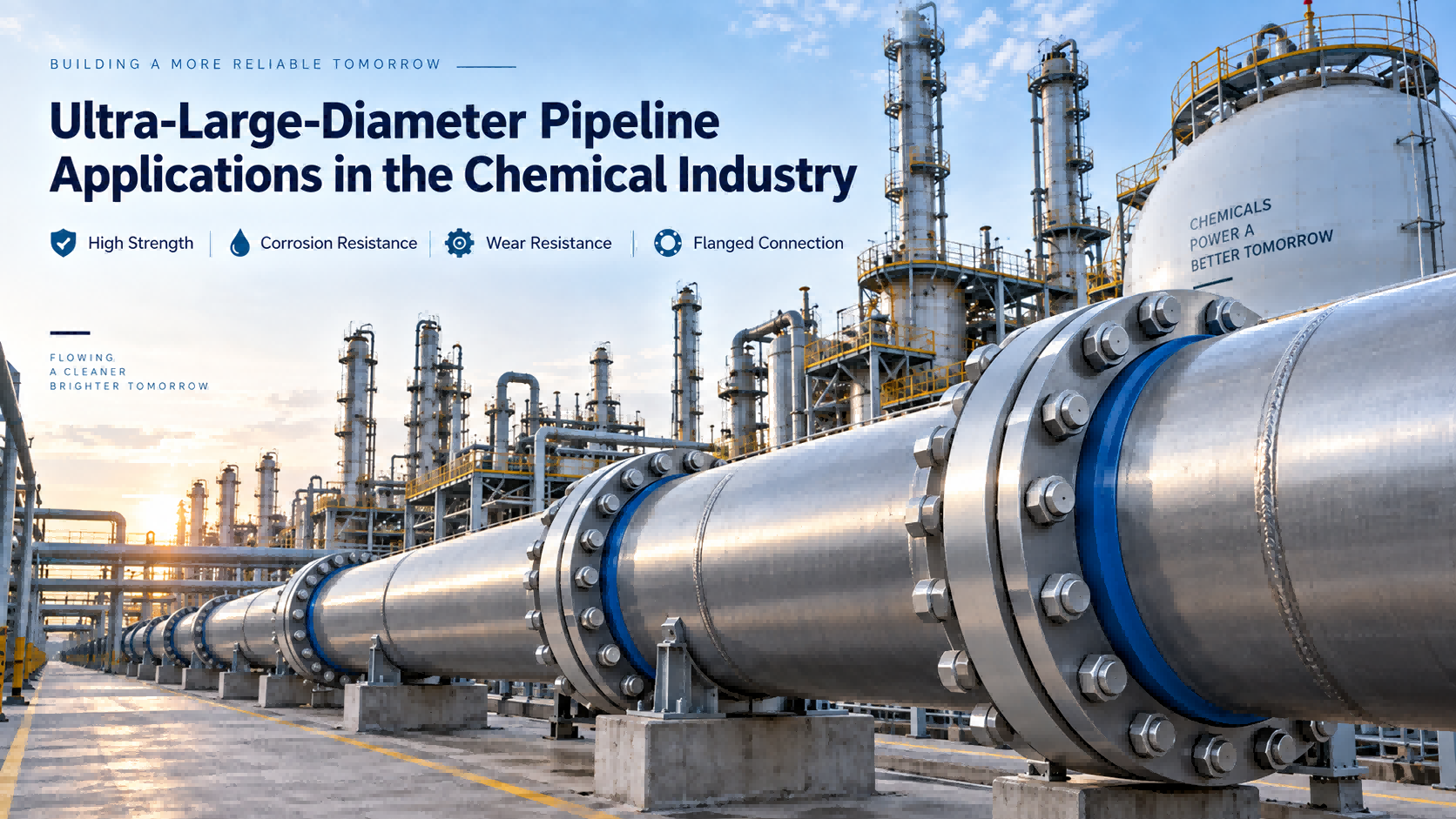
Ultra-Large-Diameter Pipeline Applications in the Chemical Industry: From High-Flow Transportation to High-Reliability System Design