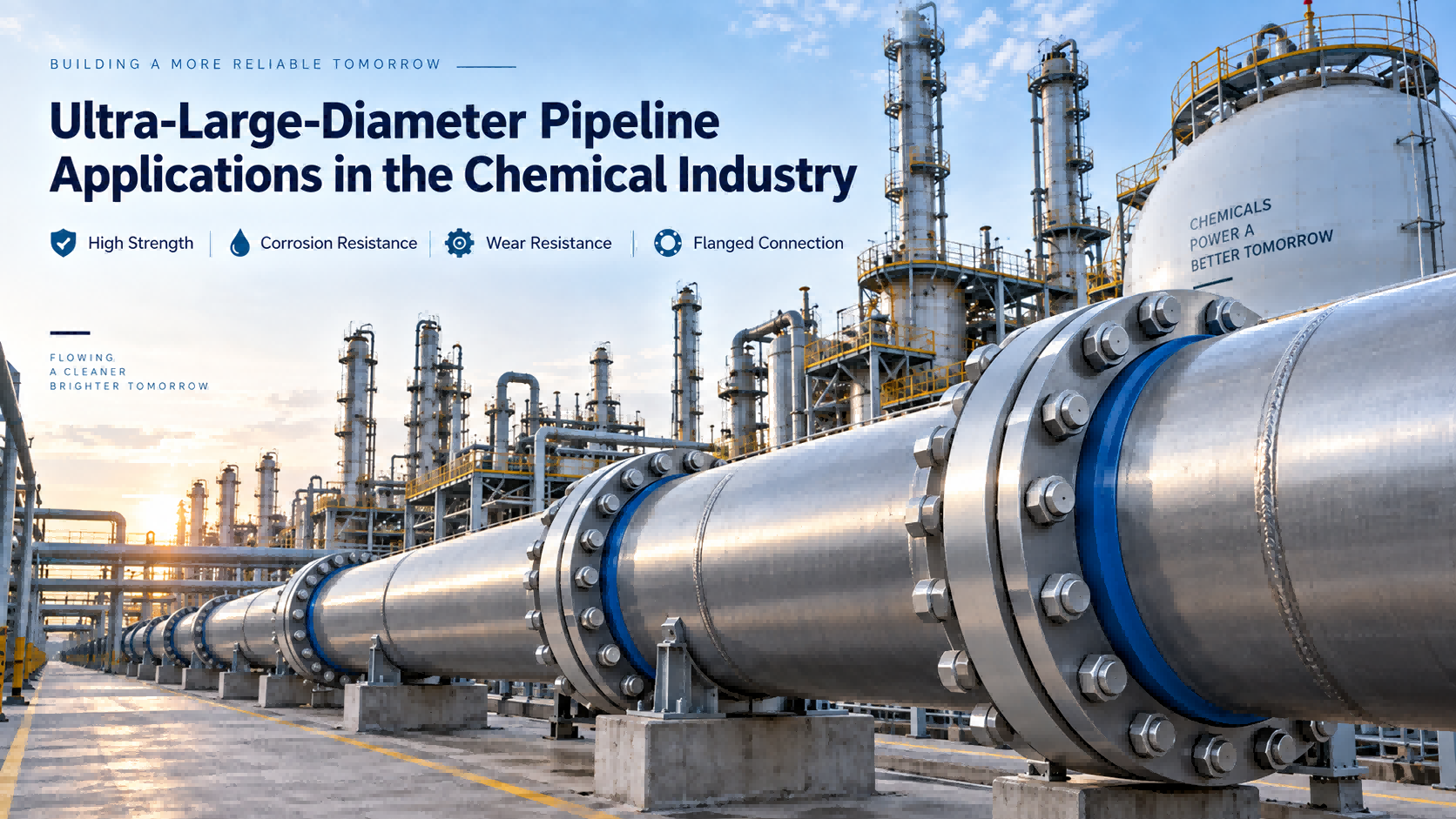
Chemical Industry Pipeline Upgrade Trends: From Traditional Metal Pipes to High-Performance Composite Piping Systems
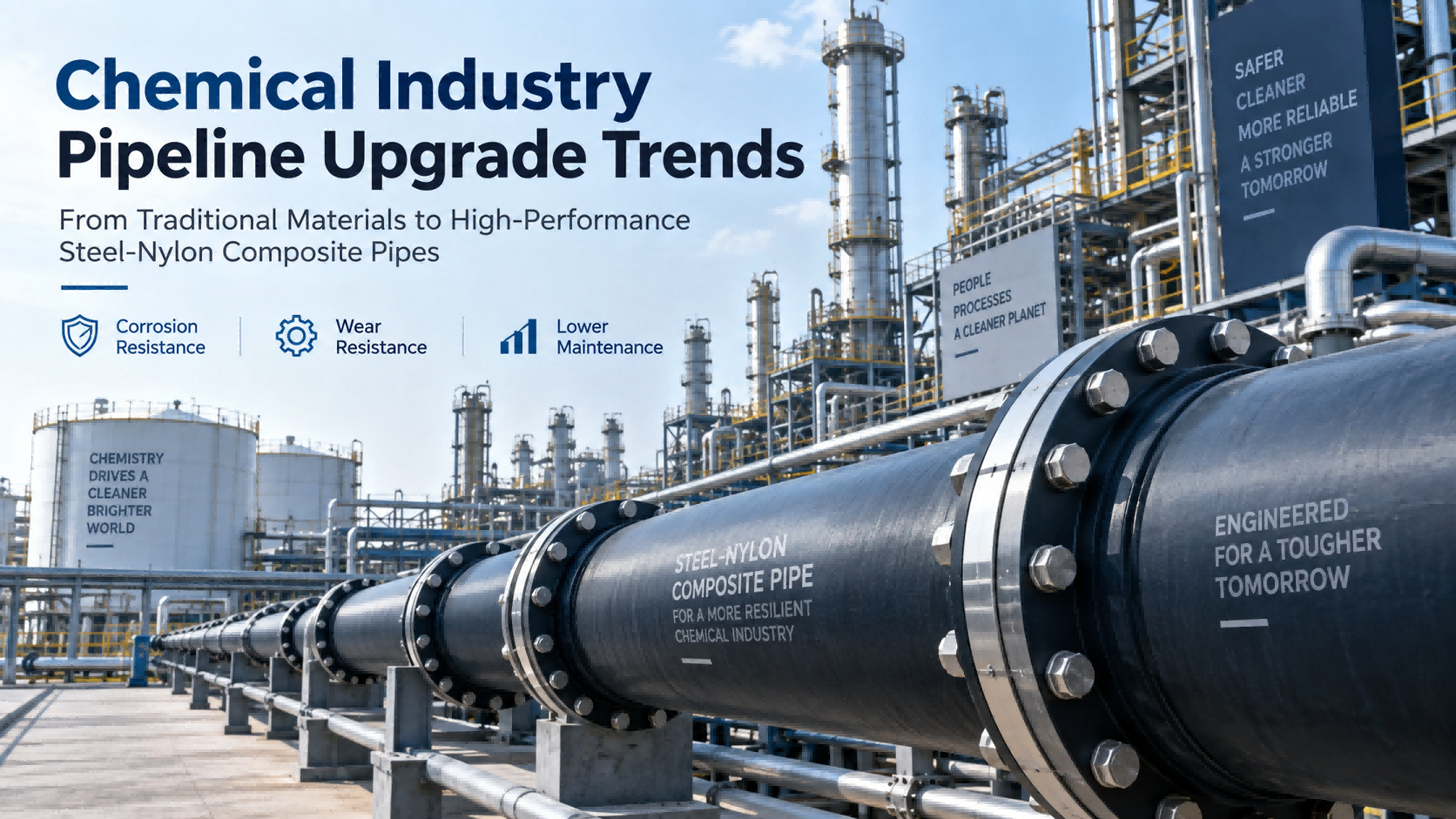
Introduction: The Chemical Industry Is Redefining the Value of Industrial Piping Systems
In the chemical industry, pipelines are essential infrastructure connecting production facilities, storage systems, and transportation networks. Whether in soda ash production, chlor-alkali processing, salt chemical manufacturing, phosphate processing, or industrial wastewater treatment, reliable piping systems play a critical role in maintaining continuous and efficient production.
However, as chemical manufacturing processes continue to evolve, traditional industrial pipelines are facing increasingly complex operating conditions.
Highly corrosive media, elevated temperatures, high pressures, abrasive particles, and frequent changes in production loads are placing greater demands on pipeline durability and structural reliability.
Although many chemical companies have established comprehensive pipeline inspection and maintenance programs, they still encounter problems such as corrosion, localized wear, flange leakage, frequent repairs, and unplanned production shutdowns.
At the same time, traditional pipeline selection methods are changing.
In the past, pipeline procurement decisions often focused primarily on material prices, pipe diameters, and pressure ratings. Today, industrial projects are increasingly considering corrosion resistance, service life, maintenance frequency, installation efficiency, and total lifecycle costs.
Pipeline upgrades in the chemical industry are evolving from simple material replacement toward systematic optimization focused on long-term reliability.
For high-performance composite piping systems, including steel-nylon composite pipes, this transformation is creating new opportunities for industrial applications.
1. Why Does the Chemical Industry Need to Continuously Upgrade Its Piping Systems?
Pipeline modernization is not simply about replacing old pipes with new ones. Its primary purpose is to address changing production conditions, material performance limitations, and increasing long-term operating costs.
1.1 Corrosion Remains a Major Factor Affecting Pipeline Service Life
During chemical manufacturing, pipelines frequently transport various corrosive media, including:
-
Sodium hydroxide solutions and other alkaline chemicals.
-
High-salinity brine, mother liquor, and saline industrial wastewater.
-
Industrial circulating water containing chloride ions.
-
Certain acidic process fluids.
-
Chemical slurries containing both corrosive components and abrasive particles.
Different media can affect pipeline performance through different corrosion mechanisms.
For example, chloride-containing solutions may cause localized corrosion in certain stainless steel grades. Strong alkaline media may corrode some metallic materials under specific concentration and temperature conditions.
Chemical slurries containing solid particles may also accelerate material loss through the combined effects of corrosion and abrasion.
Corrosion not only reduces pipeline service life but may also increase the risk of equipment maintenance, chemical leakage, and unplanned production shutdowns.
According to the IMPACT study published by NACE International, now part of the Association for Materials Protection and Performance (AMPP), the estimated global annual cost of corrosion was approximately USD 2.5 trillion, equivalent to 3.4% of global GDP in 2013.
Although this historical estimate covers multiple industries rather than chemical pipelines alone, it demonstrates the significant economic importance of industrial corrosion control.
For chemical companies, relying solely on periodic repairs may not be the most economical long-term solution.
Selecting appropriate pipeline materials during new construction or existing infrastructure upgrades can help reduce corrosion risks from the initial design stage.
1.2 Corrosion and Abrasion Often Occur Simultaneously
In soda ash production, phosphate processing, mineral processing, and related chemical industries, pipelines frequently transport slurries rather than clean liquids.
For example, salt mud, saline slurry, and certain mother liquors in soda ash production, as well as phosphate rock slurry in the phosphate industry, can create complex pipeline wear problems.
When fluids containing solid particles flow continuously through a pipeline, particle impact and friction against the internal surface may gradually remove material.
Wear can be particularly severe at elbows, reducers, and sections where local fluid velocities are relatively high.
If the transported medium is also corrosive, corrosion and abrasion may interact and accelerate material degradation.
Therefore, pipeline selection for these challenging applications should not focus exclusively on corrosion resistance.
Abrasion resistance, pressure capacity, flow velocity, particle concentration, and pipeline structural design must also be evaluated.
Composite piping systems that combine corrosion resistance, abrasion resistance, and mechanical strength represent an important material option for transporting complex chemical media.
1.3 Frequent Maintenance Disrupts Continuous Chemical Production
For continuous chemical production facilities, the actual cost of pipeline maintenance is often significantly higher than the replacement cost of the pipe itself.
A single pipeline failure may involve several operational procedures, including production shutdown, system isolation, chemical drainage, pipeline removal, replacement, sealing, pressure testing, and production restart.
When hazardous chemical media are involved, additional safety management procedures may also be required.
Therefore, chemical companies should consider more than the purchase price when evaluating pipeline modernization projects.
Maintenance frequency, production downtime, and maintenance resource requirements should all be included in the economic assessment.
Improving long-term pipeline reliability can help reduce maintenance demands and improve overall plant availability.
2. Six Major Pipeline Upgrade Trends in the Chemical Industry
Based on evolving industrial requirements and developments in pipeline technology, six important trends are shaping the modernization of chemical piping systems.
Trend 1: From Conventional Metal Pipes to High-Performance Composite Piping Systems
Traditional metallic pipelines offer mature design standards and reliable structural performance. However, they may have limitations when transporting certain corrosive chemical media.
For example, conventional carbon steel pipes may require additional corrosion protection in corrosive environments.
Although stainless steel provides good corrosion resistance in many applications, its performance varies significantly between grades, and it is not suitable for every chemical medium.
To overcome the limitations of individual materials, composite pipelines provide an alternative engineering approach.
By combining different materials with complementary functions, composite piping systems can achieve a balance between structural strength, corrosion resistance, and abrasion resistance.
Steel-nylon composite pipes are a representative example.
Their structure typically consists of a steel load-bearing component combined with a nylon inner lining.
The steel structure primarily provides mechanical strength and pressure resistance, while the nylon lining serves as the functional layer in direct contact with the transported medium.
This design allows the pipeline to be optimized for different chemical operating conditions through appropriate steel structural design and nylon material modification.
Compared with single-material pipelines, the value of composite pipes does not depend on outperforming every alternative material in every performance category.
Instead, their advantage lies in combining the characteristics of different materials to meet specific engineering requirements.
For chemical transportation systems that require corrosion resistance, structural rigidity, and pressure-bearing capacity, steel-nylon composite pipes offer an alternative solution worth evaluating.
Trend 2: From Reactive Corrosion Protection to Corrosion-Resistant Material Design
Conventional industrial pipeline corrosion protection commonly involves surface coatings, internal linings, corrosion inhibitors, and other protective measures.
These technologies have established value in appropriate applications.
However, certain protective systems require continuous maintenance and may experience coating damage, localized delamination, or protective layer aging.
Consequently, some chemical companies are exploring pipeline material upgrades that reduce corrosion risks through the initial design of the piping system.
Steel-nylon composite pipes combine a steel structure with a nylon inner lining.
When the nylon material demonstrates suitable chemical compatibility with the transported medium, and the lining and connection areas are properly designed and protected, the internal lining can reduce direct contact between the chemical medium and the steel load-bearing structure.
This design offers potential benefits in the transportation of certain high-salinity, alkaline, and other compatible chemical media.
The functional inner lining also allows engineers to optimize the pressure-bearing structure and the material in contact with the transported fluid separately.
However, nylon is not universally resistant to all chemicals.
Strong acids, strong oxidizing agents, and other aggressive media require specific compatibility assessments based on the nylon grade, chemical concentration, operating temperature, and actual exposure conditions.
Material suitability should never be determined solely by the generic material name.
The future of chemical pipeline corrosion control will place greater emphasis on combining material compatibility verification with structural design rather than relying exclusively on subsequent repairs.
Trend 3: From Individual Performance Requirements to Integrated Corrosion Resistance, Abrasion Resistance, and Pressure Capacity
For conventional industrial water supply and drainage systems, corrosion resistance and pressure-bearing capacity are often the primary requirements.
However, pipelines transporting chemical slurries, concentrated brine, and complex process fluids may be exposed to multiple operating challenges simultaneously.
For example, a chemical slurry pipeline may need to:
-
Withstand prolonged exposure to corrosive chemical media.
-
Resist continuous abrasion caused by suspended solid particles.
-
Maintain structural integrity under operating pressure and pressure fluctuations.
-
Accommodate changes in operating temperature.
-
Maintain reliable sealing performance at pipeline connections.
Selecting a material based on only one performance characteristic may not adequately address the operating requirements of the entire system.
Steel-nylon composite pipes combine a steel load-bearing structure with a modified nylon inner lining.
The steel structure provides the primary mechanical strength, while the nylon lining provides corrosion resistance and abrasion resistance for the medium-contact surface, subject to material suitability.
For applications requiring multiple performance characteristics, engineers can optimize the steel structure, lining thickness, nylon formulation, and connection design according to specific operating conditions.
Future chemical pipeline development will place greater emphasis on balancing multiple performance requirements and ensuring long-term stability under complex operating conditions.
Trend 4: From Conventional Welding to Modular Installation and Reduced On-Site Hot Work
In chemical plant modernization projects, pipeline installation methods can significantly affect construction efficiency and operational safety.
Traditional steel pipelines commonly use welded joints, flanged connections, and other joining methods.
Welding can provide reliable permanent connections, but on-site welding in operating chemical plants may require additional hot-work permits, equipment isolation, and construction safety controls.
For example, the U.S. Occupational Safety and Health Administration (OSHA) requires hot-work permit management for certain operations covered by its Process Safety Management standard.
Where engineering requirements allow, prefabricated pipe sections and mechanical connections can reduce the amount of on-site welding required.
This is an important application advantage of steel-nylon composite piping systems.
By incorporating integrally formed flange connections, steel-nylon composite pipes can support non-welded pipe assembly under suitable engineering conditions.
Compared with installation methods that require extensive on-site welding, potential benefits include reduced welding work, greater use of prefabricated pipe sections, easier removal and replacement of certain components, and shorter installation periods.
These features can be particularly valuable in pipeline modernization projects at existing chemical production facilities.
However, non-welded installation does not eliminate construction risks.
Flanged connections still require appropriate sealing surface inspection, gasket selection, bolt preload control, pipe support design, and post-installation leak testing.
For pressurized pipelines, the connection system must also satisfy the actual design pressure, temperature, external loads, and applicable engineering requirements.
Trend 5: From Initial Purchase Price to Total Lifecycle Cost
Historically, some industrial pipeline procurement decisions focused primarily on comparing the unit prices of different pipe materials.
However, for chemical plants designed to operate over extended periods, actual pipeline costs also include installation, maintenance, inspection, and replacement expenses.
As a result, lifecycle cost analysis is becoming an increasingly important method for evaluating pipeline modernization projects.
The basic calculation can be expressed as:
Total Pipeline Lifecycle Cost = Initial Procurement Cost + Installation Cost + Operation and Maintenance Cost + Production Downtime Losses + Replacement Cost + End-of-Life Disposal Cost
Consider a chemical company planning to upgrade a pipeline transporting corrosive process fluids.
Option A uses a conventional pipe material with a relatively low initial purchase price but requires frequent replacement of sections damaged by corrosion.
Option B uses a composite piping system with a higher initial procurement cost but offers the potential for longer replacement intervals under properly verified operating conditions.
If the savings in maintenance, production downtime, and replacement expenses achieved by Option B exceed its additional initial investment during the evaluation period, Option B may provide a lower total lifecycle cost.
For steel-nylon composite pipes, the economic value is not limited to material performance.
Under suitable operating conditions, their corrosion-resistant and abrasion-resistant characteristics may help reduce maintenance and replacement requirements.
However, actual cost savings must be calculated using project-specific operating conditions, installation costs, verified service-life data, and historical maintenance records.
Lifecycle cost advantages should not be assumed solely from the type of pipeline material selected.
Trend 6: From Standardized Pipe Procurement to Customized Industrial Fluid Transportation Solutions
As chemical manufacturing processes become increasingly complex, standardized pipe specifications may not meet every project's requirements.
Different chemical plants can have significantly different requirements regarding transported media, pipe diameter, design pressure, operating temperature, installation environment, and service life.
For example, soda ash manufacturers may place greater emphasis on transporting highly alkaline mother liquor and saline slurries.
Phosphate processing plants may focus more on the combined effects of slurry abrasion and chemical corrosion.
Large chemical projects may require larger pipe diameters, greater structural stability, higher pressure-bearing capacity, and improved installation efficiency.
Therefore, industrial pipeline manufacturers need more than basic production capacity.
They must also develop the ability to provide material selection support, structural design, connection solutions, and manufacturing quality control based on actual operating conditions.
For steel-nylon composite pipe manufacturers, continuous development of material formulations, pressure classes, diameter specifications, and connection structures can help address the increasingly diverse requirements of chemical industry applications.
3. Why Are Steel-Nylon Composite Pipes Worth Considering for Chemical Pipeline Upgrades?
When chemical companies modernize their piping systems, the selected material must not only meet basic transportation requirements but also address the primary causes of failure in the existing system.
By combining steel and modified nylon, steel-nylon composite pipes offer an alternative material solution for certain challenging chemical operating conditions.
Based on our product technology and manufacturing capabilities, the main advantages of our steel-nylon composite pipes include the following.
3.1 Combining Steel Structural Strength with Nylon Lining Performance
Our steel-nylon composite pipes use a steel structure as the primary load-bearing component and a modified nylon lining as the functional layer in contact with the transported medium.
Under suitable design and operating conditions, the steel structure provides the necessary mechanical strength and structural rigidity, while the nylon lining contributes corrosion resistance and abrasion resistance.
This composite design allows the mechanical loading requirements of the pipeline to be combined with the performance requirements of the medium-contact material.
For chemical projects involving corrosive media, operating pressure, and large pipe diameters, steel-nylon composite pipes provide a solution that deserves further technical evaluation.
3.2 Suitable for Certain High-Salinity and Alkaline Chemical Media
In soda ash production, chlor-alkali processing, and salt chemical manufacturing, pipelines frequently transport concentrated brine, alkaline solutions, mother liquor, and industrial wastewater.
These media may cause varying degrees of corrosion in conventional pipeline materials and connection components.
Our steel-nylon composite pipes can be designed for certain high-salinity and strongly alkaline transportation applications through appropriate nylon material selection and internal lining design.
When the lining material is compatible with the transported medium, the nylon functional layer helps reduce direct contact between the process fluid and the steel load-bearing structure.
This can reduce internal corrosion risks under suitable operating conditions.
For alkaline media such as sodium hydroxide solutions, material selection should consider the specific concentration, operating temperature, pressure, and chemical compatibility data of the selected nylon grade.
For brine and mother liquor transportation, additional chemical components, suspended particles, and variations in operating conditions must also be considered.
A project-specific compatibility assessment is essential for fully utilizing the technical advantages of steel-nylon composite structures.
3.3 Abrasion Resistance Provides Additional Options for Chemical Slurry Transportation
In salt mud, mineral slurry, and other particle-containing transportation systems, the internal surfaces of pipelines are continuously exposed to particle impact and friction.
Our steel-nylon composite pipes incorporate modified nylon lining materials that can be optimized according to the abrasion characteristics of different transported media.
Under suitable conditions, the nylon lining can provide abrasion resistance, while the external steel structure supplies the required load-bearing capacity.
Compared with piping solutions designed primarily around corrosion resistance, steel-nylon composite pipes can be engineered to address abrasion resistance, corrosion resistance, and pressure capacity simultaneously.
Nevertheless, actual abrasion performance depends on particle hardness, particle size, solids concentration, flow velocity, and local pipeline geometry.
For highly abrasive slurries, material suitability should be established through appropriate abrasion testing and relevant engineering experience.
3.4 Multiple Diameters and Pressure Ratings for Different Industrial Projects
Large chemical projects often require piping systems with different diameters and pressure ratings.
Our steel-nylon composite pipe product range includes pressure classes from 1.0 to 4.0 MPa, together with large-diameter pipe manufacturing capabilities.
Pipeline structures can be designed according to project-specific requirements, including design pressure, nominal diameter, operating temperature, and installation conditions.
Large-diameter manufacturing capabilities are particularly valuable for major soda ash production facilities, salt chemical plants, and industrial wastewater transportation projects.
It is important to note that the 1.0–4.0 MPa range represents the pressure classes available across the product series.
It does not mean that every pipe diameter and operating temperature is suitable for the maximum pressure rating.
The actual allowable working pressure must be determined according to the specific product specification, design temperature, material performance, connection structure, and engineering verification results.
3.5 Integrally Formed Flange Connections Help Improve Installation Efficiency
Pipeline connection design is an important factor affecting the long-term reliability of chemical transportation systems.
Our steel-nylon composite pipes incorporate integrally formed flange connections and other suitable joining solutions.
Pipe sections can be prefabricated and assembled on-site according to specific project requirements.
For chemical pipelines suitable for flanged connections, this design can reduce certain on-site welding requirements and improve installation, disassembly, and replacement convenience.
In particular, prefabricated non-welded connections can provide greater flexibility during pipeline modernization projects at existing chemical plants.
Furthermore, appropriate flange and sealing system design can help improve the reliability of pipeline connections.
However, integrally formed flanges do not automatically guarantee leak-free performance.
Actual sealing reliability still depends on flange dimensions, sealing surface quality, gasket compatibility, bolt preload, and installation procedures.
4. Which Chemical Industry Applications Are Suitable for Steel-Nylon Composite Pipes?
Chemical pipeline modernization should be based on the characteristics of the transported medium and the primary mechanisms responsible for pipeline failure.
It should not involve replacing every traditional pipeline with a single alternative material.
Based on the structural characteristics of steel-nylon composite pipes, the following applications are worth considering for technical evaluation and engineering suitability assessment.
| Chemical Industry | Typical Transported Media | Primary Pipeline Challenges | Potential Advantages of Steel-Nylon Composite Pipes |
|---|---|---|---|
| Soda ash industry | Mother liquor, brine, salt mud, and certain process wastewater | Alkaline corrosion, particle abrasion, and continuous operation | Combining a corrosion-resistant and abrasion-resistant lining with a steel structure to meet suitable operating requirements |
| Chlor-alkali industry | Caustic soda solutions, brine, and related process fluids | Chemical corrosion, temperature fluctuations, and connection sealing | Optimized material selection and connection design based on chemical concentration and operating temperature |
| Salt chemical industry | Concentrated brine and saline industrial wastewater | High-salinity corrosion and particle abrasion | Using a compatible nylon lining to reduce direct contact between the medium and the steel load-bearing structure |
| Phosphate chemical industry | Phosphate rock slurry and certain process slurries | Solid particle abrasion and localized corrosion | Customized abrasion-resistant lining and pipeline structural design based on slurry characteristics |
| Chemical wastewater treatment | Saline wastewater and certain acidic or alkaline wastewater | Complex chemical composition, corrosion risks, and frequent maintenance | Selecting suitable lining materials according to wastewater composition and optimizing pipeline maintenance requirements |
| Large chemical processing facilities | Circulating fluids, process liquids, and other compatible media | Large diameters, pressure capacity, installation, and long-term reliability | Combining steel structural strength, large-diameter manufacturing capabilities, and prefabricated connection solutions |
The suitability of steel-nylon composite pipes depends on their specific structural design and material properties.
Applications involving strongly oxidizing media, certain highly concentrated acids, or operating conditions beyond the product's rated temperature and pressure ranges require dedicated material compatibility testing and engineering assessment.
In practical engineering applications, selecting the appropriate material for the actual operating conditions is more important than pursuing a single universally applicable pipeline material.
5. How Should Chemical Companies Develop an Effective Pipeline Upgrade Strategy?
For chemical companies planning new pipeline installations or the replacement of aging piping systems, modernization should be based on comprehensive operating condition analysis and engineering verification.
The following five steps provide a practical approach.
Step 1: Identify the Primary Failure Mechanisms of the Existing Piping System
Before replacing existing pipelines, it is essential to determine why the original system experienced problems.
Common causes include internal corrosion, localized abrasion, structural deformation, connection leakage, stress concentration caused by thermal expansion and contraction, improper installation, and unsuitable material selection.
Different failure mechanisms require different solutions.
If corrosion is the main problem, the chemical compatibility of the replacement material should receive particular attention.
If the primary issue is slurry abrasion, engineers should analyze flow velocity, particle characteristics, and the abrasion resistance of the internal pipe surface.
If failures are concentrated at flange connections, replacing the pipe material without improving the sealing system may not solve the underlying problem.
Step 2: Establish a Complete Operating Parameter Checklist
Pipeline material selection should be based on a comprehensive understanding of the actual operating conditions.
| Key Parameter | Information Required |
|---|---|
| Transported medium | Chemical composition, concentration, pH, and potential impurities |
| Design temperature | Normal operating temperature and maximum and minimum design temperatures |
| Design pressure | Normal operating pressure, maximum design pressure, and pressure fluctuations |
| Pipe diameter and flow rate | Nominal diameter, design flow rate, flow velocity, and transportation distance |
| Solid particles | Particle size, hardness, concentration, and particle shape |
| Installation conditions | Aboveground installation, underground installation, pipe racks, or existing plant modernization |
| Project requirements | Required service life, maintenance intervals, and applicable engineering standards |
A comprehensive understanding of these parameters is essential for determining whether steel-nylon composite pipes or alternative materials are suitable for the project.
Step 3: Compare the Overall Suitability of Different Pipeline Materials
For different chemical media, steel-nylon composite pipes can be evaluated alongside carbon steel, stainless steel, HDPE, FRP, and other lined composite piping systems.
The comparison should extend beyond purchase price to include chemical compatibility, allowable working pressure, operating temperature range, abrasion resistance, connection methods, installation conditions, and expected maintenance costs.
Different metallic, nonmetallic, and composite piping systems have their own advantages and limitations.
For example, polyethylene and polypropylene piping systems are used in certain industrial applications, including chemical processing, industrial drainage, and mining.
Their suitability depends on the selected material grade, design conditions, and relevant engineering standards.
Therefore, engineering decisions should be based on specific material properties and actual operating requirements rather than broad comparisons between material categories.
Step 4: Conduct Material Verification and System Design
For steel-nylon composite pipes, material verification should include chemical compatibility, temperature and pressure suitability, and necessary mechanical and abrasion resistance testing.
Pipeline structural design should also consider support spacing, thermal expansion, connection methods, sealing systems, and the actual installation environment.
For international engineering projects, ASME B31.3, Process Piping, provides requirements covering the materials, design, fabrication, installation, inspection, and testing of process piping systems in chemical plants and other industrial facilities.
The applicable design and acceptance requirements should be determined according to local regulations, the characteristics of the transported medium, and the project specifications.
Whether a particular steel-nylon composite pipe system complies with the applicable requirements must be established through its specific structural design, material data, test reports, and necessary engineering reviews.
Step 5: Establish a Total Lifecycle Cost Evaluation Model
After confirming the technical suitability of different materials and structural designs, chemical companies should compare the long-term economic performance of the available solutions.
For new pipeline systems, this includes procurement, installation, operation, maintenance, replacement, and production downtime costs.
For existing systems, historical maintenance records, corrosion rates, failure locations, and unplanned production shutdowns should also be included in the assessment.
Where sufficient data are available, companies can establish lifecycle cost models covering five years, ten years, or another appropriate project evaluation period.
Combining technical performance analysis with economic evaluation allows chemical companies to make more informed pipeline modernization decisions.
6. The Future of Chemical Pipeline Modernization: From Pipe Manufacturing to Reliable Industrial Fluid Transportation Solutions
Technological progress in the chemical industry is reflected not only in production equipment and manufacturing processes but also in the continuous improvement of industrial infrastructure.
For industrial pipelines, future technological development will extend beyond material prices and individual performance indicators.
The ability to provide suitable products and engineering support for different chemical media, pressures, temperatures, and installation environments will become increasingly important for pipeline manufacturers.
Composite piping systems offer significant opportunities for further technological development.
In particular, for chemical pipelines exposed to the combined challenges of corrosion, abrasion, and internal pressure, integrating the functions of different materials provides an alternative approach to conventional single-material piping systems.
By combining steel and modified nylon, steel-nylon composite pipes can be designed to address specific industrial transportation requirements.
Our Development Direction: Continuously Improving the Performance and Application Capabilities of Steel-Nylon Composite Pipes
As a manufacturer of steel-nylon composite pipes, we focus on the chemical industry's practical requirements for long-term pipeline reliability, corrosion resistance, abrasion resistance, and installation efficiency.
Our ongoing technological development focuses on five main areas.
Material Modification
We continue to optimize nylon material formulations for different chemical media and abrasive environments, with the aim of improving overall product performance under suitable operating conditions.
Structural Optimization
Through the coordinated design of steel load-bearing structures and nylon inner linings, we aim to balance mechanical performance, pressure-bearing capacity, and chemical compatibility.
Large-Diameter Manufacturing
We continue to improve our large-diameter steel-nylon composite pipe manufacturing technology to meet the dimensional and structural requirements of major chemical processing facilities.
Connection Technology
Through integrally formed flanges and other suitable connection structures, we seek to optimize pipeline installation methods and reduce certain on-site welding requirements.
Manufacturing Quality Control
We focus on raw material management, manufacturing process control, and finished-product inspection to improve manufacturing consistency across different pipe specifications and production batches.
Through continuous material development, structural optimization, and improvements in manufacturing capabilities, we aim to provide reliable industrial piping products tailored to the operating requirements of chemical projects worldwide.
7. Conclusion: Chemical Pipeline Upgrades Are About Achieving Greater Long-Term Operational Value
Pipeline modernization in the chemical industry is not simply about replacing traditional materials with newer alternatives.
It is a comprehensive process of optimizing industrial fluid transportation systems around safety, reliability, service life, installation efficiency, and total lifecycle cost.
In the future, traditional metal pipes, nonmetallic pipes, and high-performance composite pipes will continue to serve different industrial applications according to their respective technical characteristics.
For chemical projects involving the combined challenges of corrosion, abrasion, and pressure, steel-nylon composite pipes offer an alternative solution by integrating a steel load-bearing structure with a nylon functional lining.
Through appropriate material selection, structural design, and connection technology, these systems can help reduce corrosion and abrasion risks under suitable operating conditions.
They may also create opportunities to reduce maintenance requirements, extend replacement intervals, and optimize long-term operating costs.
The future of chemical pipeline technology is not simply about manufacturing higher-performance pipes. It is about developing more reliable, application-specific, and economically sustainable fluid transportation solutions for different industrial operating conditions.
This is also the direction that continues to guide our development of steel-nylon composite pipe technology.
Contact Us: Find the Right Pipeline Upgrade Solution for Your Chemical Project
Is your chemical processing facility experiencing pipeline corrosion, slurry abrasion, frequent maintenance, large-diameter pipe selection challenges, or complicated installation requirements?
Our technical team is ready to help you explore suitable piping solutions.
We specialize in manufacturing reinforced nylon pipes and steel-nylon composite pipes, providing product selection and customized manufacturing support based on your project's transported media, operating temperature, design pressure, pipe diameter, and installation requirements.
Whether you are planning a new chemical processing facility or upgrading an existing pipeline system, we aim to help you improve the long-term performance of your industrial fluid transportation infrastructure through appropriate material selection and optimized pipeline design.
Contact us today to request our steel-nylon composite pipe product catalog, technical specifications, and customized pipeline selection recommendations for your specific operating conditions.
Solutions to Extend Equipment Service Life in the Chemical Industry: How Corrosion-Resistant Piping Technology Reduces Maintenance Costs and Improves Long-Term Operational Reliability