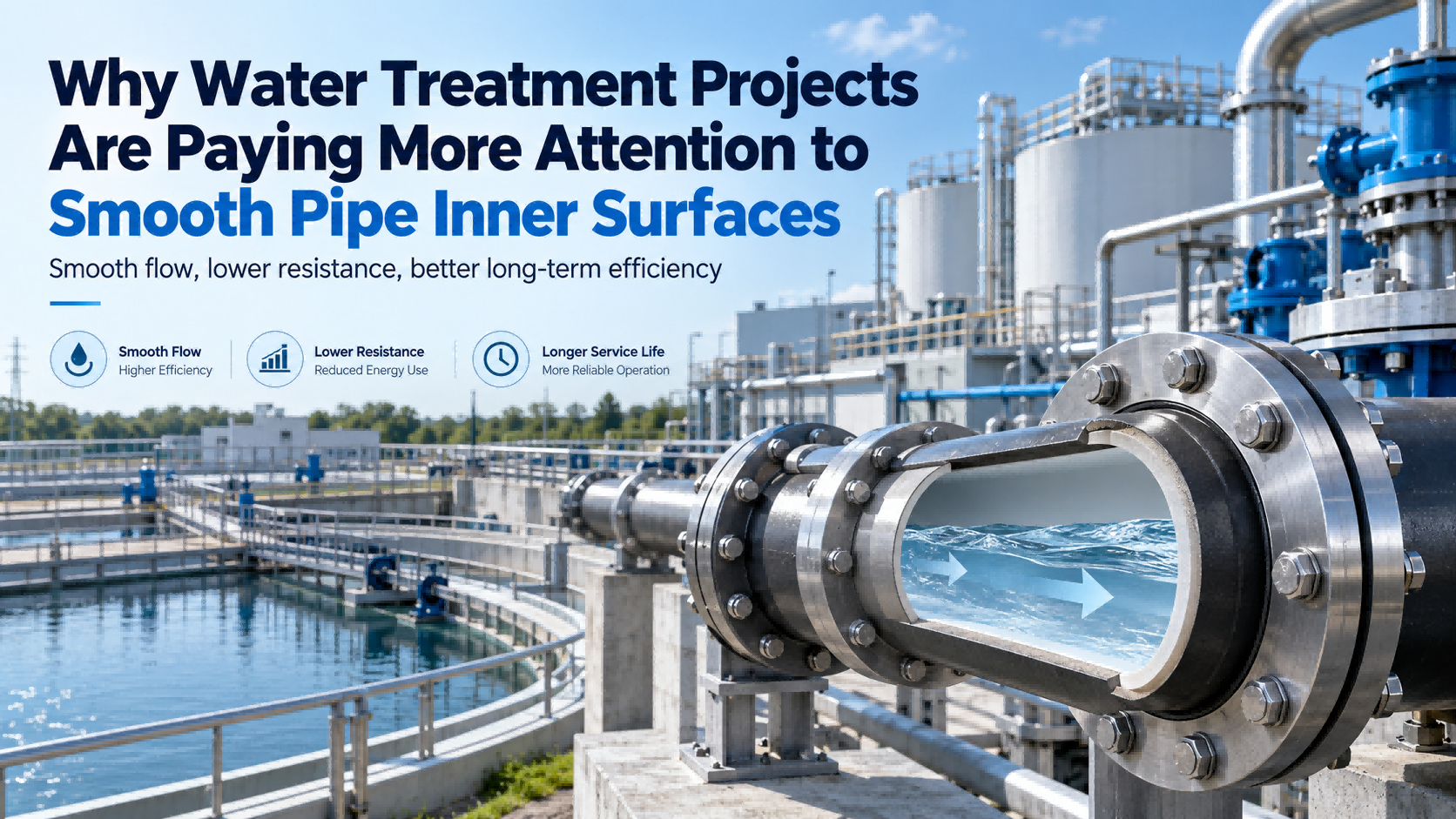
What Special Challenges Do Water Pipelines Face in Island and Coastal Regions? A Comprehensive Guide to Corrosion Resistance and Long-Term Reliability
Introduction: Why Are Coastal Water Pipeline Projects More Challenging Than Inland Projects?
As coastal cities expand, island infrastructure develops, seawater desalination capacity increases, and industrial water demand continues to grow, water pipeline systems in island and coastal regions are facing increasingly demanding performance requirements.
From municipal water supply networks on remote islands to industrial water transmission systems and seawater desalination facilities, pipelines play a critical role in ensuring reliable water distribution, maintaining operational efficiency, and controlling long-term infrastructure costs.
However, compared with conventional inland pipelines, coastal water transmission systems operate under much more complex environmental conditions.
High salinity, chloride exposure, salt spray, humidity, extreme weather, unstable coastal geology, and difficult maintenance conditions can all accelerate pipeline deterioration.
In some applications, pipelines must also withstand elevated operating pressures, pressure surges, abrasive particles, and highly corrosive water.
These factors can increase the risk of corrosion, leakage, connection failure, unexpected shutdowns, and costly repairs.
The key challenge in coastal water infrastructure is therefore not simply selecting a pipe that can transport water. It is selecting a pipeline system capable of maintaining structural integrity, hydraulic efficiency, and long-term economic performance under demanding marine conditions.
Steel–nylon composite pipes offer a promising alternative for selected coastal and industrial water applications by combining the mechanical strength of steel reinforcement with the corrosion-resistant and wear-resistant characteristics of engineering nylon.
This article explores the major challenges facing island and coastal water pipelines, compares common pipeline materials, and explains how steel–nylon composite pipes can contribute to reliable and cost-effective water transportation systems.
1. Seven Major Challenges Facing Water Pipelines in Island and Coastal Regions
1.1 High Salinity and Chloride Corrosion: A Persistent Threat to Pipeline Integrity
One of the most significant challenges in coastal pipeline systems is continuous exposure to salt and chloride ions.
According to the United States Geological Survey (USGS), average seawater salinity is approximately 3.5%, with sodium and chloride ions representing major dissolved constituents.
These salts are present not only in seawater but also in coastal groundwater, marine aerosols, and salt-laden atmospheric moisture.
For coastal water pipelines, corrosion can occur in several ways.
Internal corrosion
When pipelines transport seawater, brackish water, or saline industrial water, chloride ions can accelerate corrosion in susceptible metallic materials.
Even certain grades of stainless steel may experience localized corrosion, particularly pitting and crevice corrosion, under unfavorable chloride exposure conditions.
External corrosion
Pipelines transporting freshwater can still experience external corrosion when installed in saline soils, humid coastal environments, or areas exposed to salt spray.
Exposed steel surfaces, flanges, fasteners, and other metallic components are particularly vulnerable without appropriate protection.
Localized corrosion
Pipeline joints, coating defects, sealing interfaces, and areas where moisture accumulates may become preferential locations for corrosion-related deterioration.
Consequently, coastal pipeline selection must consider the transported medium, external environmental exposure, and connection design.
How steel–nylon composite pipes can help
Steel–nylon composite pipes use an engineering nylon layer as the fluid-contacting surface, helping reduce direct exposure of the structural steel to corrosive transported media.
When material compatibility has been verified, this design can reduce corrosion risks associated with direct contact between saline water and metallic pipe walls.
Meanwhile, the steel reinforcement provides structural strength and pressure-bearing capability.
However, exposed metallic components, flange fasteners, and external steel surfaces must still receive appropriate marine corrosion protection.
1.2 High Humidity and Salt Spray: Corrosion Risks Even in Freshwater Pipelines
A frequently overlooked issue is that coastal freshwater pipelines can suffer significant external corrosion even when seawater never enters the pipeline.
This is because marine environments often contain high atmospheric humidity and salt particles.
Once salt deposits accumulate on metal surfaces, moisture can create conductive films that promote electrochemical corrosion.
This problem is especially relevant in:
-
Coastal pumping stations
-
Island ports and marine terminals
-
Seawater desalination facilities
-
Exposed industrial pipe racks
-
Coastal water treatment plants
Common risks include corrosion of pipe supports and flanges, condensation on metallic surfaces, degradation around damaged protective coatings, and increased maintenance requirements.
For exposed metallic components, environmental corrosivity assessments based on standards such as ISO 12944 can help engineers determine suitable protective coating systems.
Steel–nylon composite pipes can reduce certain corrosion-related vulnerabilities through their composite construction, but exposed steel components still require properly designed external protection.
1.3 Typhoons, Storm Surges, and Extreme Weather: Greater Structural Demands
Island and coastal regions are frequently exposed to severe weather events.
In tropical and subtropical locations, typhoons, hurricanes, storm surges, and extreme rainfall can threaten water pipeline infrastructure.
Typical risks include:
-
Strong wind loads affecting exposed pipe supports
-
Storm surge flooding and seawater intrusion
-
Soil erosion caused by intense rainfall
-
Foundation instability and differential settlement
-
Coastal erosion exposing buried pipelines
-
Wave impact and debris damage near shorelines
Pipelines crossing estuaries, coastal embankments, or port facilities may also experience additional structural loading and ground movement.
Therefore, coastal pipeline design must consider not only internal pressure resistance but also the interaction between the pipeline, its supports, anchoring systems, and flexible connections.
The steel reinforcement in steel–nylon composite pipes can contribute to mechanical strength and structural stability, while the engineering nylon layer offers corrosion and wear protection under suitable operating conditions.
Nevertheless, pipeline material selection cannot replace proper structural engineering.
Projects located in cyclone-prone, seismic, or submerged environments require dedicated assessments of external loads, displacement, anchoring, and joint performance.
1.4 Long-Distance Water Transmission and Water Hammer
Many islands have limited freshwater resources.
To meet residential and industrial demand, water may need to be transported over considerable distances or across significant elevation differences.
Typical applications include:
-
Freshwater distribution from desalination plants
-
Long-distance industrial water transmission
-
Inter-island and mainland-to-island water pipelines
-
High-elevation water supply systems
-
Multi-stage pumping networks
These systems require careful evaluation of operating pressure, hydraulic losses, and transient pressure conditions.
A major concern is water hammer, also known as hydraulic surge.
Water hammer may occur when pumps suddenly stop, valves close rapidly, or flow velocities change abruptly.
The resulting transient pressure can exceed normal operating pressure and potentially damage pipelines, joints, valves, or other system components.
Engineers must therefore evaluate:
-
Maximum steady-state operating pressure
-
Static pressure and elevation differences
-
Pump start-up and shutdown conditions
-
Valve closing characteristics
-
Maximum transient pressure and possible vacuum conditions
-
Pressure ratings of pipes, fittings, flanges, and joints
Depending on the specific product design, our steel–nylon composite pipe range includes nominal pressure classes from 1.0 to 4.0 MPa.
The appropriate pressure class must be confirmed according to pipe diameter, operating temperature, transported medium, product construction, and the complete pipeline system design.
The main advantage is the combination of steel reinforcement for structural strength and an engineering nylon fluid-contact layer for corrosion protection.
This makes steel–nylon composite pipes worth considering in projects where both pressure performance and corrosion resistance are critical.
1.5 Sand, Sediment, and Abrasive Particles: Water Is Not Always Clean
Coastal pipelines do not always transport clean water.
Seawater intake systems may contain sand, suspended solids, shells, and other particles.
Desalination pretreatment systems may transport particle-laden backwash water, while coastal industrial facilities may handle process water containing abrasive contaminants.
When solid particles move through a pipeline, they can cause erosion and abrasive wear.
Areas requiring particular attention include:
-
Pipeline elbows
-
Tee connections
-
Pump discharge sections
-
Diameter transitions
-
High-velocity flow zones
-
Locations experiencing turbulence or particle impact
In metallic pipelines, corrosion and erosion can sometimes interact, accelerating overall material deterioration.
Engineering nylon materials used in steel–nylon composite pipes have favorable wear-resistant characteristics in suitable applications.
This can make them candidates for water systems containing moderate amounts of abrasive particles.
However, actual wear performance depends on particle hardness, particle size, concentration, flow velocity, impact angle, and the specific nylon formulation.
Laboratory testing or relevant operating experience should be used to assess expected service life.
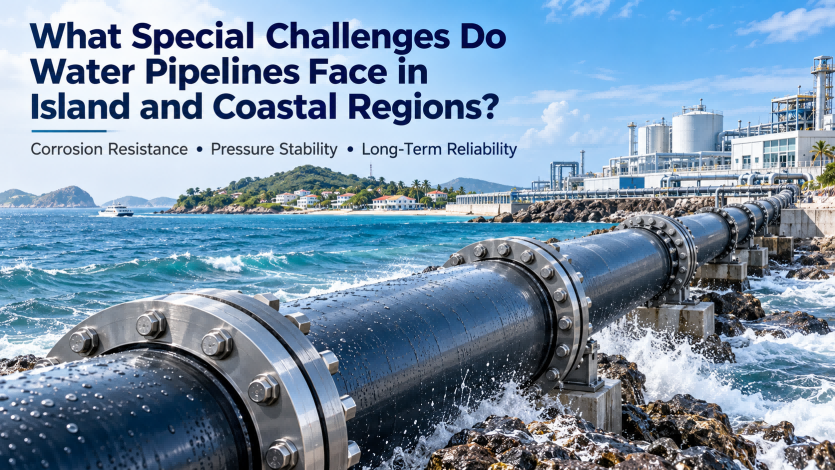
1.6 Internal Surface Smoothness and Long-Term Hydraulic Efficiency
For continuously operating water transmission systems, the internal condition of the pipeline can significantly influence energy consumption.
Pipe wall roughness is one of the important parameters affecting frictional resistance.
The Darcy–Weisbach equation expresses frictional head loss as:
hₑ = f × (L/D) × (v²/2g)
Where:
-
hₑ represents frictional head loss
-
f represents the Darcy friction factor
-
L represents pipeline length
-
D represents internal pipe diameter
-
v represents average flow velocity
-
g represents gravitational acceleration
For long-distance water pipelines, increases in surface roughness caused by corrosion, scaling, or sediment accumulation may increase frictional losses and pumping requirements.
Steel–nylon composite pipes provide a relatively smooth engineering nylon internal surface.
Because this layer separates the conveyed fluid from the structural steel, it can help reduce roughness deterioration associated with metallic internal corrosion.
Under suitable conditions, this may contribute to stable hydraulic performance and lower corrosion-related maintenance requirements.
However, biological fouling, mineral scaling, and sediment deposition may still occur.
Any claimed reduction in pumping energy should therefore be supported by actual pipe roughness data and project-specific hydraulic calculations.
1.7 Difficult Installation and Maintenance: Why Pipeline Failures Cost More on Islands
One of the most underestimated challenges in island infrastructure is the high cost of transportation and maintenance.
In remote locations, repairing a damaged pipeline may require specialized equipment, replacement fittings, engineering personnel, and construction materials to be transported from the mainland.
Some projects may also require marine transportation, temporary equipment rental, or work within limited installation windows.
As a result, the financial impact of pipeline failure extends far beyond the cost of the replacement pipe.
Additional expenses may include:
-
Transportation of replacement components
-
Deployment of maintenance personnel
-
Equipment and crane rental
-
Temporary water supply arrangements
-
Industrial production interruptions
-
Environmental remediation and operational losses
This is why reducing joint failures, minimizing replacement frequency, and simplifying installation can create substantial long-term value.
Our steel–nylon composite pipe products can be supplied with compatible flanged connection systems, including integrated molded flange designs for selected product configurations.
Where permitted by the engineering design, mechanical flange connections can simplify on-site assembly and reduce the need for field welding or other hot work.
However, installation efficiency depends on pipe weight, lifting arrangements, flange alignment, bolt tightening procedures, and actual site conditions.
2. Comparison of Common Pipeline Materials for Coastal Water Applications
Different pipeline materials offer different advantages.
No single material is universally superior under all coastal operating conditions.
| Pipe Material | Main Advantages | Key Considerations in Coastal Applications |
|---|---|---|
| Carbon Steel Pipe | High mechanical strength and established industrial use | Internal and external corrosion; protective coating maintenance |
| 304/316L Stainless Steel Pipe | Good mechanical properties and corrosion resistance in many environments | Pitting and crevice corrosion risks in aggressive chloride environments |
| Ductile Iron Pipe | Established municipal water applications and good pressure-bearing capability | External corrosion protection, lining integrity, and joint protection |
| HDPE Pipe | Resistance to aqueous corrosion, flexibility, and established heat-fusion joining | Temperature limits, long-term pressure performance, deformation, and installation requirements |
| FRP/GRP Pipe | Relatively lightweight and resistant to many corrosive fluids | Impact damage, joint performance, and long-term structural behavior |
| Steel–Nylon Composite Pipe | Steel-reinforced strength, corrosion-resistant internal surface, and wear-resistant characteristics | Material compatibility, joint design, exposed steel protection, and long-term performance verification |
From an engineering perspective, HDPE may be a competitive option for certain low-pressure, long-distance water pipelines.
Ductile iron remains an established choice for many municipal water distribution systems.
However, when a project involves a combination of salinity, abrasive particles, elevated operating pressure, and high maintenance costs, steel–nylon composite pipes deserve serious technical consideration.
Material selection should always be based on actual operating conditions, applicable engineering standards, verified performance data, and lifecycle economics.
3. Why Steel–Nylon Composite Pipes Are Worth Considering for Coastal Water Infrastructure
The fundamental design principle of steel–nylon composite pipes is to combine the structural advantages of steel with the corrosion-resistant and wear-resistant properties of engineering nylon.
3.1 A Composite Structure Combining Strength and Corrosion Protection
For coastal pipeline systems operating under pressure, corrosion resistance alone is not enough.
Pipes must also withstand internal pressure, installation stresses, axial loads, and other operating forces.
Steel–nylon composite pipes use steel reinforcement to provide structural support, while the engineering nylon layer forms a protective fluid-contact surface.
This design allows engineers to address several performance requirements within a single composite system.
3.2 Corrosion Protection for Saline and Industrial Water
The nylon layer helps separate the transported medium from the steel reinforcement.
For compatible saline water, seawater, and selected industrial water conditions, this offers a useful corrosion-control mechanism.
However, seawater chemistry, disinfectants, cleaning chemicals, temperature, and long-term immersion can influence material performance.
Compatibility and long-term durability should be verified before application.
3.3 Combined Wear Resistance and Corrosion Resistance
Some coastal projects involve water containing sand, sediment, or suspended particles.
Steel–nylon composite pipes offer an approach that combines pressure-bearing capability with an abrasion-resistant fluid-contact material.
This may be valuable in seawater pretreatment systems, certain coastal mining operations, and selected industrial wastewater pipelines.
3.4 Smooth Internal Surfaces for Efficient Water Transmission
For large-capacity water transmission systems, stable hydraulic performance is important.
Engineering nylon internal surfaces can reduce deterioration associated with corrosion of bare metallic pipe walls.
Under appropriate operating conditions, this can help maintain the pipeline's internal condition and reduce certain corrosion-related maintenance requirements.
3.5 Flanged Connections for Installation and Replacement
Island projects often face restricted installation space, difficult transportation, and limited maintenance access.
Compatible flange connections allow pipelines to interface with pumps, valves, equipment, and existing pipe sections.
Selected products in our steel–nylon composite pipe range feature integrated molded flange structures.
Compared with pipeline systems requiring extensive field welding, suitable mechanical flange connections may simplify construction planning.
Nevertheless, reliable performance requires correct flange dimensions, sealing surface quality, gasket selection, corrosion-resistant fasteners, and proper bolt tightening procedures.
3.6 Large-Diameter and Customized Pipeline Solutions
Coastal industrial parks, regional water infrastructure, and desalination facilities may require large-diameter water pipelines.
We support engineering discussions involving different nominal diameters, pressure classes, and connection configurations according to project requirements.
For large-diameter pipelines, important design considerations include pipe weight, support spacing, transportation restrictions, lifting requirements, and structural stability.
4. How Should Pipelines Be Selected for Different Coastal Applications?
Application 1: Seawater Intake and Pretreatment Systems
Seawater intake systems typically face high salinity, suspended solids, continuous operation, and localized erosion.
Key engineering considerations include:
-
Seawater compatibility of fluid-contact materials
-
Abrasion caused by sand and suspended solids
-
Pump discharge pressure and water hammer
-
Corrosion protection and maintenance intervals
Steel–nylon composite pipes can be considered where a combination of pressure resistance, corrosion protection, and wear resistance is required.
Systems involving chemical cleaning, disinfection, or elevated temperatures require additional compatibility assessment.
Application 2: Island Freshwater Supply Networks
Island freshwater networks prioritize water security, leakage prevention, and reliable long-term operation.
Even when the transported medium is freshwater, salt spray and saline soils can affect pipeline infrastructure.
Design considerations include:
-
Long-distance hydraulic losses
-
Pumping pressure and transient pressure
-
Joint reliability
-
Coastal soil corrosion and foundation conditions
-
Drinking-water material compliance
For drinking-water projects, the complete pipe product and all relevant water-contact components must meet applicable local hygiene requirements.
These may include NSF/ANSI/CAN 61 or other standards specified by the project.
The fact that nylon is used in certain water-related applications does not mean that every steel–nylon composite pipe product is certified for potable water.
Product-specific certification or acceptance must be confirmed.
Application 3: Coastal Industrial Cooling Water Systems
Power plants, chemical facilities, and other coastal industries may use seawater, freshwater, or reclaimed water for cooling and process circulation.
Such systems often operate continuously, making unexpected shutdowns particularly expensive.
Where corrosion resistance, wear resistance, and pressure capability are required together, steel–nylon composite pipes may be included in the material comparison.
Engineers should also evaluate water treatment chemicals, scaling potential, biological fouling, and operating temperature.
Application 4: Desalination Brine Discharge Pipelines
Concentrated brine discharged from desalination processes generally contains more dissolved salts than the original intake water.
Depending on the process, it may also contain additional chemical constituents.
Material selection should therefore consider actual salinity, chemical composition, temperature, and operating pressure.
The protective internal surface of steel–nylon composite pipes may offer advantages in suitable brine applications.
However, compatibility with ordinary seawater should not automatically be treated as proof of long-term compatibility with every concentrated brine composition.
Application 5: Nearshore and Subsea Water Pipelines
Nearshore pipelines, coastal landfall sections, and subsea systems face additional risks.
These can include buoyancy, seabed erosion, wave and current loads, anchor impact, and variations in seabed conditions.
Such projects require dedicated underwater pipeline design and installation assessments.
The suitability of steel–nylon composite pipes must be established by evaluating joint watertightness, external pressure resistance, axial loading, bending performance, anchoring, and installation methods.
Conventional onshore pipe specifications should not be applied to subsea projects without appropriate verification.
5. Six Technical Factors Engineers Must Evaluate in Coastal Water Pipeline Design
5.1 Water Quality and Chemical Composition
Determine whether the pipeline will carry seawater, freshwater, brackish water, reclaimed water, or industrial wastewater.
Important parameters include:
-
Salinity and chloride concentration
-
pH value
-
Operating temperature
-
Disinfectants and treatment chemicals
-
Other relevant dissolved or suspended substances
The transported medium should be evaluated against the actual pipe material formulation and operating conditions.
5.2 Actual Operating Pressure
Pipeline selection must account for normal operating pressure, static head, pumping conditions, transient pressure peaks, and potential vacuum conditions.
All pipeline components, including fittings and joints, must satisfy the relevant system pressure requirements.
5.3 External Environmental Exposure
Distinguish between indoor installations, exposed coastal environments, saline soil conditions, tidal zones, and permanently submerged applications.
Each environment may require a different external protection strategy for metallic components.
5.4 Mechanical Loads
Evaluate pipe diameter, support conditions, burial depth, soil behavior, external loads, bending stresses, and potential instability.
Coastal erosion and foundation movement should also be considered where relevant.
5.5 Joint and Sealing Performance
A reliable pipeline requires more than a strong pipe body.
Flanges, gaskets, fasteners, fittings, and special connections must also be evaluated for corrosion resistance, pressure performance, and long-term sealing reliability.
5.6 Design Life and Maintainability
Pipeline planning should include inspection intervals, repair procedures, spare-part availability, replacement strategy, and expected service life.
For steel–nylon composite pipes, additional verification may be required for long-term creep, temperature effects, moisture absorption, ultraviolet exposure, and the long-term integrity of the steel–nylon interface.
These considerations should be included in product qualification and project design rather than assuming that favorable material properties alone guarantee system service life.
6. Why Life Cycle Cost Matters More for Island Water Pipeline Projects
Pipeline purchasing decisions are often based on the initial price per meter.
However, in coastal and island environments, the material purchase price may represent only a portion of the overall investment.
A comprehensive Total Cost of Ownership (TCO) assessment should include:
TCO = Initial Material Cost + Transportation and Installation Cost + Operating Energy Cost + Inspection and Maintenance Cost + Repair Cost + Replacement Cost + Downtime Losses − Residual Value
For a more rigorous financial comparison, costs occurring in different years should be discounted to a common reference date.
Consider a hypothetical island water transmission project comparing two pipeline alternatives.
Option A: Lower Initial Material Cost
This option has a lower purchase price but may require more frequent corrosion maintenance or component replacement.
Option B: Corrosion-Resistant Composite Pipeline
This option may involve a higher initial investment but could offer lower maintenance requirements if long-term performance is validated under the actual operating conditions.
The appropriate economic comparison is not simply the price difference per meter.
Instead, engineers and project owners should calculate the total expected expenditure over a consistent evaluation period while maintaining the same required service level.
If a qualified steel–nylon composite pipe system can reduce corrosion-related repairs, replacement frequency, or unplanned downtime, those reductions may help offset its initial cost.
This potential advantage becomes particularly relevant on remote islands, where logistics are expensive, specialist contractors are difficult to mobilize, and supply interruptions can have substantial consequences.
Any projected savings, however, should be supported by project-specific quotations, validated service-life assumptions, maintenance records, and financial calculations.
7. How We Support International Island and Coastal Water Pipeline Projects
As a manufacturer of steel–nylon composite pipes, we focus not only on pipe production but also on helping international customers evaluate suitable pipeline solutions for their operating environments.
We work with EPC contractors, engineering companies, industrial customers, and infrastructure project owners to discuss technical requirements from the early planning stages.
7.1 Operating Condition Assessment
We review relevant information such as:
-
Transported medium and chemical composition
-
Salinity and operating temperature
-
Design pressure and flow rate
-
Pipeline length and diameter
-
Installation environment
-
Corrosion and abrasion risks
This information provides a basis for evaluating product suitability.
7.2 Pipe Diameter and Pressure Class Selection
Based on project requirements, we can discuss appropriate pipe specifications, nominal pressure classes, and connection configurations.
Selection should be supported by the required hydraulic and mechanical engineering calculations.
7.3 Customized Connection Solutions
Projects often require connections to pumps, valves, existing pipelines, and specialized equipment.
We can discuss suitable flange configurations, fittings, and other connection arrangements according to the project design.
7.4 Quality Control and Performance Verification
Quality discussions may include dimensional inspection, visual inspection, pressure testing, leakage testing, and other project-specific inspection or acceptance requirements.
For special applications, additional material compatibility or long-term performance testing may be necessary.
7.5 International Delivery and Installation Support
Overseas pipeline projects require careful planning of packaging, shipping dimensions, lifting arrangements, construction interfaces, and technical documentation.
We aim to support customers in identifying critical delivery and installation considerations during project preparation.
For particularly demanding marine environments, appropriate material qualification, pressure testing, joint verification, and long-term performance assessment are recommended before large-scale procurement.
8. Future Trends: Coastal Water Infrastructure Is Moving Toward High Reliability and Low Maintenance
As coastal industries expand and water infrastructure becomes increasingly important, pipeline engineering is placing greater emphasis on long-term reliability and lifecycle performance.
Several developments are likely to influence future pipeline selection.
First, corrosion and abrasion will increasingly be evaluated together.
In many industrial water applications, chemical exposure and mechanical wear occur simultaneously.
Materials that address multiple degradation mechanisms may offer advantages when properly qualified.
Second, lifecycle economics will become more important.
Initial purchase price alone cannot adequately represent the long-term financial performance of critical water infrastructure.
Maintenance, replacement, leakage risk, and energy consumption must also be considered.
Third, composite materials will provide additional design options.
By combining different material properties, composite pipeline systems can offer useful alternatives for selected corrosive and pressure-bearing applications.
Fourth, pipeline resilience and maintainability will receive greater attention.
Connection reliability, condition monitoring, ease of replacement, and performance under extreme weather will remain important design priorities.
Steel–nylon composite pipes combine steel reinforcement with the corrosion-resistant and wear-resistant characteristics of engineering nylon.
This combination offers an additional material option for selected coastal industrial water, seawater, and complex fluid transportation applications.
Nevertheless, achieving long-term reliability requires coordinated attention to materials, engineering design, manufacturing quality, connections, installation, and maintenance.
Conclusion: Coastal Water Pipelines Require a More Comprehensive Material Selection Strategy
Water pipelines in island and coastal regions face a challenging combination of high salinity, chloride corrosion, salt spray, extreme weather, hydraulic pressure fluctuations, abrasive particles, and expensive maintenance conditions.
For these projects, choosing the lowest-priced pipe is not necessarily the most economical long-term decision.
A more comprehensive evaluation should consider:
Corrosion Resistance + Structural Strength + Wear Resistance + Hydraulic Efficiency + Connection Reliability + Total Cost of Ownership
Steel–nylon composite pipes combine the mechanical advantages of steel reinforcement with the protective characteristics of an engineering nylon fluid-contact layer.
For selected applications involving saline water, abrasive particles, and pressure-bearing requirements, this composite design can provide valuable performance advantages.
For engineering companies planning island water supply networks, seawater desalination facilities, coastal industrial pipelines, or infrastructure rehabilitation projects, early material evaluation and appropriate technical verification are essential steps toward reducing long-term operating risks.
Looking for a Reliable Pipeline Solution for Your Coastal Water Project?
If your project involves seawater, brackish water, industrial water, long-distance transmission, or demanding coastal environments, our technical team welcomes the opportunity to discuss your requirements.
Please share your pipe diameter, design pressure, operating temperature, fluid composition, installation environment, and project location.
We support international engineering companies, EPC contractors, distributors, and project owners in evaluating steel–nylon composite pipe solutions that balance safety, reliability, corrosion protection, and long-term economic performance.
Contact us to discuss your coastal water pipeline requirements and explore a suitable technical solution.
Future Smart Water Systems: What New Requirements Will They Place on Pipeline Infrastructure?
Why Water Treatment Projects Are Paying More Attention to Smooth Pipe Inner Surfaces