The Future of Non-Metallic and Composite Pipes in Urban Infrastructure

Urban infrastructure is entering a new cycle of modernization and renewal.
Over the past several decades, a large proportion of municipal water supply, drainage, wastewater, reclaimed water, and utility pipeline systems have relied on traditional metallic materials such as cast iron, ductile iron, carbon steel, and stainless steel.
These materials played an important role during periods of rapid urban expansion. However, as pipeline networks continue to age, problems such as corrosion, leakage, scaling, pipe bursts, rising maintenance costs, and repeated road excavation are becoming increasingly visible.
At the same time, the criteria used to evaluate urban infrastructure projects are also changing.
Today, the most important question is no longer simply:
“How much does this pipe cost per meter?”
Instead, project owners increasingly ask:
“How many times will this pipeline need to be repaired over the next 30 years or longer? Will corrosion or leakage become a problem? How much disruption will maintenance cause to traffic and public services? What will shutdowns and water interruptions cost? And what will the total lifecycle cost really be?”
Against this background, non-metallic pipes such as HDPE, PVC, and FRP, together with composite systems such as steel-plastic composite pipes and steel-nylon composite pipes, are receiving increasing attention in urban infrastructure projects.
According to the latest U.S. EPA Drinking Water Infrastructure Needs Survey and Assessment, public drinking water systems in the United States require approximately USD 625 billion in infrastructure investment over the next 20 years, including pipeline replacement, treatment facilities, storage facilities, and other infrastructure.
At the same time, the EPA's Clean Watersheds Needs Survey reports approximately USD 630.1 billion in infrastructure needs for wastewater, stormwater, water reuse, and related clean-water systems over the next two decades.
Behind these numbers lies an important global trend:
Many cities are gradually shifting from building entirely new underground networks to upgrading and replacing aging pipeline infrastructure.
1. The Main Question Is Changing from “Do We Have Pipelines?” to “How Long Can They Operate Reliably?”
Urban underground pipelines have one very important characteristic:
Once installed, they are difficult and expensive to maintain.
Pumps, valves, and above-ground equipment can usually be inspected and repaired relatively easily.
Underground pipelines are different.
Once corrosion, perforation, or pipe failure occurs, repairs may require:
-
Road excavation
-
Traffic control
-
Water-service interruptions
-
Emergency maintenance
-
Pavement restoration
-
Significant labor and equipment costs
For this reason, the purchase price of the pipe itself represents only one part of the actual cost of an urban pipeline system.
Studies cited by ASCE indicate that hundreds of thousands of water-main breaks occur annually across the United States and Canada, while large portions of existing distribution networks have already exceeded or are approaching their expected service life.
Corrosion, pipe age, soil conditions, pressure fluctuations, and ground movement can all affect long-term pipeline reliability.
As a result, infrastructure owners are paying greater attention to:
corrosion resistance, connection reliability, maintenance frequency, installation efficiency, scaling behavior, hydraulic performance, and total lifecycle cost.
The logic behind pipe material selection is changing fundamentally.
2. Why Are Non-Metallic Pipes Becoming More Common in Urban Infrastructure?
One of the main strengths of traditional metallic pipes is their excellent mechanical strength and mature engineering design system.
However, when transporting water, wastewater, saline water, or certain chemical media over long periods, corrosion remains an unavoidable engineering challenge.
Metallic pipelines may corrode depending on factors such as:
-
Water chemistry
-
Temperature
-
Dissolved minerals
-
Chloride concentration
-
Oxygen levels
-
Flow conditions
-
Retention time
By contrast, HDPE, PVC, and other polymer pipes are not subject to conventional electrochemical rusting.
This is one of the major reasons they have gained significant market share in municipal water and wastewater infrastructure.
HDPE, for example, is now widely used in:
-
Municipal water supply
-
Pressure sewer systems
-
Reclaimed water systems
-
Industrial utility networks
Its corrosion resistance and fusion-joint technology have contributed significantly to its growth.
However, non-metallic materials are not universal solutions.
As pipe diameter increases, operating pressure rises, temperature conditions become more demanding, or external structural loads increase, engineers must carefully consider the balance between:
corrosion resistance and structural strength.
This is where composite pipelines begin to offer important advantages.
3. The Future Is Not Simply “Replacing Metal” — It Is About Combining Materials
When we examine the development of pipeline materials, one important trend becomes clear.
The traditional approach was to select a single material and expect it to solve every engineering problem.
The emerging approach is different:
Different materials are combined so that each material performs the function it is best suited for.
For example:
Steel provides excellent structural strength and pressure resistance.
Polymer materials can provide excellent corrosion resistance, abrasion resistance, and low-friction internal surfaces.
By combining these advantages, engineers can create a composite pipeline structure in which:
Steel carries the mechanical and pressure loads, while polymer materials protect the pipeline from corrosion and abrasion.
Steel-plastic composite pipes, steel-lined polymer pipes, and steel-nylon composite pipes are all examples of this engineering philosophy.
For increasingly complex urban infrastructure systems, this type of material combination offers significant potential.
4. Urban Water Supply Systems: Corrosion Control and Lower Maintenance Are Becoming Critical
Municipal water networks are generally expected to operate continuously for decades.
If internal corrosion occurs, it can lead to:
-
Progressive wall-thickness loss
-
Scaling and deposits
-
Reduced hydraulic capacity
-
Water-quality concerns
-
Leakage
-
Pipe failure
For this reason, new and replacement water-supply projects are increasingly focused on achieving a balance of:
corrosion resistance + pressure capacity + long-term hydraulic performance.
HDPE and PVC already have mature applications in many municipal water projects.
However, for large-diameter pipelines, higher-pressure systems, or special operating conditions, purely polymeric pipes may not always be the optimal choice.
Steel-nylon composite pipe provides another possible engineering approach.
Its steel structure provides mechanical support and pressure-bearing capability, while the nylon layer contributes excellent corrosion resistance, abrasion resistance, and relatively low friction.
This combination can provide a useful balance between:
structural strength and resistance to transported media.
Potential application areas include:
-
Urban water transmission lines
-
Industrial park water networks
-
Large-diameter water transportation
-
Complex water-quality systems
-
High-pressure utility pipelines
For potable water applications, however, material selection must always comply with the relevant health, certification, and drinking-water regulations applicable in the project country or region.
Material performance alone is not sufficient.
5. Wastewater and Reclaimed Water May Become Major Growth Areas for Composite Pipes
Compared with conventional drinking water, wastewater often creates a much more aggressive operating environment.
Wastewater may contain:
-
Chlorides
-
Sulfides
-
Suspended solids
-
Acidic or alkaline components
-
Organic materials
-
Abrasive particles
At wastewater pumping stations, pressure sewer lines, and industrial wastewater systems, corrosion and abrasion can occur simultaneously.
If the corrosion protection system of a conventional steel pipe is damaged, future maintenance can become extremely difficult.
This is one reason polymer and composite pipelines are receiving increasing attention in wastewater transmission systems.
According to the EPA's 2022 Clean Watersheds Needs Survey, reported needs associated with rehabilitation and construction of conveyance systems alone amount to approximately USD 151.1 billion.
A significant portion of future urban wastewater infrastructure projects will therefore involve reconsidering pipe material selection.
For conventional low-pressure wastewater service, materials such as HDPE and PVC may be appropriate.
However, for conditions such as:
-
Large-diameter pressure sewer systems
-
High-velocity transportation
-
Wastewater containing solids
-
Industrial park wastewater
-
Applications requiring greater mechanical strength
steel-nylon composite pipe may provide more differentiated engineering advantages.
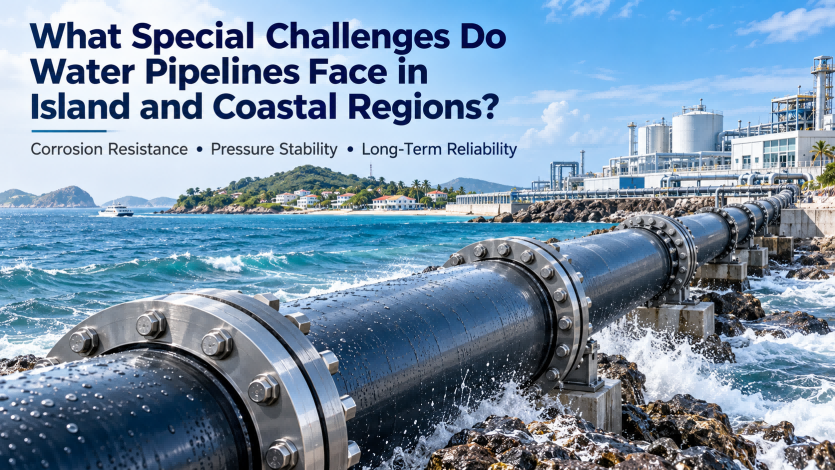
6. Coastal Cities Will Require More Corrosion-Resistant Pipeline Solutions
Another major opportunity for future urban infrastructure is the rapid development of:
coastal cities.
Coastal infrastructure is continuously exposed to:
-
Marine atmospheres
-
High soil salinity
-
Seawater
-
Chlorides
-
Brine environments
For seawater intake, seawater discharge, desalination plants, municipal circulating-water systems, and coastal industrial utilities, conventional carbon steel typically requires substantial corrosion-protection measures.
High-grade stainless steel or duplex stainless steel may provide excellent corrosion resistance, but their material cost can become significant, particularly in large-diameter projects.
This creates an important opportunity for non-metallic and composite pipelines.
A steel-nylon composite structure can retain strong mechanical characteristics while reducing direct contact between corrosive media and the steel load-bearing structure.
Potential applications therefore include:
-
Seawater transportation
-
High-salinity water
-
Concentrated brine
-
Industrial circulating water
-
Coastal industrial wastewater
-
Desalination-related infrastructure
These applications represent promising areas for further engineering development.
7. Large-Diameter Infrastructure Could Become One of the Most Important Markets for Composite Pipes
As urban populations grow, metropolitan areas expand, and large-scale water infrastructure projects develop, one trend is becoming increasingly clear:
Cities need to transport larger volumes of water and wastewater.
This often means larger pipe diameters.
For smaller-diameter applications, polymer materials such as HDPE and PVC can provide strong advantages.
However, as pipe diameter and design pressure increase, engineers must pay increasing attention to:
-
Wall thickness
-
Ring stiffness
-
Structural stability
-
Installation conditions
-
External loading
-
Joint design
-
Long-term deformation
Conventional steel pipes provide excellent pressure resistance but must address internal and external corrosion.
This creates a valuable application space for composite materials.
The key value of steel-nylon composite pipe lies precisely in this area.
It does not need to compete with every plastic pipe application.
Nor does it need to replace every steel pipeline.
Instead, its most valuable position may be in projects where the following conditions occur simultaneously:
high pressure + large diameter + aggressive media + long-term corrosion resistance requirements.
This is a much more realistic engineering approach than claiming that one material is universally superior to all others.
8. Urban Infrastructure Is Moving from CAPEX Thinking to TCO Thinking
Historically, many pipeline projects focused heavily on one number:
initial pipe price.
However, the true economics of urban infrastructure are determined by far more than the initial purchase price.
The real cost of a pipeline system may include:
-
Material procurement
-
Installation
-
Corrosion protection
-
Inspection
-
Maintenance
-
Emergency repair
-
Road excavation
-
Pavement restoration
-
Leakage losses
-
Water-service interruptions
-
Operational downtime
-
Future replacement
This means that a material with a somewhat higher initial purchase price may still provide superior economics if it can eliminate one or more major maintenance interventions during its service life.
Increasingly, cities and infrastructure operators are therefore focusing on:
Total Cost of Ownership — TCO
In other words:
the complete cost of owning and operating the pipeline throughout its lifecycle.
This shift creates one of the biggest market opportunities for non-metallic and composite pipeline systems.
Their real value is not simply that they may offer a “cheaper pipe.”
Their value is that they can potentially provide:
less corrosion, fewer maintenance interventions, lower failure risk, and more predictable long-term operating costs.
9. Where Does Steel-Nylon Composite Pipe Fit into Urban Infrastructure?
For steel-nylon composite pipe, we believe its future value lies not in simply replacing one conventional pipeline material, but in addressing the performance compromises that exist between different materials.
Conventional steel pipe offers:
High mechanical strength, but corrosion must be controlled.
Conventional plastic pipe offers:
Excellent corrosion resistance, but certain large-diameter, high-pressure, and structurally demanding applications may involve additional engineering limitations.
FRP offers:
Good corrosion resistance, but project-specific attention must be given to jointing, impact conditions, installation, and long-term service requirements.
Stainless steel offers:
Excellent performance, but large-scale and large-diameter systems can carry significantly higher material costs.
Steel-nylon composite pipe is designed around a different objective:
How can structural strength, corrosion resistance, abrasion resistance, and lifecycle economics be combined within one pipeline system?
Our steel-nylon composite pipes combine a steel load-bearing structure with reinforced nylon materials and can be engineered according to:
-
Transported medium
-
Operating pressure
-
Temperature
-
Pipe diameter
-
Flow velocity
-
Abrasion conditions
-
Installation environment
This provides several potential advantages in demanding urban utility systems.
Strong pressure-bearing capability
The steel structure provides reliable mechanical strength for pressurized pipeline systems.
Corrosion-resistant internal working layer
The nylon layer helps reduce direct contact between aggressive media and the steel structure.
Excellent abrasion resistance
This is especially valuable in wastewater or utility systems carrying suspended solids or abrasive particles.
Smooth internal surface
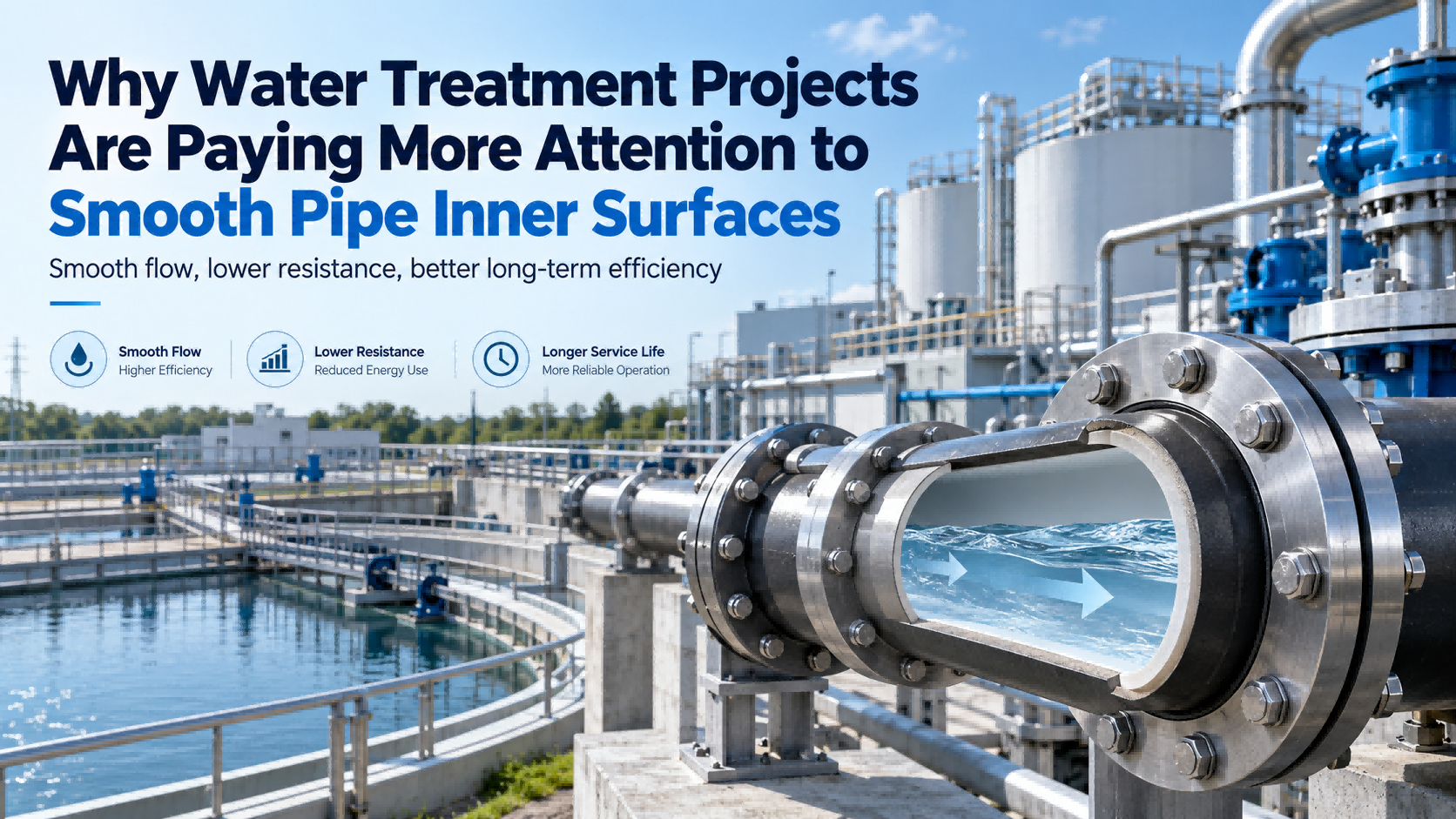
A relatively smooth internal surface can help maintain hydraulic efficiency over long operating periods.
Integrated flange design
One-piece molded flange structures can facilitate connection and installation in industrial and municipal engineering projects.
Lower maintenance potential
For urban infrastructure that is difficult to shut down or excavate repeatedly, reducing maintenance frequency can create significant economic value.
Therefore, the most important question is not:
“Can steel-nylon composite pipe replace a specific traditional pipe?”
A more useful question is:
“Under what operating conditions can steel-nylon composite pipe reduce the total lifecycle cost of the project?”
That is where the real engineering value of composite pipelines lies.
10. Five Major Trends Likely to Shape the Future of Urban Pipeline Materials
Looking ahead, the development of pipeline materials for urban infrastructure is likely to follow several clear trends.
1. From single-material systems to composite structures
Different materials will increasingly be used together to solve separate problems involving structure, corrosion, and abrasion.
2. From lowest purchase price to lowest lifecycle cost
Cities and utility operators will place greater emphasis on maintenance frequency, leakage rates, shutdown risks, and replacement cycles.
3. Large-diameter applications will create stronger demand for composite materials
Where large diameter, elevated pressure, and corrosion resistance are required simultaneously, composite structures can offer greater engineering flexibility.
4. Aging pipeline rehabilitation will become a major market
For many mature cities, one of the largest infrastructure investments over the coming decades will not be building entirely new networks, but replacing and upgrading existing water and wastewater pipelines.
5. Pipe selection will become increasingly engineering-driven
Projects will no longer simply ask whether they should use steel, plastic, or composite pipe.
Instead, engineers will evaluate:
-
Medium composition
-
Pressure
-
Temperature
-
Flow velocity
-
Burial depth
-
External loading
-
Installation conditions
-
Maintenance requirements
-
Lifecycle cost
11. The Future Does Not Belong to One Material — It Belongs to the Right Material for the Right Operating Condition
Over the coming decades, cities around the world will need to upgrade enormous quantities of underground pipeline infrastructure.
However, this does not mean metallic pipelines will disappear.
It also does not mean polymer or composite pipelines can solve every engineering problem.
The more realistic direction is:
greater material specialization, more precise engineering design, and stronger emphasis on lifecycle performance.
Low-pressure conventional water systems may continue to use large quantities of HDPE and PVC.
Applications requiring very high structural strength may continue to rely on steel or ductile iron.
Highly corrosive environments may require stainless steel or other advanced materials.
But where a project simultaneously requires:
high strength + corrosion resistance + abrasion resistance + large diameter + pressure transportation + low maintenance
composite pipe systems may become increasingly attractive.
This is also why we continue to focus on the development and manufacturing of steel-nylon composite pipes.
We do not believe the future of urban infrastructure depends on one “universal pipe.”
Instead, we believe an effective pipeline solution should always begin with a clear understanding of:
the transported medium, operating temperature, pressure, flow velocity, abrasion conditions, installation environment, and total project lifecycle.
Because for a city that expects its infrastructure to operate for decades,
the most expensive part is rarely the initial purchase of the pipe itself.
The real cost comes from decades of:
corrosion, leakage, emergency repairs, shutdowns, road excavation, and repeated replacement.
And that is precisely where non-metallic and composite pipeline systems may create their greatest value in the future.
Why Water Treatment Projects Are Paying More Attention to Smooth Pipe Inner Surfaces
Future Trends in the Large-Diameter Water Supply and Drainage Pipeline Market