Future Smart Water Systems: What New Requirements Will They Place on Pipeline Infrastructure?

Introduction: In the Era of Smart Water Management, Pipelines Are More Than Just Transportation Infrastructure
As global urbanization accelerates, water scarcity becomes increasingly serious, and aging water infrastructure enters a new cycle of modernization, the global water industry is undergoing a major transformation.
Traditional water supply and wastewater systems are gradually evolving into digital, intelligent, and highly efficient infrastructure networks.
Technologies such as the Internet of Things (IoT), Artificial Intelligence (AI), Digital Twins, smart sensors, and real-time water quality monitoring are reshaping how cities, industrial facilities, and water utilities manage their water resources.
In the past, pipeline engineering primarily focused on three fundamental questions:
-
Can the pipeline transport water safely?
-
Can the pipeline withstand the required operating pressure?
-
Is the initial construction cost reasonable?
However, future smart water systems must address a much broader range of challenges:
-
Can pipeline pressure, flow, and operating conditions be continuously monitored?
-
Can leaks be detected early to reduce non-revenue water (NRW)?
-
Can corrosion, scaling, and water quality risks associated with pipeline deterioration be minimized?
-
Can pipelines withstand pressure fluctuations caused by intelligent water distribution systems?
-
Can long-term maintenance costs and pumping energy consumption be reduced?
-
Can pipeline infrastructure be integrated with digital asset management and predictive maintenance systems?
These emerging requirements indicate that the future of smart water management depends not only on advanced software, sensors, and automation technologies but also on the reliability of the underlying pipeline infrastructure.
A truly intelligent water system requires both advanced digital technology and durable, reliable pipeline materials.
For municipal water supply, wastewater treatment, industrial water circulation, and large-scale water transmission projects, steel-nylon composite pipes offer a promising material solution by combining structural strength with corrosion and abrasion resistance.
1. How Smart Water Management Is Transforming Traditional Pipeline Design
1.1 From Reactive Repairs to Predictive Maintenance
Traditional water distribution networks generally rely on routine inspections and reactive maintenance.
When a pipe bursts, a leak occurs, pressure drops unexpectedly, or water quality problems emerge, maintenance teams must investigate and repair the affected infrastructure.
This approach can result in significant emergency repair costs, particularly in large cities and industrial facilities where uninterrupted water supply is essential.
Smart water management is changing this operating model.
By integrating pressure sensors, flow meters, acoustic monitoring devices, and digital analytics platforms, utilities can identify abnormal operating conditions and assess potential infrastructure risks before major failures occur.
For example, when a particular distribution zone experiences unusual flow patterns combined with a continuous pressure reduction, an intelligent monitoring system can generate a potential leakage alert and help maintenance teams narrow down the affected area.
However, smart monitoring technology cannot eliminate the underlying causes of material deterioration or connection failure.
Sensors help identify problems, while reliable pipeline materials help reduce the likelihood of certain problems occurring in the first place.
Therefore, future water infrastructure development must integrate intelligent monitoring capabilities with long-term pipeline reliability.
1.2 From Initial Construction Cost to Lifecycle Asset Management
Traditional pipeline procurement decisions often place considerable emphasis on the initial material price.
However, smart water infrastructure projects increasingly focus on the economic value of assets throughout their entire service life.
The actual cost of a pipeline system includes much more than purchasing and installation expenses.
It also involves:
-
Routine maintenance and inspection costs
-
Corrosion, abrasion, and leakage repair expenses
-
Energy consumption during water transportation
-
Economic losses caused by unexpected shutdowns
-
Pipeline replacement and infrastructure renewal expenses
As a result, Total Cost of Ownership (TCO) is becoming an increasingly important factor in pipeline material selection.
Under this development trend, composite piping materials with strong corrosion resistance, abrasion resistance, and structural performance are attracting greater attention from engineering designers and infrastructure operators.
2. New Requirement One: Higher Pipeline Reliability and Better Leakage Prevention
Reducing water loss is one of the most important objectives of modern smart water management.
Water leakage can result from multiple factors, including:
-
Long-term corrosion that gradually reduces pipe wall thickness.
-
Structural damage caused by pressure fluctuations and water hammer.
-
Deterioration of joint seals or improper installation.
-
Ground settlement and external mechanical loads.
-
Long-term material fatigue or physical damage.
Technologies such as District Metered Areas (DMAs), real-time pressure monitoring, and intelligent leak detection systems can improve leakage management.
However, the pipeline itself must still provide adequate structural integrity and mechanical reliability.
How Can Steel-Nylon Composite Pipes Meet These Requirements?
Steel-nylon composite pipes combine the engineering characteristics of steel and nylon materials.
Steel provides structural strength.
Steel offers high mechanical strength and rigidity, allowing the pipeline structure to withstand applicable internal pressure and external mechanical loads.
Nylon provides internal corrosion protection.
Depending on the material formulation and operating conditions, the nylon inner layer separates the transported medium from the steel structure, helping reduce internal corrosion risks while providing abrasion protection.
Flanged connections facilitate installation and maintenance.
For products incorporating integrally formed flange designs, properly engineered flange structures, gaskets, and bolt preload can provide reliable mechanical connections.
Compared with welded steel pipe connections, flanged installation can also reduce the need for on-site hot work at the corresponding joints.
These characteristics make steel-nylon composite pipes a valuable option for water infrastructure projects requiring long-term operational stability and convenient maintenance.
However, reliable connections still depend on appropriate pressure design, gasket selection, installation quality, and field testing.
3. New Requirement Two: Greater Corrosion Resistance and Water Quality Compatibility
Water quality management is becoming increasingly important in smart water infrastructure.
Beyond conventional municipal water supply, modern water management systems also cover:
-
Industrial circulating water
-
Reclaimed water reuse
-
Municipal wastewater treatment
-
Coastal water transmission
-
High-salinity industrial wastewater
-
Seawater desalination support systems
These applications can present very different corrosion challenges.
For example, chloride-containing water may cause localized corrosion in certain metallic materials.
Chemical additives, dissolved oxygen, and temperature variations in industrial circulating water systems can also affect long-term pipeline performance.
In conventional carbon steel pipelines, inadequate corrosion protection may eventually lead to internal wall deterioration, corrosion product accumulation, or localized perforation.
Corrosion Resistance Advantages of Steel-Nylon Composite Pipes
Steel-nylon composite pipes use a composite design that combines a steel load-bearing structure with a protective nylon layer.
This approach separates mechanical load-bearing functions from direct contact with the transported medium.
Compared with unprotected carbon steel pipelines, potential advantages include:
1. Reduced direct corrosion of the steel structure
When the inner layer remains intact and is chemically compatible with the transported medium, it acts as a physical barrier between the fluid and the steel.
2. Compatibility with various industrial water applications
Depending on water chemistry and material selection, steel-nylon composite pipes may be suitable for circulating cooling water, certain saline water applications, industrial wastewater, and other corrosive water environments.
3. Reduced corrosion-related maintenance
When the protective inner layer is properly selected and maintains its integrity during operation, the frequency of maintenance associated with internal corrosion may be reduced.
Nevertheless, corrosion resistance should never be assumed to apply universally.
Engineering evaluations must consider chemical concentration, operating temperature, pH, oxidizing conditions, flow velocity, and long-term immersion behavior.
Water containing strong oxidizing agents or aggressive treatment chemicals may require additional compatibility testing.
For drinking water applications, products must also comply with the applicable drinking-water-contact material regulations and certification requirements in the target market.
4. New Requirement Three: Lower Hydraulic Resistance and Higher Energy Efficiency
One of the primary objectives of future smart water systems is to reduce overall energy consumption through optimized pumping operations, pressure management, and hydraulic efficiency.
In long-distance water transmission and large industrial circulating water systems, pumping energy can represent a substantial portion of operating expenditure.
Pipeline head loss depends on several factors, including:
-
Internal pipe diameter
-
Pipeline length
-
Flow velocity
-
Internal surface roughness
-
Fluid properties and flow regime
The Darcy–Weisbach equation can be expressed as:
h_f = f × (L / D) × (v² / 2g)
Where:
-
h_f = Frictional head loss
-
f = Darcy friction factor
-
L = Pipeline length
-
D = Internal pipe diameter
-
v = Average flow velocity
-
g = Gravitational acceleration
For pipelines with the same internal diameter, flow rate, and operating conditions, differences in internal surface roughness can affect friction losses and pumping energy requirements.
Why Is Internal Pipe Smoothness Becoming More Important?
Some traditional metallic pipelines experience increasing internal roughness over time due to corrosion products and accumulated deposits.
This deterioration can cause:
-
Increased hydraulic resistance
-
Higher pump head requirements
-
Greater electricity consumption
-
Increased sediment accumulation
-
More frequent cleaning and maintenance
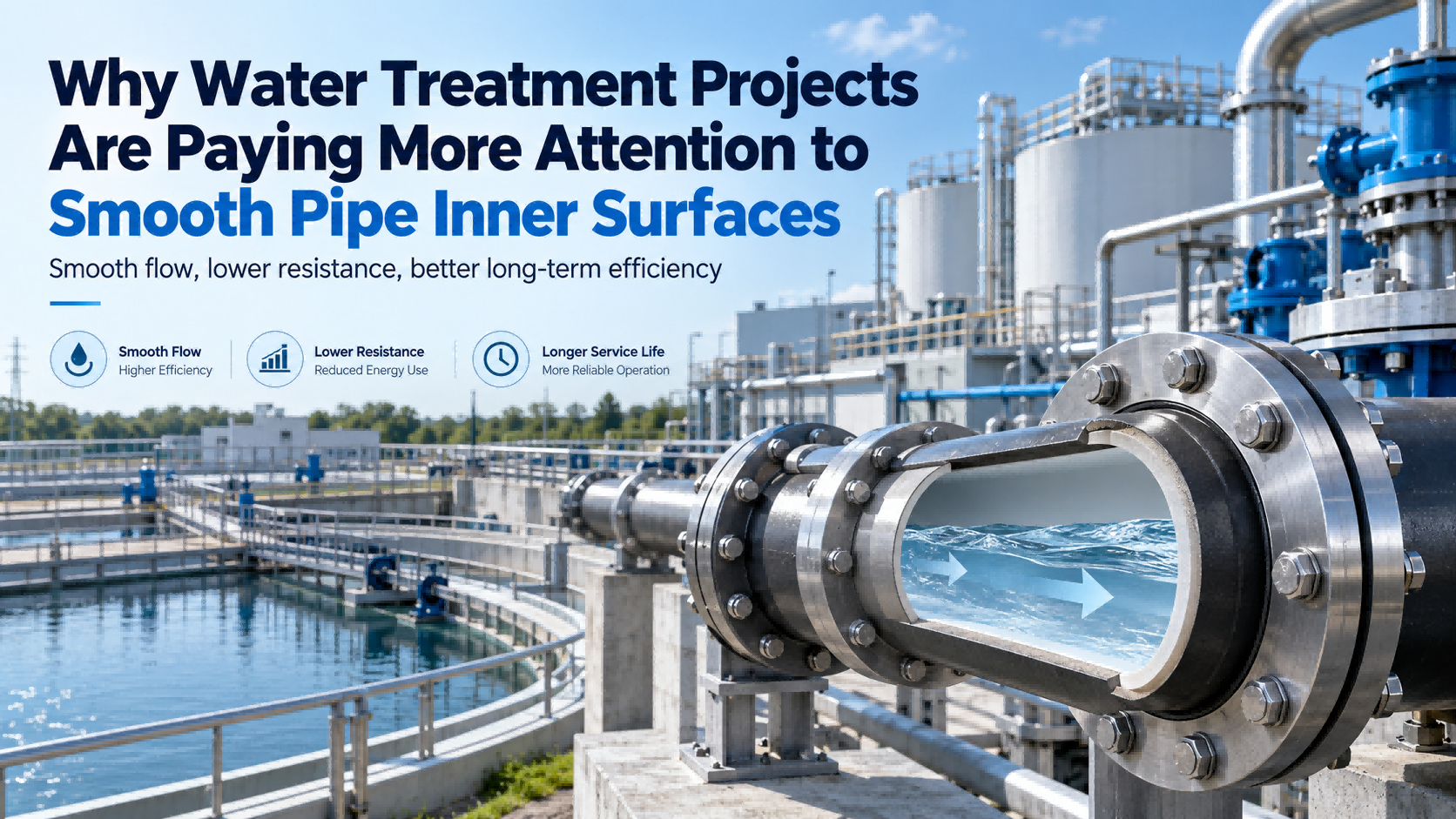
Steel-nylon composite pipes feature a relatively smooth nylon inner surface.
This characteristic can help prevent the roughness deterioration associated with internal metallic corrosion.
Under appropriate water quality and flow conditions, the inner surface may contribute to maintaining more stable hydraulic performance over time.
However, nylon pipes are not completely immune to scaling or deposits, and specific energy savings cannot be determined from the material type alone.
Accurate hydraulic calculations should use verified surface roughness parameters, actual internal diameters, and project-specific flow conditions.
Future pipeline selection should evaluate not only initial hydraulic efficiency but also how effectively that efficiency can be maintained throughout the pipeline's service life.
5. New Requirement Four: Greater Adaptability to Pressure Fluctuations and Intelligent Water Distribution
Modern smart water systems increasingly incorporate:
-
Variable frequency pumps
-
Intelligent control valves
-
Automatic pressure regulation
-
Zoned water distribution
-
Remote pumping station management
These technologies improve system efficiency but also introduce more dynamic operating conditions.
Examples include:
-
Flow variations between peak and off-peak demand
-
Pressure fluctuations caused by pump startup and shutdown
-
Water hammer resulting from rapid valve closure
-
Pressure adjustments between distribution zones
-
Transient pressure events during emergency operations
As a result, simply meeting normal operating pressure requirements is no longer sufficient for a comprehensive pipeline safety assessment.
Future pipeline systems must also account for design pressure, transient loads, cyclic loading, and long-term joint reliability.
Structural Advantages of Steel-Nylon Composite Pipes
Steel-nylon composite pipes utilize steel as the main structural load-bearing component, while the nylon inner layer provides protection against the transported medium.
Depending on the specific product design, relevant pipe specifications may be available for pressure classes ranging from 1.0 to 4.0 MPa.
However, the actual allowable pressure must be determined according to:
-
Nominal pipe diameter
-
Steel wall thickness
-
Structural design
-
Operating temperature
-
Flange pressure rating
-
Manufacturing and inspection results
A particular pressure rating should never be assumed to apply to every pipe diameter.
For smart water projects, engineers should carefully evaluate:
-
Normal operating pressure and maximum design pressure.
-
Water hammer and other transient pressure conditions.
-
Pipe supports and external mechanical loads.
-
Flange connections and sealing systems.
-
Temperature variations and thermal stresses.
-
Fatigue behavior under repeated pressure fluctuations.
With appropriate engineering design, steel-nylon composite pipes can provide a combination of structural strength and internal corrosion protection for selected medium- and high-pressure industrial water applications.
6. New Requirement Five: Integration with Digital Monitoring and Smart Infrastructure
Future smart water pipelines will no longer operate as isolated transportation components.
Instead, they will become part of integrated digital infrastructure systems.
A typical smart water network consists of three major layers.
Layer One: Physical Infrastructure
This includes:
-
Pipelines
-
Pumping stations
-
Valves
-
Flanges
-
Water storage facilities
-
Other mechanical equipment
Layer Two: Data Collection and Monitoring
This includes:
-
Pressure sensors
-
Flow meters
-
Water quality analyzers
-
Level monitoring instruments
-
Online condition monitoring equipment
Layer Three: Intelligent Management and Decision-Making
Technologies such as SCADA systems, Geographic Information Systems (GIS), Digital Twins, and AI-based analytics support:
-
Abnormal condition detection
-
Hydraulic optimization
-
Predictive maintenance
-
Asset performance management
-
Operational decision-making
For future water infrastructure projects, pipeline material selection and digital monitoring design should be coordinated from the early engineering stage.
How Can Steel-Nylon Composite Pipes Support Smart Water Infrastructure?
Steel-nylon composite pipes are not inherently intelligent pipes.
They do not automatically detect leaks, measure pressure, or transmit operating data without additional monitoring equipment.
However, they can be incorporated into smart water infrastructure through appropriate system design and engineering integration.
1. Pressure monitoring interfaces
Specially engineered instrument spools or monitoring sections can provide installation locations for pressure sensors.
2. Flow measurement integration
Flow meters can be installed at suitable locations based on instrument requirements, pipe geometry, and the properties of the transported medium.
3. Digital pipeline asset records
Information such as pipe material, diameter, manufacturing batch, installation location, pressure rating, and operating conditions can be incorporated into GIS and asset management platforms.
4. Modular maintenance design
Properly arranged flanges, valves, and removable pipeline sections can improve maintenance accessibility and facilitate localized repairs.
It is important to recognize that the composite structure of steel-nylon pipes may influence the performance of certain acoustic, electromagnetic, or clamp-on measurement technologies.
Monitoring equipment must therefore be selected and calibrated according to the actual pipe structure and measurement principles.
The competitiveness of future pipeline solutions will depend not only on material properties but also on their compatibility with digital engineering, monitoring interfaces, and long-term asset management.
7. New Requirement Six: Longer Service Life and Lower Maintenance Frequency
The primary purpose of smart water management is not simply to introduce more complex technology.
Its ultimate objective is to improve infrastructure reliability, asset utilization, and operating efficiency.
Even if a city adopts advanced monitoring systems, frequent excavation, pipe replacement, and emergency repairs can still result in substantial long-term costs.
Therefore, future pipeline material selection will increasingly emphasize:
-
Long-term structural integrity
-
Corrosion resistance
-
Abrasion resistance
-
Joint reliability
-
Maintenance frequency
-
Unplanned shutdown risks
-
Actual service life
Long-Term Value of Steel-Nylon Composite Pipes
Compared with single-material pipeline systems, steel-nylon composite pipes combine the functional advantages of different materials.
The steel structure provides mechanical load-bearing capacity, while the nylon inner layer protects the fluid-contact surface.
Under suitable operating conditions, this design can potentially reduce damage caused by internal metallic corrosion and abrasive particles.
For large municipal and industrial water projects, a pipeline with a higher initial material cost may still provide better lifecycle value if it reduces maintenance frequency, extends replacement intervals, or minimizes unplanned shutdowns.
However, long-term service life must be supported by material aging data, structural design, manufacturing quality, installation practices, and actual operational performance.
A target service life should not be presented as a guaranteed service life without appropriate verification.
8. New Requirement Seven: Combined Corrosion and Abrasion Resistance
Smart water management is expanding beyond conventional municipal drinking water systems.
Industrial water recycling, wastewater treatment, and reclaimed water applications are becoming increasingly important.
In certain industrial water systems, transported liquids may contain both corrosive substances and solid particles.
Typical examples include:
-
Sand-containing industrial wastewater
-
Mining process water reuse
-
Industrial effluent
-
Suspended-solids-containing wastewater
-
Water and slurry systems containing abrasive particles
In these environments, pipeline deterioration may involve several mechanisms simultaneously:
-
Erosion
-
Abrasive wear
-
Chemical corrosion
-
Damage at fittings and connections
Consequently, corrosion resistance alone may not provide sufficient protection.
Combined Protection Offered by Steel-Nylon Composite Pipes
When an appropriate reinforced nylon formulation is selected, the inner layer can provide abrasion protection while separating the transported medium from the steel structure.
For industrial water systems exposed to both corrosion and abrasion, steel-nylon composite pipes offer a material solution worth evaluating.
Particularly demanding pipeline locations may include:
-
Pump discharge sections
-
High-velocity transportation zones
-
Abrasion-prone elbows
-
Areas with turbulent flow near valves
-
Long-distance pipelines transporting solids-containing wastewater
Actual abrasion resistance depends on particle hardness, size, concentration, impact angle, flow velocity, and nylon material formulation.
Performance should be verified through relevant testing or pilot installations.
9. New Requirement Eight: From Purchase Price Competition to Lifecycle Cost Optimization
One important change in future smart water infrastructure procurement is the increasing emphasis on long-term investment efficiency.
A lower initial purchase price does not necessarily result in a lower total project cost.
For example, a pipeline material may offer relatively low upfront costs but require frequent repairs, shutdowns, or premature replacement.
Over the entire operating period, these additional expenses may outweigh the initial savings.
How Should Pipeline Total Cost of Ownership Be Evaluated?
A simplified TCO model can be expressed as:
TCO = Initial Material Cost + Installation Cost + Operating Energy Cost + Maintenance Cost + Failure and Shutdown Losses + Replacement Cost − Residual Value
When comparing alternative materials, future costs should also be evaluated using a consistent analysis period and discount rate.
Where Does the Economic Value of Steel-Nylon Composite Pipes Come From?
1. Potential reduction in corrosion-related maintenance costs
When the nylon inner layer is compatible with the transported medium, it can help reduce internal metallic corrosion.
2. Potential reduction in abrasion-related replacement expenses
Under suitable operating conditions, a wear-resistant inner layer may extend maintenance intervals in abrasion-prone pipeline sections.
3. Improved installation and maintenance convenience
Flanged connections can reduce on-site welding requirements at the corresponding joints and facilitate disassembly or replacement.
4. More stable long-term hydraulic performance
A relatively smooth inner surface that is protected from internal metallic corrosion may reduce the risk of increasing hydraulic resistance associated with corrosion-related roughness.
5. Potential reduction in unplanned downtime
If appropriate material selection reduces the frequency of pipeline failures, it may also lower emergency repair costs, water supply interruptions, and production losses.
These potential benefits should be quantified using actual engineering and operational data rather than applying the same assumed cost-saving percentage to every project.
10. Comparison of Common Pipeline Materials for Smart Water Infrastructure
Future smart water systems will not rely on a single pipeline material.
Different materials have different strengths, limitations, and suitable operating conditions.
Material selection should always be based on actual project requirements.
| Pipeline Material | Main Advantages | Key Engineering Considerations |
|---|---|---|
| Carbon Steel Pipe | High mechanical strength and established engineering applications | Internal and external corrosion, protective coatings, welding quality |
| Ductile Iron Pipe | Widely used in municipal water systems with good structural performance | Corrosion protection, joint sealing, soil conditions |
| HDPE Pipe | Good resistance to many corrosive media, flexibility, lightweight construction | Temperature and pressure ratings, long-term creep, thermal expansion |
| FRP Pipe | Relatively lightweight with corrosion resistance for selected media | Impact resistance, abrasion, joint design, installation quality |
| Stainless Steel Pipe | Good structural performance and corrosion resistance under suitable conditions | Chloride environments, material grades, purchase costs |
| Steel-Nylon Composite Pipe | Combines the structural strength of steel with corrosion and abrasion resistance provided by a nylon inner layer | Chemical compatibility, composite interface integrity, pressure ratings, flange design |
For projects requiring a combination of mechanical strength, corrosion resistance, abrasion resistance, and long-term maintenance efficiency, steel-nylon composite pipes can be an important candidate for engineering evaluation.
However, other materials may remain preferable in applications requiring exceptional flexibility, low-pressure operation, or specific certification systems.
The objective of professional pipeline selection is not to identify one universally superior material but to determine the most appropriate solution for the operating environment.
11. Key Applications of Steel-Nylon Composite Pipes in Future Smart Water Systems
11.1 Large-Diameter Municipal Water Supply and Drainage Systems
As cities modernize aging water infrastructure, large-diameter and long-distance transmission pipelines will increasingly emphasize reliability and lifecycle cost performance.
Steel-nylon composite pipes can be evaluated for selected large-scale water transmission projects where structural strength, internal corrosion protection, and flanged connections provide engineering value.
For drinking water applications, relevant health and safety requirements and local regulatory approvals must be satisfied.
11.2 Industrial Circulating Cooling Water Systems
Industrial cooling water systems often require continuous operation and may experience corrosion, scaling, temperature variations, and long-term maintenance challenges.
Steel-nylon composite pipes offer a combination of structural strength and internal protection for certain corrosive circulating water environments.
11.3 Reclaimed Water and Industrial Wastewater Reuse
As water recycling becomes increasingly important, reclaimed water infrastructure must address chemical compatibility, operational reliability, and maintenance requirements.
Depending on water quality and material compatibility verification, steel-nylon composite pipes may be considered for reclaimed water transportation and industrial wastewater reuse applications.
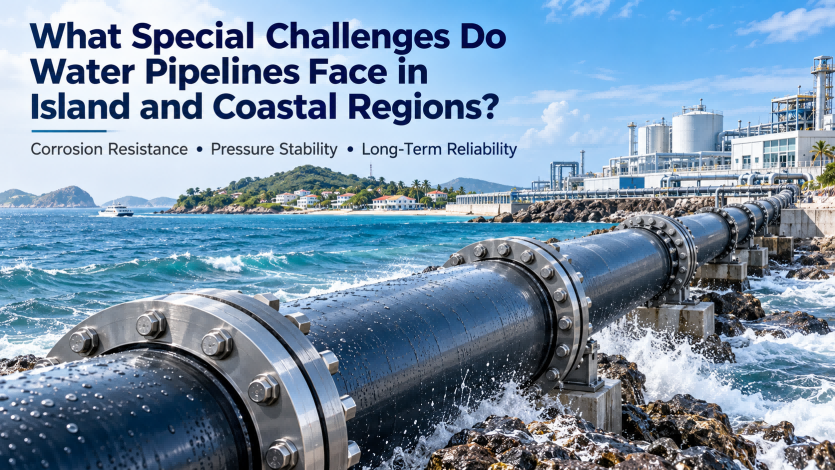
11.4 Coastal Water Infrastructure and Seawater Applications
Coastal infrastructure projects must address high salinity, chloride exposure, external corrosion, and long-term equipment reliability.
The protective inner layer of steel-nylon composite pipes offers potential value for selected seawater and high-salinity water transportation applications.
However, the external steel structure, protective coatings, connection details, and long-term durability must also be carefully evaluated.
11.5 Smart Water Networks in Large Industrial Parks
Chemical industrial parks, mining facilities, and integrated manufacturing complexes often transport multiple types of industrial water.
These facilities increasingly require centralized monitoring and zone-based pipeline management.
Steel-nylon composite pipes may be incorporated into selected industrial water supply, wastewater recovery, and circulating water systems, provided that the transported media are compatible with the pipe structure.
They can also be integrated into digital asset management systems through properly designed monitoring interfaces and engineering documentation.
12. How Should Engineers Select Pipelines for Future Smart Water Projects?
As engineering requirements become more complex, water utilities, EPC contractors, and engineering consultants should establish systematic procedures for pipeline material selection.
Step 1: Identify the Transported Medium and Water Quality Conditions
Collect water quality analysis data and evaluate:
-
Chemical composition
-
Salinity
-
pH
-
Suspended solids
-
Water treatment additives
-
Potential corrosion mechanisms
This information provides the basis for evaluating material compatibility.
Step 2: Determine Hydraulic and Structural Design Parameters
Important parameters include:
-
Nominal diameter (DN)
-
Design flow rate and velocity
-
Normal operating pressure
-
Maximum design pressure
-
Operating temperature
-
Transient pressure and water hammer
-
Installation environment
-
External mechanical loads
Step 3: Evaluate Long-Term Reliability
Key evaluation criteria should include:
-
Corrosion resistance
-
Abrasion resistance
-
Structural integrity
-
Joint sealing performance
-
Composite interface quality
-
Applicable testing and inspection reports
Step 4: Confirm Digital Monitoring and Instrumentation Requirements
Pipeline design should coordinate the location and installation requirements of:
-
Flow meters
-
Pressure sensors
-
Instrumentation spools
-
Valves
-
Maintenance access points
-
Digital asset identification systems
Early coordination can reduce the need for expensive modifications after construction.
Step 5: Calculate Total Cost of Ownership
Compare alternative pipeline materials over a consistent design life and financial evaluation period.
The analysis should include procurement, installation, maintenance, energy consumption, downtime, and replacement costs.
Step 6: Conduct Pilot Testing Where Necessary
For new material applications, aggressive media, or critical transmission pipelines, a pilot installation may be appropriate before large-scale deployment.
Operational data can be collected to evaluate:
-
Pressure performance
-
Hydraulic behavior
-
Joint sealing reliability
-
Abrasion resistance
-
Maintenance requirements
This approach helps reduce the engineering risks associated with replacing established pipeline materials.
13. How We Support Future Smart Water Infrastructure Projects
As a manufacturer specializing in reinforced nylon pipes and steel-nylon composite pipes, we focus not only on pipe production but also on helping customers address long-term challenges in fluid transportation systems.
Our approach emphasizes material suitability, engineering reliability, and lifecycle performance.
13.1 Material Selection Based on Actual Operating Conditions
We evaluate the characteristics of transported media, operating temperatures, corrosion risks, and abrasion conditions to help customers assess appropriate pipe structures and material solutions.
Rather than recommending a single material for every application, we emphasize the importance of matching pipe performance to actual engineering requirements.
13.2 Pipe Solutions for Different Diameters and Pressure Requirements
Based on project-specific pipe diameters, operating pressures, and installation conditions, we support the evaluation of suitable steel-nylon composite pipe specifications and structural designs.
For large-diameter projects, additional considerations may include transportation, installation, supports, and joint design.
13.3 Integrally Formed Flanges and Reliable Connection Design
We recognize the importance of pipeline connections in overall system reliability.
Through integrally formed flange designs and appropriate engineering evaluation, we aim to provide solutions that facilitate installation and maintenance.
Flange sealing reliability must be supported by appropriate design calculations, component selection, and quality inspection.
13.4 Long-Term Performance in Demanding Environments
We place importance on material selection, manufacturing quality control, and operating performance in applications involving corrosion, abrasion, and complex transportation conditions.
Our objective is to help customers evaluate pipeline solutions that may reduce maintenance requirements and support more reliable operation.
13.5 Technical Support for International EPC Contractors and Water Projects
For international engineering projects, we can support early-stage pipeline selection by reviewing:
-
Water quality and transported media
-
Pipe diameter requirements
-
Design and operating pressures
-
Temperature conditions
-
Connection configurations
-
Procurement and delivery requirements
Through technical cooperation with engineering teams, we aim to help project owners make better-informed material selection decisions.
Our goal is to combine suitable materials with practical engineering design to help customers reduce pipeline risks, avoid unnecessary maintenance, and achieve better long-term investment value.
14. Future Trends: How Smart Water Development Will Drive Pipeline Material Innovation
Over the next five to ten years, several important developments are likely to influence global smart water infrastructure.
Trend 1: Closer Integration Between Digital Twins and Physical Pipeline Networks
More water utilities are expected to explore the use of real-time operating data and hydraulic models to support network analysis, system optimization, and infrastructure asset management.
Trend 2: Leakage Management Will Shift Toward Proactive Risk Reduction
Digital monitoring, pressure optimization, and targeted pipeline renewal will become increasingly interconnected.
Rather than focusing exclusively on identifying existing leaks, utilities will place greater emphasis on reducing the conditions that contribute to pipeline failures.
Trend 3: Long-Term Material Reliability Will Become More Important
Pipeline evaluation will increasingly consider not only initial material properties but also long-term corrosion behavior, abrasion resistance, joint integrity, and maintenance history.
Trend 4: Low-Maintenance Materials Will Gain Greater Economic Importance
As water utilities strengthen cost control and asset management practices, materials that can effectively reduce maintenance and shutdown costs will become more attractive for suitable projects.
Trend 5: Composite Materials Will Complement Traditional Pipeline Materials
Steel, engineering plastics, and composite materials will continue to serve different applications based on their respective performance advantages.
Future infrastructure development will favor application-specific material optimization rather than universal replacement.
Trend 6: Pipeline Manufacturers Will Become More Involved in Early Engineering Design
Pipeline procurement will increasingly emphasize:
-
Material testing
-
Technical coordination
-
Engineering design support
-
Project delivery capability
-
Long-term technical assistance
For steel-nylon composite pipe manufacturers, these trends represent potential market opportunities while also introducing higher requirements for product validation, quality assurance, and engineering expertise.
Conclusion: Smart Water Infrastructure Requires Both Intelligent Technology and Reliable Pipelines
Smart water management is redefining the future of municipal and industrial water infrastructure.
Modern pipeline systems must deliver more than basic fluid transportation.
They must support:
-
Greater operational reliability
-
Better resistance to challenging water conditions
-
Stable long-term hydraulic performance
-
Reduced maintenance requirements
-
Compatibility with digital monitoring infrastructure
-
Improved lifecycle economic performance
Steel-nylon composite pipes combine the structural strength of steel with the corrosion and abrasion resistance characteristics of an engineered nylon inner layer.
This composite approach provides a promising solution for selected demanding water infrastructure applications.
In particular, steel-nylon composite pipes deserve engineering consideration in large-scale industrial water supply and drainage, circulating water systems, reclaimed water projects, coastal saline water applications, and other systems requiring long-term continuous operation.
As the global water industry moves toward intelligent management, lower maintenance requirements, and more sustainable infrastructure, competition among pipeline solutions will increasingly extend beyond initial material prices.
The future of pipeline infrastructure will be defined by reliability, engineering adaptability, and total lifecycle value.
Looking for Reliable Pipeline Solutions for Your Smart Water Infrastructure Project?
If you are planning a municipal water supply project, industrial circulating water system, reclaimed water facility, or large-scale water treatment infrastructure, our engineering team can help you evaluate suitable pipeline solutions.
Based on your project's fluid characteristics, water quality, pipe diameter, pressure, temperature, and installation requirements, we can provide technical guidance on the suitability of steel-nylon composite pipes.
Build smarter water infrastructure with pipeline solutions designed for long-term reliability.
Contact Us for Steel-Nylon Composite Pipe Solutions for Smart Water Infrastructure.
What Special Challenges Do Water Pipelines Face in Island and Coastal Regions? A Comprehensive Guide to Corrosion Resistance and Long-Term Reliability