DN100-DN2000 Industrial Pipeline Selection Guide: Why Steel-Nylon Composite Pipes Are the Ideal Choice for Modern Industrial Transport Systems

Industrial pipeline systems are the backbone of modern infrastructure, playing a critical role in mining, chemical processing, power generation, municipal water supply, marine engineering, and many other industries. Selecting the right pipe material and diameter not only affects operational efficiency but also determines maintenance costs, service life, and overall project profitability.
For large-diameter applications ranging from DN100 to DN2000, traditional carbon steel pipes, PE pipes, and conventional lined pipes often struggle to meet the increasing demands for wear resistance, corrosion protection, and long-term reliability.
This guide explores the key factors in industrial pipeline selection and highlights why steel-nylon composite pipes have become the preferred solution for demanding industrial environments.
Understanding DN100-DN2000 Pipeline Applications
Different pipe diameters are designed for different flow capacities and operating conditions.
DN100-DN300
Commonly used for:
-
Industrial water circulation systems
-
Chemical fluid transportation
-
Plant utility pipelines
-
Compressed air systems
Key characteristics:
-
Moderate flow rates
-
Complex routing layouts
-
Flexible installation requirements
DN400-DN800
Widely applied in:
-
Slurry transportation
-
Tailings pipelines
-
Power plant desulfurization systems
-
Municipal water distribution networks
Key characteristics:
-
Long-distance transportation
-
High flow volumes
-
Variable operating pressures
DN900-DN2000
Typically used for:
-
Long-distance water transmission projects
-
Seawater desalination facilities
-
Port dredging systems
-
Large-scale mining operations
-
Energy transportation networks
Key characteristics:
-
Significant capital investment
-
High maintenance costs if improperly selected
-
Long service-life requirements
For these large-scale projects, pipe selection should focus not only on initial procurement costs but also on lifecycle performance and operating efficiency.
Five Critical Factors in Industrial Pipeline Selection
1. Transported Medium
The characteristics of the conveyed medium directly influence material selection.
Common media include:
-
Clean water
-
Seawater
-
Acid and alkali solutions
-
Mineral slurry
-
Tailings
-
Coal slurry
-
Sand-laden wastewater
-
Chemical products
Each medium imposes different requirements on pipe performance.
For example, slurry and tailings pipelines experience continuous abrasion from solid particles, while chemical fluids can cause severe corrosion in conventional steel pipes.
2. Operating Pressure
Industrial systems typically operate at pressure levels such as:
-
0.6 MPa
-
1.0 MPa
-
1.6 MPa
-
2.5 MPa
-
Above 4.0 MPa
High-pressure systems require excellent structural strength and safety margins. Steel remains one of the most reliable materials for high-pressure industrial transportation due to its superior mechanical properties.
3. Wear Resistance
In mining and mineral processing industries, pipe failure is often caused by abrasion rather than corrosion.
Slurry pipelines are constantly exposed to highly abrasive particles, leading to rapid wall thinning and costly maintenance.
Therefore, wear resistance is one of the most important factors affecting pipeline service life.
4. Corrosion Resistance
Although carbon steel pipes provide excellent strength, they are vulnerable to internal and external corrosion when exposed to aggressive environments.
Applications involving:
-
Seawater
-
Chemical solutions
-
Acidic or alkaline media
-
High-salinity environments
require enhanced corrosion protection to ensure long-term reliability.
5. Total Lifecycle Cost
Modern industrial projects increasingly focus on Total Cost of Ownership (TCO).
A high-performance pipeline should deliver:
-
Long service life
-
Reduced maintenance requirements
-
Lower energy consumption
-
Minimal downtime risks
The lowest purchase price does not necessarily result in the lowest overall project cost.
Challenges of Traditional Pipe Materials
Carbon Steel Pipes
Advantages:
-
High strength
-
Proven manufacturing technology
Limitations:
-
Susceptible to corrosion
-
Rough internal surface
-
Scale buildup over time
-
High maintenance expenses
PE Pipes
Advantages:
-
Excellent corrosion resistance
-
Lightweight
Limitations:
-
Lower structural rigidity
-
Limited pressure capability in large diameters
-
Reduced performance under elevated temperatures
Rubber-Lined Pipes
Advantages:
-
Good corrosion protection
Limitations:
-
Potential lining separation
-
Complex installation
-
Difficult maintenance and repair
Steel-Nylon Composite Pipes: A Next-Generation Industrial Pipeline Solution
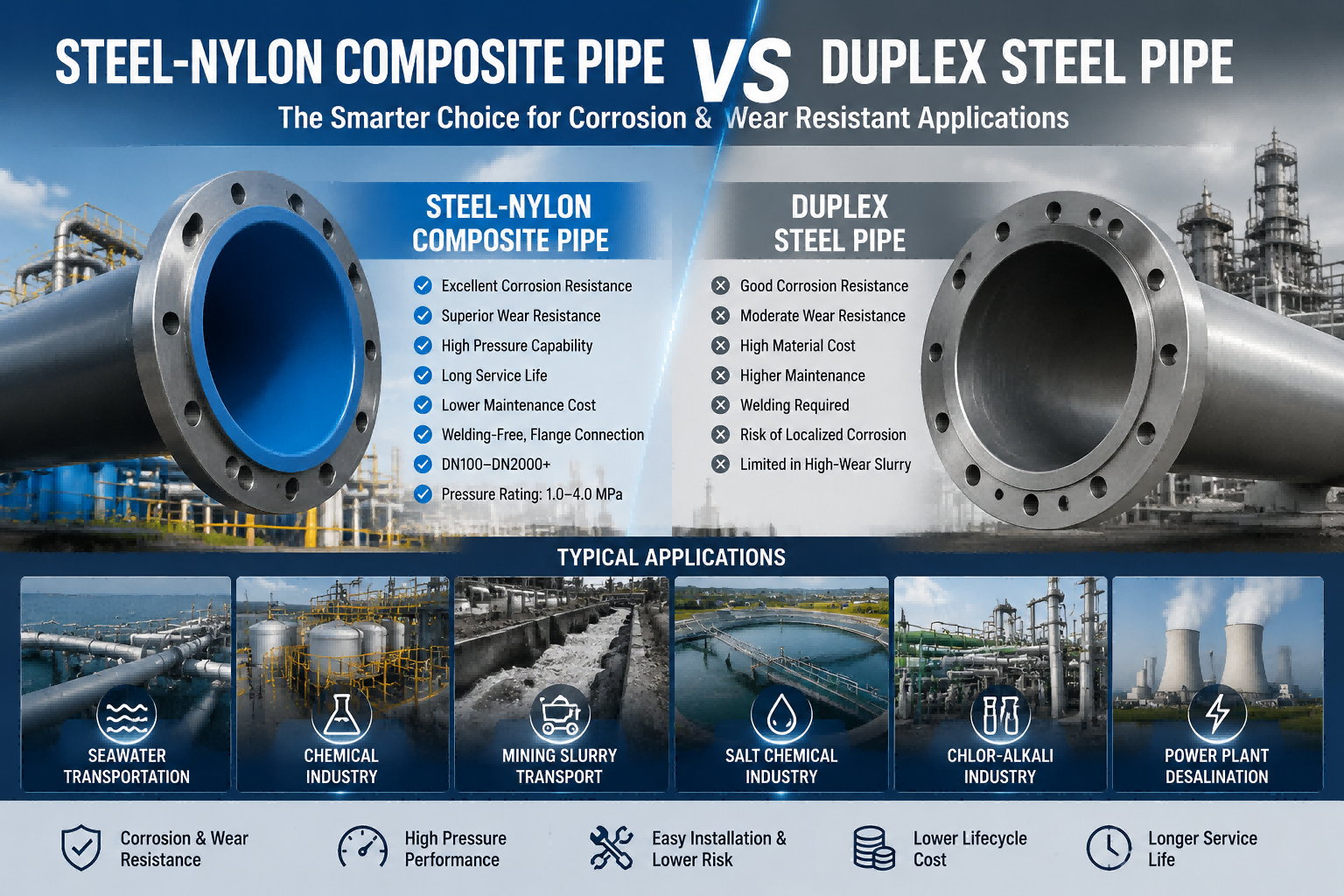
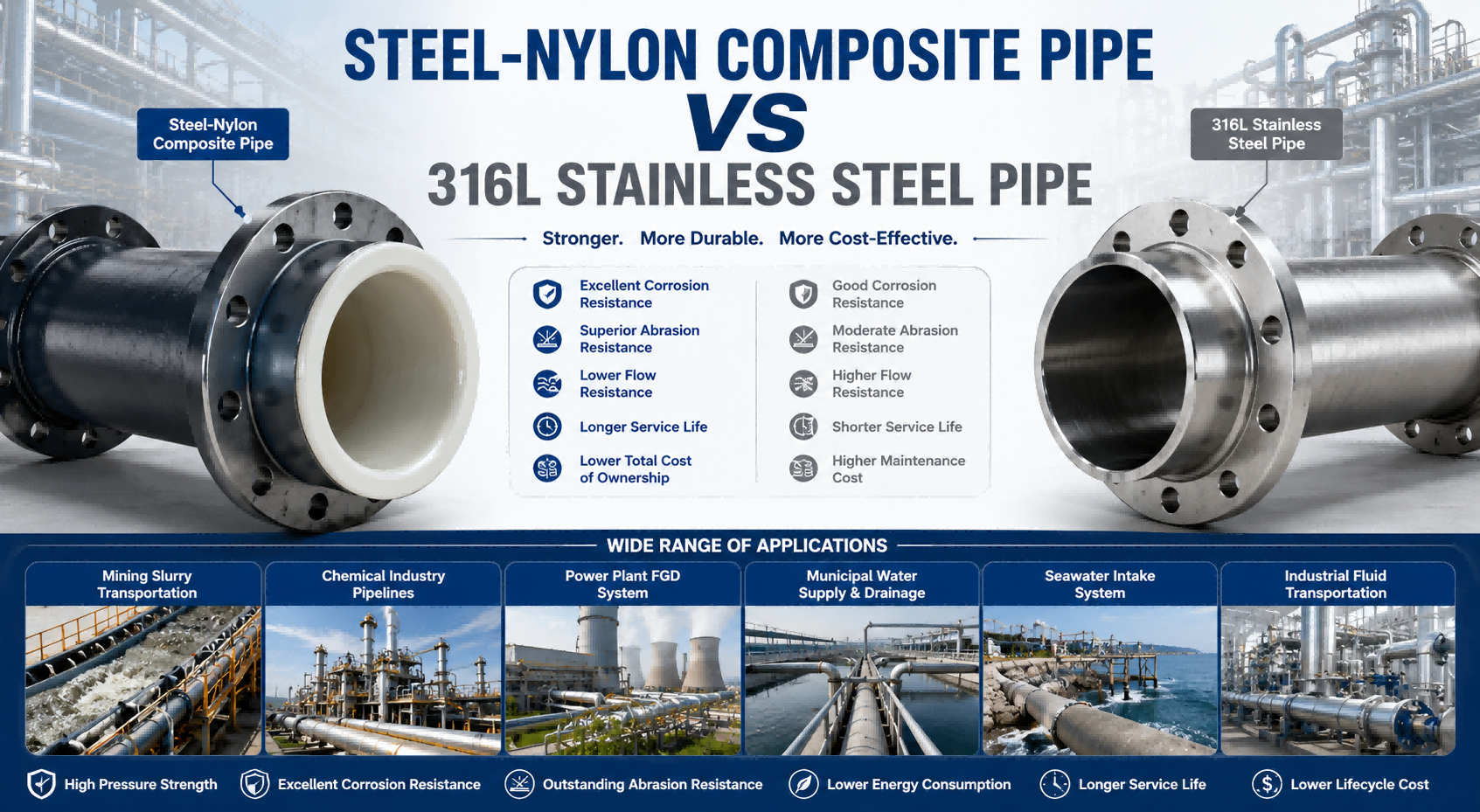
Steel-nylon composite pipes combine the structural strength of steel with the exceptional wear and corrosion resistance of engineering-grade nylon.
The typical structure consists of:
-
High-strength steel outer pipe
-
Engineering nylon inner liner
-
Advanced composite bonding technology
This innovative design leverages the strengths of both materials while minimizing their individual limitations.
Key Advantages of Steel-Nylon Composite Pipes
Exceptional Wear Resistance
Engineering nylon exhibits outstanding abrasion resistance.
For applications involving:
-
Mineral slurry
-
Tailings transportation
-
Coal slurry
-
Sand-containing fluids
steel-nylon composite pipes significantly outperform conventional steel pipes, resulting in longer service life and reduced maintenance costs.
Superior Corrosion Resistance
The nylon liner isolates the conveyed medium from the steel structure.
This makes the pipe highly suitable for:
-
Seawater transportation
-
Chemical processing
-
Acid and alkali solutions
-
High-corrosion environments
The result is enhanced durability and long-term reliability.
High Pressure Capability
The steel outer layer provides excellent structural integrity and pressure resistance.
Compared with plastic pipes, steel-nylon composite pipes can withstand higher operating pressures and more demanding industrial conditions while maintaining safety and stability.
Improved Hydraulic Efficiency
The smooth nylon inner surface reduces friction losses throughout the pipeline system.
Benefits include:
-
Lower pressure drop
-
Reduced pumping energy consumption
-
Less scaling and deposition
-
Higher transportation efficiency
For long-distance pipelines, these advantages can significantly reduce operating costs.
Extended Service Life
By simultaneously addressing both abrasion and corrosion, steel-nylon composite pipes offer a much longer operational lifespan than many traditional pipe solutions.
This translates into:
-
Lower maintenance frequency
-
Reduced replacement costs
-
Increased system availability
-
Improved return on investment
Large-Diameter Manufacturing Capability
For DN100-DN2000 applications, steel-nylon composite pipes can be customized to meet project-specific requirements, including:
-
Large diameters
-
Long-distance transportation systems
-
High-pressure operation
-
Specialized industrial applications
This flexibility makes them suitable for large infrastructure and industrial projects worldwide.
Recommended Industries for Steel-Nylon Composite Pipes
Mining Industry
-
Iron ore slurry transportation
-
Copper concentrate pipelines
-
Tailings transportation
-
Backfill systems
Power Generation
-
Flue gas desulfurization systems
-
Ash handling pipelines
-
Cooling water circulation systems
Chemical Industry
-
Corrosive chemical transportation
-
Industrial wastewater systems
-
Process fluid pipelines
Municipal Infrastructure
-
Water transmission projects
-
Sewage networks
-
Urban utility systems
Marine Engineering
-
Seawater transportation
-
Port construction projects
-
Desalination facilities
How to Choose a Reliable Steel-Nylon Composite Pipe Manufacturer
When selecting a supplier, consider the following factors:
Technical Expertise
Look for manufacturers with:
-
Large-diameter production capabilities
-
Advanced composite manufacturing technology
-
Engineering design support
Product Quality
Evaluate:
-
Raw material standards
-
Liner bonding performance
-
Wear resistance testing
-
Pressure testing certifications
Industry Experience
Prioritize suppliers with proven experience in:
-
Mining projects
-
Chemical processing plants
-
Municipal infrastructure
-
International engineering projects
Conclusion
As industrial transportation systems continue to demand higher pressure ratings, larger diameters, and longer service life, traditional pipe materials increasingly face challenges related to wear, corrosion, and maintenance costs.
Steel-nylon composite pipes provide an advanced solution by combining the mechanical strength of steel with the exceptional wear resistance and corrosion protection of engineering nylon. This unique structure delivers outstanding performance in demanding applications ranging from mining and power generation to chemical processing and municipal infrastructure.
As a professional manufacturer of steel-nylon composite pipes, we specialize in producing DN100-DN2000 large-diameter pipeline solutions designed to maximize durability, efficiency, and long-term value. Our products help customers reduce maintenance costs, improve operational reliability, and achieve superior lifecycle performance.
If you are planning a new pipeline project or seeking to upgrade an existing system, steel-nylon composite pipes offer a smart and future-proof investment for modern industrial transportation.
What Factors Affect Industrial Pipeline Service Life? A Complete Analysis from Material Selection to Operation Management
How to Choose Wear-Resistant Pipelines for High-Abrasion Applications?