The Future of Industrial Piping: Steel-Nylon Composite Pipes

The Future of Industrial Piping: How Advanced Composite Materials Are Reshaping Industrial Pipeline Systems
Introduction: Industrial Piping Is Entering a New Era of Technological Transformation
Over the past several decades, industrial pipeline development has primarily focused on three objectives: improving pressure resistance, reducing manufacturing costs, and extending service life.
However, as industrial infrastructure continues to evolve worldwide, the criteria used to select piping materials are undergoing a fundamental transformation.
In mining, chemical processing, marine engineering, municipal water infrastructure, power generation, and industrial fluid transportation, pipelines are no longer regarded merely as components that connect equipment.
Instead, they are critical infrastructure assets that directly influence operational efficiency, energy consumption, system safety, and long-term investment returns.
Today, engineers, EPC contractors, and industrial procurement managers are increasingly asking an important question:
What capabilities must the next generation of industrial piping systems possess?
The answer extends far beyond higher mechanical strength or lower initial purchase prices.
The future of industrial piping is moving toward corrosion resistance, abrasion resistance, multifunctional composite structures, simplified installation, improved energy efficiency, and long-term operational reliability.
Within this technological transformation, steel-nylon composite pipes are emerging as a promising solution for demanding industrial applications.
By combining the structural strength of steel with the functional advantages of engineering nylon, these composite pipes offer an alternative approach to pipeline design in complex operating environments.
This article examines six major dimensions shaping the future of industrial piping: engineering requirements, material innovation, structural design, installation technology, lifecycle economics, and long-term industry trends.
1. Why Traditional Industrial Pipeline Technologies Need to Evolve
1.1 Corrosion Remains a Major Challenge for Industrial Infrastructure
Corrosion is one of the leading factors affecting the reliability and service life of industrial pipelines.
According to the IMPACT study published by NACE International in 2016, the estimated global annual cost of corrosion was approximately $2.5 trillion, representing about 3.4% of global GDP based on 2013 economic data.
This historical research demonstrates that corrosion is not merely a material deterioration issue. It is also a major economic challenge affecting industrial productivity and infrastructure performance.
In practical applications, conventional carbon steel pipelines may experience several problems:
-
Corrosion caused by seawater and high-salinity fluids.
-
Chemical corrosion in industrial wastewater environments.
-
Erosion and abrasion caused by solid particles.
-
Increasing flow resistance due to corrosion products and deposits.
-
Wall thinning, leakage, and unplanned operational shutdowns.
Although carbon steel pipes offer excellent structural strength and mature manufacturing processes, additional protection systems are frequently required in corrosive environments.
These systems may include internal linings, protective coatings, cathodic protection, and periodic maintenance or replacement.
While such measures can improve pipeline performance, they also increase system complexity and long-term maintenance requirements.
Consequently, one of the major development directions for next-generation industrial piping is to incorporate corrosion protection directly into material selection and structural design.
1.2 Industrial Fluid Transportation Is Becoming More Complex
Modern industrial pipelines must accommodate increasingly challenging operating conditions.
For example, mining pipelines transport abrasive slurries containing particles of various sizes. Marine pipelines operate in saltwater environments. Chemical processing systems may encounter simultaneous pressure, temperature, and chemical exposure.
Municipal wastewater pipelines must also withstand complex water chemistry, suspended solids, and varying operating conditions.
These applications require multiple performance characteristics from the same piping system.
A single material may struggle to simultaneously provide:
-
High structural strength.
-
Corrosion resistance.
-
Abrasion resistance.
-
Long-term mechanical stability.
-
Cost-effective installation and maintenance.
This growing complexity is one of the primary forces driving the development of composite piping technologies.
1.3 Industrial Procurement Is Shifting Toward Long-Term Value
Traditional pipe procurement often begins with a comparison of unit prices.
However, for industrial projects designed to operate for decades, the initial purchase cost represents only one component of the overall investment.
Other important factors include transportation, installation, pumping energy consumption, maintenance, replacement, and production losses resulting from unexpected shutdowns.
Therefore, the competitive landscape of industrial piping is increasingly shifting toward a new principle:
The best industrial pipe is not necessarily the one with the lowest purchase price, but the one that delivers reliable performance at the most reasonable total cost throughout its intended service life.
2. Development Trend One: From Single Materials to Multifunctional Composite Piping
2.1 The Performance Limitations of Conventional Pipe Materials
Traditional industrial piping materials include carbon steel, stainless steel, HDPE, fiberglass-reinforced plastic (FRP), and various engineering thermoplastics.
Each material offers distinct advantages, but also has limitations.
| Pipe Material | Primary Advantages | Main Limitations |
|---|---|---|
| Carbon Steel | High mechanical strength, established manufacturing processes | Vulnerable to corrosion without appropriate protection |
| Stainless Steel | Good corrosion resistance in many industrial environments | Higher material costs and susceptibility to certain types of corrosion |
| HDPE | Good resistance to many chemicals, corrosion resistance, established joining methods | Pressure, stiffness, and temperature limitations depending on material grade and design |
| FRP | Good resistance to many corrosive media, relatively lightweight | Impact resistance, joint design, and installation quality require careful consideration |
| Steel-Nylon Composite Pipe | Combines steel structural strength with the functional advantages of nylon | Requires verification of composite integrity, joint reliability, and chemical compatibility |
This comparison highlights an important direction for future industrial piping.
Rather than relying on a single material to meet every engineering requirement, manufacturers can combine complementary materials within an optimized structural system.
2.2 Structural Innovation in Steel-Nylon Composite Pipes
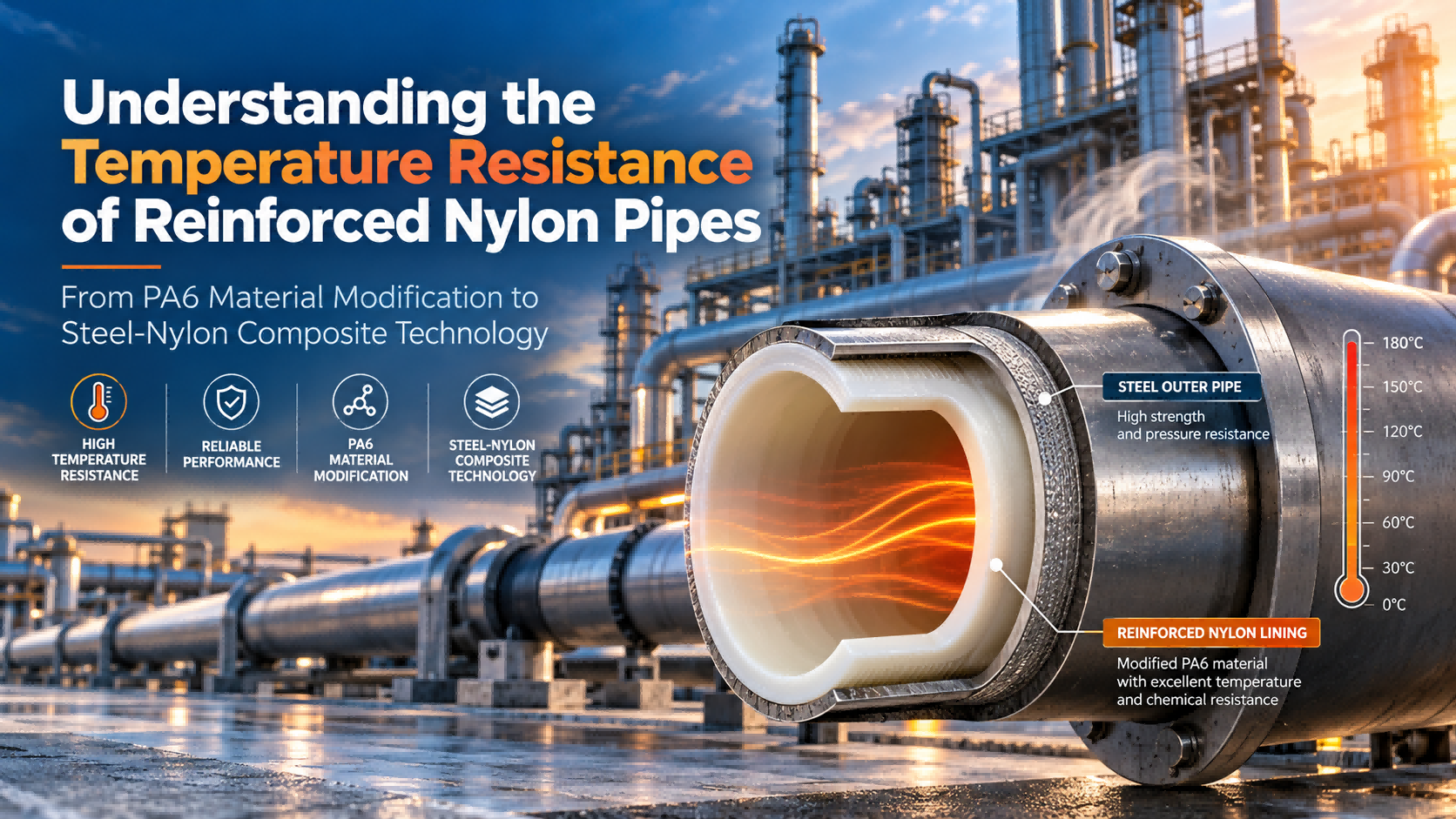
The fundamental concept behind steel-nylon composite piping is to combine a steel load-bearing structure with an engineering nylon protective layer.
The two materials perform different but complementary functions.
Steel Structural Layer
The steel component primarily provides mechanical support and structural strength.
Its main functions include:
-
Supporting the pipeline under mechanical loads.
-
Carrying pressure-related structural loads.
-
Providing rigidity and dimensional stability.
-
Meeting engineering support and installation requirements.
Engineering Nylon Functional Layer
The nylon layer primarily provides protection at the surface in contact with the transported medium.
When an appropriate material formulation and manufacturing process are used, Nylon 6 (PA6) can offer advantages including abrasion resistance, resistance to selected chemicals, and reduced direct contact between corrosive fluids and the steel substrate.
This structural configuration allows the pipeline to distribute engineering requirements between two different materials.
However, the actual pressure rating and long-term performance depend on steel wall thickness, nylon layer thickness, bonding integrity, joint design, and operating conditions.
2.3 The Engineering Value of Composite Material Technology
The primary advantage of composite piping is not simply the combination of two materials.
Its true value lies in assigning different functions to materials that are particularly well suited to performing them.
Steel provides structural support, while the nylon layer can help isolate the steel substrate from selected corrosive media.
In fluid transportation systems containing suspended solids, the nylon layer may also contribute to protecting the internal surface against abrasion.
When these functions are achieved through reliable manufacturing and quality control, composite pipes may reduce the need for certain additional protective measures.
This represents a fundamental shift:
Industrial piping is evolving from single-material performance toward integrated structural performance.
3. Development Trend Two: From Conventional Corrosion Protection to Integrated Corrosion and Abrasion Resistance
3.1 Corrosion Protection Begins at the Manufacturing Stage
Conventional metal pipes often rely on additional coatings or internal lining systems for corrosion protection.
These technologies play an important role in industrial applications, but their long-term performance depends on surface preparation, coating integrity, installation quality, and operating conditions.
Next-generation industrial piping places greater emphasis on integrating protective functionality during manufacturing.
A continuous, factory-manufactured nylon layer can reduce direct exposure of the steel substrate to the transported fluid.
For compatible aqueous solutions, saline media, and industrial process fluids, this approach may provide meaningful engineering benefits.
Compared with solutions that rely primarily on the corrosion resistance of the structural metal, steel-nylon composite pipes offer a different protective design strategy.
3.2 Why Corrosion and Abrasion Must Be Considered Together
Many industrial pipeline failures are not caused by a single deterioration mechanism.
For example, in slurry transportation systems, suspended particles can strike or slide along the internal pipe surface.
This mechanical action may damage protective layers, exposing fresh metal surfaces to corrosive fluids.
Corrosion can subsequently accelerate material degradation, creating a combined erosion-corrosion mechanism.
As a result, the deterioration rate may exceed predictions based on corrosion or abrasion alone.
Nylon 6 offers useful toughness and friction-related wear characteristics.
With appropriate formulations and structural design, steel-nylon composite pipes may improve internal surface protection in certain solid-liquid transportation applications.
However, abrasion performance depends heavily on:
-
Particle hardness.
-
Particle size and distribution.
-
Solids concentration.
-
Flow velocity.
-
Particle impact angle.
-
Nylon formulation.
-
Operating temperature.
For highly abrasive environments, material selection should be supported by representative abrasion testing rather than assumptions based solely on material type.
3.3 The Future of Pipeline Protection Is Multifactor Performance
Future industrial piping systems will increasingly be evaluated under combinations of operating conditions.
Important factors include chemical corrosion, abrasion, temperature variations, pressure cycles, bonding stability, and connection integrity.
Piping systems capable of maintaining reliable performance under these combined conditions will have greater potential for long-term industrial adoption.
4. Development Trend Three: Improving Fluid Transportation Efficiency Through Internal Surface Optimization
Industrial pipes do more than transport fluids safely. They also influence pumping energy requirements and operational efficiency.
In continuously operating pipeline networks, internal surface condition, effective internal diameter, flow velocity, and pressure loss directly affect operating costs.
4.1 Pipeline Friction Influences Energy Consumption
Technical guidance from the U.S. Department of Energy identifies pipe diameter, internal surface roughness, flow rate, and pipeline length as important factors affecting friction losses and pumping costs.
Under comparable operating conditions, maintaining a relatively smooth internal surface can help reduce friction-related pressure losses.
In conventional carbon steel pipes, internal corrosion, scaling, and deposits may increase hydraulic resistance over time.
Steel-nylon composite pipes provide a continuous nylon internal surface that may help reduce deterioration caused by corrosion products under suitable operating conditions.
4.2 Energy Savings Must Be Verified Through Hydraulic Calculations
It would be inaccurate to assume that the use of a nylon lining automatically produces substantial energy savings.
Actual hydraulic performance depends on several factors:
-
Effective internal pipe diameter.
-
Internal roughness.
-
Flow rate and fluid properties.
-
Pipeline length.
-
Fittings and local resistance.
-
Pump efficiency.
-
Long-term operating conditions.
An important consideration is that an internal lining occupies part of the available flow area.
Therefore, comparisons between pipe materials should use actual internal diameters rather than nominal pipe sizes alone.
Potential energy advantages should be evaluated through comprehensive hydraulic calculations.
4.3 Potential Benefits in Long-Distance Transportation Systems
Long-distance mining pipelines, industrial cooling-water networks, seawater transportation systems, and municipal water pipelines often operate continuously.
Even relatively small differences in pressure loss may become economically significant over many years of operation.
For these applications, pipeline procurement should incorporate hydraulic modeling, predicted energy costs, and the expected evolution of internal surface conditions.
5. Development Trend Four: Modular Installation, Factory Prefabrication, and Reduced On-Site Welding
5.1 Installation Efficiency Is Becoming a Major Procurement Consideration
Large industrial projects face strict construction schedules, complex installation environments, and demanding quality assurance requirements.
Conventional welded piping systems may involve several on-site activities, including welding, weld inspection, corrosion-protection repairs, quality checks, and potential rework.
For remote mines, coastal infrastructure, or projects with limited installation windows, these activities can create additional logistical challenges.
Future industrial piping systems will place greater emphasis on factory prefabrication and efficient field assembly.
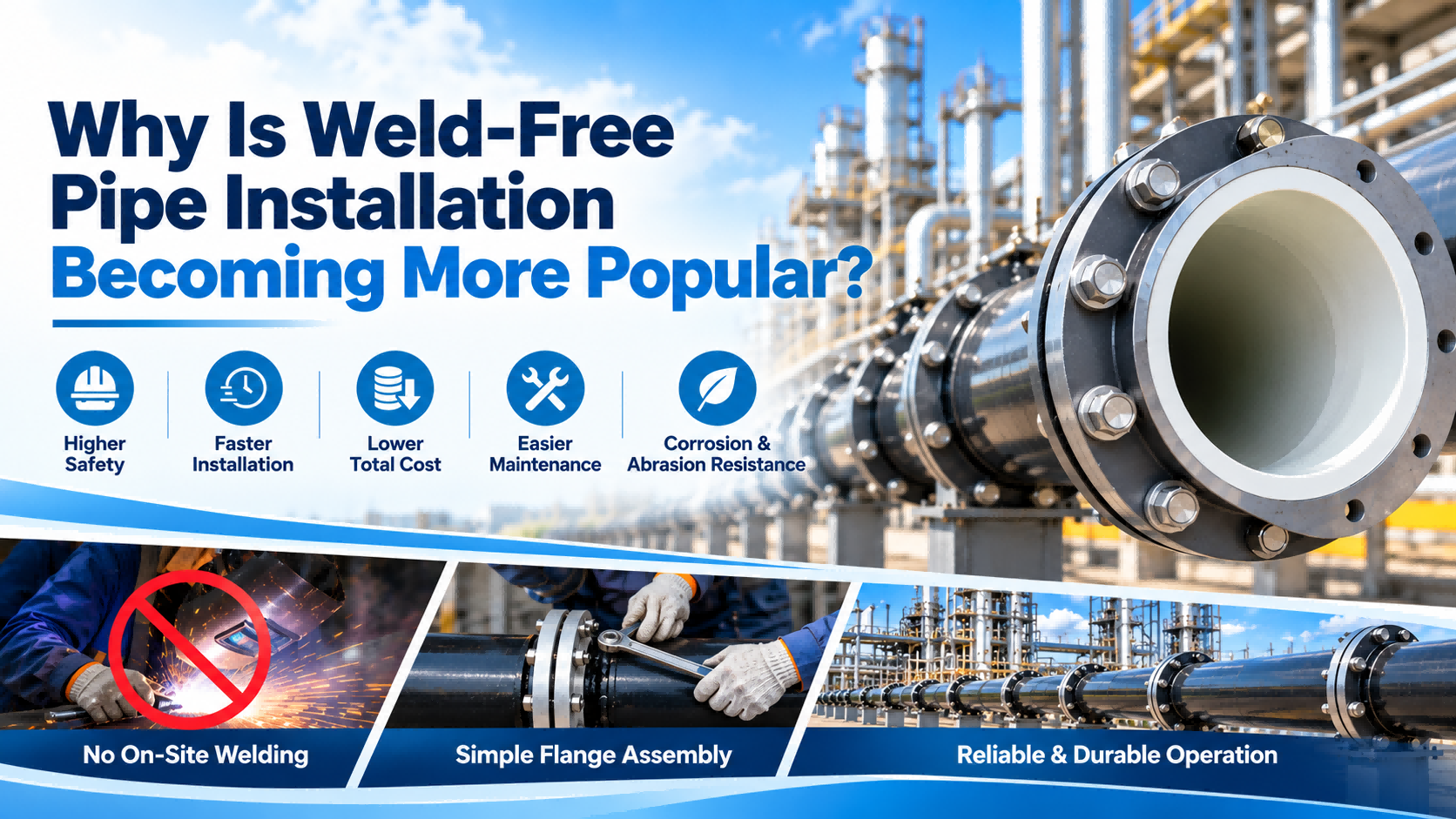
5.2 Flanged Connections Can Improve Installation Efficiency
Steel-nylon composite pipes can be manufactured with prefabricated flange connection systems, depending on the product configuration.
Compared with piping systems requiring extensive field welding, properly designed flanged connections can reduce certain on-site welding operations.
Potential advantages include:
-
Reduced requirements for field hot work.
-
Simplified installation procedures.
-
Greater opportunities for factory prefabrication.
-
Easier sectional maintenance and replacement.
-
Improved construction planning and predictability.
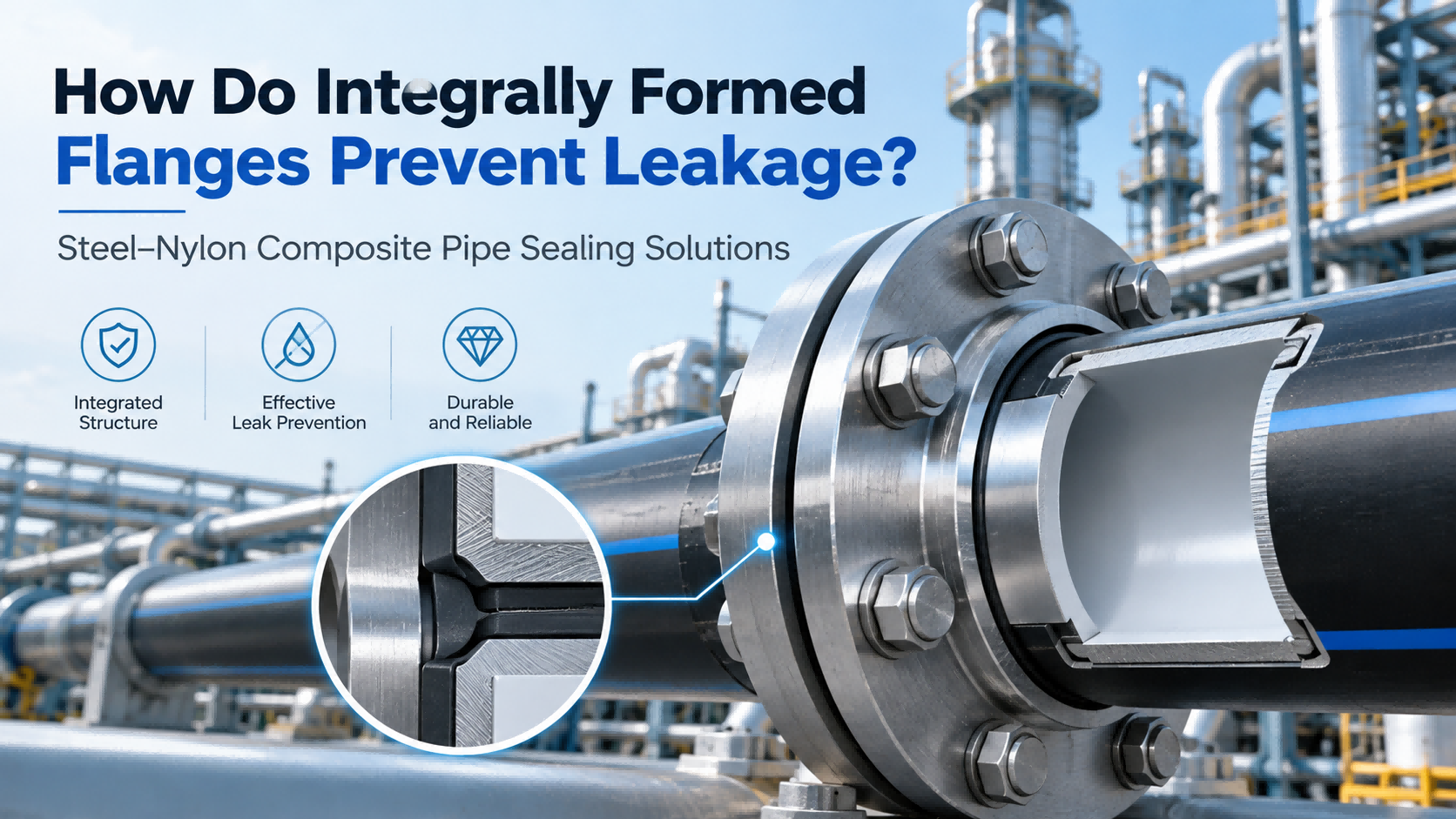
However, flanged connections are not automatically leak-free.
Sealing reliability still depends on flange geometry, gasket selection, bolt preload, installation alignment, and pressure testing.
5.3 Future Competition Will Extend Beyond Pipe Materials
Next-generation piping manufacturers will increasingly need to offer more than individual pipe sections.
Successful suppliers will be expected to provide compatible fittings, prefabricated configurations, connection systems, installation guidance, and engineering support.
The integration of materials, connection technology, and installation processes will become an increasingly important competitive advantage.
6. Development Trend Five: From Initial Purchase Price to Total Cost of Ownership (TCO)
6.1 Why the Lowest Purchase Price May Not Deliver the Lowest Overall Cost
Consider two industrial piping solutions designed to meet the same transportation requirements.
Solution A has a lower initial purchase price but requires more frequent maintenance and replacement.
Solution B has a higher initial price but demonstrates reduced maintenance requirements and longer replacement intervals under verified operating conditions.
If procurement decisions consider only material prices, Solution A may appear more attractive.
However, once energy consumption, maintenance, shutdown losses, and replacement costs are included, the economic comparison may change considerably.
This is why Total Cost of Ownership (TCO) is becoming increasingly important in industrial piping selection.
6.2 A Practical TCO Model for Industrial Pipelines
A simplified lifecycle cost model can be expressed as:
TCO = Procurement Cost + Transportation and Installation Cost + Energy Cost + Maintenance and Repair Cost + Downtime Losses + Replacement Cost + End-of-Life Disposal Cost
For comprehensive investment decisions, future costs should also be discounted according to the financial requirements of the project.
Steel-nylon composite pipes may offer lifecycle advantages in several areas.
1. Reduced Corrosion-Related Maintenance
When the nylon layer effectively isolates the transported medium and maintains its integrity over time, it may reduce certain forms of internal corrosion affecting the steel substrate.
2. Reduced Abrasion-Related Replacement
In operating environments where suitable testing confirms the abrasion performance of the nylon layer, improved internal surface durability may help extend maintenance intervals.
3. More Efficient Installation
Factory prefabrication and appropriately designed flange connections can reduce certain field installation activities.
4. Improved Long-Term Hydraulic Performance
If internal surface characteristics and pipeline dimensions contribute to lower overall hydraulic resistance, pumping costs may be reduced.
5. Reduced Risk of Unplanned Shutdowns
For industrial facilities where pipeline failures lead to substantial production losses, verified long-term reliability has significant economic value.
6.3 Why TCO Will Shape Global Industrial Pipe Procurement
Industrial project owners increasingly treat pipeline networks as long-term infrastructure assets rather than disposable components.
The ISO 55000:2024 asset management standard emphasizes generating value from assets throughout their lifecycle and aligning asset management with organizational objectives.
For industrial pipeline buyers, this means material selection must balance technical performance, safety, economic efficiency, and maintainability.
The market potential of steel-nylon composite piping should therefore be demonstrated through measurable lifecycle value rather than unsupported performance claims.
7. Development Trend Six: Smart Monitoring and Digital Pipeline Asset Management
The future of industrial piping will be shaped not only by advanced materials but also by digital technologies.
Modern industrial transportation systems are placing greater emphasis on continuous operational data collection and condition assessment.
7.1 From Scheduled Maintenance to Condition Monitoring
Traditional industrial pipeline management relies heavily on periodic inspections, manual monitoring, and reactive repairs.
Modern pipeline systems can increasingly incorporate:
-
Pressure and flow monitoring.
-
Leak detection.
-
Temperature monitoring.
-
Vibration and abnormal operating condition analysis.
-
Pipe wall condition assessment.
-
Data-driven maintenance planning.
These technologies help operators identify potential problems earlier and schedule maintenance more effectively.
7.2 Composite Pipes Require Suitable Inspection Technologies
Unlike conventional steel pipes, steel-nylon composite pipes have a multilayer structure.
Consequently, some nondestructive testing techniques developed for single-material metallic pipes may require adaptation or additional validation.
Inspection programs may need to assess not only the steel structural layer but also nylon layer wear, potential delamination, and connection integrity.
Future composite pipe manufacturers will benefit from closer collaboration with inspection technology providers and engineering organizations.
It is important to recognize that digital monitoring is a potential complementary technology. It does not mean that all steel-nylon composite pipes currently contain embedded sensors or intelligent monitoring capabilities.
8. Why Steel-Nylon Composite Pipes Have Strong Potential for Next-Generation Industrial Applications
Based on these technological trends, steel-nylon composite piping offers several advantages worth considering.
8.1 Combining Steel Strength With Nylon Functionality
By using steel for structural support and nylon for selected corrosion and abrasion protection functions, composite piping reduces reliance on a single material to satisfy every performance requirement.
This approach is particularly relevant to industrial applications requiring a combination of mechanical strength and compatibility with challenging fluid environments.
8.2 PA6 Engineering Nylon Offers a Balance of Toughness and Wear Resistance
Nylon 6 is a widely used engineering thermoplastic with useful toughness, mechanical properties, and resistance to selected industrial chemicals.
With appropriate material formulations, manufacturing processes, and lining thicknesses, PA6 can provide functional protection for internal pipe surfaces.
Compared with unprotected metal surfaces, this offers a different engineering approach to managing certain corrosion and abrasion conditions.
8.3 Supporting Complex Operating Requirements
Steel-nylon composite pipes can be considered for applications such as industrial cooling water, selected slurry transportation systems, industrial wastewater, and compatible saline fluids.
Their composite structure may be particularly valuable in projects where structural capacity, internal surface protection, and installation efficiency are all important considerations.
8.4 Compatibility With Prefabricated Flange Systems
Properly engineered prefabricated flange connections can support efficient on-site assembly, reduce certain welding operations, and facilitate future maintenance.
This allows steel-nylon composite piping solutions to align with the broader industry movement toward modular construction.
8.5 Opportunities for Improved Lifecycle Economics
The economic value of steel-nylon composite pipes extends beyond the initial purchase price.
Where suitable engineering validation demonstrates benefits in corrosion protection, abrasion resistance, installation efficiency, and operational stability, these advantages may contribute to improved lifecycle economics.
This aligns with the global industrial procurement trend toward asset reliability and TCO optimization.
9. Which Industries Will Drive Demand for Next-Generation Industrial Pipes?
9.1 Mining and Tailings Transportation
Mining operations frequently require pipelines to transport slurry containing abrasive solid particles.
Future material selection will increasingly focus on wear resistance, structural capacity, and maintenance intervals.
Steel-nylon composite pipes can be evaluated for slurry applications according to particle characteristics, flow velocity, solids concentration, and representative test results.
9.2 Seawater and Coastal Industrial Infrastructure
Coastal industrial facilities, seawater intake systems, and certain aquaculture projects must manage saline environments and challenging operating conditions.
Steel-nylon composite pipes can use their functional inner layer to protect the steel substrate from direct exposure to compatible fluids.
However, exposed external steel surfaces, support structures, flanges, and fasteners still require appropriate external corrosion protection.
9.3 Municipal Water Supply and Wastewater Treatment
As cities modernize their infrastructure, installation efficiency, durability, and maintenance costs remain important considerations.
Steel-nylon composite pipes can be evaluated as an alternative material where their performance meets the relevant technical and regulatory requirements.
For potable water applications, suitable health and material safety approvals must be obtained according to the applicable market requirements.
9.4 Industrial Cooling Water and Process Fluid Transportation
Industrial cooling-water systems often operate continuously with limited opportunities for shutdown and maintenance.
When fluid chemistry and operating temperatures are compatible with the selected nylon material, steel-nylon composite piping can be considered as a potential long-term internal protection solution.
9.5 Ports and Large Infrastructure Projects
Ports, industrial parks, and major infrastructure projects require a combination of structural strength, reliable connections, and construction efficiency.
Through factory prefabrication, suitable joining systems, and effective material protection, composite piping may contribute to improved construction and operational performance.
10. Five Technical Challenges That Next-Generation Pipe Manufacturers Must Address
Although composite piping technology has considerable potential, future market success will depend on engineering validation rather than promotional claims alone.
10.1 Long-Term Composite Structural Stability
Steel and nylon have different thermal expansion characteristics and mechanical behavior.
Therefore, composite piping systems must be evaluated for dimensional stability and interface integrity under temperature cycling, pressure variations, and long-term operating conditions.
10.2 Chemical Compatibility of Nylon Materials
PA6 is not suitable for every chemical environment.
Concentrated mineral acids, certain strong oxidizing agents, and some high-temperature chemical conditions may cause significant material deterioration.
In addition, PA6 absorbs moisture, and its dimensions and mechanical properties may change depending on moisture content, temperature, and long-term fluid exposure.
Consequently, material selection must consider fluid composition, concentration, temperature, pressure, service duration, and material formulation.
General claims of corrosion resistance should never replace proper chemical compatibility assessment.
10.3 Connection System Reliability
Composite piping connections must meet structural, sealing, and media-isolation requirements simultaneously.
Engineering validation should focus on flange designs, gaskets, transition regions, and leak resistance under pressure cycling.
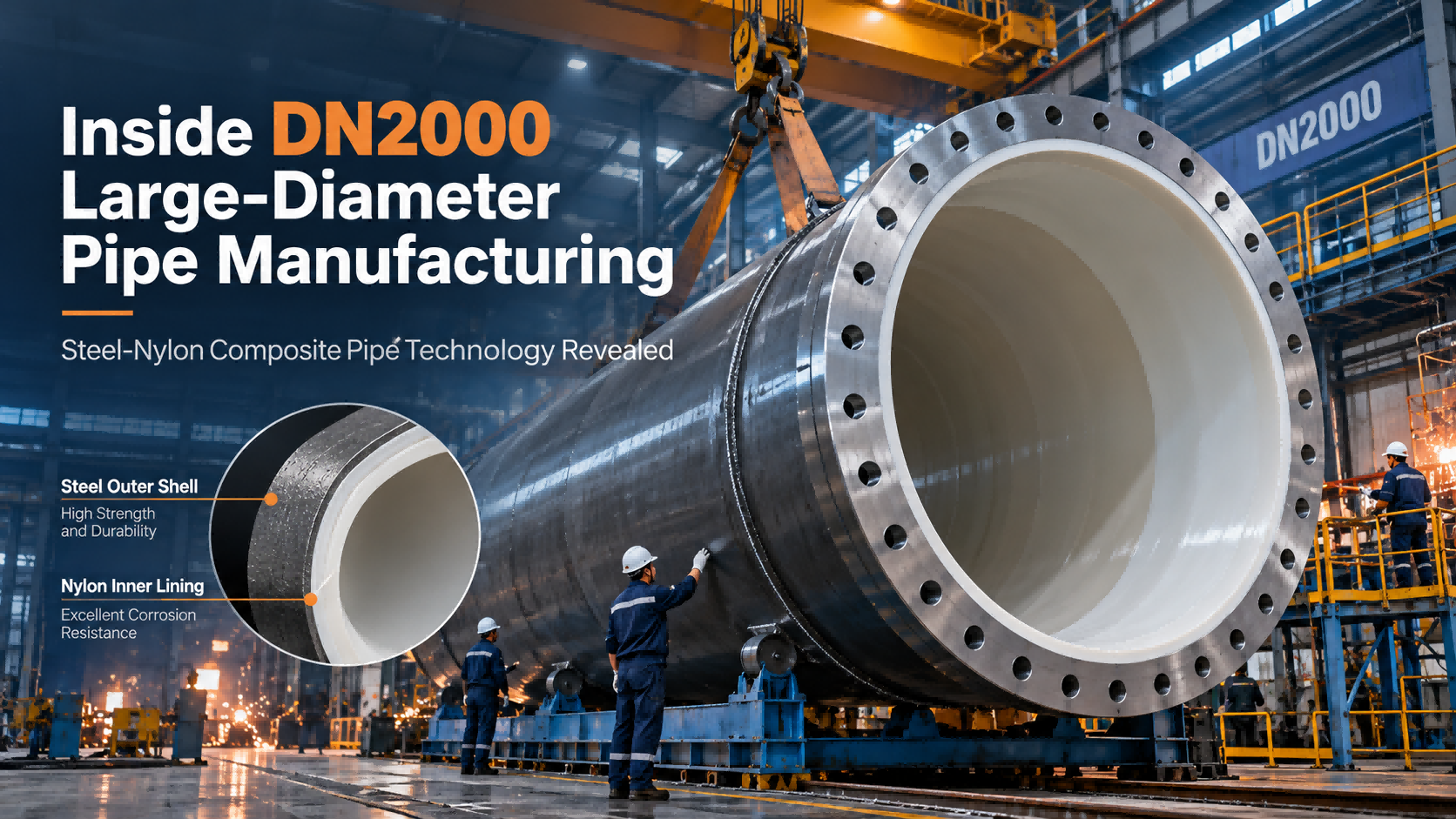
10.4 Consistent Large-Diameter Manufacturing
Demand for high-capacity fluid transportation continues to create opportunities for large-diameter piping systems.
However, increasing pipe diameter involves more than simply enlarging production dimensions.
Important manufacturing challenges include:
-
Nylon layer thickness uniformity.
-
Composite interface quality.
-
Steel structural deformation control.
-
Dimensional consistency.
-
Finished product inspection.
Manufacturers must develop suitable production controls to maintain consistent quality across different pipe sizes.
10.5 Reliable Testing and Quality Assurance
Future high-performance composite piping systems should be supported by technical documentation and appropriate testing methods.
Important evaluation activities may include:
-
Hydrostatic pressure and pressure cycling tests.
-
Nylon lining thickness and integrity inspection.
-
Steel-nylon interface bonding evaluation.
-
Abrasion testing under representative conditions.
-
Chemical immersion and aging tests.
-
Flange sealing and structural testing.
-
Long-term performance evaluation and failure mode analysis.
Manufacturers capable of providing traceable quality records and comprehensive technical documentation will be better positioned to meet the expectations of major industrial projects.
11. How Will Industrial Piping Technology Evolve Over the Next 5–10 Years?
Based on current engineering requirements, material development, and infrastructure management trends, industrial piping may evolve in five major directions.
11.1 Greater Adoption of Multifunctional Materials
More engineering projects will compare metals, engineering plastics, and composite materials according to specific operating requirements.
Material selection will increasingly focus on integrated performance rather than individual material categories.
11.2 Integration of Manufacturing and Installation
Factory prefabrication, standardized connections, and efficient field assembly will become more important procurement criteria.
11.3 Long-Service-Life Design Supported by Engineering Data
Project owners will increasingly require verified service-life assumptions, application-specific testing, and realistic maintenance interval predictions.
Unsupported claims of extremely long pipe lifespans will become less persuasive than documented performance evidence.
11.4 Digitalization of Pipeline Operations
Pipeline systems will increasingly be integrated with pressure monitoring, leak detection, asset management platforms, and predictive maintenance technologies.
11.5 Sustainability and Lifecycle Environmental Assessment
Future industrial projects will place greater emphasis on the environmental impacts of raw materials, manufacturing, transportation, installation, energy consumption, maintenance, replacement, and disposal.
For steel-nylon composite pipes, this creates both opportunities and technical responsibilities.
Longer replacement intervals and reduced maintenance may provide environmental benefits in suitable applications.
However, composite material separation, recycling, and end-of-life treatment also require careful assessment.
A complete lifecycle assessment is necessary before concluding that one piping material has a lower environmental impact than another.
12. Our Vision: Advancing Steel-Nylon Composite Piping for High-Value Industrial Applications
As a manufacturer specializing in steel-nylon composite pipes, we focus not only on producing pipes but also on addressing the long-term engineering challenges faced by industrial fluid transportation systems.
Our product development philosophy is centered on combining steel structural components with Nylon 6 engineering materials to provide composite piping solutions that balance strength, internal surface protection, and installation efficiency.
We focus on four key areas of customer value.
Structural Performance
Using steel load-bearing structures to meet the mechanical design requirements of different industrial piping systems.
Corrosion and Abrasion Resistance
Leveraging the functional characteristics of PA6 engineering nylon to provide internal surface protection in compatible corrosive and particle-containing environments.
Installation Efficiency
Supporting project-specific installation requirements through prefabricated pipe sections and appropriate flange connection solutions.
Lifecycle Value
Evaluating pipeline performance from a long-term perspective that includes procurement, installation, operation, maintenance, and replacement.
For mining, marine engineering, industrial water treatment, municipal infrastructure, and other demanding applications, our objective is to help customers identify piping solutions suited to their specific operating conditions.
We also recognize that no single piping material is suitable for every pressure, temperature, or chemical environment.
A reliable solution must be supported by clear technical communication, responsible material selection, and appropriate engineering verification.
Conclusion: The Future of Industrial Piping Is About Better Systems, Not Just Better Materials
Industrial piping is evolving from a conventional purchased material into a long-term infrastructure asset that requires comprehensive engineering and lifecycle management.
Future competitiveness will not be determined solely by pressure ratings or initial material costs.
Instead, successful piping solutions must deliver safe, reliable, efficient, and economically sustainable performance under demanding operating conditions.
From advanced composite materials and integrated corrosion protection to modular installation, digital monitoring, and lifecycle cost optimization, the industrial piping sector is entering a new phase of development.
The potential advantage of steel-nylon composite piping lies in combining the structural capabilities of steel with the functional properties of engineering nylon to achieve a balance of material performance, installation efficiency, and long-term economic value in properly validated applications.
For engineering companies planning new pipeline infrastructure or upgrading existing industrial networks, the most important question is changing.
It is no longer simply:
"Which pipe material can meet today's transportation requirements?"
Instead, the question is:
"Which piping solution can continue delivering value to the entire industrial system for years to come?"
That is the direction in which the next generation of industrial piping is moving.
Explore Next-Generation Industrial Piping Solutions With Us
Are corrosion, abrasion, complex installation requirements, or high maintenance costs affecting your industrial pipeline project?
Discover how our steel-nylon composite piping solutions may help address these challenges.
By sharing your transportation medium, design pressure, operating temperature, pipe diameter, flow velocity, and installation environment, you can help us better understand your engineering requirements and discuss suitable product options.
Explore Our Steel-Nylon Composite Pipe Solutions
Website: //www.nylonpipeline.com
Build a more reliable industrial fluid transportation system with piping solutions designed around structural performance, durability, and long-term lifecycle value.