What Pipeline Opportunities Will Be Created by Global Urban Water Network Renewal?
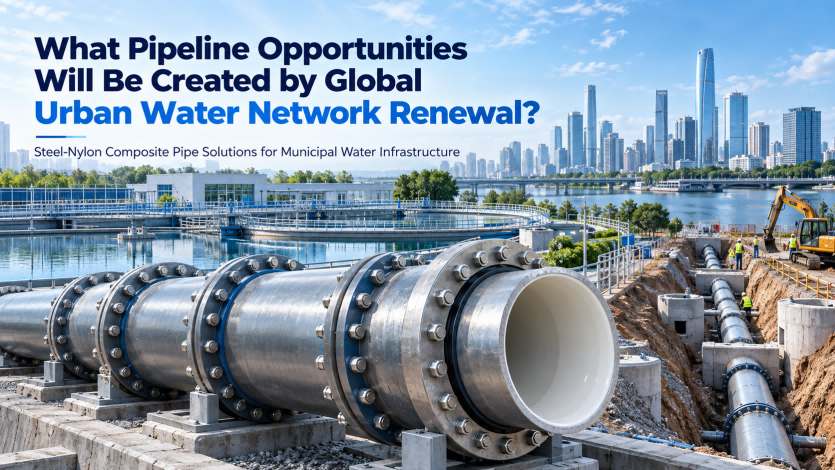
Urban water supply systems around the world are entering a new cycle of infrastructure renewal.
Over the past several decades, the primary objective of many municipal water projects was to expand water supply capacity. Today, however, a growing number of cities face a different challenge:
How can aging water networks be renewed, leakage reduced, pipe failures minimized, hydraulic efficiency improved, and the service life of next-generation water infrastructure extended?
The International Water Association (IWA) has repeatedly highlighted the challenges associated with aging infrastructure, water losses, and the operational efficiency of urban water systems. In many cities, a significant portion of treated water can be lost before it ever reaches end users.
The World Bank has also continued to link reductions in Non-Revenue Water (NRW) with improved operational efficiency and financial sustainability for water utilities. Pipe leakage, bursts, and aging infrastructure remain major concerns for municipal water systems.
For pipeline manufacturers, therefore, the real opportunity in the future urban water market is not simply that cities will need “more pipes.”
The greater opportunity is that cities increasingly need:
Pipeline systems with higher reliability, longer maintenance intervals, lower leakage risk, and lower lifecycle costs.
This shift is creating new opportunities for advanced pipeline materials.
1. Global Urban Water Infrastructure Is Moving from Expansion to “Expansion + Renewal”
Urban water pipelines are usually designed for long service lives.
However, the fact that an old pipeline is still transporting water does not necessarily mean that it remains in good operating condition.
As pipelines age, traditional water infrastructure may gradually experience:
-
Internal corrosion
-
External soil corrosion
-
Joint deterioration
-
Local leakage
-
Frequent pipe bursts
-
Internal scaling
-
Reduced effective flow area
-
Increased hydraulic resistance
-
Higher pumping energy consumption
-
Increasing maintenance frequency
As cities grow, water systems originally designed for much smaller populations may also be required to handle substantially higher flow rates and operating loads.
As a result, water utilities are increasingly moving away from asking:
“Can this pipeline continue operating?”
Instead, they are asking:
“If we rebuild this pipeline today, which material can provide reliable operation for the next several decades?”
This fundamentally changes the way pipeline materials are evaluated.
In the past, procurement decisions might have focused heavily on:
Initial pipe cost per meter.
Future projects are increasingly likely to consider:
Purchase Cost + Installation Cost + Leakage Losses + Energy Consumption + Maintenance Cost + Service Interruption Losses + Replacement Cycle
In other words, pipeline decisions are increasingly based on:
Life Cycle Cost (LCC)
and
Total Cost of Ownership (TCO)
2. Water Loss Reduction Will Become a Major Driver of Urban Pipeline Renewal
One of the most expensive problems in an urban water system may not occur at the treatment plant.
It may occur underground.
Water must go through a complete process of:
Water abstraction → Treatment → Disinfection → Pressurization → Distribution
If that treated water is ultimately lost through aging or damaged pipelines, the energy and treatment costs invested upstream are also wasted.
Reducing water losses can therefore deliver benefits beyond water conservation. It can also reduce the energy required for abstraction, treatment, pumping, and distribution.
For this reason, many municipal pipeline renewal programs are no longer simply:
Pipe Replacement Projects
They are increasingly becoming:
Water Loss Reduction Projects
These two types of projects do not necessarily use the same material-selection criteria.
For leakage reduction projects, engineers typically pay closer attention to:
-
Long-term corrosion resistance
-
Joint reliability
-
Water hammer resistance
-
Internal surface stability
-
External mechanical loads
-
Ground settlement conditions
-
Installation quality control
-
Long-term maintainability
This creates a meaningful opportunity for steel-nylon composite piping systems.
3. Opportunity One: Replacement of Aging Metallic Water Transmission Pipelines
Many traditional municipal water systems use materials such as:
-
Carbon steel pipe
-
Cast iron pipe
-
Ductile iron pipe
-
Reinforced concrete pipe
-
Other conventional metallic piping systems
These materials have long and proven engineering histories.
However, depending on water chemistry, soil conditions, environmental exposure, and service duration, metallic pipelines may eventually face corrosion-related challenges.
This is particularly relevant in applications involving:
-
High-chloride water
-
High-mineral-content water
-
Coastal groundwater
-
Special raw-water conditions
-
Industrial municipal water systems
Traditional metallic systems may require coatings, cathodic protection, linings, or other corrosion-control measures.
Steel-nylon composite pipe follows a different structural concept.
The steel structure provides mechanical strength and pressure resistance, while the nylon functional layer isolates the transported medium from the metallic structure.
Instead of requiring a single material to simultaneously provide:
Strength + Pressure Resistance + Corrosion Resistance + Wear Resistance + Hydraulic Performance
a composite structure allows different materials to perform different functions.
This design philosophy can be especially valuable for municipal water transmission mains.
4. Opportunity Two: Large-Diameter Urban Water Transmission Mains
Urban water systems generally include two major pipeline categories:
Distribution Networks
which distribute water throughout urban areas,
and:
Water Transmission Mains
which transport large volumes of water over longer distances.
Transmission pipeline diameters may include:
DN600
DN800
DN1000
DN1200
DN1600
or even larger sizes.
At these diameters, material-selection priorities change significantly.
Engineers must simultaneously consider:
Large Diameter + Internal Pressure + Long-Distance Transmission + External Loads + Water Hammer + Installation + Long-Term Reliability
Some polymer pipelines provide excellent corrosion resistance.
However, as pipe diameter and operating pressure increase, wall thickness, structural stiffness, installation requirements, and engineering design become increasingly important.
Traditional steel pipelines provide excellent mechanical strength but may again face corrosion-related concerns.
This creates an important engineering space for composite structures combining:
Metallic Structural Strength + Polymer Corrosion Resistance
Steel-nylon composite pipe therefore occupies a different technical position from both conventional plastic piping and traditional steel piping.
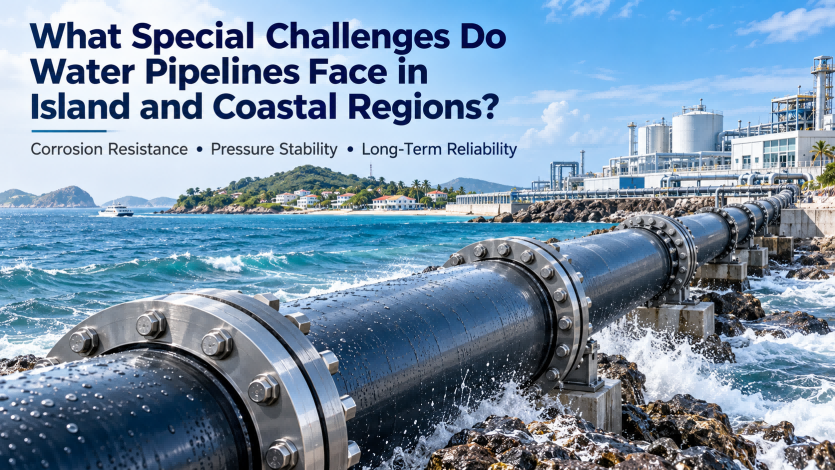
5. Opportunity Three: Desalination and Coastal Municipal Water Supply
Future urban water sources are becoming increasingly diversified.
In addition to conventional sources such as:
Rivers
Reservoirs
Groundwater
many water-stressed cities are increasingly considering:
-
Seawater desalination
-
Brackish-water desalination
-
Reclaimed water
-
Long-distance water transfer
-
Blended water sources
This creates a new challenge for pipeline materials:
Future municipal water pipelines may transport water with more complex chemical characteristics than traditional freshwater systems.
Coastal projects, for example, may need to consider:
-
Chloride ions
-
Elevated salinity
-
Humid and hot environments
-
Corrosive groundwater
-
Marine atmospheric exposure
Pipeline selection for these projects cannot always rely on conventional freshwater experience.
Composite pipes containing corrosion-resistant functional layers may therefore receive increasing technical consideration.
6. Opportunity Four: Reducing Energy Consumption in Urban Water Systems
When discussing energy efficiency in municipal water supply, attention often focuses on:
-
High-efficiency pumps
-
Variable-frequency drives
-
Intelligent control systems
-
Pressure management
However, the pipeline itself also affects energy consumption.
After many years of operation, some pipelines may experience:
-
Corrosion products
-
Scaling
-
Sediment accumulation
-
Increased internal roughness
These changes can increase hydraulic friction losses.
To maintain the same flow rate, the pumping system may then require higher pressure and greater energy input.
Therefore, pipeline evaluation should not focus only on:
Initial internal surface roughness.
The more important question is:
What will the internal surface condition look like after 10, 20, or even more years of operation?
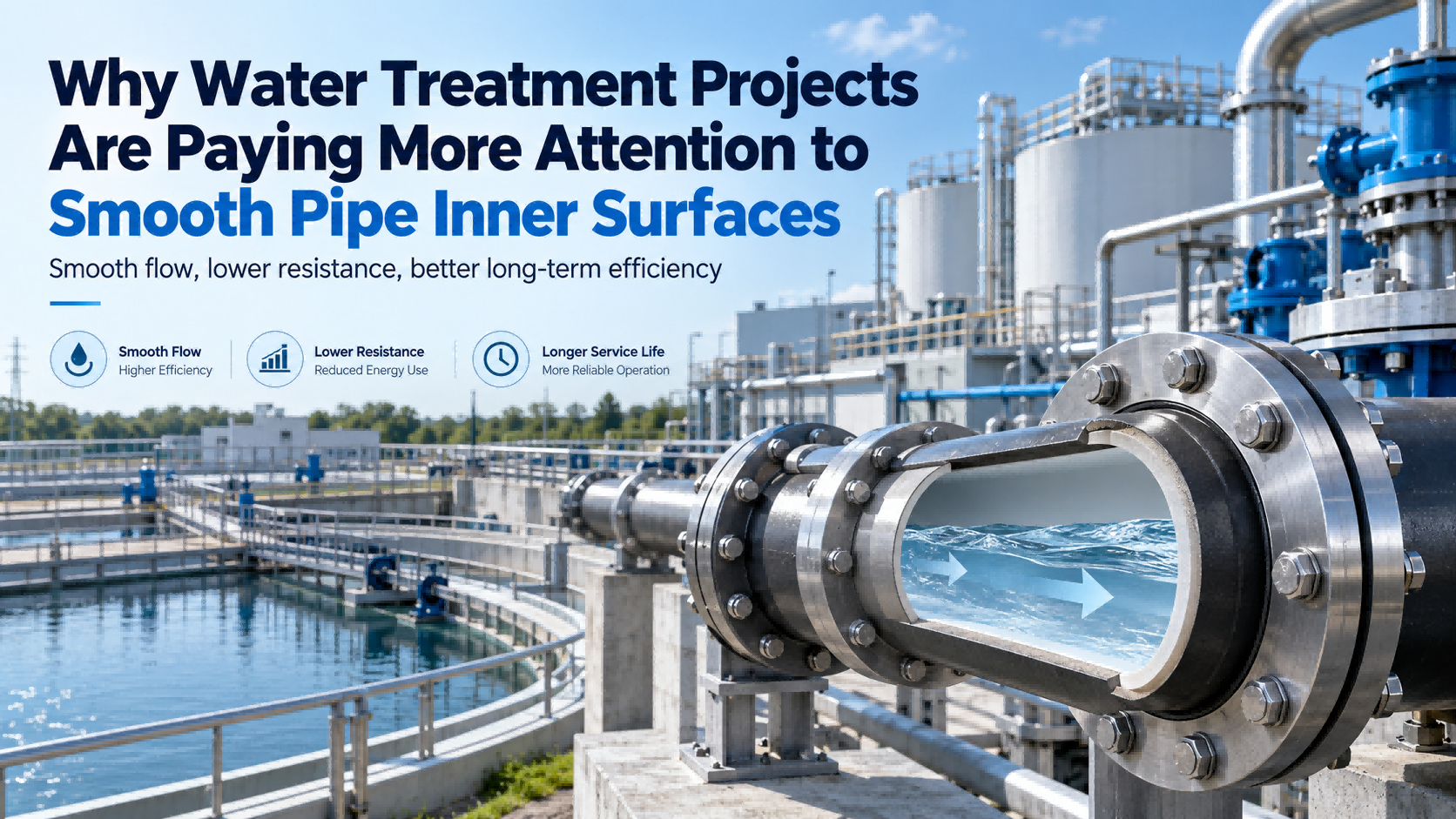
For long-distance water transmission systems, maintaining a relatively smooth and stable internal surface can help control hydraulic losses throughout the pipeline's service life.
This represents another potential advantage of polymer functional layers over pipeline materials whose internal surfaces may deteriorate because of corrosion or scaling.
7. Opportunity Five: Moving from Full-System Replacement to Targeted Pipeline Upgrades
Future urban water network renewal does not necessarily mean replacing an entire city's underground pipeline system at once.
A more practical approach is often:
Risk-Based Pipeline Replacement
In this model, utilities prioritize the highest-risk sections first.
These may include:
-
Areas with frequent pipe bursts
-
Sections with severe corrosion
-
Critical water transmission mains
-
Water treatment plant outlet pipelines
-
Pump station discharge lines
-
Water supply lines serving important industrial zones
-
River-crossing or road-crossing sections
-
High-pressure pipeline sections
This trend is particularly important for introducing new pipeline materials.
Large public infrastructure projects may not immediately replace all traditional materials with a newly adopted solution.
A more realistic pathway is:
Pilot Section → Operational Verification → Critical-Section Application → Larger-Scale Deployment
For steel-nylon composite pipe manufacturers, this means that entering overseas municipal water markets does not necessarily require winning an entire citywide pipeline project at the beginning.
A more practical market entry point may be:
100–500 meter trial sections, highly corrosive pipeline sections, large-diameter transmission mains, or high-maintenance areas.
Real operating data from these applications can provide stronger evidence of material value than product promotion alone.
8. Opportunity Six: Municipal Water Projects Are Moving from CAPEX Thinking to TCO Thinking
Traditional pipeline tenders often begin by comparing:
USD per Meter
However, mature infrastructure projects increasingly need to evaluate both:
CAPEX
including:
-
Pipe purchase price
-
Transportation
-
Civil works
-
Installation
-
Connections
-
Corrosion protection
-
Construction equipment
and:
OPEX
including:
-
Leakage repairs
-
Emergency pipe-burst repairs
-
Water-service interruption costs
-
Energy consumption
-
Corrosion maintenance
-
Pipeline replacement costs
The real comparison therefore becomes:
30-Year Pipeline Cost
For example:
Pipeline A
may have a lower initial purchase price but begin requiring significant repairs after 10–15 years.
Pipeline B
may have a higher initial cost but significantly fewer maintenance interventions.
Even if Pipeline B costs more initially, its total lifecycle cost may ultimately be lower.
Therefore:
The future competition among municipal water pipeline materials may not be about which pipe is cheapest to purchase, but which system delivers the lowest long-term operating cost.
This is an important reason why corrosion-resistant and low-maintenance composite pipeline systems can become increasingly relevant to major infrastructure projects.
9. Why Should Steel-Nylon Composite Pipe Be Considered for Municipal Water Projects?
Municipal water pipeline selection should never be based on a single performance parameter.
A material should be evaluated across multiple engineering requirements.
| Engineering Requirement | Technical Logic of Steel-Nylon Composite Pipe |
|---|---|
| Pressure resistance | Steel structure provides mechanical strength |
| Corrosion resistance | Nylon functional layer isolates the medium from the metal |
| Large-diameter capability | Suitable for large water transmission pipeline designs |
| Internal surface performance | Smooth internal surface can support efficient hydraulic transport |
| Wear resistance | Can address water containing certain levels of suspended particles |
| Structural stability | Combines structural rigidity with functional-layer performance |
| Maintenance requirements | Designed to reduce corrosion-related maintenance |
| Service life | Suitable for lifecycle-cost-based evaluation |
Steel-nylon composite pipe should not simply be understood as a:
Plastic Pipe
nor as a conventional:
Steel Pipe
A more accurate description is:
Structural Steel + Functional Nylon Layer
In other words:
Steel provides the structure. Nylon manages the medium-contact environment.
This division of functions is one of the important engineering concepts behind modern composite materials.
10. How Does Steel-Nylon Composite Pipe Compare with Common Municipal Water Pipeline Materials?
There is no single pipeline material that is suitable for every municipal water project.
Each material has its own appropriate application range.
| Pipe Material | Main Advantages | Key Engineering Considerations |
|---|---|---|
| HDPE | Corrosion resistance and flexibility | Structural design for large-diameter, higher-pressure applications |
| Ductile Iron | Mature engineering experience and high strength | Long-term corrosion protection |
| Steel Pipe | High strength and mature large-diameter manufacturing | Internal and external corrosion protection |
| FRP | Corrosion resistance and relatively low weight | Impact resistance, joints, and long-term structural behavior |
| Stainless Steel | Good corrosion and hygienic performance | Cost in large-diameter projects |
| Steel-Nylon Composite Pipe | Combines mechanical strength and corrosion resistance | Engineering design based on pressure, water chemistry, temperature, and connection method |
We do not suggest that:
“Every municipal water project should use steel-nylon composite pipe.”
A more professional material-selection approach is:
If a project simultaneously involves:
Large Diameter + Pressure + Corrosion + Long Service Life + Low Maintenance
then steel-nylon composite pipe deserves to be included in the material evaluation process.
11. The Real Future Opportunity Is Not Simply Selling Pipe — It Is Participating in Early-Stage Material Selection
Overseas municipal water projects are placing increasingly high requirements on pipeline manufacturers.
Customers may no longer need only a:
Pipe Quotation
They increasingly need:
Pipeline Engineering Support
This may include:
-
Water chemistry analysis
-
Operating pressure
-
Design pressure
-
Pipeline diameter
-
Flow velocity
-
Temperature
-
Aboveground or underground installation
-
Soil environment
-
Water hammer analysis
-
Joint and connection design
-
Lifecycle evaluation
-
TCO comparison between materials
Only after analyzing these parameters can engineers properly answer:
Which pipe material is suitable for this water project?
This is particularly important for industrial pipeline manufacturers entering international markets.
Future competition will not only involve manufacturing capability.
It will increasingly involve a combination of:
Material Selection Capability + Engineering Capability + Manufacturing Capability
12. Which Municipal Water Projects Are Particularly Relevant for Steel-Nylon Composite Pipe?
The following overseas project categories deserve particular attention:
1. Aging Water Network Replacement
Renewal of aging municipal water infrastructure.
2. Large-Diameter Water Transmission Pipelines
Long-distance, high-capacity water transmission projects.
3. Coastal City Water Supply
Municipal water infrastructure in coastal environments.
4. Desalination Water Transmission
Pipelines transporting desalinated seawater.
5. High-Salinity Water Pipelines
Water systems with elevated salt or mineral content.
6. Water Treatment Plant Main Pipelines
Major inlet and outlet pipelines for water treatment facilities.
7. Pump Station Discharge Pipelines
High-load pipelines downstream of pumping stations.
8. Industrial City Water Supply
Municipal systems supplying major industrial areas.
9. High-Pressure Water Transmission
Pressurized long-distance transmission mains.
10. Frequent Pipe Failure Replacement Projects
Pipeline renewal in areas experiencing repeated leakage or pipe bursts.
In these applications, project owners are often more concerned with:
Reliability, Corrosion Resistance, Pressure Capacity, Maintenance Cost, and Service Life
than in ordinary low-pressure distribution networks.
These requirements align closely with the technical positioning of steel-nylon composite piping systems.
13. What Opportunities Will Global Urban Water Network Renewal Really Create?
Over the next 10–20 years, one of the most important changes in the global municipal water industry may not simply be the number of kilometers of new pipeline installed.
The more important change may be:
Pipeline Procurement Standards Are Changing
In the past, the fundamental question was:
Can this pipe transport water?
In the future, the question will increasingly become:
Can this pipeline transport water reliably for decades with lower leakage, lower maintenance requirements, and lower lifecycle cost?
These are fundamentally different procurement philosophies.
As water utilities pay more attention to:
-
Leakage rates
-
Pipe burst frequency
-
Energy consumption
-
Corrosion
-
Maintenance frequency
-
Lifecycle costs
pipeline material selection will inevitably evolve as well.
Traditional materials will not disappear.
HDPE, ductile iron, steel pipe, stainless steel, and FRP will continue to have their own appropriate application areas.
At the same time:
Composite Pipeline Solutions
will have more opportunities to enter material-selection frameworks.
For steel-nylon composite pipe, the real market opportunity is not simply replacing one traditional pipe material.
Its value lies in addressing engineering requirements that can be difficult for a single conventional material to balance simultaneously:
Pressure Resistance + Corrosion Resistance + Large Diameter + Long-Term Reliability + Low Maintenance
Conclusion: The Next Phase of Municipal Water Infrastructure Will Compete on Long-Term Reliability
Municipal water infrastructure is not an ordinary industrial product.
Once a major water transmission pipeline is installed, it may be expected to operate for decades.
Therefore, what a project owner is purchasing is not simply a batch of pipe.
They are purchasing decades of:
Water Transmission Reliability
A pipeline solution that can help customers:
reduce one major pipe burst,
avoid one large-scale water-service interruption,
eliminate one excavation and replacement operation,
reduce long-term pumping energy consumption,
or extend one pipeline replacement cycle,
may create engineering value far greater than the initial purchase price of the pipe itself.
Global urban water network renewal is encouraging more project owners to reconsider traditional pipeline material-selection strategies.
For steel-nylon composite pipe, which combines structural strength, corrosion resistance, wear resistance, and long-term operating capability, this represents a global infrastructure market worth developing over the long term.
If you are planning a municipal water supply, large-diameter water transmission, desalination water, high-salinity water, or aging pipeline renewal project, we can provide steel-nylon composite pipe selection support and material comparison analysis based on pipeline diameter, pressure, water chemistry, temperature, installation environment, and required design life.
Why Aging Municipal Pipeline Renewal Projects Are Focusing More on Life Cycle Cost
Mining Pipeline Downtime Cost Analysis: The Real Cost Is Often Not the Pipe, but Lost Production Time