High Water-Cut Oilfield Pipeline Upgrade Projects: How to Address Corrosion and Abrasion Challenges

Introduction: What New Challenges Do Pipeline Systems Face as Oilfields Enter the High Water-Cut Stage?
As oilfields enter the middle and later stages of production, the water cut of produced fluids continues to increase in many oil wells. Gathering and transportation systems originally designed primarily for crude oil gradually transition toward handling complex multiphase mixtures of oil, water, and gas.
For oilfield operators, changes in water cut affect more than the composition of produced fluids. They can also directly influence pipeline corrosion risks, transportation efficiency, equipment maintenance frequency, and overall operating costs.
This is particularly important in environments where highly saline produced water, CO₂, H₂S, and solid particles coexist. Conventional metallic pipelines may simultaneously experience electrochemical corrosion, localized pitting, particle erosion, and the combined effects of corrosion and mechanical wear.
Once pipeline perforation, leakage, or localized failure occurs, operators may face additional repair expenses, production interruptions, environmental contamination, and safety risks.
Therefore, pipeline upgrades in high water-cut oilfields should involve more than simply replacing aging pipes. They should include a comprehensive reassessment of transported media, material structure, connection methods, long-term maintenance requirements, and total lifecycle costs.
Against this background, steel-nylon composite pipes, which combine the structural strength of steel with the corrosion resistance of suitable non-metallic materials, offer an alternative worth evaluating for upgrading high water-cut oilfield gathering and transportation systems.
1. Why Does Increasing Water Cut Change the Corrosion Environment Inside Oilfield Pipelines?
1.1 Higher Water Cut Creates More Complex Internal Corrosion Conditions
During the early stages of oilfield production, the transported fluids in some gathering pipelines consist primarily of crude oil, with a relatively low proportion of water.
As production continues, the water cut in certain oilfields gradually increases, resulting in a higher proportion of water in the produced fluids.
For carbon steel pipelines, continuous exposure to water containing corrosive components is an important condition for internal corrosion.
However, water cut alone does not directly determine the corrosion rate.
The formation of a continuous water phase, the degree of water wetting on the metal surface, the chemical composition of the aqueous phase, and actual flow conditions all influence the severity of corrosion.
Common corrosion-related factors in high water-cut oilfield fluids include:
-
Chloride ions and other dissolved salts in highly saline produced water.
-
Acid gases such as CO₂ and H₂S dissolved in the aqueous phase.
-
Dissolved oxygen potentially introduced during water injection, fluid transportation, and treatment processes.
-
Microorganisms and their metabolic activities.
-
Solid particle deposition, localized flow disturbances, and temperature fluctuations.
For oilfield operators planning pipeline upgrades, the first question should not simply be how many years the existing pipelines have been in service.
Instead, the priority should be determining whether the original pipeline materials remain suitable for current and anticipated operating conditions.
1.2 CO₂ Corrosion: A Common Internal Corrosion Problem in High Water-Cut Oilfields
When CO₂ dissolves in produced water, it changes the chemical environment of the aqueous phase and may promote electrochemical corrosion of carbon steel pipe walls.
Under certain conditions, corrosion product films may form on the internal pipe surface. However, their protective effectiveness depends on temperature, flow velocity, water chemistry, and other factors.
When these films are locally damaged by fluid turbulence or solid particles, the exposed metal surface may continue to corrode.
CO₂ corrosion can cause both uniform wall thinning and severe localized corrosion.
For oilfield gathering pipelines operating over extended periods, localized wall thinning deserves particular attention because it can reduce local pressure-bearing capacity and eventually lead to perforation and leakage.
Recommended approach:
For oilfield gathering pipelines exposed to CO₂ corrosion risks, material selection should focus on reducing direct contact between corrosive water and the pressure-bearing steel structure.
Using an appropriate non-metallic corrosion-resistant inner layer as the primary medium-contact surface is one of the technical advantages worth evaluating in steel-nylon composite pipes.
1.3 H₂S Corrosion: A Challenge Affecting Both Pipeline Service Life and Operational Safety
Some oilfield production fluids contain H₂S, which can create a complex corrosive environment when combined with water.
Under certain material, stress, and environmental conditions, H₂S may also contribute to sulfide stress cracking and hydrogen-induced cracking.
For high water-cut oilfields, pipeline safety cannot be evaluated solely by checking for visible corrosion.
Material properties, stress levels, acid gas partial pressures, and actual service conditions must also be considered.
Steel-nylon composite pipes incorporate a non-metallic inner layer that can reduce opportunities for the transported medium to come into direct contact with the steel pressure-bearing structure.
However, applications involving H₂S still require careful evaluation of nylon gas permeability, long-term chemical stability, end-sealing performance, and potential exposure of metallic components to sour environments.
No non-metallic lining should be assumed to eliminate all corrosion and cracking risks associated with H₂S-containing service.
1.4 Microbiologically Influenced Corrosion: An Overlooked Long-Term Operational Risk
Oilfield produced water may contain microorganisms such as sulfate-reducing bacteria.
Under suitable conditions, microorganisms can form biofilms on internal pipe surfaces or in areas containing accumulated deposits, potentially contributing to localized corrosion.
In low-flow sections, pipelines subject to extended shutdowns, and low-lying areas where water accumulates, microbiologically influenced corrosion requires evaluation based on actual environmental conditions.
Therefore, pipeline upgrades in high water-cut oilfields should address not only conventional chemical corrosion but also potential risks associated with deposits, microorganisms, and pipeline operating conditions.
2. Why Do High Water-Cut Oilfield Pipelines Often Experience Corrosion and Abrasion Simultaneously?
In actual oilfield production, the transported medium is often more complex than a simple mixture of oil and water.
Produced fluids may also contain formation sand, corrosion products, and other solid particles.
These solids create an additional source of mechanical wear within the pipeline.
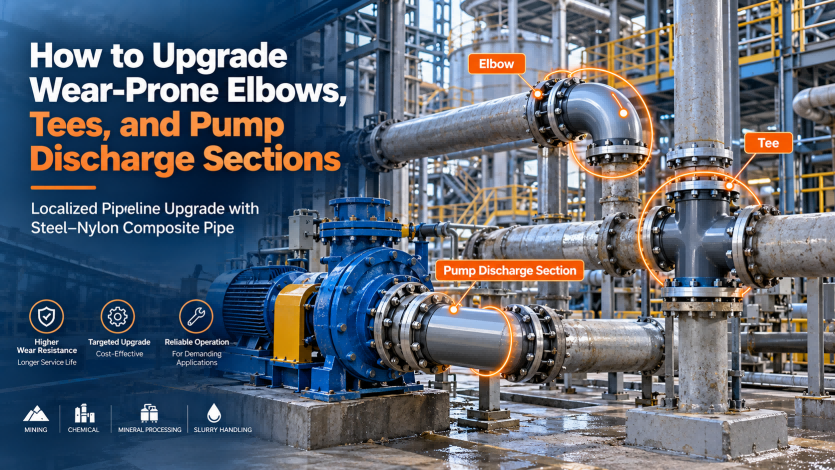
At elbows, tees, diameter transitions, and other locations where flow direction changes, particles may repeatedly strike the internal pipe surface.
Over time, this impact can contribute to localized material loss and pipeline deterioration.
2.1 Corrosion and Abrasion Can Reinforce Each Other
In metallic pipelines transporting oil-water mixtures containing sand, corrosion and mechanical wear may occur simultaneously.
A typical process can be summarized as follows:
Metal surface corrosion → Particle impact damages the corrosion product film → Fresh metal surfaces become exposed → Corrosion continues → Pipe wall thickness decreases further.
This interaction between mechanical erosion and corrosion is commonly referred to as erosion-corrosion.
However, the severity of erosion-corrosion is not determined by sand concentration alone.
It also depends on flow velocity, particle size, particle hardness, impact angle, and the corrosiveness of the transported medium.
2.2 Why Are Certain Pipeline Sections More Vulnerable Than Straight Pipe Sections?
In high water-cut oilfield gathering systems, the following locations deserve particular attention:
| Pipeline Location | Potential Risks | Key Considerations During Upgrades |
|---|---|---|
| Elbows | Particle impact and localized erosion | Wear-resistant materials, bend radius, and flow velocity |
| Tees | Changes in flow direction and localized turbulence | Branch geometry and localized protection |
| Diameter transitions | Changes in flow velocity and localized erosion | Gradual transition design |
| Low-lying pipeline sections | Water accumulation and solid deposits | Drainage, cleaning, and corrosion monitoring |
| Flanged connections | Seal failure and crevice corrosion | End protection and sealing design |
| Long straight sections | Prolonged exposure to corrosive media and wall thinning | Material compatibility and corrosion protection |
Consequently, oilfield pipeline upgrades should be designed according to the actual failure mechanisms affecting individual pipeline sections rather than treating the entire system as a single operating environment.
3. Why Should Pipeline Materials Be Reconsidered During High Water-Cut Oilfield Upgrades?
Conventional carbon steel pipelines offer well-established mechanical properties, manufacturing processes, and installation systems.
However, under complex operating conditions involving high water cut, high salinity, acid gases, and solid particles, carbon steel alone may not provide sufficient corrosion and wear resistance for long-term service.
Pipeline upgrade projects should therefore evaluate several alternative technical approaches.
Option 1: Continue Using Carbon Steel Pipelines with Enhanced Corrosion Protection
For pipelines where corrosion risks can be effectively managed following a comprehensive assessment, operators may choose to retain carbon steel while improving corrosion-control measures.
Common methods include corrosion inhibitor injection, fluid treatment, regular pigging, corrosion monitoring, and targeted replacement of damaged sections.
This approach allows operators to continue using existing material systems and portions of their current infrastructure.
However, its long-term effectiveness depends on inhibitor compatibility, injection reliability, cleaning conditions, and continuous corrosion management.
For pipeline sections experiencing frequent corrosion perforation or localized erosion failures, the suitability of the original materials should be reassessed.
Option 2: Use Corrosion-Resistant Alloy Pipelines
For specific corrosive environments, suitable grades of stainless steel, duplex stainless steel, or other corrosion-resistant alloys may be considered.
However, different alloys have different levels of resistance to chloride ions, H₂S, CO₂, and elevated temperatures.
Material suitability should never be determined by alloy classification alone.
For long-distance and large-scale oilfield gathering systems, the procurement, welding, and installation costs of corrosion-resistant alloys must also be considered.
Option 3: Use Metal–Non-Metal Composite Pipelines
Metal–non-metal composite pipes combine different materials so that each structural layer performs a specific function.
For example, the steel structure primarily provides mechanical strength and pressure-bearing capacity, while the non-metallic inner layer protects the medium-contact surface.
For high water-cut oilfield gathering systems, this material combination offers an alternative to conventional pipelines made from a single material.
The core value of steel-nylon composite pipes lies in combining the pressure-bearing advantages of steel with the corrosion-resistant and wear-resistant properties of suitable nylon materials to address complex fluid transportation requirements.
4. How Can Steel-Nylon Composite Pipes Address Both Corrosion and Abrasion in High Water-Cut Oilfields?
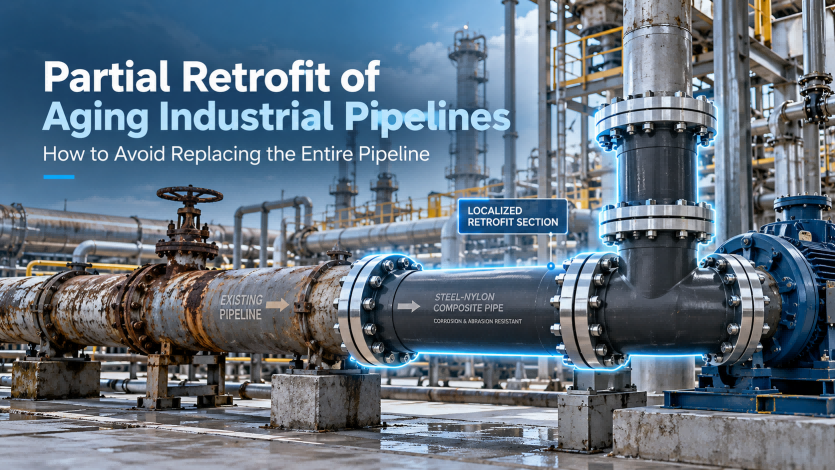
Our company specializes in manufacturing reinforced MC nylon pipes and steel-nylon composite pipes.
We are committed to providing corrosion-resistant and wear-resistant pipeline products for the chemical industry, oil and gas fields, and other industrial applications involving complex transported media.
For high water-cut oilfield gathering pipelines, we focus on fluid corrosiveness, solid-particle abrasion, pressure-bearing performance, and long-term maintenance requirements.
4.1 Composite Structure: Allowing Different Materials to Deliver Their Respective Advantages
In conventional carbon steel pipelines transporting corrosive produced water, the internal metal surface is directly exposed to the transported medium.
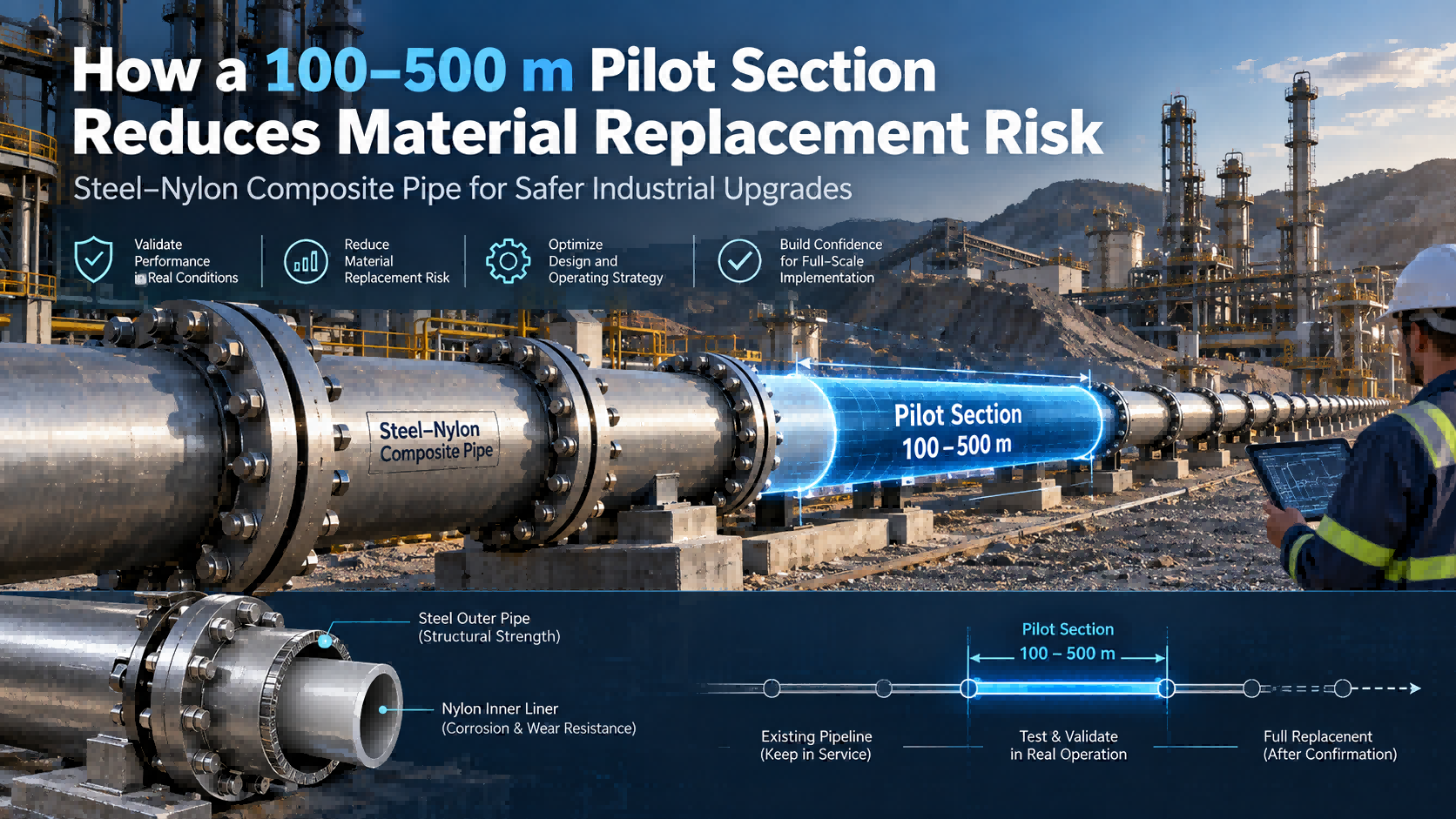
Steel-nylon composite pipes combine a steel pressure-bearing structure with a nylon inner layer, allowing different material layers to perform different functions.
The primary functions of the steel structure include:
Providing the required mechanical strength and structural rigidity while supporting internal pressure, external loads, and installation-related forces according to the specific engineering design.
The primary functions of the nylon inner layer include:
Serving as the medium-contact layer and, where operating conditions have been properly verified, providing corrosion and wear protection while reducing direct contact between the transported medium and the steel structure.
The advantage of this approach is that a single material does not need to perform every function independently.
Instead, different materials work together through an integrated structural design.
For high water-cut oilfield pipelines, particular attention should be paid to the reliability of the interface between the steel structure and nylon inner layer, long-term dimensional stability, and the integrity of the protective inner surface.
4.2 Corrosion Resistance: Reducing Direct Exposure of the Steel Structure to Produced Water
In high water-cut oilfield gathering systems, the corrosive aqueous phase is often a major source of internal pipeline corrosion.
If a continuous, intact, and chemically compatible non-metallic inner layer can isolate the steel structure from the transported medium, it may reduce the risk of direct internal corrosion of the steel components.
Our steel-nylon composite pipes combine steel and nylon to address industrial transportation applications requiring both pressure-bearing performance and medium-contact protection.
For highly saline produced water and oil-water mixtures containing CO₂, material selection should focus on verifying the long-term stability of the nylon inner layer under actual temperature, pressure, and fluid composition conditions.
It is important to note that nylon compatibility may vary depending on the specific hydrocarbons, aromatic compounds, organic chemicals, and acid gas environments involved.
Therefore, satisfactory performance in one produced-water application should not automatically be extended to all oilfield fluids.
For applications involving complex hydrocarbon compositions, high acid gas partial pressures, or substantial temperature fluctuations, targeted evaluations of chemical compatibility, permeability, and long-term material performance are necessary.
4.3 Wear Resistance: Addressing Continuous Particle Impact on Internal Pipe Surfaces
For high water-cut oilfields where sand production is also present, pipeline abrasion must be considered during material selection.
Under suitable operating conditions, the wear-resistant properties of nylon can provide an additional material option for transporting fluids containing solid particles.
Steel-nylon composite pipes incorporate a nylon medium-contact layer within a steel structure, combining mechanical support with the wear-resistant properties of nylon.
For high-sand-content applications, actual particle concentration, particle size distribution, flow velocity, and impact conditions should be used to evaluate material wear performance.
The service life of an entire pipeline should not be predicted solely from a material's general wear-resistance characteristics.
At elbows, tees, and localized high-velocity sections, hydraulic calculations and wear assessments should be incorporated into the structural design.
For applications where corrosion and abrasion occur simultaneously, the material combination used in steel-nylon composite pipes offers a technical approach worth evaluating for improving internal pipeline protection.
4.4 Pressure-Bearing Structure: Meeting the Engineering Requirements of Oilfield Gathering Pipelines
Oilfield gathering pipelines must provide more than corrosion and wear resistance.
They must also meet the pressure-bearing requirements of the intended engineering application.
Operating pressure, pressure fluctuations, transportation distance, and pipe diameter can vary significantly between oilfield production areas.
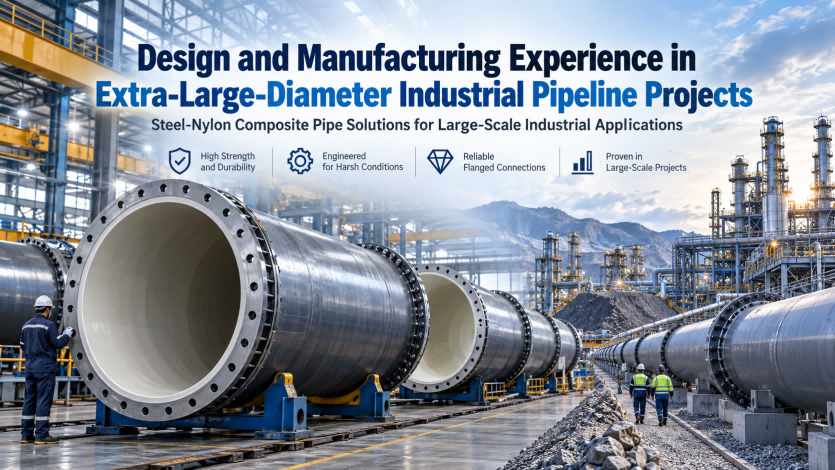
Our steel-nylon composite pipes combine a steel structure with a nylon inner layer and can be selected according to specific engineering requirements for diameter, pressure rating, and connection design.
Key factors requiring evaluation include:
-
Design pressure, normal operating pressure, and maximum anticipated pressure.
-
Fluid temperature and long-term pipeline operating temperature.
-
Water hammer, startup and shutdown conditions, and other transient pressure events.
-
Pipe diameter, wall thickness, and pipeline support conditions.
-
Buried, aboveground, or other installation environments.
-
Long-term bonding reliability between the nylon inner layer and steel structure.
The actual allowable pressure of a composite pipeline must be determined by considering temperature, product structure, connection methods, and pressure-test results.
It should not be inferred solely from the mechanical strength of the steel component.
For oilfield pipeline upgrade projects, reliable pressure-bearing design and corrosion protection should be developed together.
5. Connection Design Optimization: Why Are Flanged Connections Important for High Water-Cut Oilfield Pipelines?
In conventional oilfield pipeline systems, considerable attention is often given to corrosion of the pipe body.
However, the long-term reliability of pipeline connections is equally important.
For composite pipelines, connection points involve multiple design considerations, including sealing performance, pressure-bearing capacity, installation tolerances, and continuity of corrosion protection.
Even when the pipe body offers excellent corrosion resistance, localized corrosion or leakage may still occur if the connection design allows the transported medium to contact exposed steel components.
Therefore, composite pipeline upgrades must consider the entire connection structure rather than focusing exclusively on pipe materials.
Our Integrated Flange Connection Solution
Our company places particular emphasis on integrated flange technology in the design of steel-nylon composite pipes.
By optimizing pipe-end structures and flange connection methods, prefabricated connection systems can be developed according to specific engineering requirements.
Compared with connection methods requiring on-site welding, properly designed flanged connections can reduce certain field-welding operations and provide greater convenience during existing pipeline upgrades and installation.
Their main engineering benefits can be summarized in three areas.
1. Improving the structural integrity of pipeline connections
Through appropriate pipe-end and flange design, the risk of structural defects caused by improper on-site fabrication can be reduced.
2. Maintaining corrosion protection at connection points
Suitable end-protection and sealing designs can help reduce the possibility of transported media reaching the steel structure through connection interfaces.
3. Improving installation and maintenance convenience
When engineering requirements are satisfied, flanged connections facilitate pipeline disassembly, replacement, and localized maintenance while reducing certain field-welding operations.
However, the actual reliability of flanged connections still depends on sealing surface design, gasket materials, bolt preload, installation accuracy, and service conditions.
For operating pipelines containing flammable hydrocarbons or H₂S, the use of flanged connections does not eliminate the need for appropriate isolation, purging, gas testing, and other required safety measures.
6. How Should a High Water-Cut Oilfield Pipeline Upgrade Project Be Implemented?
An effective pipeline upgrade is not simply a matter of replacing existing carbon steel pipes with another material.
Instead, it requires a systematic assessment to determine which sections need upgrading, which materials are suitable, and how the effectiveness of the upgrade can be verified.
For high water-cut oilfield gathering systems, we recommend organizing the engineering process into four stages.
Stage 1: Establish a Corrosion and Abrasion Assessment System for Existing Pipelines
Before implementing an upgrade, operators should conduct a comprehensive investigation of existing pipeline operating conditions.
Key information to collect includes:
| Assessment Item | Main Investigation Requirements | Engineering Significance |
|---|---|---|
| Water cut | Current water cut, historical changes, and future projections | Evaluate changes in water-phase contact and operating conditions |
| Produced water composition | Salinity, chloride concentration, pH, and other parameters | Analyze the corrosive environment |
| Acid gases | CO₂ and H₂S concentrations and partial pressures | Evaluate acid gas corrosion and material suitability |
| Solid particles | Sand concentration, particle size, and particle hardness | Assess erosion and abrasion risks |
| Operating parameters | Pressure, temperature, flow rate, and operating fluctuations | Establish structural design conditions |
| Pipeline history | Perforation, leakage, repair, and inspection records | Identify high-risk pipeline sections |
| Pipeline configuration | Diameter, length, elbows, and connection methods | Develop a targeted upgrade plan |
For pipeline sections that have experienced repeated leakage, operators should also investigate failure locations, wall-thickness inspection results, and, where necessary, corrosion product characteristics to determine the primary failure mechanisms.
For example, localized corrosion at the bottom of a pipeline may be associated with water accumulation or deposits.
Localized wall thinning at elbows may require further investigation of particle impact, flow conditions, and fluid corrosiveness.
Only after the actual causes of failure have been identified can reliable material-selection decisions be made.
Stage 2: Determine the Suitable Application Range of Steel-Nylon Composite Pipes
For oilfield upgrade projects considering steel-nylon composite pipes, the following performance characteristics should be verified.
Corrosion resistance: Compatibility of the nylon material with the actual oil-water mixture, including long-term stability in environments containing CO₂, H₂S, and other relevant components.
Wear resistance: Performance of the nylon inner layer under actual particle concentrations, particle sizes, and flow velocities.
Pressure-bearing performance: Reliability of the complete pipe, flanges, and connection components under the specified design temperature and pressure.
Structural integrity: Bonding between the nylon inner layer and steel structure, differences in thermal expansion, and performance under cyclic loading.
Operation and maintenance: Compatibility of pipeline cleaning, sand removal, inspection, and maintenance procedures with the composite structure.
For pipelines operating at elevated temperatures, experiencing significant pressure fluctuations, or transporting chemically complex fluids, more targeted testing and engineering verification may be required.
The objective of material selection is not simply to maximize a single performance characteristic.
Instead, it is to ensure that the pipeline meets safety, transportation efficiency, and maintenance requirements throughout its intended service life.
Stage 3: Prioritize Pipeline Sections with Higher Corrosion and Abrasion Risks
Large oilfields may have extensive gathering and transportation networks involving numerous pipelines.
Replacing the entire system at once can require substantial capital investment and may disrupt normal production.
A phased upgrade strategy can therefore be developed based on the results of the risk assessment.
Priority may be given to pipeline sections with a history of frequent leakage, difficult maintenance conditions, or potentially serious consequences in the event of failure.
For sections where corrosion and abrasion occur together, steel-nylon composite pipes may be considered if their suitability has been confirmed through appropriate evaluation.
In areas where corrosion risks are relatively low and existing carbon steel pipelines still meet safe operating requirements, operators may choose to retain the current system while strengthening monitoring.
This risk-based approach helps direct engineering investment toward the sections where upgrades are most needed.
Stage 4: Establish a Long-Term Performance Evaluation System After Upgrading
Completion of a pipeline upgrade does not mean that corrosion and abrasion management can be discontinued.
Composite pipelines require an operating evaluation system suited to their structural characteristics.
Key monitoring areas include connection sealing performance, pressure changes, temperature fluctuations, abnormal vibration, and potential damage to the inner layer.
Where internal inspection is feasible, inspection methods should be selected based on their compatibility with the non-metallic inner layer and composite pipe structure.
It should not be assumed that conventional inspection equipment designed for steel pipelines is suitable for all composite pipeline systems.
By comparing operating data before and after an upgrade, oilfield operators can gradually accumulate performance information under different service conditions.
These data can then support future pipeline upgrades and material-selection decisions across other production areas.
7. From Repeated Repairs to Long-Term Reliable Operation: What Value Can Steel-Nylon Composite Pipes Provide?
For oilfields entering the high water-cut production stage, the economic value of pipeline upgrades should not be judged solely by the initial purchase price.
The more important question is whether the upgraded pipelines can reduce unplanned production interruptions, repair requirements, fluid leakage, and other long-term operating expenses.
7.1 Reducing Repeated Repairs Caused by Internal Corrosion
If a properly validated nylon inner layer effectively reduces direct contact between corrosive fluids and the steel structure, it may lower certain internal corrosion risks associated with conventional metallic pipelines.
For sections that previously experienced frequent corrosion-related perforation, this structural advantage may help reduce repeated repair and replacement requirements.
However, actual maintenance intervals will still depend on inner-layer integrity, end-sealing performance, changes in fluid composition, and site-specific operating practices.
7.2 Reducing the Risk of Unplanned Shutdowns Caused by Corrosion and Abrasion
The consequences of pipeline failure in high water-cut oilfields often extend beyond material and labor costs.
In some cases, leakage may result in reduced oilfield production, transportation interruptions, and additional environmental remediation expenses.
Targeted upgrades of corrosion-prone and wear-prone sections can create opportunities to improve the operational continuity of the gathering system.
These benefits should be verified by comparing leakage frequency, maintenance labor hours, and unplanned downtime before and after the upgrade.
7.3 Optimizing Total Pipeline Lifecycle Costs
For high water-cut oilfields, a lifecycle cost (LCC) model is recommended when evaluating the economic feasibility of pipeline upgrades.
A basic calculation can be expressed as follows:
Total Pipeline Lifecycle Cost = Initial Procurement Cost + Installation Cost + Operating and Maintenance Cost + Inspection and Repair Cost + Downtime and Leakage-Related Cost + Decommissioning and Disposal Cost
When comparing the economic performance of different pipeline materials, operators should use consistent design-life assumptions, transportation conditions, and evaluation boundaries.
The time value of money should also be considered when assessing future expenditures.
The economic value of steel-nylon composite pipes should be evaluated using actual procurement costs, verified service life, maintenance records, and other relevant engineering data.
For pipeline sections experiencing severe corrosion and abrasion, composite pipes may offer competitive long-term economics if they can reduce maintenance frequency and production losses while meeting applicable safety requirements.
This may remain true even when their initial procurement cost is higher than that of certain conventional alternatives.
8. From Pipe Manufacturing to Pipeline Upgrade Solutions: What Makes Our Products Valuable?
Upgrading high water-cut oilfield pipelines is a comprehensive engineering challenge involving corrosion protection, material structure, pressure-bearing design, fluid transportation, and long-term maintenance.
For pipeline manufacturers, product value is reflected not only in manufacturing capability but also in the ability to provide material and structural solutions tailored to actual customer operating conditions.
Our company specializes in the research, development, and manufacturing of reinforced MC nylon pipes and steel-nylon composite pipes.
We continuously focus on the requirements that complex industrial fluids place on pipeline corrosion resistance, wear resistance, and pressure-bearing performance.
In high water-cut oilfield gathering applications, our main product and technology advantages are reflected in four areas.
8.1 Composite Structure Combining Steel and Nylon
By combining a steel pressure-bearing structure with a nylon inner layer, our products integrate mechanical strength with medium-contact protection.
This provides an alternative to conventional single-material pipelines for complex oilfield gathering environments.
8.2 Designed for Applications Involving Both Corrosion and Abrasion
For complex fluids such as highly saline produced water and oil-water mixtures containing sand, we evaluate corrosion resistance, wear resistance, and structural strength according to actual operating conditions.
8.3 Emphasis on Connection Design and On-Site Installation
Through connection technologies such as integrated flanges, we optimize pipe-end structures and provide greater flexibility for prefabricated installation, existing pipeline upgrades, and subsequent maintenance.
8.4 Focus on Long-Term Operating Costs
In addition to the initial purchase price, we emphasize material service life, connection reliability, maintenance frequency, production interruption risks, and other factors affecting customers' long-term economic performance.
Our objective is not simply to replace one type of pipe with another. It is to provide composite pipeline solutions that can be validated through engineering evaluation and tailored to customers' corrosion, abrasion, and maintenance challenges.
9. Future Development Trends in High Water-Cut Oilfield Pipeline Upgrades
As some oilfields enter the high water-cut production stage, the actual operating conditions of their gathering systems may gradually differ from the assumptions used in the original pipeline design.
This means that future pipeline upgrades will need to place greater emphasis on changes in fluid composition, long-term material stability, and integrated protection against corrosion and abrasion.
From an engineering perspective, three development directions deserve continued attention.
9.1 From Single-Factor Corrosion Protection to Integrated Multi-Factor Design
For complex operating conditions involving high water cut, sand production, and acid gases, pipeline design must simultaneously consider corrosion, abrasion, temperature, pressure, and connection sealing performance.
9.2 From Single-Material Selection to Composite Structure Optimization
Through the appropriate combination of metallic and non-metallic materials, different components can perform their respective structural and protective functions.
This approach creates additional options for transporting complex industrial fluids under specific operating conditions.
9.3 From Reactive Maintenance to Lifecycle Reliability Management
Through pre-upgrade risk assessments, material compatibility verification, regular post-upgrade monitoring, and long-term operating data analysis, oilfield operators can progressively improve the reliability of their gathering and transportation systems.
For steel-nylon composite pipes, future technical development should also focus on the long-term stability of nylon inner layers, bonding reliability between steel and nylon, connection structure optimization, and performance verification under complex operating conditions.
These areas affect not only the performance of individual pipes but also the potential for reliable application of composite pipeline technology across different oilfield environments.
10. Conclusion: Addressing Long-Term Operational Challenges Through Better Material Selection
Corrosion and abrasion in high water-cut oilfield gathering pipelines are rarely caused by a single factor.
Highly saline produced water, CO₂, H₂S, solid particles, fluid flow conditions, and fluctuations in temperature and pressure can all influence long-term pipeline performance.
For pipelines experiencing frequent corrosion perforation, localized wear, or leakage, increasing the frequency of repairs may not adequately address the underlying reliability problems.
A more systematic upgrade strategy begins with identifying actual failure mechanisms and then developing solutions based on material properties, pipeline structure, and operating conditions.
By combining a steel structure with a nylon inner layer, steel-nylon composite pipes provide an alternative worth evaluating for high water-cut oilfield pipelines that require pressure-bearing capacity, corrosion resistance, and wear resistance.
For applications where material compatibility and engineering performance have been verified, the composite structure may reduce direct exposure of the steel pressure-bearing layer to corrosive fluids while providing wear protection for transportation environments containing solid particles.
At the same time, connection technologies such as integrated flanges offer additional flexibility for prefabricated pipeline upgrades, installation, and maintenance.
For oilfield operators, the ultimate objective of pipeline upgrading is not simply to install a new set of pipes.
It is to reduce long-term operating risks, minimize unplanned maintenance, and optimize the total lifecycle cost of the entire gathering and transportation system through appropriate material selection and structural design.
Moving from repeated repairs toward long-term reliable operation is an important objective of high water-cut oilfield pipeline upgrades—and the driving force behind our continued development of steel-nylon composite pipe technology.
Contact Us: Composite Pipeline Solutions for Your High Water-Cut Oilfield
Are your oilfield gathering pipelines experiencing problems associated with high water cut, highly saline produced water, CO₂/H₂S corrosion, or abrasion caused by sand-containing fluids?
Are you planning to upgrade carbon steel pipelines that frequently experience leakage while seeking to reduce long-term maintenance costs without compromising safety?
We specialize in the research, development, and manufacturing of reinforced MC nylon pipes and steel-nylon composite pipes.
Based on the fluid composition, operating pressure, temperature, pipe diameter, and installation requirements provided by our customers, we can assist with material suitability assessments and pipeline selection.
Contact us to discuss your oilfield pipeline operating conditions and upgrade requirements, and explore steel-nylon composite pipeline solutions tailored to complex oilfield transportation applications.
Case Study: Chemical Mother Liquor Pipeline System Upgrade — How to Solve Corrosion, Abrasion, Leakage, and Frequent Maintenance at the Same Time
Over 20 Years of Nylon Pipe Application Experience in the Soda Ash Industry: The Long-Term Value of Steel–Nylon Composite Pipes