How to Choose Wear-Resistant Pipelines for High-Abrasion Applications?
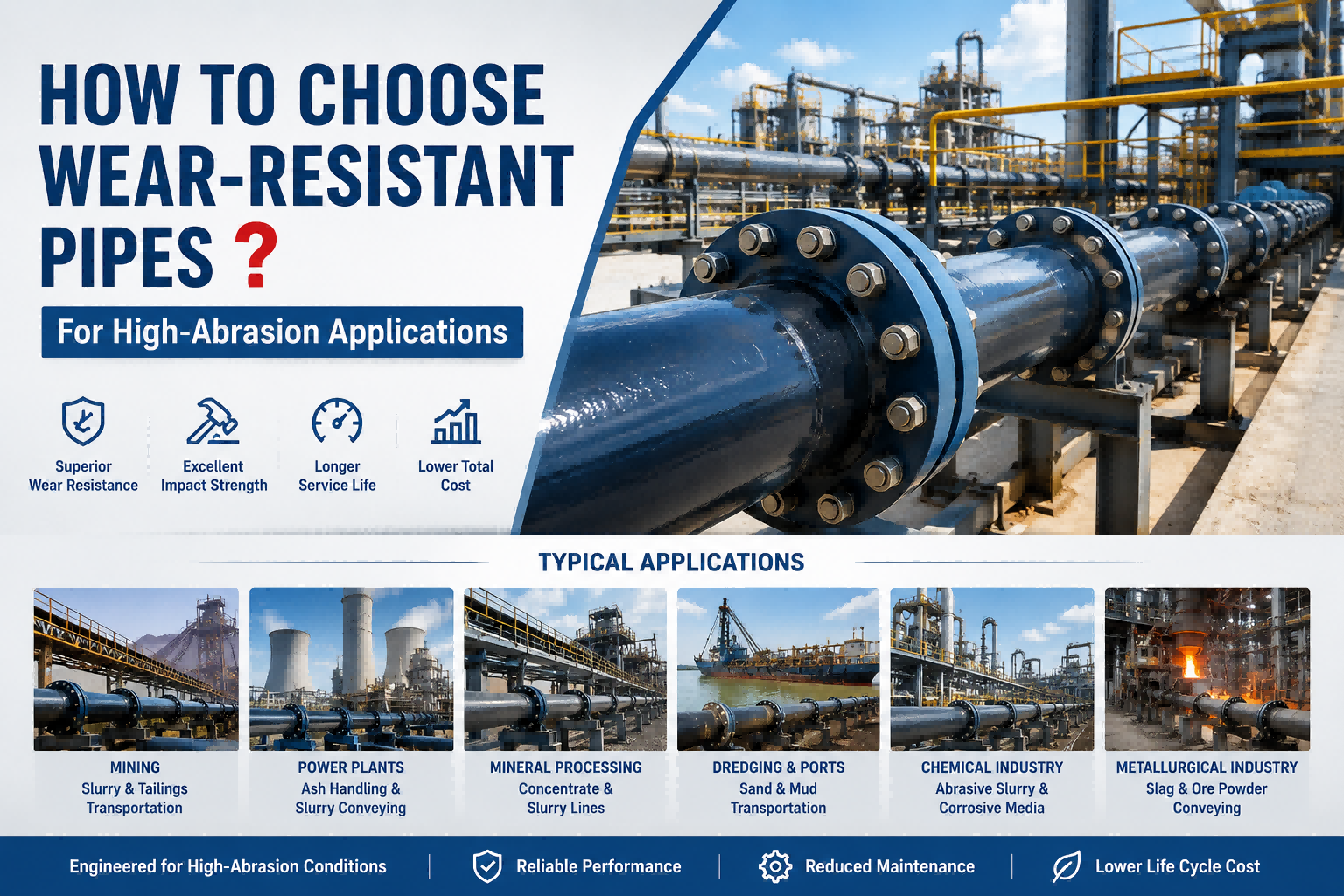
Why Steel-Nylon Composite Pipes Are the Ideal Solution for Mining, Power Plants, and Industrial Conveying Systems
In industries such as mining, power generation, metallurgy, chemical processing, and bulk material handling, pipeline wear is one of the most common challenges affecting operational efficiency and maintenance costs.
Many companies focus primarily on the initial purchase price when selecting pipelines, while overlooking the long-term costs associated with wear, downtime, maintenance, and frequent replacements. In reality, choosing the right wear-resistant pipeline for abrasive applications can significantly reduce lifecycle costs and improve system reliability.
So, how should industrial users select wear-resistant pipelines for high-abrasion environments? What are the differences between various pipeline materials? And why are steel-nylon composite pipes becoming increasingly popular worldwide?
This article provides a comprehensive analysis.
What Are High-Abrasion Operating Conditions?
High-abrasion conditions generally involve the transportation of media with the following characteristics:
-
High solid particle content
-
Hard and abrasive particles
-
High conveying velocity
-
Long-distance transportation
-
Continuous operation
Typical applications include:
Mining Industry
-
Iron ore slurry transportation
-
Copper ore slurry transportation
-
Tailings transportation
-
Coal slurry transportation
Power Generation Industry
-
Fly ash conveying
-
Bottom ash handling
-
Limestone slurry transportation
-
Flue gas desulfurization (FGD) systems
Metallurgical Industry
-
Mineral powder transportation
-
Slag conveying
-
Dust collection ash handling
Ports and Dredging Projects
-
Bulk material conveying
-
Sand and slurry transportation
-
Dredging pipelines
Under these operating conditions, abrasive particles continuously impact and scour the inner pipe wall, causing conventional steel pipes to wear out rapidly.
Comparison of Common Wear-Resistant Pipeline Materials
Several types of wear-resistant pipelines are commonly used in industrial applications:
| Pipeline Type | Wear Resistance | Impact Resistance | Weight | Installation | Overall Cost |
|---|---|---|---|---|---|
| Carbon Steel Pipe | Low | High | Heavy | Moderate | Low |
| Wear-Resistant Steel Pipe | Medium-High | High | Heavy | Moderate | Medium |
| Ceramic-Lined Pipe | Excellent | Relatively Low | Heavy | Complex | High |
| UHMWPE Pipe | High | High | Light | Easy | Medium |
| Steel-Nylon Composite Pipe | High | Excellent | Moderate | Easy | Outstanding |
While hardness is often considered the key indicator of wear resistance, it is not always the most important factor.
For example:
-
Ceramic-lined pipes offer excellent abrasion resistance but may crack under severe impact.
-
Wear-resistant steel pipes are heavy and costly to maintain.
-
Pure plastic pipes may have limitations under high-pressure conditions.
As a result, many industrial users are turning to steel-nylon composite pipes as a balanced solution that combines strength, wear resistance, and cost efficiency.
Structural Advantages of Steel-Nylon Composite Pipes
Steel-nylon composite pipes consist of:
An outer steel pipe combined with an inner cast nylon (MC Nylon) lining.
This design fully utilizes the advantages of both materials.
Outer Steel Layer
The steel shell provides:
-
High pressure resistance
-
Excellent mechanical strength
-
Superior structural integrity
-
Reliable performance in demanding industrial environments
Inner MC Nylon Lining
The nylon lining offers:
-
Outstanding wear resistance
-
Low friction coefficient
-
Self-lubricating properties
-
Excellent impact resistance
Together, they create an ideal combination of strength and durability.
Why Are Steel-Nylon Composite Pipes Ideal for High-Wear Applications?
1. Excellent Abrasion Resistance
MC Nylon exhibits significantly better wear resistance than conventional steel materials.
When transporting abrasive media such as:
-
Mineral slurry
-
Fly ash
-
Coal powder
-
Tailings
the nylon lining dramatically reduces internal pipe wear.
Benefits include:
-
Extended service life
-
Reduced replacement frequency
-
Lower maintenance requirements
-
Increased operational reliability
2. Superior Impact Resistance
Many abrasive applications also involve severe impact loads.
Examples include:
-
Large ore particles striking pipe bends
-
Flow fluctuations in slurry systems
-
Solid-liquid mixed transportation
Compared with ceramic materials, nylon possesses much higher toughness and flexibility.
As a result, steel-nylon composite pipes are less likely to experience:
-
Cracking
-
Chipping
-
Lining failure
This makes them particularly suitable for elbows, tees, and other high-impact pipeline sections.
3. Lower Friction and Higher Conveying Efficiency
The smooth nylon inner surface significantly reduces friction compared with traditional steel pipes.
Advantages include:
-
Reduced pressure loss
-
Lower energy consumption
-
Improved conveying efficiency
-
Enhanced system performance
For long-distance transportation systems, these benefits can translate into substantial energy savings.
4. Reduced Risk of Material Build-Up and Blockage
Many industrial materials tend to adhere to pipeline surfaces, including:
-
Coal slurry
-
Fly ash
-
Tailings
-
Chemical slurries
The low-friction nylon lining minimizes material adhesion and scaling.
This helps:
-
Maintain stable flow rates
-
Reduce cleaning frequency
-
Lower downtime risks
-
Improve production continuity
5. Longer Service Life and Lower Lifecycle Costs
Field applications have shown that steel-nylon composite pipes can significantly outlast conventional steel pipelines under identical operating conditions.
Longer service life means:
-
Fewer shutdowns
-
Reduced spare parts inventory
-
Lower maintenance labor costs
-
Improved operational efficiency
When evaluated from a Total Cost of Ownership (TCO) perspective, steel-nylon composite pipes often provide a superior return on investment.
Typical Applications of Steel-Nylon Composite Pipes
Mining and Mineral Processing
-
Iron ore slurry pipelines
-
Copper concentrate transportation
-
Tailings pipelines
-
Mineral processing systems
Power Plants
-
Fly ash handling systems
-
Bottom ash conveying
-
Limestone slurry transportation
-
FGD applications
Ports and Dredging Projects
-
Slurry transportation
-
River dredging
-
Sand conveying systems
Chemical Industry
-
Abrasive slurry transportation
-
Corrosive media handling
Metallurgical Industry
-
Ore powder transportation
-
Slag conveying
-
Sintering plant systems
How to Choose a Reliable Steel-Nylon Composite Pipe Manufacturer
When selecting a supplier, consider the following factors:
Quality of Raw Materials
High-grade MC Nylon directly affects wear resistance and service life.
Manufacturing Technology
The bonding quality between the nylon lining and steel pipe is critical for long-term reliability.
Custom Engineering Capability
A qualified manufacturer should provide complete pipeline solutions, including:
-
Elbows
-
Tees
-
Reducers
-
Flanged fittings
-
Customized pipeline assemblies
Industry Experience
Extensive experience in mining, power generation, metallurgy, and material handling projects ensures optimal engineering support and product performance.
Conclusion
As industrial conveying systems continue to demand greater reliability, durability, and cost efficiency, conventional steel pipelines are no longer sufficient for many high-abrasion applications.
Steel-nylon composite pipes offer an ideal combination of:
-
Outstanding wear resistance
-
Excellent impact strength
-
Low friction coefficient
-
Longer service life
-
Reduced maintenance requirements
-
Lower total lifecycle costs
These advantages have made steel-nylon composite pipes a preferred solution for mining, power generation, metallurgy, chemical processing, ports, and bulk material handling industries worldwide.
As a professional manufacturer of steel-nylon composite piping systems, we are committed to providing high-performance wear-resistant pipeline solutions tailored to the specific needs of industrial customers. From engineering consultation and custom design to complete pipeline systems, we help businesses reduce maintenance costs, improve conveying efficiency, and achieve long-term operational reliability.
DN100-DN2000 Industrial Pipeline Selection Guide: Why Steel-Nylon Composite Pipes Are the Ideal Choice for Modern Industrial Transport Systems
What Pipe Is Suitable for Transporting Highly Corrosive Media? A Comprehensive Guide to Industrial Pipeline Selection