
2026–2030 Industrial Piping Technology Trends: From Material Breakthroughs to System Elevation
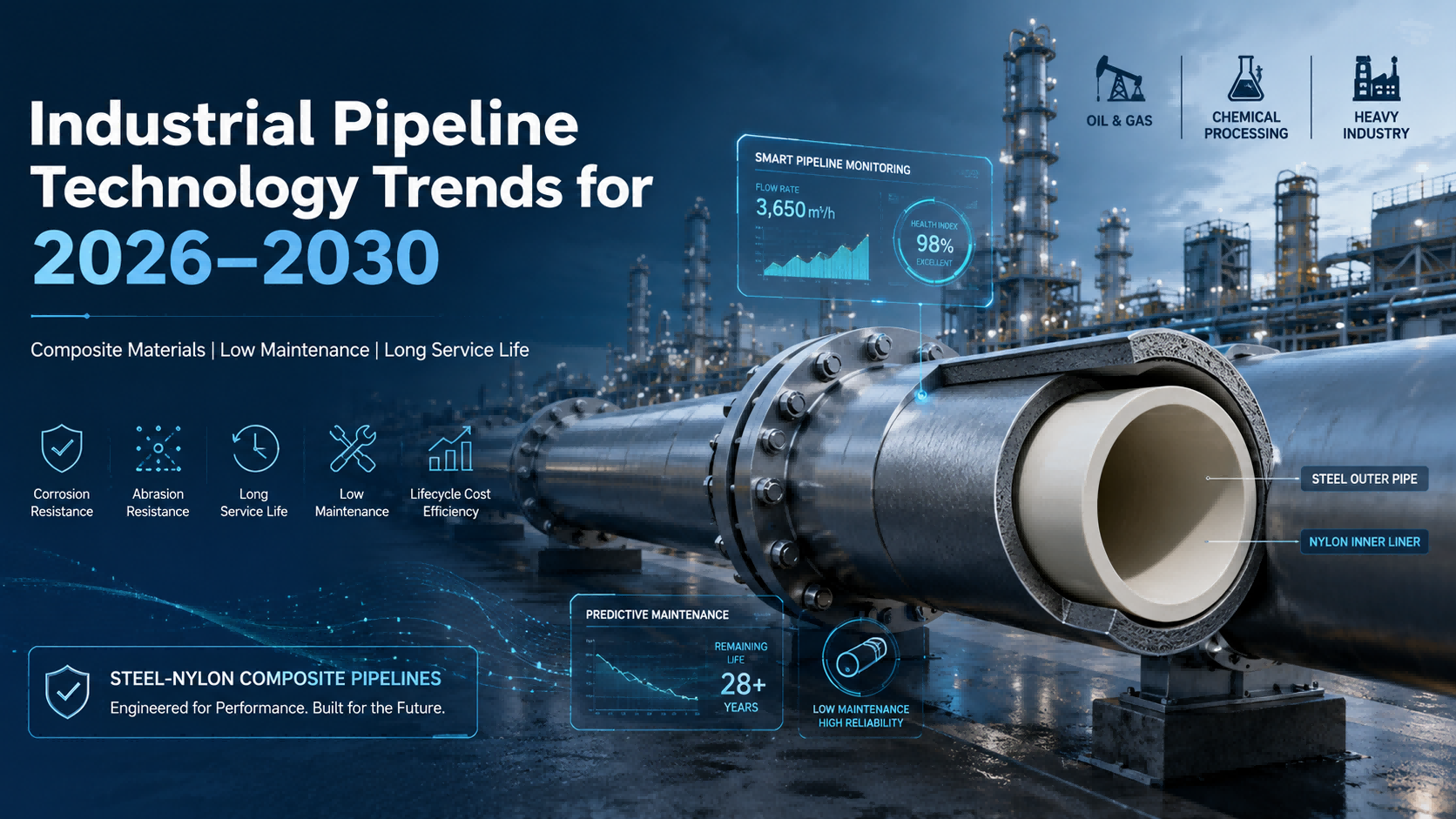
In modern industrial manufacturing, energy transportation, and chemical processing, industrial piping systems serve as the critical "vascular network" of enterprise operations. The global manufacturing landscape is accelerating toward automation, high-pressure operations, decarbonization, and zero downtime. Against this backdrop, the limitations of traditional piping materials are increasingly exposed: conventional metal pipes suffer from poor corrosion resistance, heavy weight, and high fluid resistance, while pure plastic pipes fall short when subjected to high pressure, severe mechanical impact, and extreme temperature fluctuations.
Looking ahead to 2026–2030, industrial piping technology will enter a new five-year development cycle centered on high-performance composite materials, energy efficiency, and full lifecycle cost-effectiveness.
Trend 1: Material Redefining — Dual-Phase Combination & "Flexibility with Strength"
Over the next five years, the ultimate goal of industrial material R&D lies in "reducing weight while eliminating weaknesses and maximizing strengths." Single-type materials (such as carbon steel, stainless steel, PVC, or PE) can no longer simultaneously meet the comprehensive demands for high pressure, wear resistance, corrosion resistance, and lightweight design.
Core Direction: High-Performance Organic/Inorganic Composite Structures
Industrial applications no longer require pipes to simply "prevent leaks," but rather demand consistent stability under harsh environments:
-
High Load-Bearing Structural Layer: The outer layer retains the high mechanical strength and high-pressure toughness of metals like steel.
-
Superior Wear/Corrosion-Resistant Lining: The inner layer integrates modified engineering plastics (such as modified nylon PA12/PA6) to completely block medium corrosion and significantly reduce abrasive wear.
Trend 2: Fluid Energy Savings & Redefining Life Cycle Cost (LCC)
Driven by dual-carbon strategies and ESG compliance standards, plant energy consumption tracking now extends to the "pump power losses caused by pipe friction resistance."
-
Roughness Control: Traditional steel pipes feature high inner wall roughness and are prone to scaling over long-term operation, increasing fluid drag and boosting pumping power demands.
-
Prioritizing Life Cycle Cost (LCC): Purchasing decisions are shifting from focusing solely on initial Capital Expenditure (Capex) to evaluating the 20-year comprehensive Operational Expenditure (Opex) and replacement costs. The production losses caused by frequent downtime for pipe replacements far exceed the cost of the piping materials themselves.
| Evaluation Metric | Traditional Pure Metal Pipes | Pure Plastic / Standard Plastic-Lined Pipes | Steel-Nylon Composite Pipes |
| Pressure Rating | High (but thins over time due to corrosion) | Low to Medium (deforms easily under high pressure) | Extremely High (outer steel pipe provides mechanical integrity) |
| Wear & Corrosion Resistance | Poor (requires frequent anti-corrosion treatments) | Good (limited temperature/wear resistance) | Outstanding (tough molecular chain structure of modified nylon) |
| Fluid Resistance | High (rough inner wall, prone to scaling) | Low | Extremely Low (smooth inner surface, lowers drag by 15%–30%) |
| Comprehensive Service Life | 3–5 Years (severe corrosion/abrasion environments) | 5–8 Years | 15–20+ Years |
Trend 3: Industrial Solutions for Extreme Operating Conditions (High Abrasion, Strong Corrosion, Severe Impact)
In extreme industrial scenarios—such as slurry transport in mining, strong acids and alkalis in chemical processing, pneumatic powder conveyance, and high-pressure gas transmission—Steel-Nylon Composite Pipes emerge as the revolutionary product addressing industry pain points over the next five years.
As a company focused on the R&D and manufacturing of high-end industrial piping, our steel-nylon composite pipes leverage a proprietary process to achieve a molecular-level bond between an outer high-strength steel pipe and an inner modified nylon (PA) engineering plastic lining:
1. Breakthrough Abrasion Resistance and Self-Lubricating Properties
Nylon features extremely high molecular chain toughness and a low coefficient of friction. In media transport involving abrasive particulates, tailings, or dust, its wear resistance is several times that of standard carbon steel. The smooth interior minimizes flow resistance and reduces scaling by over 80%, helping clients substantially lower pumping energy consumption.
2. Superior Comprehensive Corrosion Resistance and Chemical Stability
Nylon inherently offers excellent resistance to acid and alkali attack, salt spray, and organic solvents. Steel-nylon composite pipes effectively isolate aggressive corrosive media from the external metallic structure, eliminating the risks of pipe perforation and leaks.
3. High-Pressure Safety & Overcoming Thermal Delamination
Traditional plastic-lined pipes are susceptible to delamination between the inner and outer layers when subjected to temperature fluctuations or pressure surges. Our composite technology achieves deep interfacial bonding between the steel and nylon, allowing the system to withstand working pressures up to tens of megapascals (MPa) while maintaining structural integrity across alternating temperatures from -40°C to 100°C.
4. Seamless Replacement with Low Total Maintenance Cost
The outer dimensions and connection methods (flanged, grooved, etc.) are fully compatible with standard industrial pipelines, requiring no specialized tools for installation. A single installation increases service life by 3 to 5 times, saving enterprises the heavy costs associated with frequent downtime, repairs, and pipe replacements.
Conclusion
In the 2026–2030 industrial piping market, competition is no longer a race to the bottom on price, but a showcase of materials science and system reliability. Choosing steel-nylon composite pipes is not merely selecting a premium piping material—it is establishing a solid foundation for the efficient, low-carbon, and safe operation of your plant long into the future.
Is the Global Adoption of High-Performance Composite Piping Accelerating?
Why Industrial Projects Are Paying More Attention to Pipeline Reliability


SEND MESSAGE