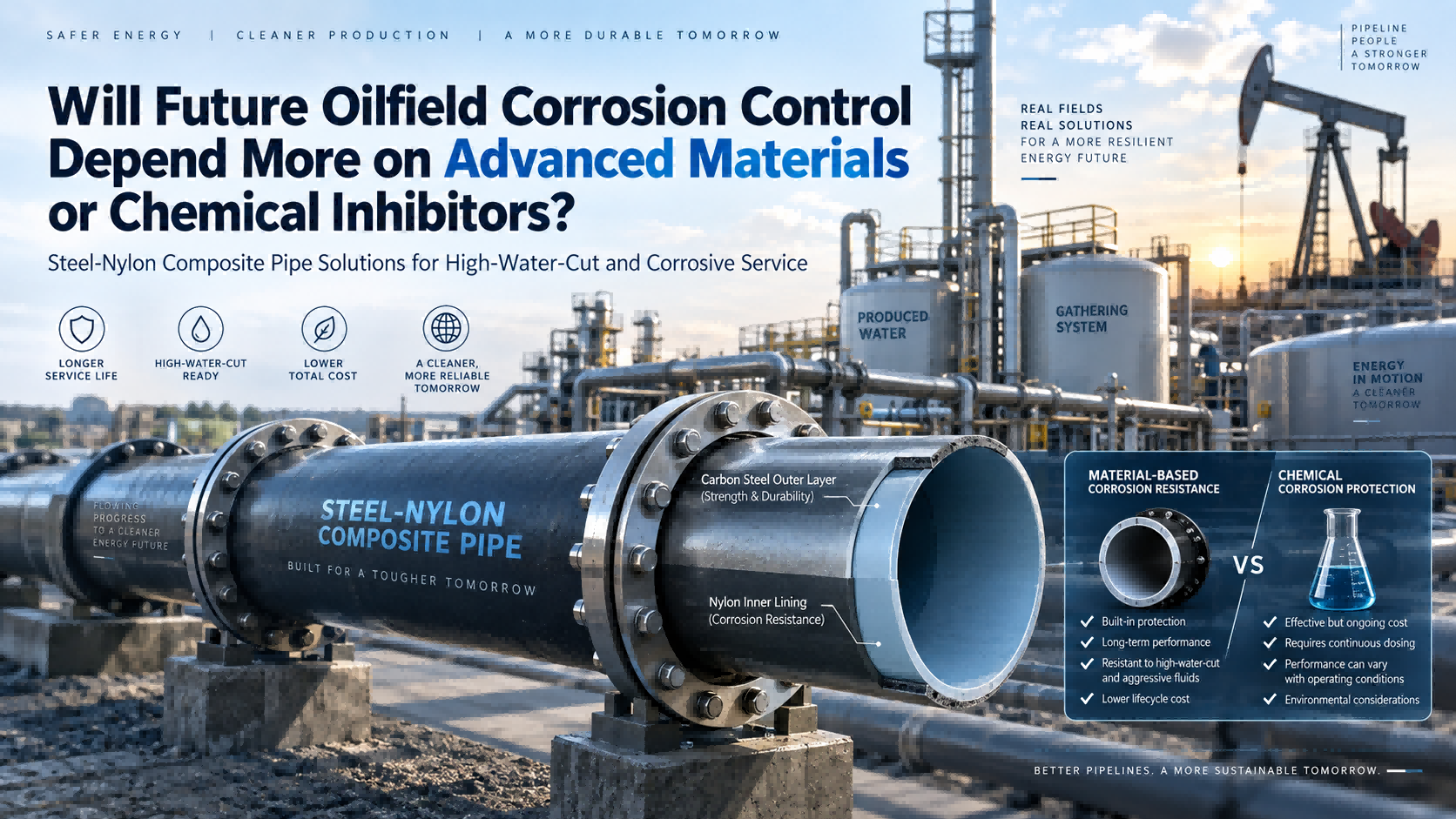
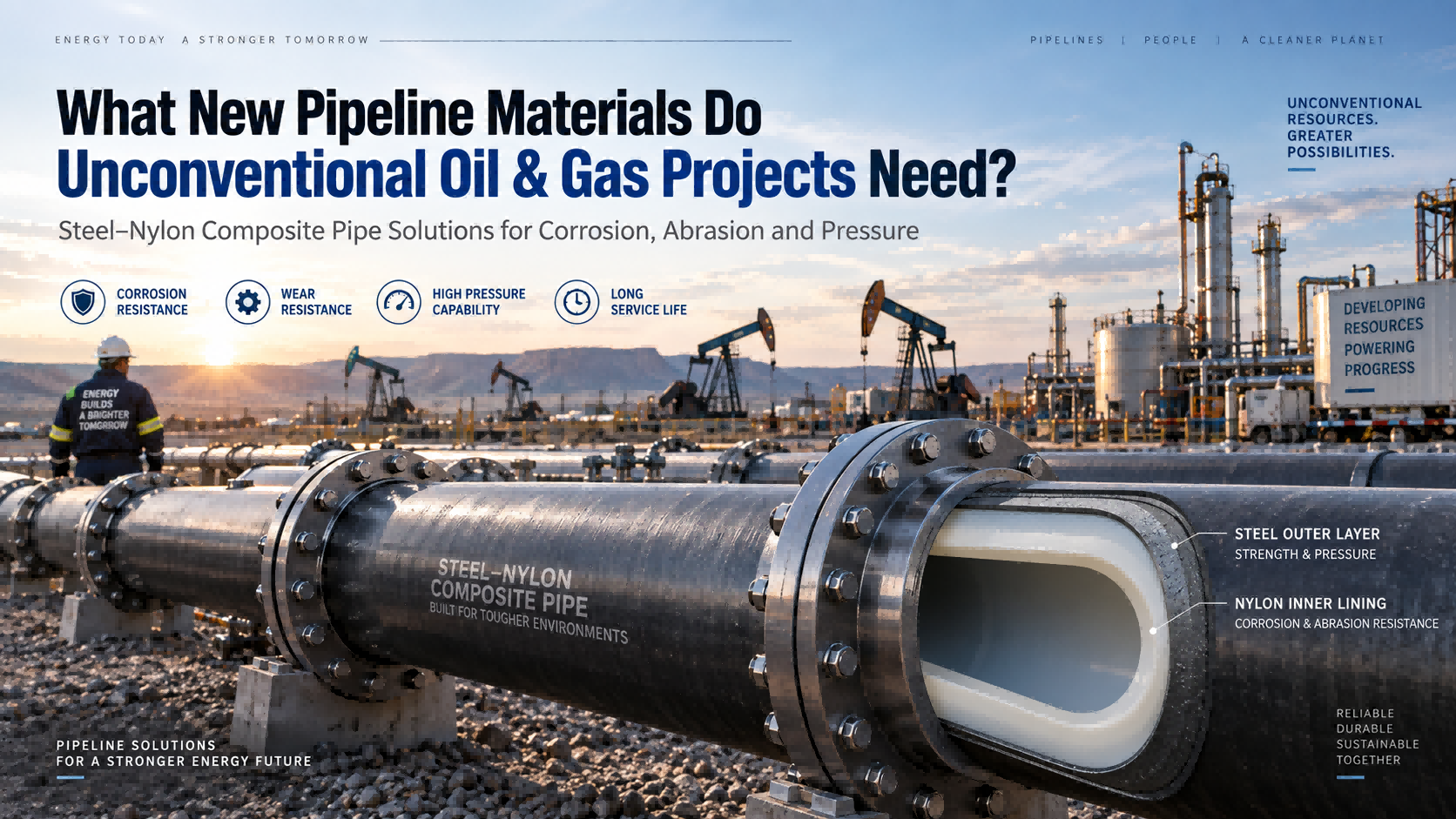
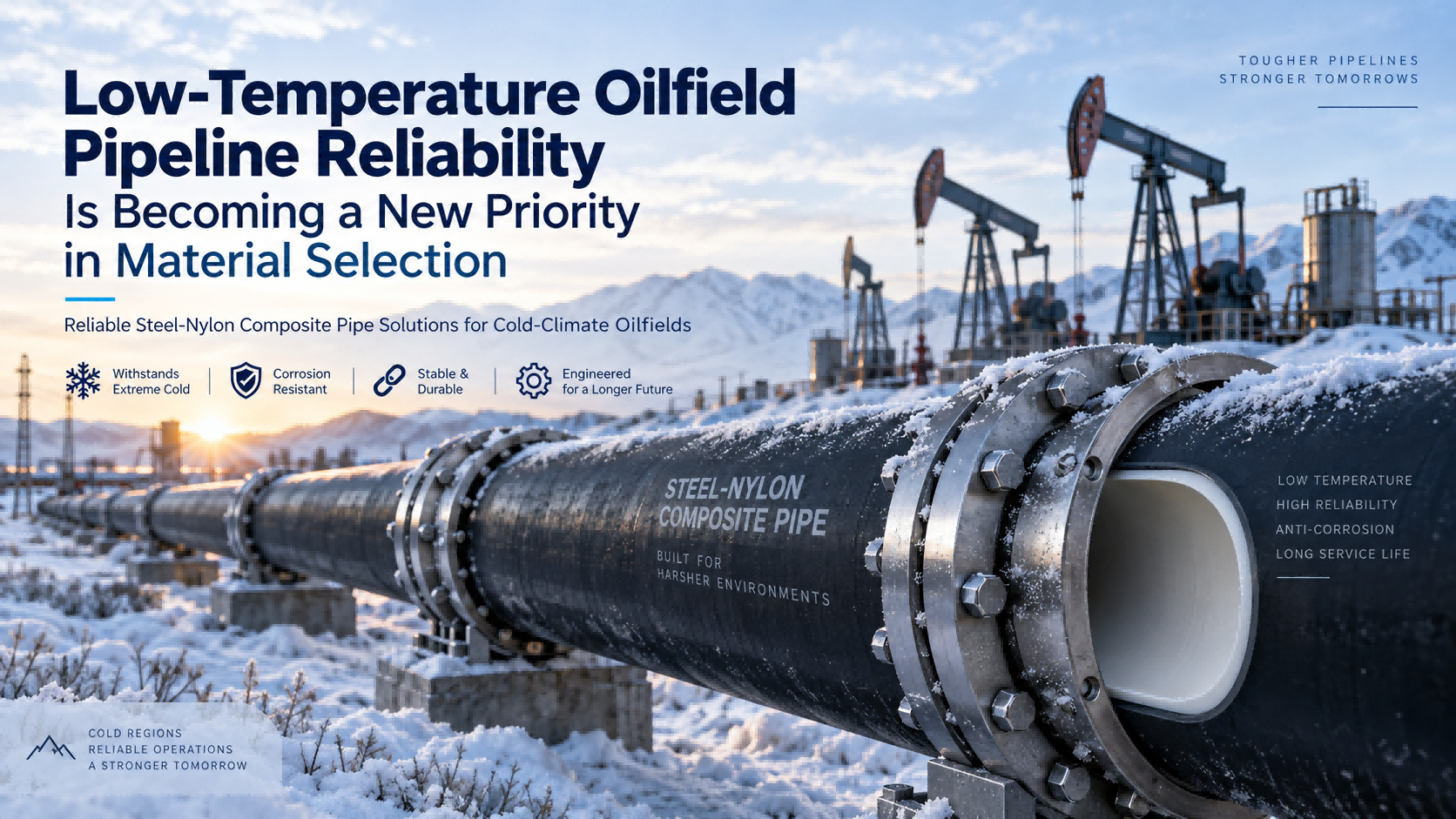
Low-Temperature Oilfield Pipeline Reliability Is Becoming a New Priority in Material Selection
In oil and gas pipeline engineering, corrosion, pressure, and wear have long been among the most important factors in pipe material selection.
However, as oil and gas development continues to expand into high-latitude regions, cold deserts, mountainous areas, and locations exposed to extreme winter temperatures, another factor that was previously underestimated is becoming increasingly important:
Long-term pipeline reliability under low-temperature conditions.
For ordinary industrial pipelines, low temperature may simply be an environmental parameter. For oilfield gathering lines, produced-water pipelines, water-injection systems, and process piping, however, low temperatures can simultaneously affect material properties, connection reliability, installation quality, and mechanical stresses during start-up and shutdown.
As a result, more oilfield projects are beginning to reconsider an important question:
A pipe may be corrosion-resistant, but does that necessarily mean it is suitable for long-term operation in a low-temperature environment?
A pipeline system designed for cold-climate oilfields must take into account not only corrosion resistance, but also structural strength, low-temperature performance, connection reliability, and lifecycle maintenance costs.
1. Why Is Low Temperature Becoming an Important Factor in Oilfield Pipeline Selection?
Traditional oilfield pipeline selection generally focuses on factors such as:
-
Composition of the transported medium
-
H₂S and CO₂ content
-
Chloride concentration
-
Water cut
-
Operating pressure
-
Flow velocity
-
Corrosion rate
-
Solid particle concentration
In cold regions, however, analyzing the process medium alone is no longer sufficient.
As ambient temperatures fall, the effects on a pipeline system become increasingly complex.
Long-term exposure to winter temperatures may result in a combination of:
Changes in material toughness + thermal contraction + changes in sealing performance + support stress variations + increased start-up and shutdown impact loads.
Pipeline reliability in cold environments is therefore no longer simply a question of whether the pipe wall can resist corrosion.
The more important question is whether the entire pipeline system can remain structurally and mechanically stable throughout repeated temperature cycles.
This is particularly important for:
-
Northern oilfields
-
High-latitude oil and gas fields
-
Plateau and mountainous oilfields
-
Desert oilfields with large seasonal temperature variations
-
Long-distance above-ground gathering pipelines
For these applications, low-temperature reliability is becoming an increasingly important material-selection criterion.
2. What Challenges Do Low Temperatures Create for Oilfield Pipelines?
2.1 Low-Temperature Brittleness
Different pipeline materials respond differently as temperature decreases.
Some materials may provide adequate strength under normal ambient conditions but experience changes in impact toughness when exposed to significantly lower temperatures.
If a pipeline is simultaneously exposed to:
-
Pressure fluctuations
-
Water hammer
-
Mechanical impact
-
Ground settlement
-
Pipeline vibration
then low-temperature impact performance becomes particularly important.
For this reason, pipeline selection for cold-region oilfields should not rely only on mechanical properties measured at room temperature.
The actual mechanical stability of the material under the minimum project design temperature should also be evaluated.
2.2 Thermal Expansion and Contraction
Long-distance oilfield pipelines are particularly sensitive to temperature changes.
For example, when an above-ground pipeline extending hundreds of meters or even several kilometers transitions from summer temperatures to severe winter conditions, significant thermal contraction may occur.
If the system design does not adequately account for:
-
Fixed supports
-
Sliding supports
-
Expansion compensation
-
Flange locations
-
Elbow locations
mechanical stresses may become concentrated in specific sections of the pipeline.
This means that low-temperature reliability should not be evaluated solely on the basis of the pipe itself.
Instead, it should be assessed as a complete system involving:
Pipe material + fittings + flanges + supports + pipeline layout.
2.3 Corrosion Does Not Disappear at Low Temperatures
One common misconception is that:
Lower environmental temperatures mean corrosion is no longer a major concern.
In reality, many oilfield pipelines continue to transport highly corrosive fluids even when ambient temperatures are below freezing.
Typical examples include:
-
High-salinity produced water
-
Oil-water mixtures
-
CO₂-containing fluids
-
H₂S-containing media
-
Chloride-containing water
-
Sand-containing fluids
In other words, the outside environment may be extremely cold while the inside of the pipeline remains continuously exposed to corrosive service conditions.
Cold-region oilfields may therefore face a combination of:
Low temperature + internal corrosion + pressure + erosion.
This is one reason why solving corrosion alone is no longer sufficient for increasingly complex oilfield operating conditions.
3. What Performance Indicators Should Be Reconsidered for Cold-Region Oilfield Pipelines?
For oilfield projects in cold climates, pipeline systems should be evaluated comprehensively from several perspectives.
3.1 Low-Temperature Mechanical Performance
The first step is to determine whether the pipeline material can maintain adequate:
-
Strength
-
Toughness
-
Impact resistance
-
Dimensional stability
at the project's minimum design temperature.
Room-temperature performance data alone should not be used as the basis for material selection.
For cold-region projects, the minimum ambient and operating temperatures should be treated as fundamental design parameters.
3.2 Internal Corrosion Resistance
Internal corrosion remains one of the major causes of oilfield pipeline failure.
This problem becomes especially significant in mature oilfields with high water cuts, where large volumes of high-salinity produced water may be transported continuously.
Traditional carbon steel pipelines often rely on additional wall thickness as a corrosion allowance.
However, increasing wall thickness only delays the consequences of corrosion; it does not eliminate direct contact between the metal and the corrosive medium.
For this reason, an increasing number of projects are considering another strategy:
Using an internal functional layer to isolate corrosive media from the structural steel.
This is one of the fundamental design principles behind composite pipeline systems.
3.3 Erosion and Wear Resistance
Produced fluids are not always clean liquids.
Oilfield pipelines may contain:
-
Sand
-
Solid particles
-
Corrosion products
-
Deposits
At elbows, reducers, valves, and other locations where turbulence increases, localized erosion can become particularly severe.
Therefore, oilfield pipeline selection should address not only corrosion but also wear and erosion resistance.
3.4 Pipeline Rigidity and Structural Strength
In many oilfield projects, pipelines may require:
-
Above-ground installation
-
Long-distance routing
-
Crossing of trenches or uneven terrain
-
Installation across complex landscapes
Under these conditions, highly flexible pipe systems may require additional supports or different structural designs.
One important characteristic of a steel-nylon composite pipe is that different materials can perform different functions.
The steel structural layer provides mechanical strength and rigidity, while the nylon inner layer provides corrosion resistance and wear resistance.
This combination allows the pipeline to avoid relying on a single material to solve every engineering challenge simultaneously.
4. Why Can a Steel-Nylon Composite Structure Be Suitable for Complex Oilfield Conditions?
The core value of a steel-nylon composite pipe is not simply the combination of two different materials.
The engineering principle is:
Allow steel and nylon to perform the functions for which each material is best suited.
Steel Structural Layer: Providing Mechanical Strength
Steel provides high structural strength and rigidity, giving the pipeline mechanical support under demanding operating conditions.
This is particularly important for:
-
Higher-pressure transportation
-
Large-diameter pipelines
-
Long-distance above-ground installation
-
Pump stations
-
Valve group areas
Stable structural performance is essential in these environments.
Nylon Functional Layer: Isolating Corrosive Media
Inside the pipe, the nylon layer is exposed directly to the transported medium.
This helps reduce direct contact between corrosive fluids and the steel structural layer.
For common oilfield services such as:
-
High-salinity produced water
-
Oil-water mixtures
-
Water-injection systems
-
Certain particle-containing fluids
the composite structure separates the requirements for mechanical strength from those for medium resistance.
From an engineering perspective, this can be more practical than requiring one material to simultaneously provide:
Pressure resistance + corrosion resistance + wear resistance.
5. Connection Reliability Is Equally Important in Low-Temperature Environments
Many oilfield pipeline leaks do not occur along straight pipe sections.
Instead, failures often occur around:
-
Flanges
-
Elbows
-
Tees
-
Valves
-
Pump outlets
-
Reducers
For this reason, cold-climate pipeline reliability cannot be evaluated solely on the basis of pipe material.
The connection system is also a critical part of overall pipeline reliability.
Our steel-nylon composite pipes use a flanged connection system, allowing them to be integrated with:
-
Valves
-
Pumps
-
Equipment interfaces
-
Fittings
-
Existing pipeline systems
Compared with pipeline systems that require extensive field welding, flange connections provide another important engineering advantage:
They can reduce the amount of hot work required during installation.
This is particularly relevant for oilfields, chemical plants, and operating production facilities where hot-work activities require additional safety procedures.
Reducing complex field welding can also simplify installation under difficult winter construction conditions.
6. Cold-Region Oilfields Should Pay Particular Attention to Fittings and High-Risk Sections
In oilfield pipeline systems, long straight pipe sections are not always the locations most likely to fail.
Localized high-stress and high-erosion areas often deserve greater attention.
Pump Outlets
Pump discharge sections may experience a combination of:
-
Pressure fluctuations
-
Vibration
-
High flow velocities
As a result, they are often among the most demanding sections of an oilfield pipeline.
Elbows
When the transported fluid changes direction, the outer radius of an elbow may experience increased erosion.
Upstream and Downstream of Valves
Valve operation can create local changes in velocity, pressure, and turbulence.
These sections may therefore experience higher levels of corrosion and erosion.
Reducers
Changes in pipe cross-sectional area alter the flow pattern and may create localized high-velocity regions.
For cold-region pipeline upgrades, this means that it may not always be necessary to replace an entire pipeline immediately.
A more practical engineering strategy can be to:
Upgrade the highest-risk sections first.
This may include:
-
Elbows
-
Tees
-
Pump outlet sections
-
Upstream and downstream valve sections
-
Severely corroded sections
-
100–500 meter trial sections
Once actual operating performance has been verified, the application can then be expanded to larger sections of the pipeline network.
7. Low-Temperature Reliability Is Ultimately a System Engineering Issue
Future oilfield pipeline selection is gradually shifting away from a simple question:
“Which material is the most corrosion-resistant?”
toward a more comprehensive one:
“Which pipeline system can remain reliable throughout its intended service life?”
These are fundamentally different approaches.
Long-term pipeline reliability requires simultaneous consideration of multiple variables:
| Selection Factor | Key Considerations |
|---|---|
| Temperature | Minimum ambient temperature, fluid temperature, temperature cycles |
| Pressure | Operating pressure, design pressure, pressure fluctuations |
| Corrosion | CO₂, H₂S, Cl⁻, salinity |
| Wear | Sand content, particle concentration, flow velocity |
| Structure | Diameter, span, support arrangement |
| Connections | Flanges, valves, fittings |
| Installation | Hot-work requirements, winter construction difficulty |
| Maintenance | Inspection frequency, repair frequency, production interruption |
| Service Life | Replacement cycle and lifecycle cost |
As a result, competition among industrial pipeline materials will increasingly move beyond individual material-property data.
The focus will shift toward:
The engineering reliability of the entire pipeline system.
8. Why Lifecycle Cost Matters More Than Initial Purchase Price
Pipeline repairs in cold regions are often more difficult than in moderate climates.
When a leak occurs during winter, repairs may involve:
-
Production shutdown
-
Pipeline draining
-
Cleaning
-
Hot-work approval
-
Winter construction
-
Personnel and equipment mobilization
-
Environmental remediation
Therefore, the most expensive part of a pipeline system may not be the pipe itself.
It may instead be:
The entire repair process caused by an unexpected pipeline failure.
This is why more oilfield projects are shifting their focus from initial purchase price to:
Total Cost of Ownership (TCO).
A simplified TCO model may include:
Pipeline purchase cost
Installation cost
Maintenance cost
Replacement cost
Production-loss cost
Leak remediation cost
If a pipeline material has a higher initial purchase price but significantly extends replacement intervals and reduces maintenance frequency, its long-term economics may be more attractive.
9. Where Can Steel-Nylon Composite Pipes Be Evaluated in Oilfield Applications?
Depending on the medium, operating pressure, temperature, and project design requirements, steel-nylon composite pipes can be evaluated for several oilfield applications.
Oil and Gas Gathering Pipelines
Suitable for applications transporting oil, water, and multiphase fluids where corrosion resistance, pressure capacity, and long-term mechanical stability are important.
High-Salinity Produced Water Pipelines
The nylon inner layer helps isolate high-salinity fluids from direct contact with the steel structural layer.
Oilfield Water-Injection Systems
These systems often require a combination of corrosion resistance, pressure capability, and long-term reliability.
Well Drain Valve Groups and Station Process Piping
Flanged connections simplify integration with valves, pumps, and other process equipment.
Pump Outlets and High-Wear Pipe Sections
These areas can be targeted for upgrades where localized erosion and corrosion are particularly severe.
Partial Replacement of Aging Pipelines
Where complete pipeline replacement is not practical, high-risk corrosion and leakage sections can be upgraded first.
10. Oilfield Pipeline Selection Is Undergoing an Important Change
In the past, oilfield pipeline procurement often centered on one question:
Which pipe is cheaper?
Later, the industry increasingly began asking:
Which material provides better corrosion resistance?
Today, as oilfields enter stages characterized by higher water cuts, greater salinity, more complex corrosion conditions, and harsher climates, another question is becoming increasingly important:
Which pipeline can operate reliably for a longer period of time?
This represents a shift from:
Initial procurement cost
toward:
Reliability + lifecycle cost.
In cold-region oilfields, this transition is likely to become even more important.
Conclusion
Low temperature should not be treated as an isolated environmental parameter.
It interacts with corrosion, pressure, erosion, thermal contraction, connection design, and construction conditions, ultimately affecting the long-term reliability of the entire oilfield pipeline system.
For this reason, pipeline selection for cold-region oilfields should move beyond comparing a single material property.
A more comprehensive evaluation should consider:
Low-temperature performance + structural strength + corrosion resistance + wear resistance + connection reliability + maintenance cost.
Steel-nylon composite pipes combine:
A steel structural layer for mechanical strength, a nylon functional layer for corrosion and wear resistance, and engineered flange connections for system integration.
This provides an alternative composite pipeline solution that can be evaluated for demanding oilfield operating conditions.
For oilfield projects facing challenges such as:
-
Frequent pipeline corrosion
-
High-salinity produced water
-
Low-temperature winter operation
-
Rapid wear at pump outlets and elbows
-
Frequent repairs of aging pipelines
the long-term question should not simply be how to repair the pipeline again.
It should be:
How can the next pipeline system operate longer, more reliably, and with less maintenance?
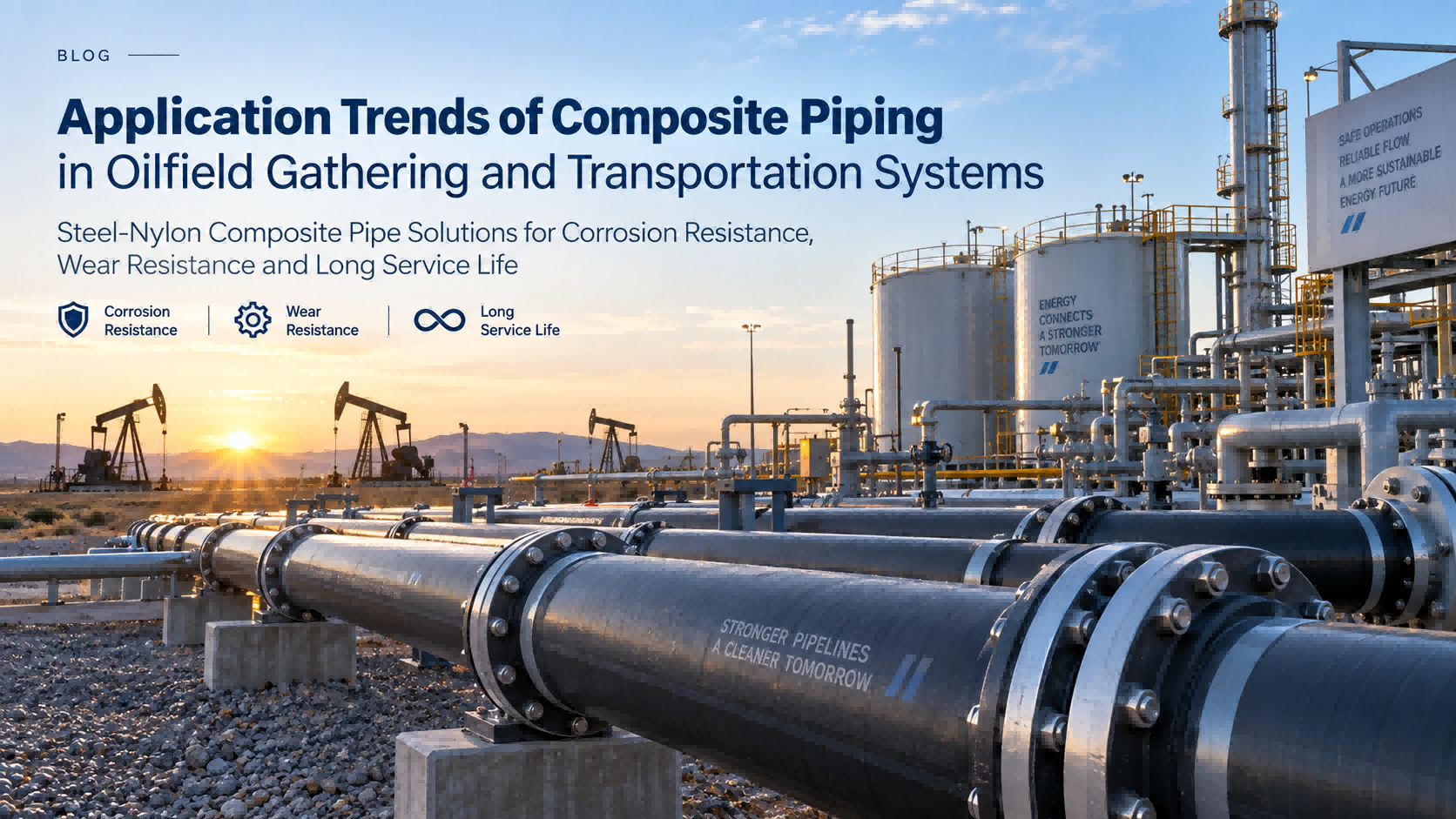
Application Trends of Composite Piping in Oilfield Gathering and Transportation Systems
What Does the Desert Oilfield Environment Mean for Pipeline Materials?