Low-Temperature Pipeline Material Selection Guide: How to Choose Reliable, Safe, and Long-Lasting Piping Systems
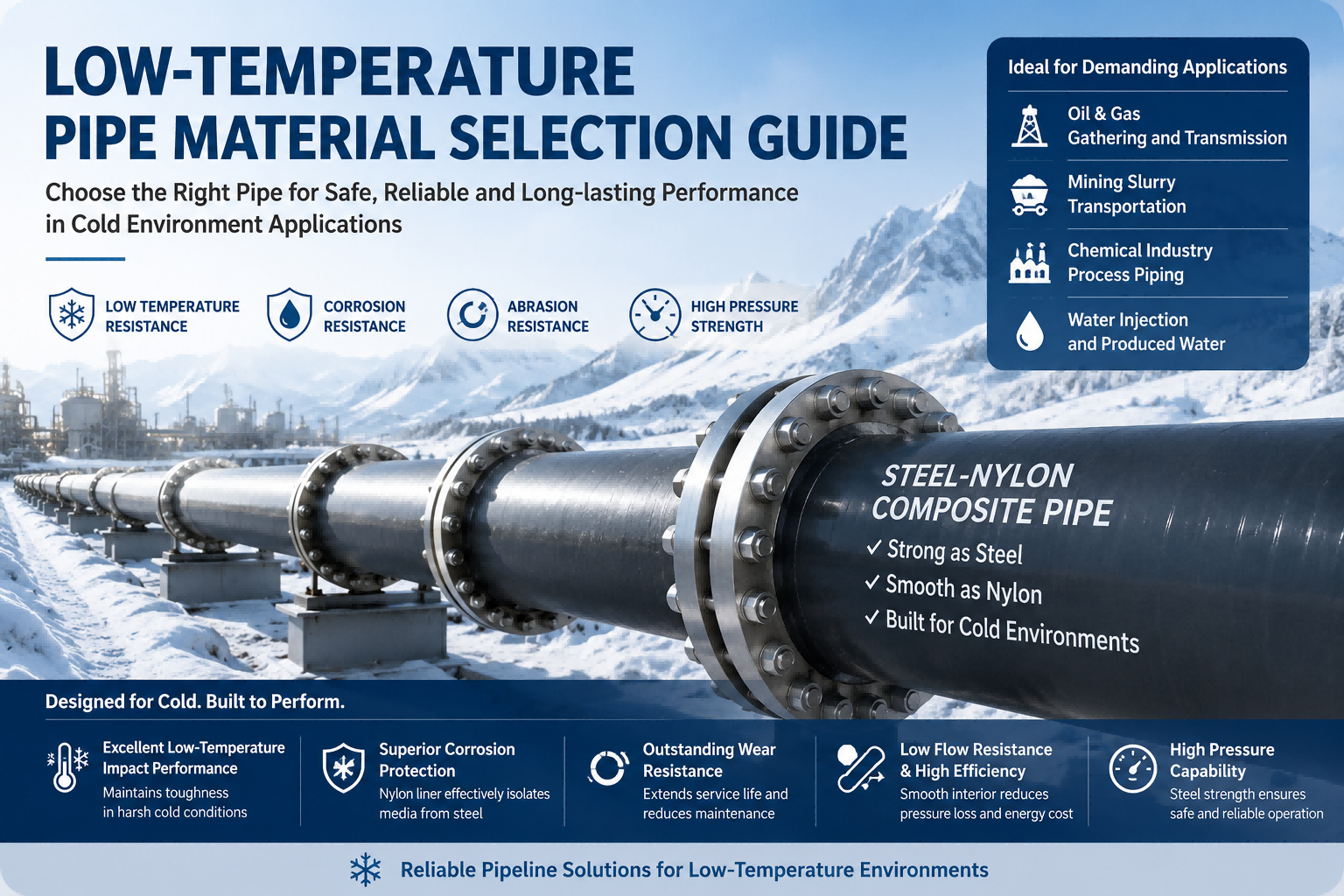
In industries such as oil and gas production, coalbed methane transportation, chemical processing, mining slurry conveyance, and municipal infrastructure projects in cold regions, low-temperature environments present significant challenges to pipeline systems. As temperatures drop, many conventional pipe materials become brittle, experience reduced impact resistance, and are more susceptible to cracking and failure.
Selecting the right pipe material for low-temperature service is therefore not only a matter of operational reliability but also a critical factor affecting safety, maintenance costs, and long-term return on investment.
This article explores the key challenges of low-temperature applications, compares common piping materials, and explains why Steel-Nylon Composite Pipe is emerging as a superior solution for demanding industrial environments.
Challenges of Low-Temperature Operating Conditions
Material properties can change dramatically when temperatures fall below 0°C (32°F). In extreme environments reaching -20°C, -40°C, or even lower, these effects become increasingly pronounced.
1. Material Embrittlement
Many metallic materials experience a ductile-to-brittle transition at low temperatures.
Common consequences include:
-
Reduced impact toughness
-
Lower crack resistance
-
Increased risk of sudden fracture under dynamic loads
For high-pressure oil, gas, or industrial fluid transportation systems, this risk can be particularly severe.
2. Thermal Contraction and Stress Concentration
As temperatures decrease, pipeline materials contract.
For systems that are:
-
Buried underground
-
Installed above ground
-
Used in long-distance transmission networks
thermal contraction can generate significant axial stress and stress concentrations at joints and connections.
3. Corrosion and Freeze-Thaw Cycles
Cold environments are often accompanied by:
-
Snow and ice
-
Moisture
-
Saline groundwater
-
Freeze-thaw cycles
These conditions accelerate corrosion and shorten the service life of conventional steel pipelines.
4. Reduced Flow Efficiency
Low temperatures can increase the viscosity of transported media such as:
-
Crude oil
-
Chemical fluids
-
Industrial slurries
The rougher the pipe's internal surface, the greater the pressure loss and energy consumption during transportation.
Comparison of Common Pipe Materials for Low-Temperature Applications
Carbon Steel Pipe
Advantages
-
High mechanical strength
-
Relatively low initial cost
-
Widely available
Limitations
Under low-temperature conditions:
-
Susceptible to brittle fracture
-
Prone to internal and external corrosion
-
Higher maintenance requirements
Although carbon steel remains widely used, its lifecycle cost can be substantial in harsh environments.
HDPE Pipe
Advantages
-
Excellent corrosion resistance
-
Lightweight
-
Easy installation
Limitations
For high-pressure applications:
-
Lower structural rigidity
-
Limited pressure-bearing capability
-
Long-term creep deformation concerns
These limitations can restrict its use in demanding oil and gas transportation systems.
Stainless Steel Pipe
Advantages
-
Outstanding corrosion resistance
-
Good low-temperature toughness
Limitations
-
High material costs
-
Expensive installation
-
Significant project investment
Stainless steel is typically reserved for highly specialized or high-value applications.
Steel-Nylon Composite Pipe: An Ideal Solution for Low-Temperature Service
Advances in composite pipeline technology have led to the increasing adoption of Steel-Nylon Composite Pipes across industries including oil and gas, mining, chemical processing, and industrial fluid transportation.
Steel-Nylon Composite Pipe combines the strengths of both materials:
-
The steel layer provides exceptional mechanical strength and pressure resistance.
-
The nylon liner delivers superior corrosion resistance, wear resistance, and flow performance.
This unique combination offers the best of both worlds.
Advantage 1: Excellent Low-Temperature Impact Resistance
Engineering-grade nylon maintains outstanding toughness even in cold environments.
Benefits include:
-
Reduced risk of cracking
-
Improved impact resistance
-
Greater operational reliability
Compared with traditional anti-corrosion steel pipes, Steel-Nylon Composite Pipe performs significantly better in low-temperature conditions.
Advantage 2: Superior Corrosion Resistance
Corrosion remains one of the most costly challenges for conventional steel pipelines.
This issue becomes particularly severe in environments containing:
-
Saline water
-
Carbon dioxide (CO₂)
-
Hydrogen sulfide (H₂S)
-
Aggressive chemical media
The high-performance nylon liner effectively isolates the conveyed fluid from the steel structure, providing:
-
Excellent chemical resistance
-
Protection against electrochemical corrosion
-
Reduced scale formation
-
Extended service life
Advantage 3: Outstanding Wear Resistance
Many industrial applications involve abrasive media, including:
-
Mining slurry
-
Tailings
-
Sand-containing crude oil
-
Particle-laden industrial fluids
Nylon naturally exhibits excellent self-lubricating and wear-resistant properties.
Compared with conventional steel pipe:
-
Internal wear is significantly reduced
-
Maintenance intervals are extended
-
Pipeline lifespan is increased
Advantage 4: Lower Flow Resistance and Energy Consumption
The smooth internal surface of nylon-lined composite pipe reduces friction losses throughout the system.
Benefits include:
-
Lower pressure drop
-
Higher transportation efficiency
-
Reduced pumping energy consumption
-
Lower operating costs
For long-distance pipeline projects, these advantages can generate substantial cost savings over the system's lifetime.
Advantage 5: High Pressure-Bearing Capacity
Unlike many plastic piping systems, Steel-Nylon Composite Pipe retains the structural strength of steel.
This provides:
-
High hoop strength
-
Excellent tensile strength
-
Superior pressure resistance
As a result, it is well suited for:
-
Oil and gas gathering systems
-
Water injection pipelines
-
Mining transportation networks
-
Industrial process pipelines
Typical Applications of Steel-Nylon Composite Pipe
Oil and Gas Fields
Ideal for:
-
Gathering pipelines
-
Produced water transportation
-
Water injection systems
Its corrosion resistance and pressure performance make it highly suitable for challenging oilfield environments.
Shale Gas and Coalbed Methane Projects
In remote and cold regions, Steel-Nylon Composite Pipe offers:
-
Long service life
-
Reduced maintenance requirements
-
Reliable operation under harsh weather conditions
Mining Industry
Applications include:
-
Slurry transportation
-
Tailings pipelines
-
Abrasive media conveyance
The combination of wear resistance and structural strength provides significant operational advantages.
Chemical Processing Facilities
Suitable for:
-
Corrosive fluid transportation
-
Low-temperature chemical processes
-
Industrial process pipelines
The nylon lining helps minimize corrosion-related downtime and maintenance costs.
Key Considerations When Selecting Pipe Materials for Low-Temperature Service
When evaluating pipeline solutions, engineers should consider:
| Selection Factor | Key Consideration |
|---|---|
| Operating Temperature | Minimum ambient and fluid temperatures |
| Working Pressure | Long-term pressure requirements |
| Transported Medium | Corrosive or abrasive characteristics |
| Service Life | Design life expectations |
| Maintenance Requirements | Inspection and repair frequency |
| Total Cost of Ownership | Lifecycle cost analysis |
For projects involving a combination of:
-
Low temperatures
-
High pressure
-
Corrosive fluids
-
Long-distance transportation
Steel-Nylon Composite Pipe often delivers the optimal balance of safety, durability, and cost-effectiveness.
Conclusion
As energy development, mining operations, and industrial infrastructure continue expanding into colder and more demanding environments, selecting the right pipeline material has become increasingly important.
While traditional steel pipes offer strength, they remain vulnerable to corrosion and high maintenance costs. Plastic pipes provide corrosion resistance but may lack the structural performance required for high-pressure applications.
Steel-Nylon Composite Pipe bridges this gap by combining the strength of steel with the corrosion resistance, wear resistance, and low-flow resistance of engineering nylon. The result is a high-performance pipeline solution capable of delivering reliable operation, longer service life, and lower lifecycle costs.
For operators seeking a durable and cost-effective pipeline system in low-temperature environments, Steel-Nylon Composite Pipe represents not just a material upgrade, but a strategic investment in long-term operational efficiency and safety.
Weak Acid Pipeline Material Selection Guide: How to Choose Industrial Pipes with Superior Corrosion Resistance and Long-Term Reliability?
High Temperature Pipeline Material Selection Guide: How to Choose Industrial Pipes for High Temperature, Corrosion Resistance and Long Service Life?