
Where Will the Focus of Next-Generation Steel-Nylon Composite Pipe Technology Shift?
An Accelerating Replacement Cycle
The global reinforced thermoplastic pipe market reached US$7.82 billion in 2025 and is projected to grow to US$12.98 billion by 2034. The RTP and flexible composite pipe solutions segment is also maintaining strong momentum, with a CAGR of 7.5% expected from 2026 to 2032. The underlying drivers of this growth are the urgent pressure to control corrosion in oil and gas fields, the practical need to replace aging metal pipelines, and a reassessment of pipeline full life-cycle economics under the low-carbon construction philosophy.
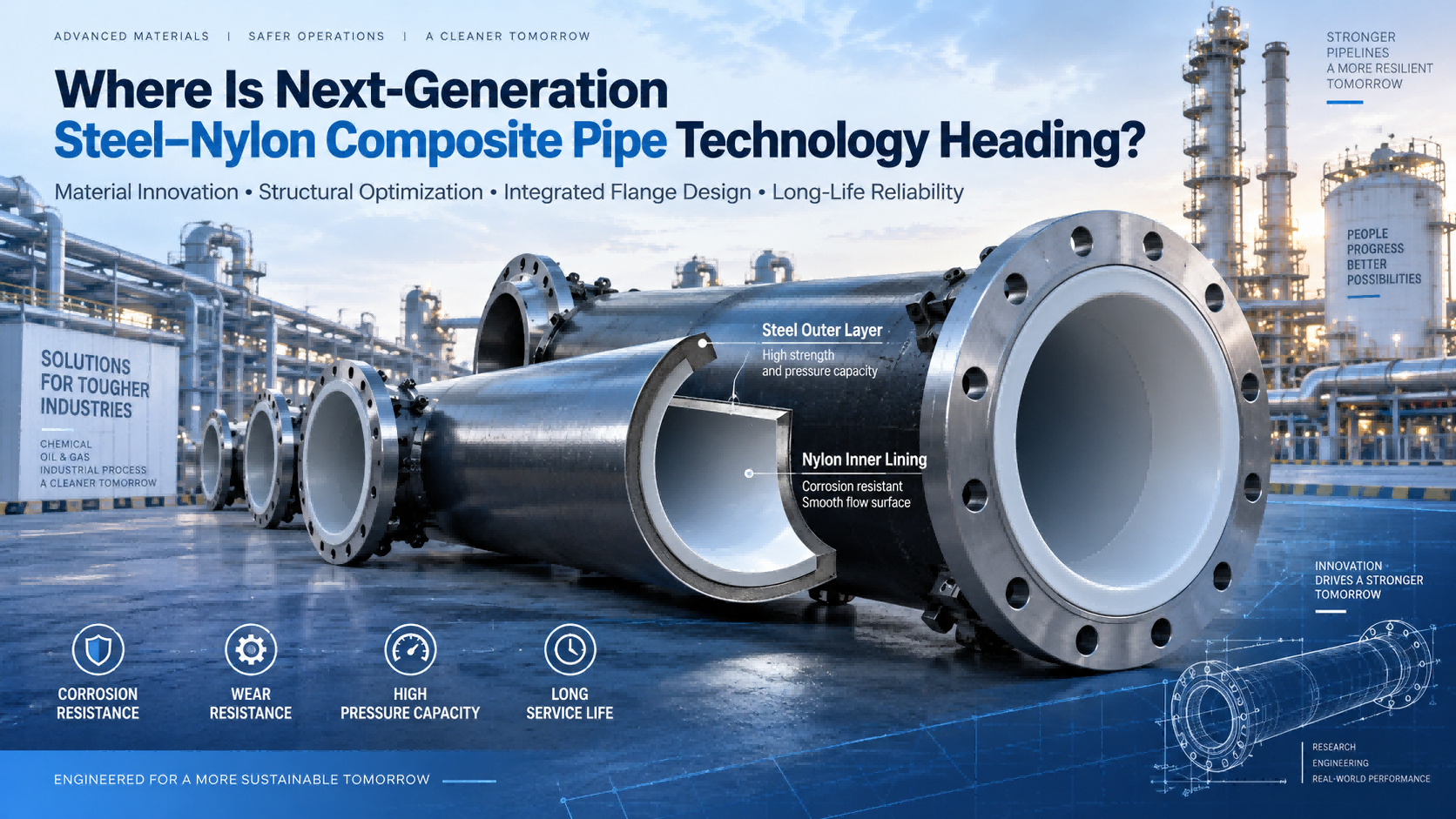
Among the many composite pipe technology routes, steel-nylon composite pipes combine the pressure-bearing capacity of steel with the corrosion resistance of a nylon liner, achieving both rigidity and flexibility. They have already proven their value in harsh operating conditions such as oilfield water injection, chemical fluid transportation, and high-sulfur wastewater treatment. However, the industry is not stopping there. The competitive focus of next-generation technology is now converging on three key directions.
Direction One: Deep Strengthening of Interfacial Bonding—From “Sticking” to “Inseparable”
The main failure risk of composite pipes lies neither in the steel itself nor in the nylon itself, but in the bonding interface between the two. The polarity, coefficient of thermal expansion, and modulus of different materials differ greatly, making it easy to create interfacial defects during the extrusion compounding process and leading to interlayer delamination under subsequent pressure and temperature cycles. It can be said that whoever masters stronger interfacial bonding technology will control the core competitiveness of next-generation composite pipes.
At present, the industry's main improvement path is to introduce epoxy resin pre-impregnation technology (RPC) for chemical modification on the basis of physical surface treatment—such as sandblasting and file indentation—to increase substrate roughness. Experimental data show that after combining physical abrasion and RPC treatment, the single-lap shear strength of steel-nylon bonded specimens can increase by up to 68.28%. This improvement means that the interlayer reliability of composite pipes under alternating loads has achieved a qualitative leap.
Direction Two: Continuous Expansion of the Operating Envelope—Higher Pressure, Wider Temperature Range, Stronger Corrosion Resistance
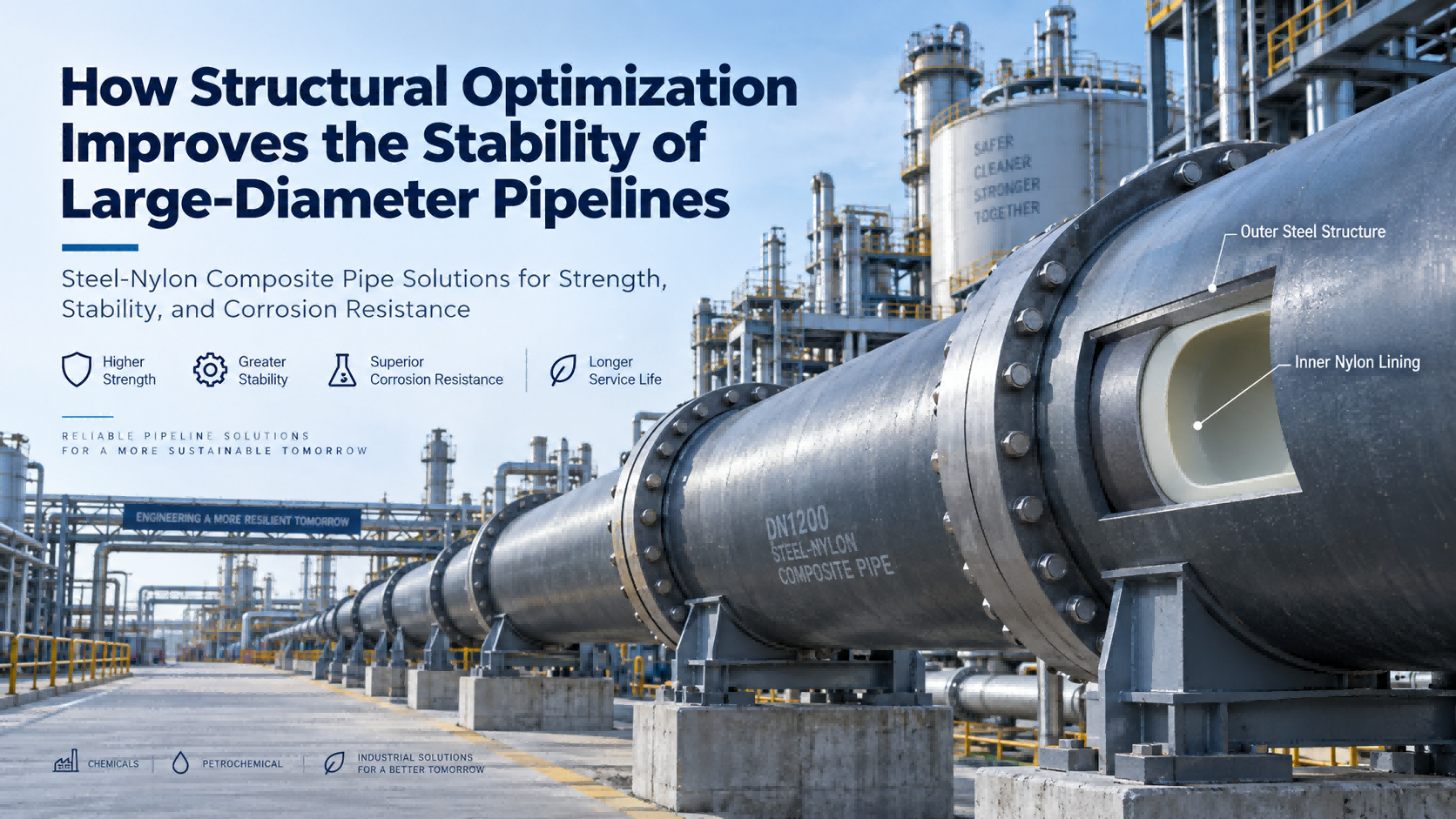
The second evolutionary direction of next-generation steel-nylon composite pipes is to continuously push operating limits while maintaining lightweight advantages. New nylon composite materials are improving impact resistance and creep resistance by adding modifying components, making them suitable for higher-pressure applications. At the same time, product specifications are also extending toward larger diameters to meet the needs of gathering and transportation pipelines and municipal main pipeline networks.
Future products will move toward higher pressure ratings, larger diameters, and greater temperature and chemical resistance. Combined with online monitoring, digital operation and maintenance, and modular joint systems, they will form integrated solutions from pipes and fittings to construction services.
Direction Three: Digitalization and Intelligence—Making Pipes “Speak”
The long-term service reliability of pipelines after installation has always been a trust barrier for composite pipe technology. The third direction of next-generation technology is to embed structural health monitoring capabilities into the pipeline system itself. From radiographic testing and ultrasonic testing to embedded piezoelectric sensors, fiber-optic sensors, and electromagnetic sensors, multiple technical approaches are being integrated into pipeline integrity management systems to enable early fault detection and full life-cycle data traceability.
Industrialization signals of this trend have already appeared. An ultrasonic-based online automatic wall-thickness monitoring system for steel-plastic composite pipes is under development, capable of real-time monitoring of key quality information such as steel mesh position, wall thickness, and ovality. For end users, this means composite pipes are shifting from “trust after installation” to “data-driven operation,” greatly reducing uncertainty in O&M decisions.
Aligning Technology Directions with Product Capabilities
These three technology directions are not laboratory concepts. They have already been translated into verifiable product capabilities and fully tested in real projects.
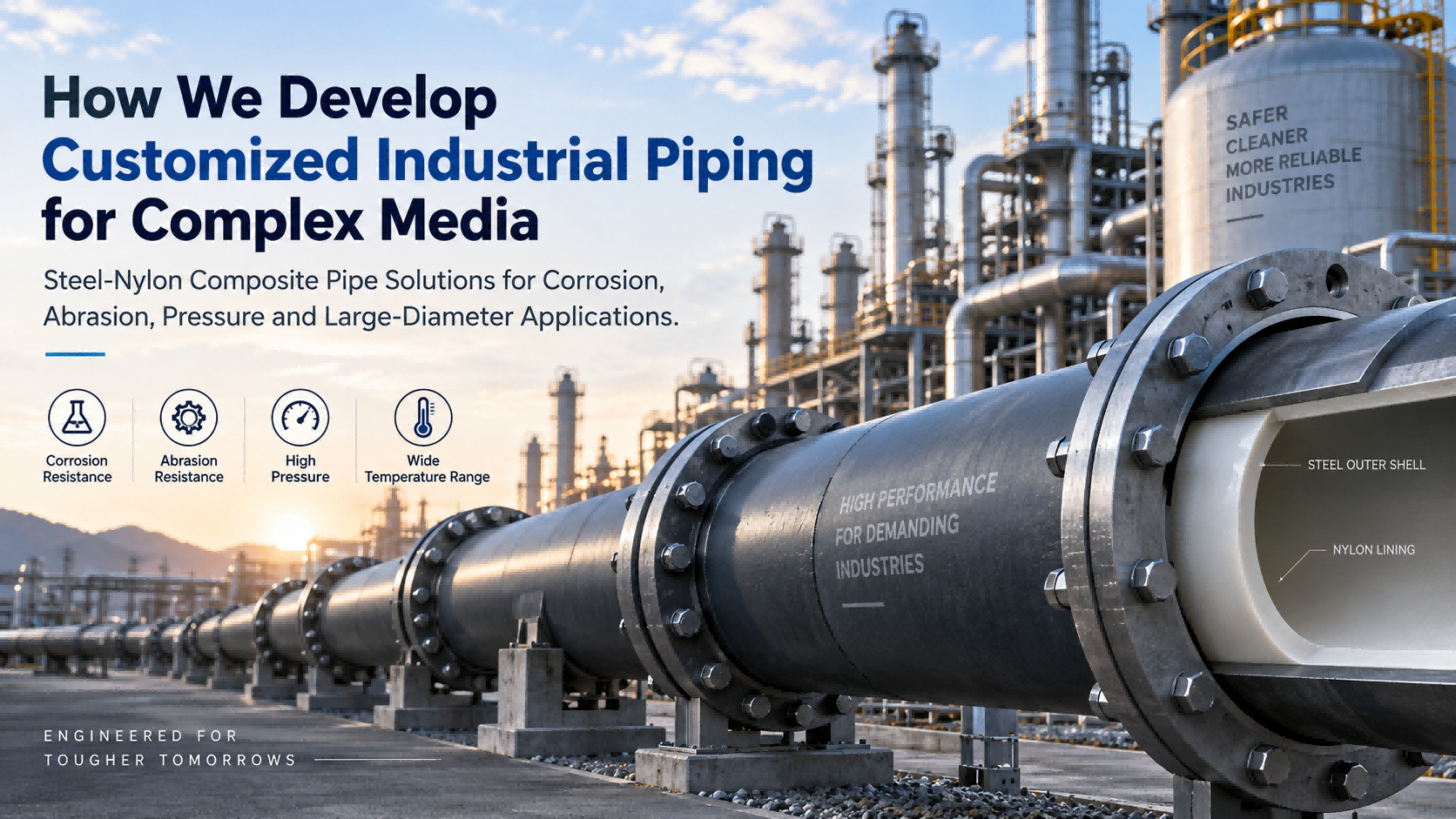
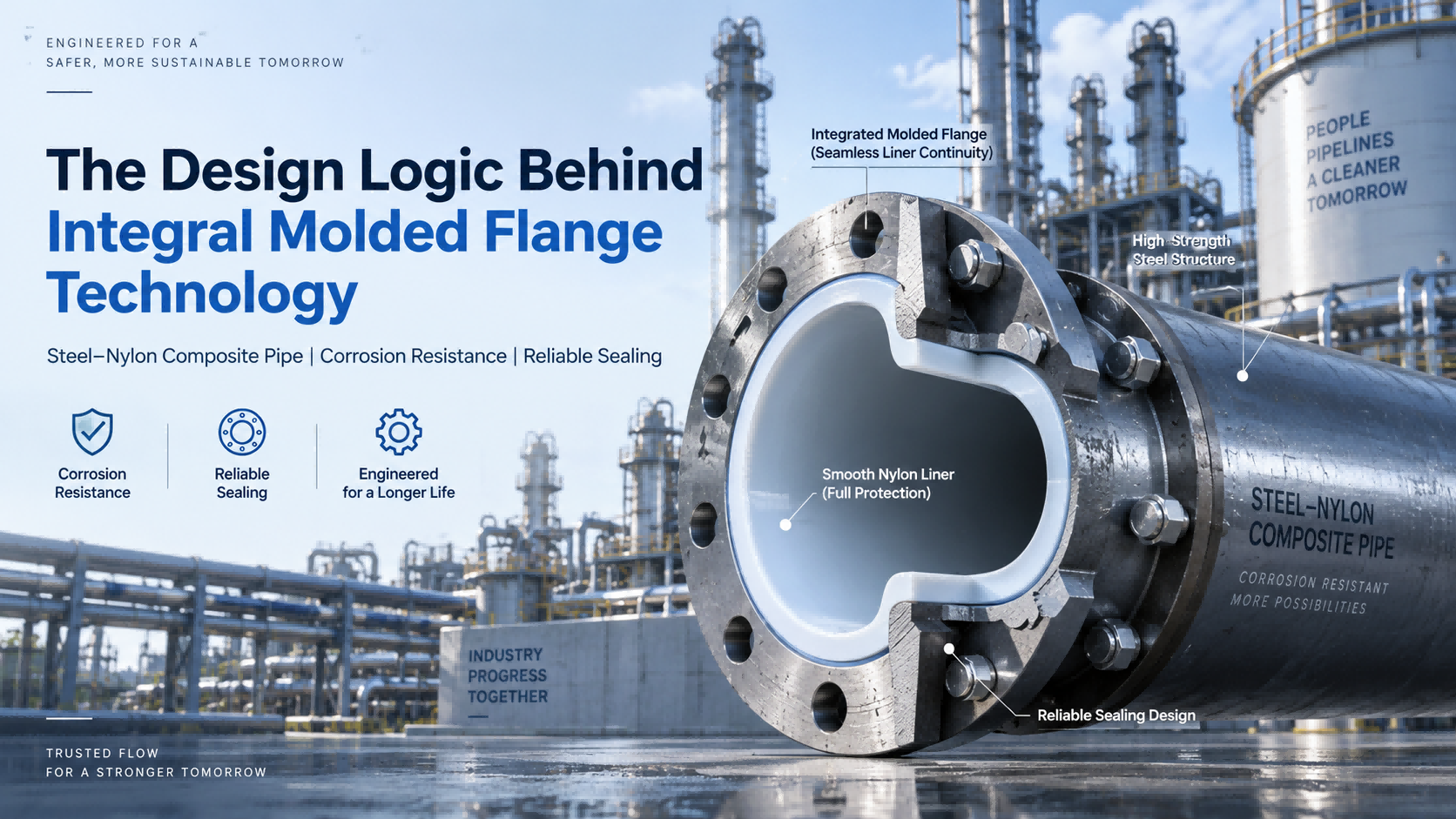
**In terms of interfacial bonding**, we use a centrifugal casting process to directly polymerize and form reinforced MC nylon (monomer casting nylon) on the inner wall of the steel pipe. Through the synergy of special surface treatment of the steel inner wall and resin pre-impregnation technology, we achieve high-strength bonding of the steel-nylon interface. Composite pipes produced by this process cover nominal diameters from DN50 mm to DN2000 mm, pressure ratings of 1.0–4.0 MPa, and an operating temperature range of approximately -36°C to 160°C.
**In terms of operating condition adaptability**, our products have established long-term operating records in multiple harsh environments. In applications with Sinopec Shengli Oilfield, Sinopec Southwest Oil & Gas Company, and other organizations, more than 40,000 meters have been installed cumulatively. More than 10,000 meters have been applied in chemical plants at Qingdao Refining & Chemical and Tianjin Refining & Chemical. **The earliest commissioned pipeline has been in continuous operation for 23 years without corrosion leakage**—this is not extrapolated data from accelerated aging tests, but service validation under real operating conditions.
**In terms of digital capabilities**, we have established a full-process quality control system from raw material inspection and production process monitoring to finished product testing. Our products meet the requirements of API SPEC 15S-2022, *Coiled Reinforced Thermoplastic Line Pipe*, and have completed certification for reinforced MC nylon pipes and nylon-steel composite pipes under the SY/T 6662.3 standard framework. In terms of product quality traceability and consistency assurance, we continue to invest in building digital inspection capabilities, providing a data foundation for full life-cycle pipeline integrity management.
Conclusion
Ultimately, the technology competition in next-generation steel-nylon composite pipes comes down to three questions: Can the interface be made “inseparable”? Can the operating conditions be “withstood”? Can operation be “seen”? The answers to these three questions determine whether composite pipes can move from specific scenarios such as oilfield water injection to the broader energy infrastructure market.
Our answers have already been validated by a 23-year actual service record. If you are looking for a reliable pipeline solution for corrosive operating conditions, welcome to contact our technical team to obtain product selection recommendations and engineering case data for your specific operating conditions.
For Complex Media, How Do We Develop Customized Industrial Pipelines?
SEND MESSAGE