PAMC Material Technology: Steel-Nylon Composite Pipe Guide
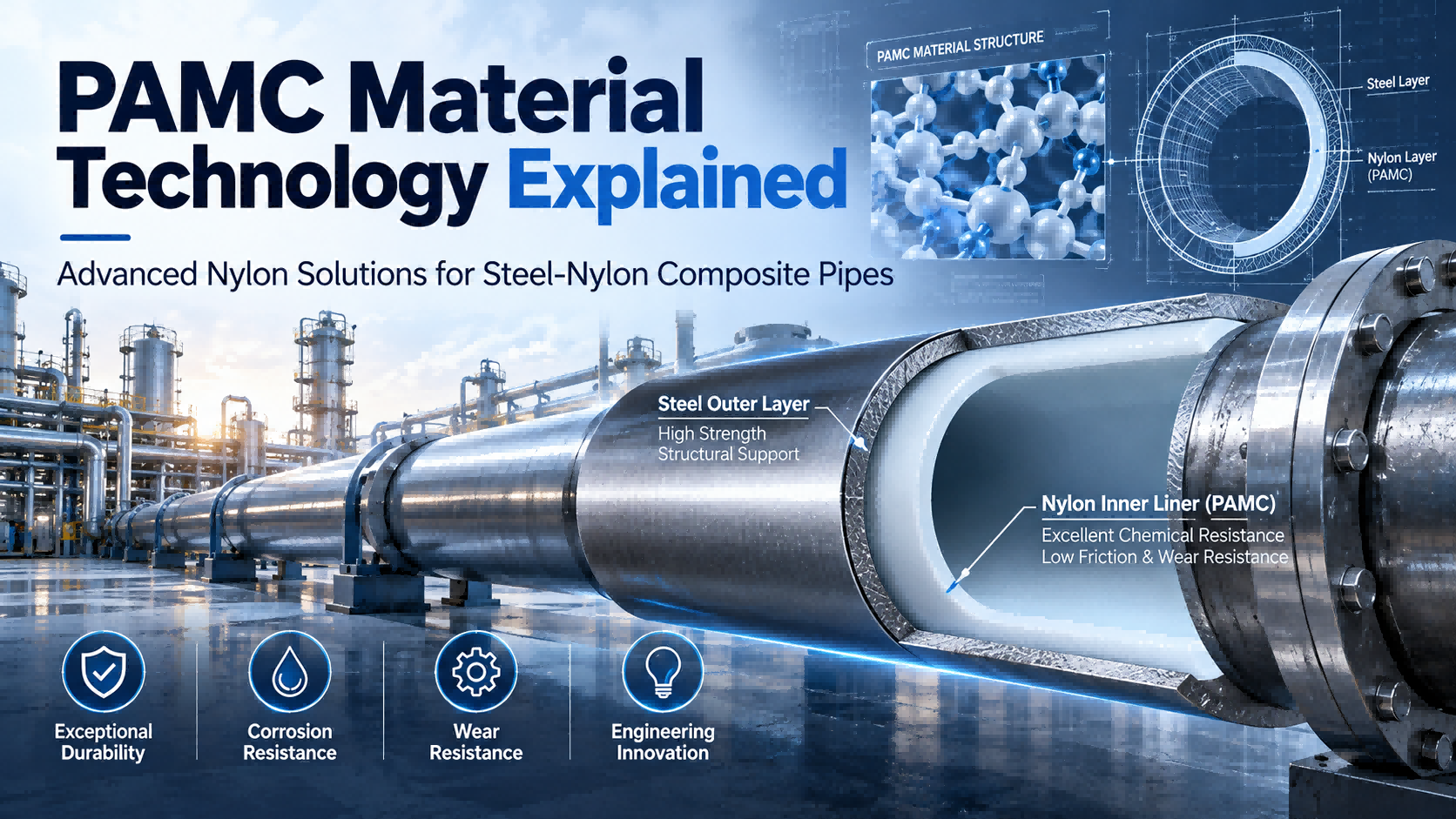
PAMC Material Technology Explained: Advanced Nylon and Steel-Nylon Composite Pipes
How Advanced PAMC Nylon Technology Improves Corrosion Resistance, Wear Performance, and Reliability in Industrial Piping Systems
Introduction: Why PAMC Material Technology Matters in Modern Industrial Piping
In industries such as oil and gas, chemical processing, mining, salt production, seawater transportation, and industrial water management, pipelines must do much more than transport fluids.
They are continuously exposed to challenging operating conditions, including corrosion, abrasion, pressure fluctuations, temperature variations, and complex installation environments.
Traditional carbon steel pipes provide excellent mechanical strength. However, when exposed to highly saline, humid, or chemically aggressive environments, they may suffer from internal corrosion, wall thinning, and localized perforation.
Stainless steel can improve corrosion resistance in certain applications, but it remains vulnerable to localized corrosion in some chloride-containing environments. Its relatively high material cost can also create challenges for large-scale pipeline projects.
Non-metallic materials such as high-density polyethylene (HDPE) and fiberglass-reinforced plastic (FRP) provide effective corrosion resistance under suitable conditions. However, higher pressures, large diameters, temperature variations, and complex mechanical loads may introduce additional structural design requirements.
As a result, industrial pipeline technology is evolving beyond the limitations of individual materials.
The focus is increasingly shifting toward advanced polymer modification and integrated metal-polymer composite structures.
PAMC material technology represents an important development in this direction.
By optimizing nylon molecular structures, polymerization processes, material formulations, and manufacturing techniques, PAMC-based piping systems can combine the functional properties of engineering polymers with the structural strength of steel.
For industrial facilities requiring reliable, continuous operation, the value of PAMC technology extends beyond individual material properties.
Its greater significance lies in improving overall pipeline reliability, reducing maintenance requirements, and potentially lowering total lifecycle costs.
1. What Is PAMC Material?
1.1 Understanding PAMC Technology
In industrial pipeline applications, PAMC is associated with enhanced cast nylon, modified MC nylon, and nylon-steel composite piping technology.
In this article, PAMC refers to an industrial engineering material system based primarily on polyamide 6 (PA6), developed through material modification, controlled polymerization, and optimized casting processes.
PAMC should not automatically be considered a single universally standardized resin grade with an identical chemical formulation or fixed performance specifications.
Its exact composition, reinforcement approach, and technical properties depend on the specific manufacturer's material formulation and production process.
Research and industrialization programs involving PAMC nylon-steel composite pipes have focused on reinforced nylon materials, centrifugal casting technology, and the development of composite industrial pipelines.
These technologies demonstrate how advanced engineering polymers can be integrated with steel structures to address demanding industrial operating conditions.
1.2 How Is PAMC Different from Conventional Nylon?
Conventional PA6 nylon provides several valuable engineering properties, including:
-
Good mechanical strength.
-
High toughness.
-
Excellent potential for wear-resistant applications.
-
Good machinability and processability.
-
Resistance to many common industrial chemicals.
However, applying conventional nylon directly to demanding industrial pipeline systems requires additional engineering considerations.
These include:
-
Long-term creep and dimensional stability under pressure.
-
Mechanical property retention at elevated temperatures.
-
Long-term compatibility with transported chemicals.
-
Resistance to abrasion caused by suspended solid particles.
-
Uniform wall thickness during large-diameter manufacturing.
-
Thermal expansion differences between nylon and steel.
The primary objective of PAMC technology is to improve the suitability of nylon for industrial fluid transportation through coordinated optimization of material formulations and manufacturing processes.
Therefore, the engineering value of PAMC cannot be evaluated solely through raw material properties.
It must also be assessed through pipeline structure, production quality, operating conditions, and long-term service performance.
2. Molecular Structure and Performance Mechanisms of PAMC Materials
2.1 The Role of Hydrogen Bonding in Polyamide Chains
Nylon 6 is a semi-crystalline polyamide containing repeating amide groups within its molecular structure.
These amide groups are represented by:
—CONH—
The amide groups allow hydrogen bonds to form between neighboring polymer chains.
Hydrogen bonding and molecular chain arrangement play important roles in determining the material's strength, stiffness, toughness, and thermal behavior.
From a materials science perspective, nylon performance is influenced by several fundamental factors:
-
Molecular weight and molecular weight distribution.
-
Crystallinity and crystalline structure.
-
Intermolecular interactions.
-
Compatibility between modifying additives and the nylon matrix.
-
Microstructural characteristics developed during polymerization and cooling.
Consequently, even when manufacturers use the same basic PA6 material, differences in polymerization methods, modification technologies, and processing conditions can produce significantly different mechanical and wear-related properties.
This is one reason why industrial-grade modified nylon materials should be evaluated according to their actual manufacturing specifications rather than their chemical classification alone.
2.2 Why Is Crystallinity Important?
Nylon is a semi-crystalline polymer containing both crystalline and amorphous regions.
Crystalline regions generally contribute to stiffness, hardness, and dimensional stability.
Amorphous regions influence toughness, impact behavior, and molecular mobility.
For industrial piping applications, maximizing crystallinity is not necessarily the best approach.
Excessive stiffness can reduce impact toughness, while focusing too heavily on flexibility may compromise long-term dimensional stability and load-bearing performance.
The objective of PAMC material engineering is therefore to establish an appropriate balance between these properties.
Cast nylon is commonly manufactured through the polymerization of caprolactam.
The resulting microstructure can be influenced by the polymerization process, cooling conditions, and selected modifying additives.
Proper control of these factors can improve material consistency and help manufacturers develop nylon products for specific industrial applications.
2.3 How Material Modification Improves PAMC Performance
Several engineering approaches can be used to optimize enhanced nylon materials.
| Modification Method | Technical Objective | Benefits for Industrial Piping |
|---|---|---|
| Toughness modification | Improve impact performance | Reduce the risk of damage during transportation, installation, and mechanical impacts |
| Wear-resistant modification | Optimize friction and wear behavior | Improve performance in particle-containing fluid systems |
| Thermal stabilization | Reduce thermal-oxidative degradation | Improve long-term stability within the intended operating temperature range |
| Polymerization optimization | Control molecular weight and residual monomers | Improve material consistency and reliability |
| Crystalline structure optimization | Balance stiffness and toughness | Improve mechanical performance and dimensional stability |
These are general engineering approaches used in advanced nylon development.
The actual modification technologies incorporated into a particular PAMC product should be confirmed through its technical documentation.
3. Five Key Technical Properties of PAMC Materials
3.1 Corrosion Resistance: Protecting Steel from Aggressive Fluids
Corrosion is one of the most common causes of pipeline deterioration in industrial facilities.
In high-salinity oilfield produced water, chemical processing solutions, salt-containing wastewater, and other aggressive environments, conventional carbon steel can experience electrochemical corrosion.
Continuous exposure to corrosive media may cause:
-
Progressive pipe wall thinning.
-
Localized pitting and perforation.
-
Accumulation of corrosion products.
-
Reduced pressure-bearing capacity.
-
Pipeline leakage.
-
Unplanned shutdowns.
PAMC nylon is a non-metallic engineering material and does not undergo electrochemical rusting in the same way as carbon steel.
When used as the internal functional layer of a steel-nylon composite pipe, PAMC can form a physical barrier between the transported medium and the steel pressure-bearing structure.
The basic functional arrangement is:
Corrosive Fluid → PAMC Nylon Inner Layer → Steel Pressure-Bearing Layer
This approach addresses internal corrosion through material separation rather than relying exclusively on higher-grade metallic alloys.
For pipelines operating in saline or chemically aggressive environments, the resulting reduction in direct fluid-to-steel contact can be an important design advantage.
However, nylon is not universally resistant to every chemical.
Strong acids, strong oxidizing agents, and certain elevated-temperature chemical environments can degrade PA6-based materials.
Therefore, chemical compatibility must always be evaluated according to the specific medium, concentration, operating temperature, and exposure duration.
3.2 Wear Resistance: Designed for Abrasive Industrial Fluids
Industrial pipelines frequently transport fluids containing suspended solids.
Examples include:
-
Mineral slurries.
-
Mining tailings.
-
Salt sludge.
-
Sand-containing oilfield produced water.
-
Industrial wastewater containing abrasive particles.
In these applications, pipe deterioration may result from a combination of corrosion and mechanical wear.
The severity of abrasion depends on several factors:
-
Particle hardness.
-
Particle size and shape.
-
Solids concentration.
-
Flow velocity.
-
Impact angle.
-
Pipeline geometry.
PAMC nylon offers the potential to improve resistance to certain abrasion mechanisms through its polymer toughness and suitable tribological properties.
These characteristics can be particularly valuable in areas where fluid direction or velocity changes.
Typical high-wear locations include:
-
Elbows.
-
Tees.
-
Reducers.
-
Pump discharge pipelines.
-
Sections near valves and other flow disturbances.
At these locations, particle impact and turbulent flow can accelerate localized material loss.
A properly designed PAMC nylon inner layer may help reduce wear-related deterioration and extend maintenance intervals.
Nevertheless, wear resistance is highly dependent on operating conditions.
Not every nylon formulation will outperform wear-resistant alloys, ceramics, or rubber linings in every abrasive environment.
Material selection should therefore be supported by relevant wear testing and application-specific performance evaluation.
3.3 Low Friction and Smooth Internal Surfaces: Improving Hydraulic Performance
The internal surface condition of a pipeline directly affects fluid friction losses.
In conventional steel pipelines, internal corrosion can gradually produce rust deposits and irregular surfaces.
These changes may increase hydraulic resistance and lead to higher pumping energy requirements.
PAMC nylon can provide a relatively smooth internal contact surface while avoiding the surface roughening associated with steel corrosion.
The Darcy–Weisbach equation describes frictional pressure loss in a straight pipe:
ΔP = f × (L/D) × (ρv²/2)
Where:
-
ΔP: Frictional pressure drop.
-
f: Darcy friction factor.
-
L: Pipeline length.
-
D: Actual internal pipe diameter.
-
ρ: Fluid density.
-
v: Average fluid velocity.
Internal surface roughness influences the friction factor and can therefore affect the energy consumption of a pumping system.
By maintaining a smoother internal surface under suitable conditions, nylon-lined pipelines may help control frictional losses over time.
However, actual energy savings depend on the flow rate, Reynolds number, internal diameter, and local flow resistance.
Because the internal nylon layer occupies part of the pipe cross-section, its effect on the effective internal diameter must also be considered.
A smoother surface alone does not guarantee lower pressure losses under every operating condition.
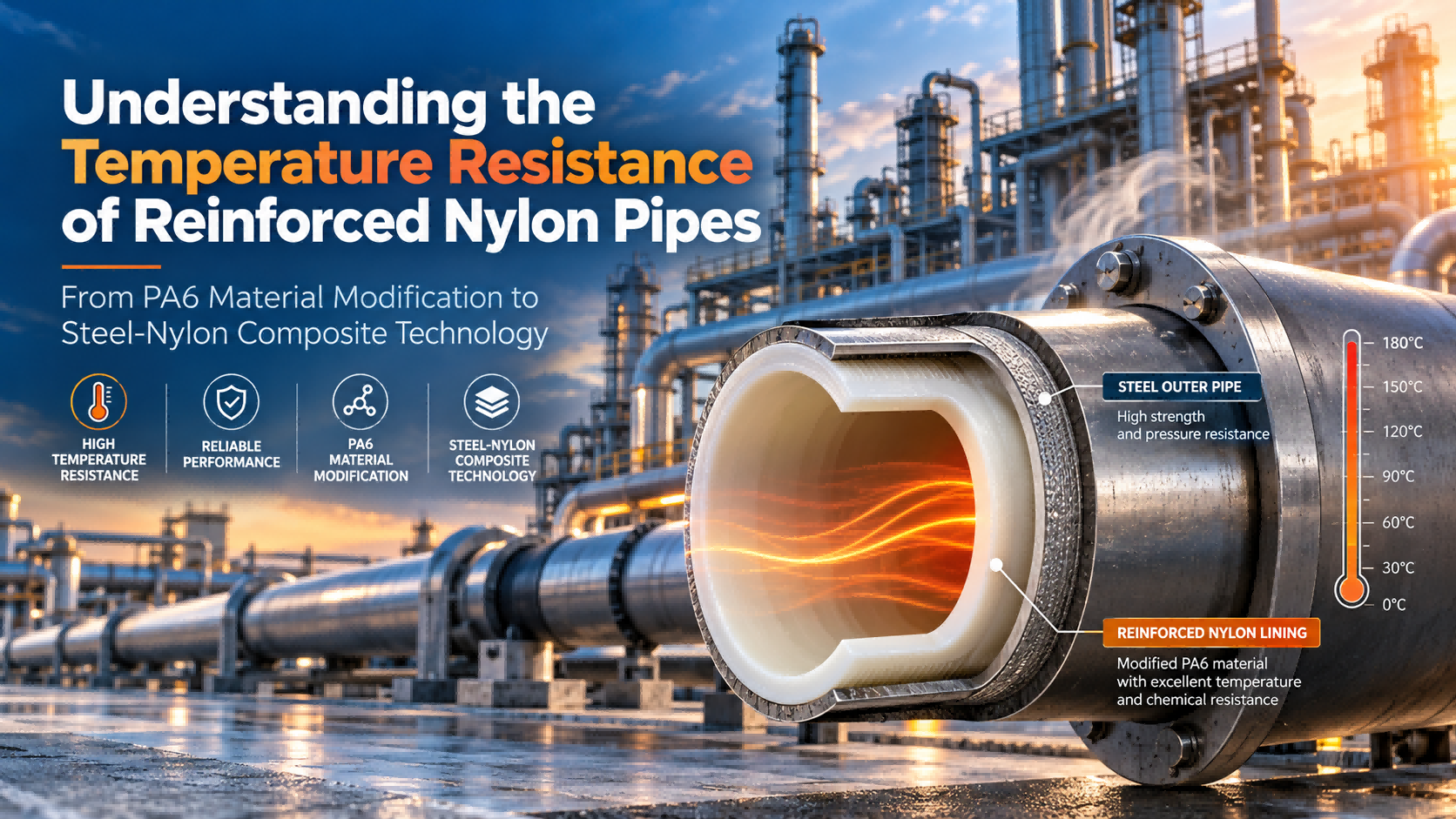
3.4 Temperature Resistance: Combining Material Properties with Structural Engineering
Industrial piping systems may operate under elevated temperatures or repeated temperature fluctuations.
Under these conditions, polymer materials may experience:
-
Reduced elastic modulus.
-
Increased long-term creep.
-
Thermal aging.
-
Dimensional changes.
-
Changes in stresses at the steel-nylon interface.
The temperature resistance of PAMC materials cannot be evaluated solely by their melting point or short-term heat-deflection temperature.
The critical engineering question is whether the material can maintain sufficient mechanical performance and structural stability under the specified temperature, pressure, medium, and operating duration.
Some steel-nylon composite pipe products are designed for a relatively wide range of operating conditions.
However, the permissible continuous operating temperature and pressure rating of each product must be confirmed through technical specifications and appropriate validation.
For hot-water service, acidic environments, and applications involving continuous pressure fluctuations, additional attention should be given to water absorption, creep, and possible hydrolytic degradation of PA6.
3.5 Dimensional Stability: A Critical but Often Overlooked Property
Nylon is a hygroscopic material, meaning that it can absorb moisture from its surrounding environment.
Changes in moisture content and temperature may affect its dimensions and mechanical behavior.
In steel-nylon composite pipes, the steel structure and nylon layer have different coefficients of thermal expansion.
During temperature fluctuations, poorly controlled expansion differences may create:
-
Localized interfacial stress.
-
Axial movement of the lining.
-
End-seal deterioration.
-
Connection instability.
-
Damage caused by repeated thermal cycling.
For this reason, PAMC technology involves more than simply selecting a suitable nylon formulation.
It also requires careful consideration of composite interface design, end restraints, manufacturing procedures, and structural performance.
These engineering factors are essential when comparing industrial-grade steel-nylon composite pipes with conventional mechanically lined or surface-coated steel piping systems.
4. Why Combine PAMC Nylon with Steel in Composite Pipes?
No single material provides the ideal combination of corrosion resistance, abrasion resistance, structural rigidity, and pressure-bearing performance for every industrial application.
Steel-nylon composite piping addresses this challenge through the functional integration of two different materials.
Each material performs a distinct role within the overall pipe structure.
4.1 Steel Outer Layer: Providing Structural Strength
Steel offers high stiffness, mechanical strength, and structural rigidity.
In a properly designed composite piping system, the steel outer structure can carry the major mechanical loads associated with:
-
Internal pressure.
-
Hoop stress.
-
Axial loads.
-
External mechanical forces.
-
Installation and support requirements.
-
Certain impact and vibration loads.
The steel structure also helps address some of the structural challenges associated with large-diameter, high-rigidity industrial piping applications.
This is particularly relevant where operating pressure, pipe diameter, external loads, and installation conditions must be considered together.
4.2 PAMC Inner Layer: Providing Functional Protection
The PAMC nylon inner layer provides the fluid-contact surface.
Its primary functions include:
Corrosion Resistance + Wear Resistance + Smooth Internal Surface
By separating the structural and functional requirements, the composite design allows each material to be optimized for its intended role.
In industrial systems where corrosion and abrasion occur simultaneously, this approach may reduce some of the compromises associated with relying on a single pipe material.
4.3 Composite Interface: A Critical Factor in Long-Term Reliability
Simply placing nylon inside a steel pipe does not automatically create a reliable composite structure.
Long-term performance depends on several important factors:
-
Mechanical interaction between the nylon lining and steel structure.
-
Residual stresses after manufacturing.
-
Differential thermal expansion.
-
Lining stability during pressure fluctuations.
-
End-sealing structure.
-
Lining continuity around elbows, tees, reducers, and flange transitions.
If the interface is poorly designed or inadequately controlled, lining movement, localized deformation, or other structural failures may occur even when the individual materials possess excellent properties.
Reliable steel-nylon composite pipes therefore require an integrated approach involving material selection, manufacturing technology, structural design, and connection engineering.
5. Key Manufacturing Technologies for PAMC Steel-Nylon Composite Pipes
5.1 Raw Material Formulation and Polymerization Control
The manufacturing process begins with the development of a consistent raw material system.
Important production parameters may include:
-
Raw material purity.
-
Moisture content.
-
Polymerization conditions.
-
Distribution of modifying additives.
-
Residual monomer content.
-
Process consistency.
Polymerization temperature, reaction duration, and production stability can influence molecular weight, crystallization behavior, and final mechanical performance.
For industrial pipeline manufacturing, repeatable production quality is essential.
Achieving excellent results in a single laboratory experiment is not sufficient if those results cannot be reproduced consistently during large-scale manufacturing.
5.2 Centrifugal Casting and Integrated Manufacturing
Centrifugal casting is an important manufacturing approach associated with PAMC nylon-steel composite pipe technology.
This process utilizes controlled rotation and polymerization conditions to manufacture annular nylon structures that can be integrated into composite pipelines.
Critical process parameters include:
-
Temperature distribution during casting.
-
Rotational speed.
-
Material distribution.
-
Polymerization uniformity.
-
Lining thickness consistency.
-
Cooling shrinkage.
-
Residual stress management.
-
Steel-nylon interface quality.
Unlike relatively thin surface coatings, thicker nylon functional layers require careful control of geometry, mechanical stability, and long-term failure mechanisms.
Research on PAMC nylon-steel composite pipe centrifugal casting has demonstrated its industrial application and development across a range of pipeline sizes.
This manufacturing approach provides an important technical foundation for producing advanced corrosion-resistant and wear-resistant composite pipelines.
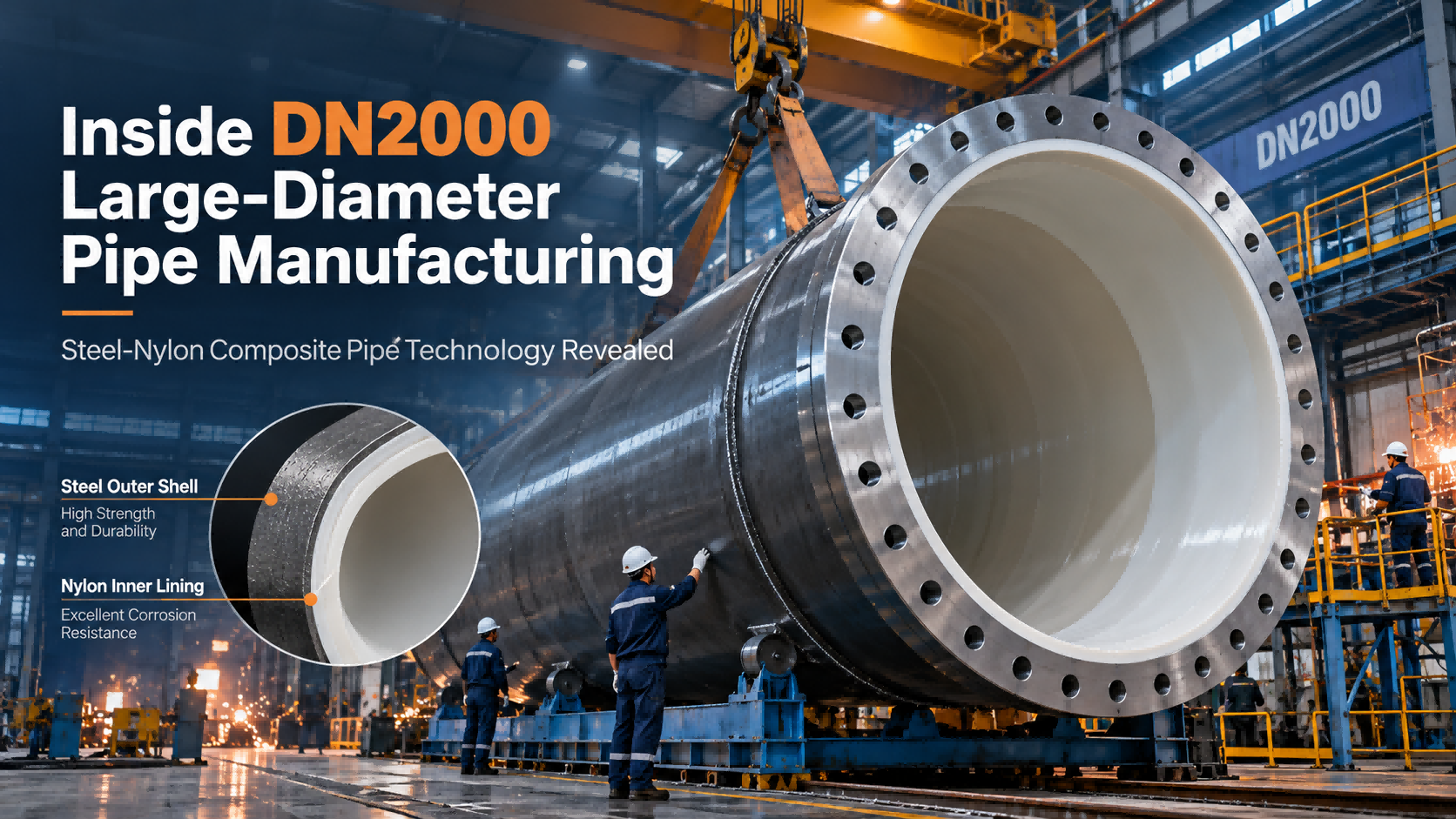
5.3 Large-Diameter Manufacturing: Beyond Material Performance
As pipe diameter increases, manufacturing challenges become significantly more complex.
Large-diameter production requires additional control over:
-
Wall thickness variation.
-
Temperature distribution during cooling.
-
Dimensional deformation.
-
Flange machining accuracy.
-
Geometrical consistency.
-
Inspection procedures.
-
Installation tolerances.
Manufacturing large composite pipes, including sizes such as DN1000, DN1600, and DN2000, requires the coordinated development of material formulations, specialized production equipment, mold design, and quality assurance systems.
Our continued focus on large-diameter steel-nylon composite pipes reflects the growing demand for reliable piping solutions in major industrial infrastructure projects.
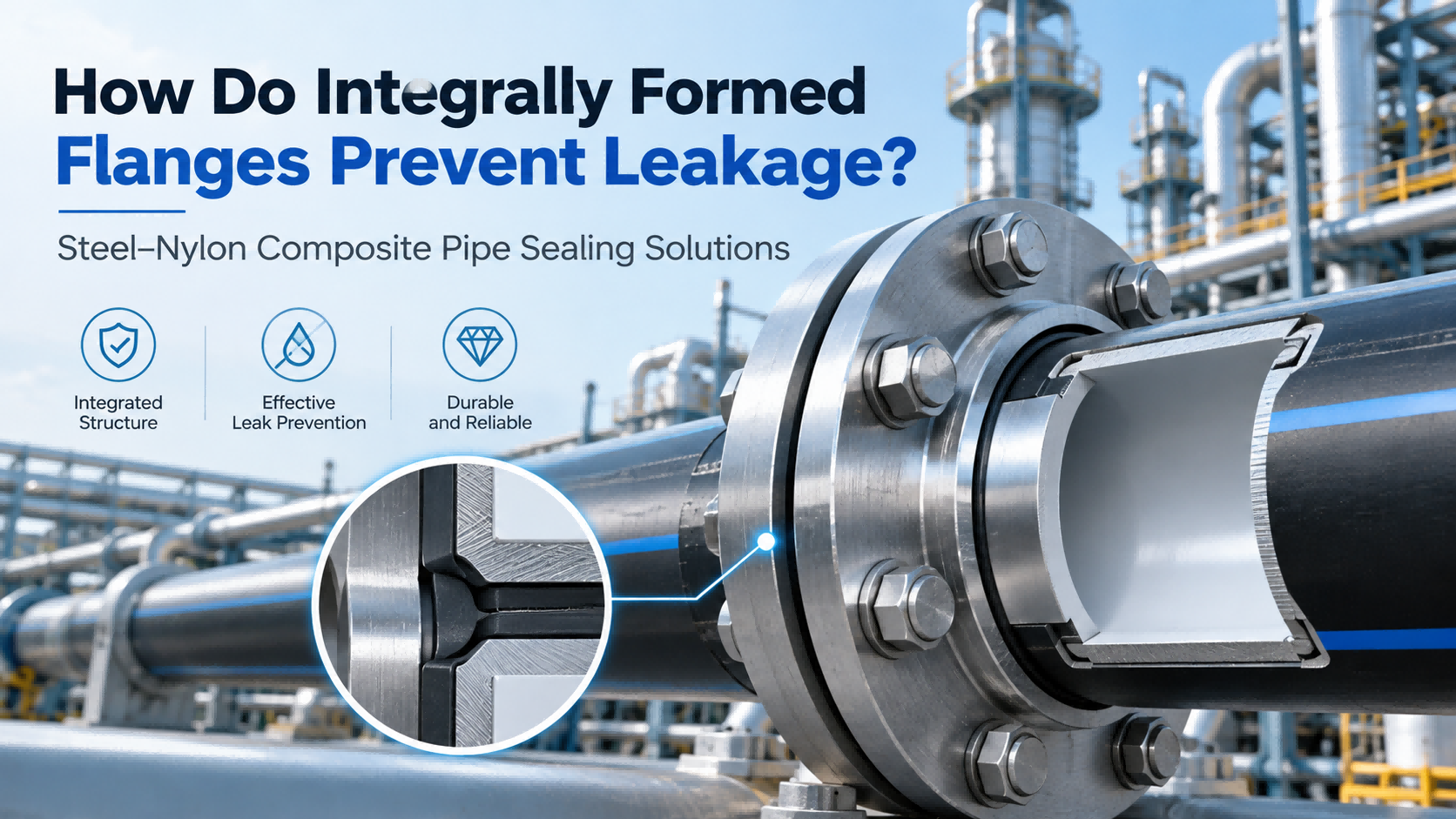
5.4 Flange Connections and Sealing Reliability
Pipeline leakage does not occur exclusively along straight pipe sections.
In industrial applications, flange connections, valve interfaces, and transition fittings can also become critical failure locations.
Our steel-nylon composite piping systems incorporate suitable flanged connection designs for applicable product configurations.
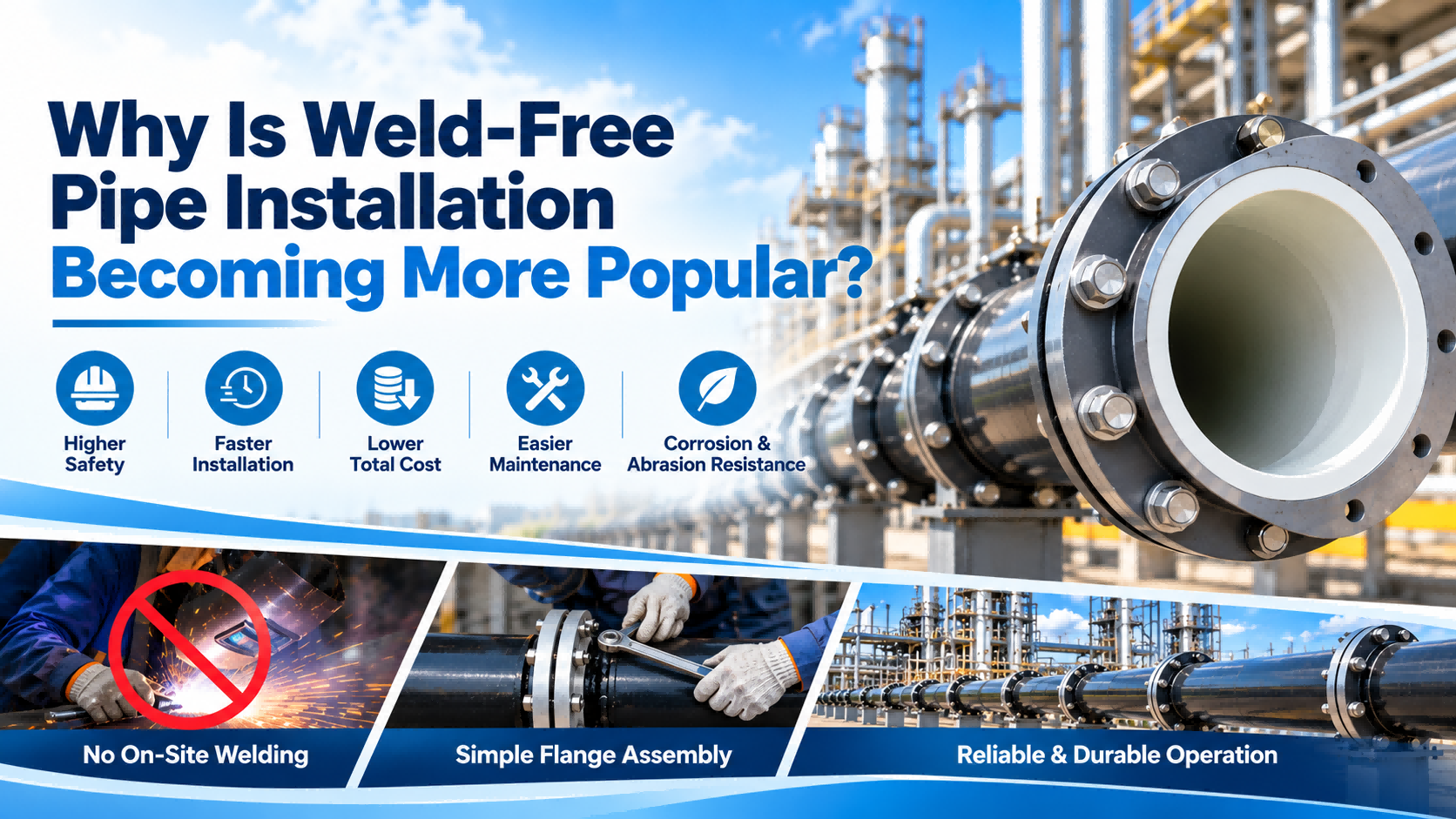
These connections can reduce the need for on-site pipe-body welding and provide several practical advantages:
-
Improved installation convenience.
-
Reduced requirements for certain hot-work operations.
-
Easier connection to pumps, valves, and industrial fittings.
-
Greater flexibility during pipeline replacement and modification.
-
Convenient disassembly and maintenance.
However, reliable flange performance still depends on correct sealing surface design, gasket selection, bolt preload, alignment, and operating loads.
Flanged construction should not be interpreted as an automatic guarantee of leak-free operation.
6. PAMC Steel-Nylon Composite Pipes vs. Traditional Industrial Pipe Materials
Selecting an industrial piping material requires a balanced evaluation of structural performance, chemical resistance, installation requirements, and lifecycle costs.
The following comparison summarizes the general engineering characteristics of several commonly used piping systems.
| Performance Factor | Carbon Steel | Stainless Steel | HDPE | FRP | PAMC Steel-Nylon Composite |
|---|---|---|---|---|---|
| Structural strength | High | High | Depends on grade and design | Depends on laminate design | Steel provides primary structural strength |
| Internal corrosion resistance | Requires corrosion management | Depends on alloy and medium | Suitable for many chemicals | Depends on resin system | PAMC lining separates the medium from steel |
| Abrasion resistance | Depends on steel grade and conditions | Depends on alloy and conditions | Requires evaluation | Depends on liner construction | Nylon inner layer can be optimized for wear |
| Large-diameter applications | Well-established | Potentially expensive | Requires structural verification | Depends on design and manufacturing | Combines steel structure with functional lining |
| Temperature capability | Relatively broad | Relatively broad | Limited by material grade | Limited by resin system | Depends on nylon properties and composite design |
| Installation methods | Welding or flanges | Welding or flanges | Heat fusion, electrofusion, or flanges | Bonding, socket joints, or flanges | Prefabricated flange connections available |
| Lifecycle costs | Influenced by corrosion and maintenance | Influenced by material cost | Depends on operating conditions | Depends on operating conditions | Potential for reduced maintenance and downtime |
Note: This comparison describes general material characteristics and does not represent a performance ranking based on identical laboratory testing.
PAMC steel-nylon composite pipes are particularly worth evaluating when an industrial pipeline must simultaneously meet requirements for:
Mechanical Strength, Internal Corrosion Resistance, and Wear Performance.
For extremely high temperatures, strongly oxidizing chemicals, or other specialized applications, alternative engineering materials may remain more appropriate.
7. Major Industrial Applications of PAMC Steel-Nylon Composite Pipes
7.1 High-Water-Cut Oilfield Gathering Systems
As oilfields mature, the water content of produced fluids often increases.
These fluids may contain:
-
Highly mineralized produced water.
-
Dissolved salts.
-
Crude oil.
-
Natural gas.
-
Suspended sand.
-
Carbon dioxide and other potentially corrosive components.
These conditions can create combined corrosion and erosion problems in conventional steel pipelines.
By using a PAMC nylon inner layer together with a steel outer structure, composite pipes can reduce direct contact between aggressive produced fluids and the pressure-bearing steel.
This makes steel-nylon composite piping a potential solution for selected oilfield gathering and transportation applications.
Our published application information includes the use of steel-nylon composite pipes in the Gudong oil production area of the Shengli Oilfield.
The project documentation describes installations beginning in 2015, covering approximately 2.6 kilometers of pipelines in stages.
Applications included well-group connections, elbows, reducers, and station piping components.
These project records provide an example of practical industrial application rather than a guaranteed service-life prediction for every operating environment.
7.2 Salt Chemical Processing and Soda Ash Production
Salt-based chemical industries frequently transport highly saline fluids and process materials.
These may include:
-
Brine.
-
Mother liquor.
-
Salt sludge.
-
Chemical process liquids.
-
Suspended solid particles.
Such media can create a combination of corrosion, scaling, and abrasion challenges.
PAMC steel-nylon composite pipes may be evaluated for brine transportation, mother liquor pipelines, and selected solids-containing process applications.
The primary technical advantage is the use of a nylon inner layer to reduce direct exposure of the steel pressure-bearing structure to corrosive media.
7.3 Mining Tailings and Slurry Transportation
Mining pipelines often handle fluids with high concentrations of abrasive particles.
These applications require materials capable of withstanding continuous wear.
Suitable PAMC material systems can be evaluated for abrasion resistance under defined particle conditions.
However, successful material selection requires a detailed understanding of:
-
Particle hardness.
-
Flow velocity.
-
Solids concentration.
-
Particle size distribution.
-
Pipeline geometry.
-
Localized wear at bends and fittings.
For highly abrasive service, comparative testing against alternative lining materials is recommended.
Such testing may include simulated slurry wear tests or trials using actual process media.
7.4 Industrial Water, Wastewater, and Seawater Transportation
Industrial water and wastewater pipelines may be exposed to corrosive dissolved salts and other aggressive substances over extended operating periods.
Steel-nylon composite piping can be considered as one of several potential material solutions.
For seawater transportation or continuous immersion applications, further assessment is required regarding:
-
Nylon water absorption.
-
Long-term mechanical property retention.
-
Biological fouling.
-
Chemical compatibility.
-
Flange and end-seal reliability.
Where drinking water is involved, the piping materials must also meet applicable health, safety, and potable-water contact requirements in the target market.
8. How to Evaluate PAMC Material Performance for Industrial Projects
For engineering design institutes, EPC contractors, and industrial procurement teams, understanding material technology is only the first step.
Reliable procurement decisions should be supported by verifiable technical data.
We recommend evaluating PAMC materials and composite piping systems across five major areas.
8.1 Material Performance Testing
Relevant ISO or ASTM testing methods may be used to evaluate:
-
Tensile strength.
-
Elongation at break.
-
Elastic modulus.
-
Impact toughness.
-
Wear resistance.
-
Water absorption.
-
Dimensional changes.
-
Thermal properties.
-
Long-term aging.
-
Mechanical property retention after chemical exposure.
The appropriate test method should be selected according to the material, specimen geometry, and intended application.
8.2 Pipe Structure Testing
The complete piping system should be evaluated for:
-
Hydrostatic pressure performance.
-
Long-term pressure stability.
-
Pressure cycling.
-
Temperature cycling.
-
End-connection sealing.
-
Internal lining stability.
-
Transportation and installation loads.
Testing the complete pipe structure is particularly important because raw material performance alone cannot fully describe composite system behavior.
8.3 Chemical Compatibility Testing
Chemical resistance should never be assumed solely from the name of a material.
Where practical, testing should use the actual process fluid or a representative simulated medium.
Evaluation may include:
-
Mass changes.
-
Dimensional changes.
-
Surface condition.
-
Mechanical property retention.
-
Evidence of chemical degradation.
Temperature, pressure, concentration, and exposure duration should be considered when interpreting results.
8.4 Long-Term Service Performance
Short-term laboratory performance is not equivalent to long-term industrial service performance.
Critical factors include:
-
Polymer creep.
-
Thermal aging.
-
Water absorption.
-
Chemical degradation.
-
Repeated pressure fluctuations.
-
Accumulated mechanical damage.
These factors should be considered when establishing operating limits and expected maintenance intervals.
8.5 Manufacturing Quality Control
Large industrial projects also require consistent manufacturing quality.
Important inspection items include:
-
Raw material batch consistency.
-
Pipe and lining wall thickness.
-
Lining integrity.
-
Flange dimensional accuracy.
-
Sealing surface condition.
-
Finished-product inspection records.
-
Product traceability.
Only when material performance, structural design, manufacturing processes, and quality control operate as an integrated system can PAMC technology deliver its intended engineering value.
9. Why Choose Our PAMC Steel-Nylon Composite Pipes?
As a manufacturer specializing in industrial nylon pipes and steel-nylon composite piping systems, we focus on providing solutions for demanding fluid transportation applications.
Our goal is not simply to supply a corrosion-resistant material.
We aim to help industrial customers evaluate piping solutions that combine structural performance, material protection, manufacturing quality, and installation efficiency.
9.1 Combining Steel Strength with Nylon Functionality
Our steel-nylon composite pipes utilize a steel structure for primary mechanical support and a PAMC nylon inner layer for contact with the transported medium.
This combination allows structural strength and functional resistance to be considered together.
For applications involving both corrosion and abrasion, the composite design offers a practical engineering approach that differs from conventional single-material piping.
9.2 Solutions for Demanding Industrial Media
Our products can be evaluated for a wide range of industrial applications, including:
-
Oilfield gathering and transportation.
-
Chemical processing.
-
Salt chemical production.
-
Soda ash manufacturing.
-
Mining slurry transportation.
-
Industrial water treatment.
-
Corrosion-sensitive pipeline systems.
We recognize that industrial pipeline reliability depends on more than resistance to a single chemical.
Real operating environments often involve a combination of corrosion, mechanical wear, pressure changes, and temperature fluctuations.
Our approach emphasizes material selection and structural design according to actual project conditions.
9.3 Large-Diameter Manufacturing Capabilities
Large industrial projects require pipelines that can accommodate different flow rates, pressure levels, connection configurations, and installation environments.
Our product development focuses on matching pipe diameter, lining thickness, steel structure, and flange configuration to project requirements.
This approach provides additional options for large industrial pipeline networks and existing-system upgrades.
9.4 Factory Prefabrication and Flanged Installation
For suitable product configurations, factory-prefabricated flange connections help simplify field installation.
Compared with piping systems requiring extensive on-site welding, flanged composite pipe assemblies may offer:
-
Reduced field welding requirements.
-
Convenient installation.
-
Easier connection to industrial equipment.
-
Greater flexibility during maintenance.
-
Simplified replacement of selected pipeline sections.
These advantages can be particularly valuable in industrial facilities where shutdown periods are limited.
9.5 Focusing on Total Cost of Ownership
The initial purchase price represents only one part of an industrial pipeline's economic performance.
A complete total cost of ownership (TCO) evaluation should also include installation, operation, maintenance, downtime, and replacement.
A simplified lifecycle cost model can be expressed as:
TCO = C₀ + Cᵢ + Cₑ + Cₘ + C𝒹 + Cᵣ
Where:
-
C₀: Initial procurement cost.
-
Cᵢ: Transportation and installation costs.
-
Cₑ: Operating energy costs.
-
Cₘ: Maintenance costs.
-
C𝒹: Downtime losses.
-
Cᵣ: Repair and replacement costs.
The potential economic benefits of PAMC steel-nylon composite pipes arise when improved resistance to corrosion and wear helps reduce maintenance frequency and unplanned interruptions.
For facilities facing severe internal corrosion, frequent pipeline failures, or expensive production shutdowns, these potential benefits deserve careful financial evaluation.
A lifecycle cost analysis based on actual project data is the most reliable way to quantify them.
10. How to Select the Right PAMC Steel-Nylon Composite Pipe
PAMC technology is not suitable for every industrial environment.
To determine whether a particular composite piping system meets project requirements, engineers and procurement teams should provide detailed operating information during the selection process.
| Selection Parameter | Information Required |
|---|---|
| Transported medium | Chemical composition, concentration, and pH |
| Operating temperature | Normal temperature, maximum temperature, and thermal cycling |
| Operating pressure | Normal pressure, design pressure, and transient pressure |
| Pipe diameter | Nominal diameter, actual internal diameter, and flow requirements |
| Fluid characteristics | Flow velocity, viscosity, and solids concentration |
| Installation environment | Buried, aboveground, indoor, or outdoor |
| Connection requirements | Flange standards, sealing surfaces, and connecting equipment |
| Design service life | Target operating years and maintenance intervals |
Based on these parameters, our engineering team can assist customers in evaluating the suitability of PAMC nylon materials, steel structures, lining thicknesses, and connection configurations.
The objective is to develop a piping solution that matches the actual operating conditions rather than relying on generic material claims.
11. Frequently Asked Questions About PAMC Material Technology
Q1: Is PAMC the Same as Conventional PA6 Nylon?
Not exactly.
The PAMC material system discussed in this article is based on PA6-related cast nylon technology but may incorporate additional material modification, polymerization control, manufacturing optimization, and composite structural design.
Actual material properties should be verified through the relevant product grade and technical testing documentation.
Q2: Can PAMC Steel-Nylon Composite Pipes Completely Replace Stainless Steel Pipes?
Not in every application.
For selected industrial environments involving both corrosion and abrasion, steel-nylon composite pipes may provide technical and economic advantages.
However, high-temperature applications, strongly oxidizing chemicals, and certain specialized media may require other material solutions.
A detailed chemical compatibility and engineering assessment is necessary before material substitution.
Q3: Are PAMC Materials Suitable for High-Pressure Pipelines?
PAMC nylon can serve as the functional inner layer of a composite pipe system designed for specified operating pressures.
However, allowable pressure depends on the complete pipe structure, manufacturing quality, operating temperature, and relevant testing results.
The pressure rating should never be determined solely from the properties of the nylon raw material.
Q4: Do PAMC Steel-Nylon Composite Pipes Require Welding?
Suitable product configurations can use prefabricated flange connections to reduce the need for on-site pipe-body welding.
The appropriate connection method depends on the pipe structure, project requirements, and installation environment.
Q5: Can PAMC Composite Pipes Reduce Operating Costs?
Potentially, yes.
In applications where corrosion and abrasion frequently cause pipeline deterioration, reducing maintenance requirements and avoiding unplanned shutdowns may lower total lifecycle costs.
However, the actual financial benefits depend on project-specific conditions, material prices, maintenance histories, and operating requirements.
Q6: What Is the Main Advantage of PAMC Steel-Nylon Composite Pipes?
Their primary advantage is the combination of two complementary material functions.
The steel structure provides mechanical strength, while the PAMC nylon inner layer provides the fluid-contact surface with potential corrosion and wear resistance benefits.
This integrated design can help address industrial piping challenges that are difficult to solve using a single material.
Conclusion: PAMC Technology Represents a More Integrated Approach to Industrial Piping
PAMC material technology is more than an advancement in nylon modification.
It represents a broader engineering approach that combines polymer science, metal structures, manufacturing technology, and industrial application requirements.
Traditional pipeline material selection often focuses on individual characteristics such as strength, corrosion resistance, or purchase price.
However, modern industrial projects demand a more comprehensive evaluation.
Corrosion, abrasion, pressure, temperature, installation efficiency, maintenance requirements, and lifecycle costs are frequently interconnected.
As a result, the most suitable piping solution is often the one that achieves the best balance between these competing requirements.
By combining a steel pressure-bearing structure with a PAMC nylon functional inner layer, steel-nylon composite pipes offer an engineering solution worth considering for demanding industrial fluid transportation systems.
For oil and gas, chemical processing, salt production, mining, and industrial water transportation projects, this composite approach can help address internal corrosion and wear challenges when supported by appropriate material selection, structural design, and technical validation.
As polymer modification technologies, centrifugal casting processes, large-diameter manufacturing equipment, and composite structural engineering continue to advance, PAMC steel-nylon composite pipes may become increasingly relevant in complex industrial piping applications.
The future of industrial piping is not simply about choosing between metal and plastic.
It is about integrating the strengths of different materials to achieve better overall system performance.
Contact Us: Explore PAMC Steel-Nylon Composite Pipe Solutions
Is your industrial project experiencing pipeline corrosion, abrasive wear, frequent leakage, high maintenance costs, or challenges associated with large-diameter fluid transportation?
Our team specializes in industrial nylon pipes and steel-nylon composite piping solutions.
We can assist with technical discussions and preliminary product selection based on your operating conditions.
Whether you are an EPC contractor, engineering consultant, industrial distributor, or project owner, we welcome the opportunity to discuss your pipeline requirements.
Applications We Support:
-
Corrosion-resistant industrial pipeline systems.
-
Abrasion-resistant slurry transportation.
-
Oilfield gathering and transportation pipelines.
-
Chemical and salt-processing pipelines.
-
Large-diameter industrial water pipelines.
-
Industrial pipeline replacement and modernization.
Website: //www.nylonpipeline.com
Contact our team to discuss your project requirements and explore suitable PAMC steel-nylon composite pipe solutions.
Steel for structural strength. PAMC nylon for corrosion and wear protection. A smarter material combination for demanding industrial pipelines.