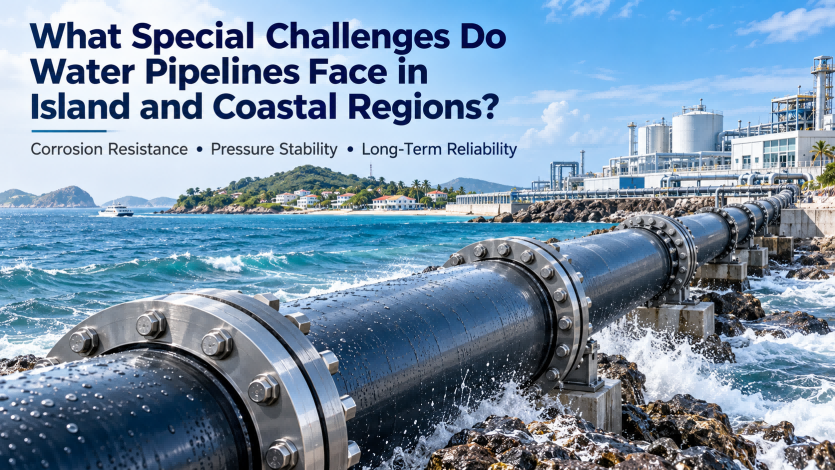
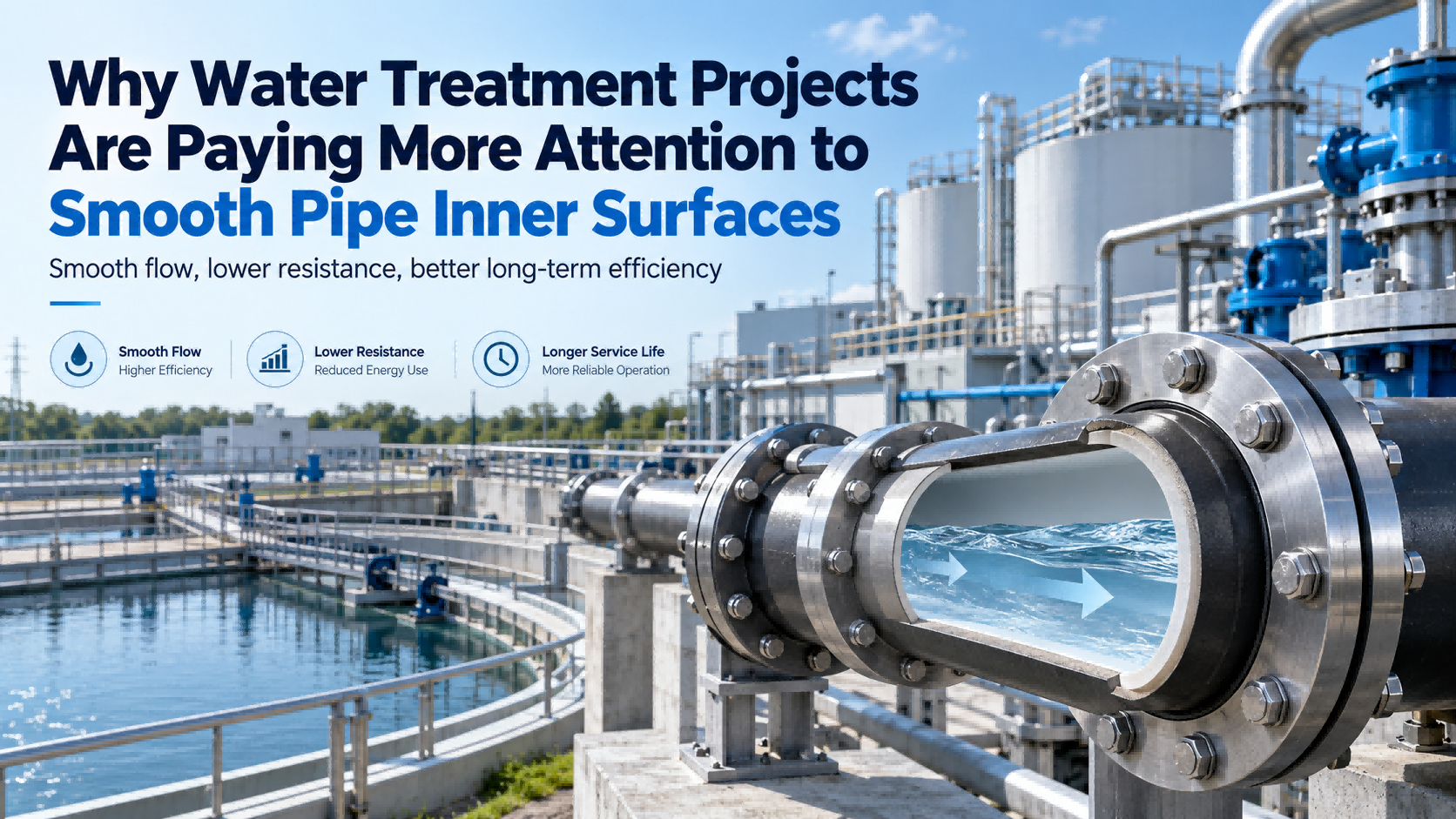
What Pipe Material Demands Will Be Driven by the Growth of Seawater Desalination Projects?

Global water scarcity is accelerating the development of seawater desalination. In many water-stressed regions, desalination is evolving from a supplementary water source into an increasingly important component of municipal water supply, industrial water systems, and coastal infrastructure.
According to World Bank materials citing industry data, global installed desalination capacity reached approximately 70.6 million m³/day in 2023, with an additional 19.51 million m³/day expected to be added between 2023 and 2028. The Middle East and North Africa remain major markets, while projects are also expanding across Asia, Latin America, and other regions.
For the industrial piping industry, this represents an important shift:
The expansion of seawater desalination will not simply increase demand for more pipelines. It will also accelerate demand for piping systems that combine corrosion resistance, abrasion resistance, large-diameter capability, pressure resistance, reliability, and lower lifecycle costs.
This is particularly important in seawater intake, pretreatment, filtration, brine transportation, and brine discharge systems, where conventional single-material piping solutions may struggle to balance corrosion resistance, mechanical strength, installation requirements, and long-term maintenance costs.
1. Why Are Desalination Projects So Demanding on Pipe Materials?
When seawater desalination is discussed, reverse osmosis membranes, energy recovery devices, and high-pressure pumps often receive the most attention.
However, a complete desalination plant also contains an extensive network of pipelines.
A typical SWRO — Seawater Reverse Osmosis — facility may include:
Seawater Intake → Pretreatment → Ultrafiltration/Filtration → RO High-Pressure System → Brine Discharge → Post-Treatment → Product Water Transmission
Each section operates under different conditions.
The transported medium, operating pressure, flow velocity, solids content, chemical composition, and corrosion environment can vary significantly from one part of the plant to another.
Therefore, one pipe material should not automatically be expected to serve every section of a desalination facility.
One of the most significant challenges is the high chloride concentration in seawater.
Chloride ions can increase the risk of localized corrosion mechanisms such as pitting and crevice corrosion in many metallic materials. Even stainless steels may experience localized corrosion if the alloy grade, welding procedure, heat treatment, fabrication quality, or structural design is unsuitable for the actual operating environment.
As a result, pipe material selection in desalination projects is shifting from a simple question:
“Is this material corrosion-resistant?”
to a much more important engineering question:
“Can this piping system achieve a long-term balance between corrosion resistance, pressure capability, abrasion resistance, flow conditions, pipe diameter, installation requirements, maintenance, and lifecycle cost?”
This change will directly influence the future demand for desalination piping materials.
2. Seawater Intake Systems: Growing Demand for Large-Diameter Corrosion-Resistant Pipe
The seawater intake system is one of the first major piping sections in a desalination plant.
Large desalination facilities require extremely high intake volumes, which can result in the use of DN800, DN1000, DN1200, DN1600, or even larger-diameter pipelines.
Typical operating conditions may include:
-
Continuous seawater transportation
-
High chloride concentrations
-
Suspended solids and sediment
-
Sand, shells, and other particles
-
Possible chlorination for biological fouling control
-
Large flow volumes
-
Long-term continuous operation
At the same time, the seawater intake system is critical to the entire desalination process.
Pipeline leakage, corrosion failure, or unexpected shutdowns can directly reduce plant output.
As a result, future seawater intake systems will increasingly emphasize three major characteristics:
large-diameter capability, long-term seawater corrosion resistance, and structural reliability.
Conventional carbon steel requires a reliable corrosion protection system if it is to operate in seawater environments.
Some stainless steels can also face chloride-induced localized corrosion risks depending on grade and operating conditions.
For these reasons, materials such as FRP, HDPE, corrosion-resistant alloys, and various composite piping systems are increasingly evaluated for seawater infrastructure.
For suitable operating pressures, steel-nylon composite pipe provides a different structural concept:
The steel structure provides mechanical strength and pressure resistance, while the internal nylon layer isolates the corrosive medium from the steel.
Instead of relying entirely on the corrosion resistance of a metallic material itself, this approach separates the structural and corrosion-resistance functions between different materials.
3. Pretreatment Systems: Corrosion Resistance Alone Is Not Enough
Before seawater enters the RO membranes, it must undergo a series of pretreatment processes.
Depending on plant design, these processes may include:
-
Coagulation
-
Dissolved air flotation
-
Sand filtration
-
Multimedia filtration
-
Ultrafiltration
-
Chemical dosing
-
Backwashing
Pipelines in this section may therefore transport more than relatively clean seawater.
The medium may contain suspended solids, sediment, treatment chemicals, and other particles.
In some sections, pipelines may face a combination of:
corrosion + erosion + particle abrasion.
This is an important consideration because a pipe material that performs well against chemical corrosion may still suffer from erosion or abrasive wear under certain flow conditions.
Enhanced nylon has favorable wear-resistance characteristics, while a steel structural layer provides mechanical strength.
Therefore, steel-nylon composite piping can be particularly worth evaluating for pipeline sections where both corrosive media and abrasive or erosive conditions exist.
For pretreatment systems designed for continuous operation, extending maintenance intervals may be much more valuable than simply minimizing the initial pipe purchase price.
4. RO High-Pressure Sections: Pressure Rating Must Come First
This is one of the most important technical distinctions in desalination pipeline material selection.
The high-pressure section of an SWRO system can operate at very high pressures.
Large seawater reverse osmosis systems may operate at approximately 70 bar or even higher depending on salinity, membrane configuration, recovery rate, and system design.
For this reason, high-strength corrosion-resistant materials such as super duplex stainless steel are commonly used in high-pressure RO piping and associated components.
Therefore:
A material should never be considered suitable for the RO high-pressure main line simply because it has good seawater corrosion resistance.
The same principle applies to steel-nylon composite pipe.
If a steel-nylon composite piping system is designed for pressure classes between 1.0 and 4.0 MPa, its most appropriate applications are generally within systems whose design pressure remains within the verified product pressure range.
Potential applications may include:
-
Seawater intake
-
Pretreatment
-
Low- and medium-pressure transmission
-
Brine transportation
-
Brine discharge
-
Certain auxiliary systems
It should not automatically be presented as a substitute for RO high-pressure piping when the operating or design pressure exceeds the qualified pressure rating of the product.
Clearly defining this application boundary is essential.
A professional industrial pipe supplier should first understand the customer's actual:
operating pressure, design pressure, temperature, fluid composition, flow velocity, pipe diameter, installation environment, and applicable engineering standards.
Only then should a suitable pipe material be recommended.
5. Brine Discharge Could Become a Major Growth Market for Corrosion-Resistant Piping
After seawater passes through reverse osmosis membranes, part of the feedwater becomes desalinated product water while the remaining stream becomes concentrated brine.
The salt concentration in this brine is therefore higher than that of the original seawater.
As a result, brine pipelines may face an even more challenging corrosive environment.
Large desalination plants can also generate significant quantities of concentrated brine, requiring high-flow, large-diameter, and sometimes long-distance discharge pipelines.
Future brine transportation systems are therefore likely to place greater emphasis on:
high-salinity corrosion resistance, long-term erosion resistance, large-diameter manufacturing capability, and low maintenance requirements.
Conventional metallic pipelines may require higher-alloy materials, internal linings, coatings, or other corrosion protection systems.
However, as pipe diameter increases, the cost of highly alloyed metallic materials can increase significantly.
This creates an opportunity for composite piping concepts in which:
a structural material carries the mechanical load, while a corrosion-resistant polymer layer protects the pipe from direct contact with the aggressive medium.
This is one of the fundamental engineering concepts behind steel-nylon composite pipe.
6. Large-Diameter Piping Will Become Increasingly Important
When a desalination plant produces hundreds of thousands of cubic meters of freshwater per day, the amount of raw seawater that must be processed can be considerably larger.
As individual desalination plants continue to increase in capacity, the diameter requirements for seawater intake, pretreatment mains, brine discharge lines, and product water transmission pipelines may also increase.
Once pipe diameter increases from DN300 to DN800, DN1200, DN1600, or even larger, the material-selection process becomes significantly more complex.
Engineers must consider not only corrosion resistance but also:
-
Pipe wall thickness
-
Ring stiffness
-
Vacuum resistance
-
Surge and water hammer
-
Support spacing
-
Transportation
-
Lifting and installation
-
Flange and joint design
-
Site construction conditions
-
Long-term structural stability
Therefore, future competition in desalination piping will not simply be about:
“Which material has the best corrosion resistance?”
Instead, the more relevant question will be:
“Which piping system can provide the complete large-diameter engineering solution required by the project?”
For manufacturers capable of producing steel-nylon composite pipes up to DN1600 and developing larger-diameter solutions, seawater desalination and related coastal water infrastructure represent an important market direction.
7. Desalination May Accelerate the Development of Metal-Polymer Composite Pipe
Industrial pipe materials have traditionally followed two broad approaches.
Metallic Materials
Their main advantages include:
-
High mechanical strength
-
Good rigidity
-
Pressure-bearing capability
-
Strong structural stability
However, metallic materials must address corrosion in high-chloride environments.
Non-Metallic Materials
Materials such as polymers and FRP can provide excellent corrosion resistance.
However, depending on the material, pipe diameter, pressure, installation conditions, and engineering design, they may face different limitations related to:
-
Structural rigidity
-
Mechanical impact
-
Support requirements
-
Pressure capability
-
Large-diameter handling
-
Installation environment
For this reason, one increasingly important engineering approach is:
Let metal provide structural strength while the polymer provides corrosion and wear resistance.
Steel-nylon composite pipe follows this concept.
The steel structure provides:
-
Mechanical strength
-
Dimensional stability
-
Structural rigidity
-
Pressure-bearing capability
The enhanced nylon inner layer provides:
-
Corrosion isolation
-
Wear resistance
-
Protection against direct contact between the transported medium and the steel structure
For seawater, brine, and selected corrosive industrial fluids, this structure can reduce dependence on expensive corrosion-resistant metallic alloys in suitable pressure and temperature ranges.
8. Different Desalination Sections Require Different Pipe Materials
There is no single universal pipe material for the entire desalination plant.
Each process section should be evaluated according to its actual operating conditions.
Seawater Intake
Primary requirements:
Corrosion resistance + large diameter + mechanical reliability + impact resistance
Steel-nylon composite pipe may have strong application potential where the pressure, temperature, installation environment, and design requirements fall within the qualified product range.
Raw Seawater Transmission
Primary requirements:
Long-term corrosion resistance + low hydraulic resistance + large flow capacity
A smooth polymer inner surface can provide benefits where hydraulic performance and corrosion isolation are important.
Pretreatment Piping
Primary requirements:
Corrosion resistance + erosion resistance + resistance to suspended solids
Steel-nylon composite piping can be considered where both corrosion and abrasive conditions are present.
Backwash Systems
Primary requirements:
Resistance to changing flow conditions + wear resistance + reliable connections
Material selection should consider pressure fluctuations, flow velocity, and operating frequency.
Low-Pressure RO Feed Sections
Primary requirements:
Corrosion resistance + reliability
Composite piping may be evaluated depending on actual design pressure and chemical environment.
RO High-Pressure Main Lines
Primary requirements:
High pressure resistance + chloride corrosion resistance
Material selection must be based primarily on design pressure, applicable standards, fatigue considerations, and corrosion performance.
Steel-nylon composite pipe should only be used when the required pressure falls within the product's verified pressure rating.
Concentrated Brine Transportation
Primary requirements:
High-salinity corrosion resistance + erosion resistance + long-term reliability
This may be one of the more attractive application areas for corrosion-resistant composite piping.
Brine Discharge
Primary requirements:
Large diameter + corrosion resistance + high flow capability
Large-diameter steel-nylon composite pipe may provide an alternative material option for suitable operating conditions.
Product Water Transmission
Primary requirements:
Water quality safety + long-term stability + regulatory compliance
For potable water applications, all materials must satisfy applicable drinking-water, hygiene, and regulatory requirements for the specific market.
Chemical Dosing Pipelines
Primary requirements:
Chemical compatibility
Compatibility must be verified individually according to the chemical concentration, temperature, pressure, and exposure conditions.
The key principle is therefore:
Do not select a pipe material simply according to the industry. Select it according to the actual operating conditions of each pipeline section.
9. Why Will Low-Maintenance Piping Become More Important?
Large desalination plants are typically designed for long-term continuous operation.
The true cost of a pipeline is therefore not limited to its initial purchase price.
Other costs can include:
-
Leakage-related production losses
-
Corrosion inspections
-
Emergency repairs
-
Local pipe replacement
-
Welding and hot work
-
Coating repair
-
Spare-parts inventory
-
Planned maintenance
-
Unplanned shutdowns
-
Labor and equipment costs
For this reason, more industrial projects are shifting from a purely CAPEX-based evaluation toward TCO — Total Cost of Ownership.
Consider a simplified example.
Pipe Material A may have an initial purchase cost that is 20% lower but requires several repairs or replacements over a 20-year period.
Pipe Material B may require a higher initial investment but significantly extend maintenance intervals and reduce unexpected shutdowns.
For a desalination facility designed to operate for 20 to 30 years, Material B may ultimately deliver the lower lifecycle cost.
Therefore, project owners and EPC contractors are increasingly asking:
“How many times will this pipeline need to be repaired or replaced over the next 20 years?”
rather than simply:
“What is the price per meter?”
This change creates significant opportunities for long-life, corrosion-resistant composite piping systems.
10. Where Is the Value of Steel-Nylon Composite Pipe in Desalination Projects?
The core value of steel-nylon composite pipe is not that it should automatically replace one particular conventional material.
Its value comes from addressing an engineering conflict that exists in many industrial piping systems:
Some corrosion-resistant materials may have structural or mechanical limitations, while mechanically strong materials may face corrosion problems.
A steel-nylon composite structure separates these functions.
The Steel Structure Provides:
-
Pressure-bearing capability
-
Mechanical strength
-
External load resistance
-
Structural stability
-
Dimensional stability
The Enhanced Nylon Layer Provides:
-
Corrosion isolation
-
Wear resistance
-
Protection from direct contact between the medium and the steel structure
-
A relatively smooth internal flow surface
For seawater intake, pretreatment, filtration, low- and medium-pressure seawater transmission, concentrated brine transportation, and brine discharge systems within the qualified design range, this structure can provide another option alongside conventional metal, FRP, HDPE, and other piping materials.
Our steel-nylon composite pipes can be selected and engineered according to project-specific parameters, including:
pipe diameter, design pressure, fluid composition, temperature, flow velocity, installation environment, and connection method.
Rather than recommending the same pipe specification for every desalination project, the appropriate solution should be determined according to the actual service conditions.
This is particularly important for large desalination projects, where material suitability should ideally be evaluated during the early engineering and design stages.
11. What Will Really Determine Future Competition in Desalination Piping?
As the global desalination industry continues to expand, demand for industrial piping will increase.
However, the most important market opportunity may not belong to one traditional pipe material.
Instead, future demand will increasingly favor piping systems capable of simultaneously providing:
better chloride corrosion resistance, longer service life, larger manufacturing diameters, reliable structural strength, lower maintenance frequency, and lower total lifecycle cost.
This means competition in desalination piping is shifting from:
single-material performance
toward:
complete engineering-system capability.
For industrial pipe manufacturers, the key question will no longer simply be:
“What kind of pipe can we manufacture?”
The more important question will become:
“Can we understand the actual operating conditions of each desalination process section and provide an appropriate material and piping structure for that specific service?”
Conclusion: Desalination Growth Is Creating a New Industrial Piping Market
As global water stress continues to increase, seawater desalination is becoming an increasingly important component of water infrastructure in many regions.
For the industrial piping industry, this trend is expected to increase demand for:
large-diameter piping, seawater-corrosion-resistant piping, concentrated-brine piping, corrosion- and wear-resistant composite pipe, and low-maintenance long-life piping systems.
The steel structure + nylon corrosion- and wear-resistant layer design used in steel-nylon composite pipe provides an engineering approach worth evaluating for future desalination infrastructure.
In particular, steel-nylon composite pipe may provide significant application potential in:
-
Seawater intake systems
-
Raw seawater transmission
-
Pretreatment pipelines
-
Low- and medium-pressure water transportation
-
Concentrated brine transportation
-
Brine discharge pipelines
-
Large-diameter auxiliary piping systems
provided that pressure, temperature, fluid compatibility, applicable standards, and other engineering requirements remain within the verified product design range.
The future of desalination piping is therefore not simply about finding the pipe material with the highest corrosion resistance.
It is about finding a piping system that can achieve a better balance between:
corrosion resistance, abrasion resistance, pressure capability, pipe diameter, installation requirements, maintenance frequency, and total lifecycle cost.
This is where steel-nylon composite piping can create meaningful value in the next generation of seawater desalination infrastructure.
How Is Material Selection for Seawater Piping Systems Changing?
Why Aging Municipal Pipeline Renewal Projects Are Focusing More on Life Cycle Cost