What Pipe Is Suitable for Transporting Highly Corrosive Media? A Comprehensive Guide to Industrial Pipeline Selection

In industries such as chemical processing, mining, power generation, metallurgy, environmental protection, and water treatment, the transportation of highly corrosive media has always been a major engineering challenge. Acids, alkalis, saline solutions, mineral slurries, chloride-containing fluids, and various industrial wastewater streams can cause severe corrosion and wear to pipeline systems.
Studies show that corrosion-related failures account for a significant portion of industrial equipment damage, with pipelines being among the most vulnerable components. Once leakage occurs, it can lead to production downtime, environmental pollution, safety hazards, and substantial maintenance costs.
So, what type of pipe is most suitable for transporting highly corrosive media? What factors should engineers and project owners consider when selecting a pipeline system? This article provides an in-depth analysis of pipeline materials, performance requirements, and why Steel-Nylon Composite Pipes have become an increasingly preferred solution for demanding industrial applications.
Key Requirements for Pipelines Handling Highly Corrosive Media
Pipelines used in corrosive environments typically face several challenges:
-
Strong chemical corrosion
-
Continuous long-term operation
-
Fluctuating temperature and pressure conditions
-
Abrasive particles suspended in the media
-
High maintenance and replacement costs
To ensure reliability and efficiency, an ideal pipeline should provide:
Excellent Corrosion Resistance
The pipe's internal surface must withstand exposure to acids, alkalis, salts, and aggressive chemicals without suffering from pitting, crevice corrosion, or stress corrosion cracking.
Superior Wear Resistance
Many corrosive media also contain solid particles, such as mineral slurries, tailings, desulfurization slurry, and industrial wastewater. Therefore, the pipeline must resist both corrosion and abrasion.
High Mechanical Strength
Industrial pipeline systems often operate under high pressure. The selected material must provide sufficient strength, impact resistance, and structural stability.
Long Service Life and Low Maintenance Costs
For large-scale industrial projects, downtime and replacement costs often exceed the initial material investment. Therefore, lifecycle cost becomes a critical factor in pipeline selection.
Common Corrosion-Resistant Pipe Materials Compared
Stainless Steel Pipes
Stainless steel is widely used in food processing, pharmaceuticals, and certain chemical applications due to its corrosion resistance.
Advantages:
-
High mechanical strength
-
Easy installation
-
Attractive appearance
Limitations:
-
Relatively high cost
-
Limited resistance to highly concentrated acids and alkalis
-
Susceptible to chloride-induced corrosion
For highly aggressive chemical environments, stainless steel is not always the optimal choice.
Plastic Pipes (PE, PVC, PP)
Plastic piping systems offer good chemical resistance and are commonly used in water treatment and chemical transfer applications.
Advantages:
-
Corrosion resistant
-
Lightweight
-
Cost-effective
Limitations:
-
Limited pressure capacity
-
Lower temperature resistance
-
Potential aging and deformation over time
In demanding industrial applications, pure plastic pipes may not provide sufficient mechanical performance.
Rubber-Lined Steel Pipes
Rubber-lined pipes combine the strength of steel with the chemical resistance of rubber linings.
Advantages:
-
Good resistance to certain acids and alkalis
-
Moderate wear resistance
Limitations:
-
Rubber aging over time
-
Risk of liner delamination
-
Limited service life in harsh environments
Steel-Nylon Composite Pipes
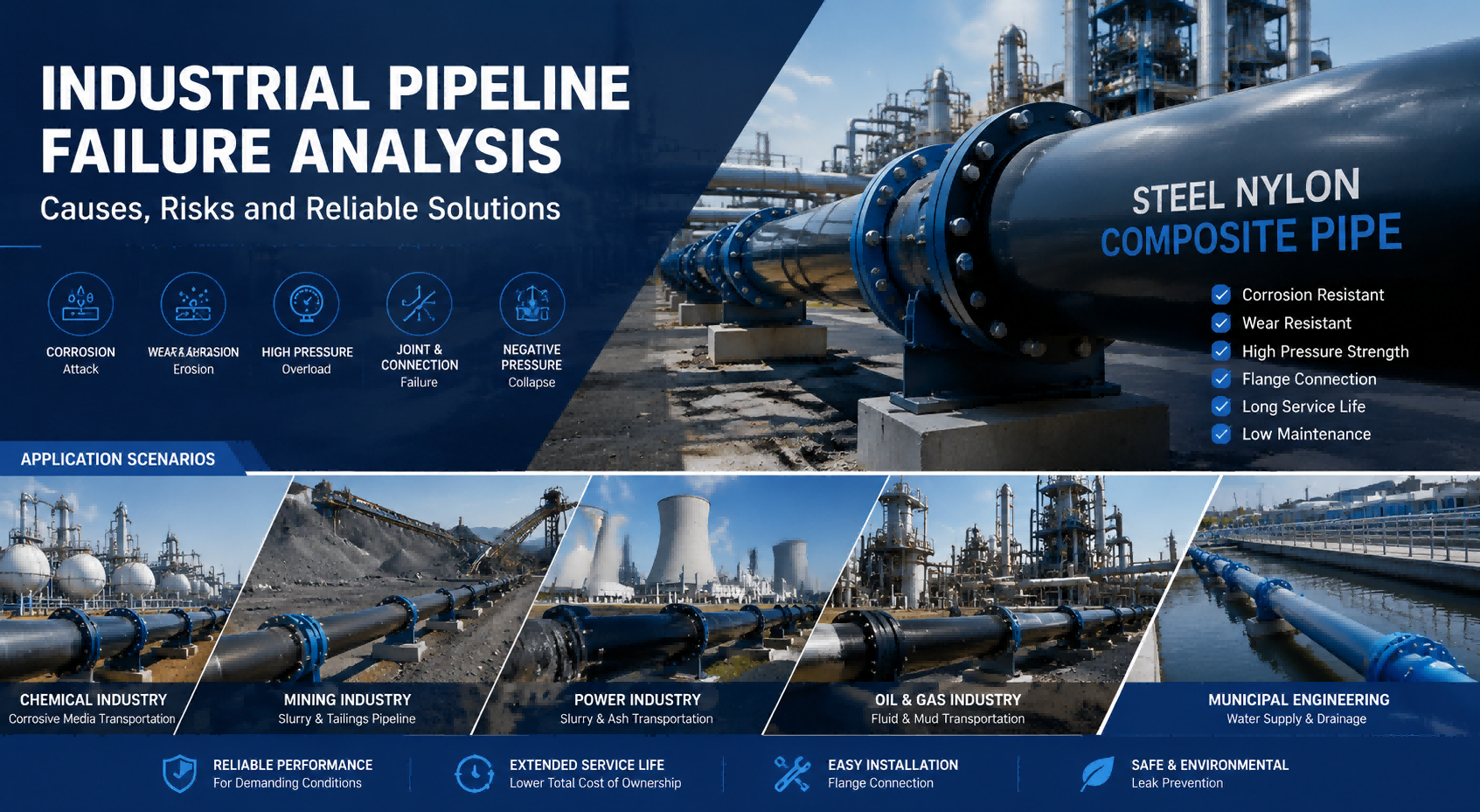
In recent years, Steel-Nylon Composite Pipes have emerged as an advanced solution for transporting highly corrosive and abrasive media due to their outstanding overall performance.
Why Are Steel-Nylon Composite Pipes Ideal for Highly Corrosive Media?
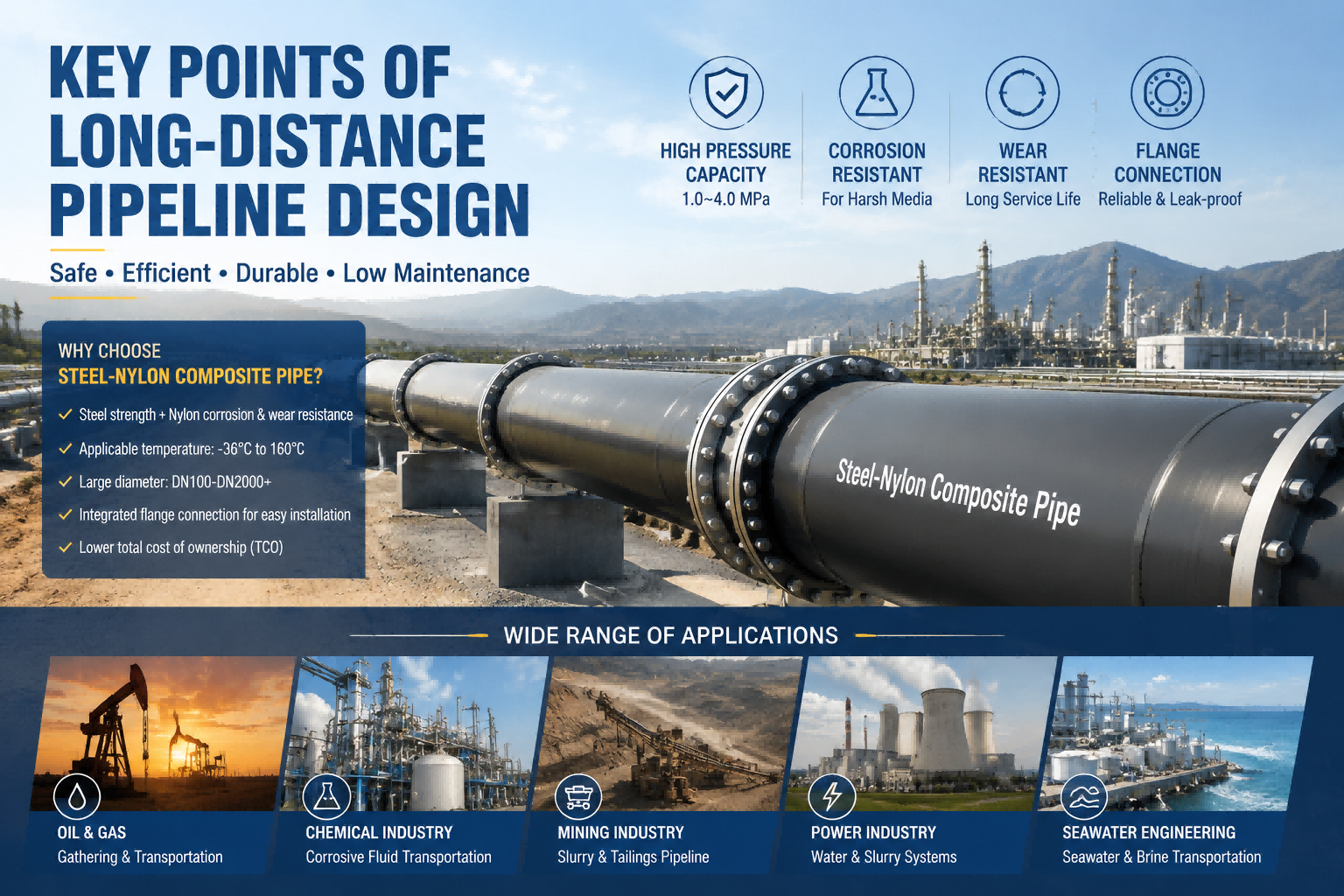
Steel-Nylon Composite Pipes combine a high-strength steel outer layer with a high-performance nylon lining, integrating the structural advantages of steel with the chemical resistance of engineering plastics.
1. Outstanding Corrosion Resistance
The nylon lining demonstrates excellent resistance to a wide range of acids, alkalis, salts, and industrial chemicals.
Compared with conventional steel pipelines, Steel-Nylon Composite Pipes:
-
Resist electrochemical corrosion
-
Eliminate rust contamination
-
Perform reliably in aggressive chemical environments
They are particularly suitable for mining slurry transport, chemical process pipelines, and industrial wastewater systems.
2. Excellent Wear Resistance
Many industrial fluids contain abrasive particles that can rapidly wear conventional pipes.
The nylon liner offers:
-
Low friction coefficient
-
High surface hardness
-
Superior abrasion resistance
In mining and slurry transportation applications, Steel-Nylon Composite Pipes often provide significantly longer service life than traditional carbon steel pipes.
3. High Pressure Capability
One of the main limitations of plastic pipes is their relatively low pressure resistance.
The steel outer layer of Steel-Nylon Composite Pipes provides:
-
High mechanical strength
-
Excellent impact resistance
-
Superior pressure-bearing capacity
This makes them suitable for demanding industrial conveying systems.
4. Smooth Inner Surface for Improved Flow Efficiency
The nylon lining features a highly smooth internal surface.
Benefits include:
-
Reduced flow resistance
-
Less scaling and buildup
-
Improved transport efficiency
-
Lower pumping energy consumption
For long-distance pipeline systems, this can significantly reduce operating costs.
5. Extended Service Life
Conventional steel pipelines often fail prematurely due to corrosion and abrasion.
Steel-Nylon Composite Pipes offer a combination of:
-
Corrosion resistance
-
Wear resistance
-
Impact resistance
This triple-protection design can extend service life several times longer than traditional carbon steel pipelines under comparable operating conditions.
Typical Applications of Steel-Nylon Composite Pipes
Mining Industry
Suitable for:
-
Tailings transportation
-
Concentrate slurry transport
-
Backfill systems
-
Coal washing systems
Chemical Industry
Suitable for:
-
Acid and alkali solution transfer
-
Chemical wastewater transport
-
Corrosive slurry transportation
Power Plant Desulfurization Systems
Suitable for:
-
Limestone slurry transport
-
Flue gas desulfurization (FGD) slurry systems
-
Wastewater treatment pipelines
Environmental Protection and Water Treatment
Suitable for:
-
Industrial wastewater transfer
-
High-salinity wastewater treatment
-
Sludge transportation systems
Metallurgical Industry
Suitable for:
-
Hydrometallurgical processes
-
Pickling solution transport
-
Various slurry conveying systems
Important Factors When Selecting Pipelines for Corrosive Media
Pipeline selection should not be based solely on initial purchase cost. Key considerations include:
-
Chemical composition of the media
-
Operating temperature
-
Working pressure
-
Solid particle concentration
-
Expected service life
-
Maintenance requirements
-
Downtime costs
From a total lifecycle cost perspective, investing in durable and reliable pipeline systems often provides the greatest long-term economic value.
Conclusion
As industrial operations demand higher levels of safety, reliability, and cost efficiency, traditional piping materials are increasingly challenged by harsh corrosive environments.
Steel-Nylon Composite Pipes combine the strength of steel with the exceptional corrosion and wear resistance of engineered nylon. This unique structure effectively addresses common issues such as corrosion, abrasion, leakage, and premature pipeline failure while reducing maintenance costs and energy consumption.
For industries including mining, chemical processing, power generation, environmental protection, and metallurgy, Steel-Nylon Composite Pipes have become a preferred solution for modern corrosive media transportation systems.
If you are seeking a pipeline solution that delivers corrosion resistance, abrasion resistance, high-pressure performance, and long service life, Steel-Nylon Composite Pipes offer a reliable and cost-effective choice for demanding industrial applications.
How to Choose Wear-Resistant Pipelines for High-Abrasion Applications?
Chemical Industry Pipeline Material Comparison | Selection Guide & Steel–Nylon Composite Pipe Advantages