Urban Drainage System Upgrades with Steel-Nylon Pipes

Urban Drainage System Upgrade Solutions: Improving Infrastructure Reliability with High-Performance Composite Pipes
Introduction: Urban Drainage Infrastructure Is Entering a New Era of Modernization
Urban drainage systems are essential infrastructure for maintaining the safe and efficient operation of modern cities. From municipal wastewater collection and industrial effluent transportation to stormwater management, sewage pumping, and wastewater treatment, the performance of drainage networks directly affects environmental protection, public health, and long-term infrastructure costs.
As urban populations grow, existing infrastructure ages, and extreme rainfall events create additional pressure on drainage networks, traditional drainage systems are facing increasingly complex challenges.
Many cities still rely on underground pipelines installed decades ago. Over time, these pipelines may experience corrosion, sediment accumulation, leakage, structural deterioration, and insufficient hydraulic capacity.
These problems become particularly significant in applications involving corrosive wastewater, complex underground conditions, and continuous high-load operation.
Consequently, upgrading urban drainage infrastructure is no longer simply a matter of replacing old pipes or increasing pipeline diameters.
Modern drainage improvement projects increasingly focus on several strategic objectives:
-
Improving hydraulic capacity and overall system reliability.
-
Selecting corrosion-resistant and wear-resistant pipeline materials.
-
Reducing leakage, unplanned shutdowns, and repeated excavation.
-
Introducing intelligent monitoring and preventive maintenance.
-
Reducing total infrastructure costs through lifecycle-based engineering decisions.
Against this background, advanced composite piping materials, particularly steel–nylon composite pipes, offer new possibilities for upgrading drainage infrastructure in demanding operating environments.
1. Five Major Challenges Facing Traditional Urban Drainage Systems
1.1 Pipeline Corrosion and Structural Deterioration
Municipal wastewater often contains dissolved salts, organic substances, suspended solids, and various chemical compounds.
Under certain anaerobic conditions, wastewater systems may produce hydrogen sulfide (H₂S). When hydrogen sulfide enters the gas phase inside a sewer, microbial processes can create an acidic environment capable of damaging certain concrete and metallic pipeline materials.
Common corrosion-related problems include:
-
Internal corrosion and localized perforation of metallic pipes.
-
Biogenic sulfuric acid corrosion in concrete sewer systems.
-
Localized deterioration of protective coatings.
-
Leakage caused by corrosion or deterioration of pipeline connections.
As these problems develop, localized corrosion may gradually lead to structural failures, increasing maintenance expenses and environmental risks.
For pressurized wastewater transportation systems, selecting pipelines with reliable corrosion-resistant internal surfaces and adequate structural strength is particularly important.
1.2 Sediment Accumulation and Abrasive Wear
Urban drainage systems transport more than water. They may also carry sand, sediment, suspended particles, and other solid materials.
When flow velocities, particle concentrations, or pipeline configurations are unsuitable, these solids can accumulate or cause abrasive wear.
The most vulnerable locations frequently include:
-
Wastewater pumping station outlets.
-
High-velocity drainage transmission pipelines.
-
Pipeline elbows, tees, and diameter transitions.
-
Pressurized stormwater pipelines containing sand and sediment.
Over time, abrasive wear can reduce effective wall thickness and increase the risk of localized pipeline failure.
Meanwhile, sediment accumulation and increasing internal surface roughness can contribute to higher hydraulic resistance and increased pumping energy requirements.
Therefore, modern drainage pipeline selection should consider corrosion resistance, abrasion resistance, and hydraulic performance rather than focusing exclusively on initial material costs.
1.3 Insufficient Drainage Capacity
Urban development changes wastewater generation patterns and stormwater runoff characteristics.
As buildings, roads, industrial facilities, and residential areas expand, existing drainage networks may no longer have sufficient capacity to handle increasing demand.
Groundwater infiltration and unintended stormwater inflow can also increase the hydraulic load on wastewater collection systems.
When actual flow exceeds design capacity, several operational problems may occur:
-
Slow drainage and localized backups.
-
Wastewater overflows.
-
Increased pumping station loads.
-
Surface flooding and sewer surcharge.
-
Temporary overloading of wastewater treatment facilities.
Effective modernization requires hydraulic modeling, flow monitoring, and long-term demand forecasting.
Increasing pipe diameter alone cannot solve every drainage capacity problem.
1.4 Rising Underground Pipeline Maintenance Costs
Urban drainage networks are frequently installed beneath roads, industrial areas, commercial districts, and densely populated neighborhoods.
When a major pipeline failure occurs, conventional excavation and replacement may involve significant additional costs.
These can include traffic management, protection of nearby underground utilities, pavement restoration, and temporary wastewater diversion.
For aging drainage systems, repeated local repairs may become increasingly expensive.
Using durable piping materials and prioritizing the replacement of frequently damaged sections can help reduce future maintenance requirements and minimize infrastructure disruption.
1.5 The Transition from Reactive to Preventive Maintenance
Traditional drainage maintenance often begins only after a blockage, leakage incident, or flooding event occurs.
This reactive approach can result in emergency repair expenses and makes it difficult to predict remaining pipeline service life.
Modern drainage management increasingly emphasizes:
-
Regular pipeline inspection.
-
Risk-based condition assessment.
-
Digital infrastructure asset management.
-
Predictive maintenance planning.
-
Long-term pipeline performance monitoring.
Material upgrades should therefore be integrated with improved infrastructure management practices.
2. Core Technical Strategies for Modern Urban Drainage Upgrades
A successful drainage modernization project requires coordinated improvements in hydraulic performance, pipeline structure, construction methods, and operational management.
2.1 Conduct a Comprehensive Pipeline Condition Assessment
Before beginning a drainage improvement project, engineers should establish a comprehensive inventory of existing pipeline assets.
Important information includes:
-
Pipe diameter and material.
-
Installation date and operating history.
-
Design and actual operating pressure.
-
Structural defects and leakage history.
-
Maintenance records.
-
Actual flow rates and hydraulic conditions.
Inspection technologies such as closed-circuit television (CCTV), flow monitoring, pipeline mapping, and hydraulic modeling can help identify damaged sections and hydraulic bottlenecks.
A risk-based assessment allows project owners to prioritize pipeline sections where failure could cause serious wastewater overflows, traffic disruption, or interruption of essential services.
2.2 Implement Phased and Targeted Rehabilitation
Not every aging drainage pipeline requires complete replacement.
For gravity sewer pipelines with adequate structural integrity but localized leakage, trenchless rehabilitation technologies may provide an effective solution.
However, pipelines with severe corrosion, insufficient hydraulic capacity, or inadequate pressure resistance may require replacement or construction of additional transmission lines.
A targeted approach allows infrastructure owners to allocate investment more efficiently while minimizing unnecessary construction.
2.3 Optimize Pipeline Material Selection
Different drainage applications require different material characteristics.
For gravity drainage pipelines, important factors include structural loading, buried pipe deformation, installation slope, joint sealing, and construction costs.
For pressurized wastewater transmission pipelines, additional requirements include:
-
Internal pressure resistance.
-
Surge pressure tolerance.
-
Resistance to cyclic loading.
-
Chemical compatibility.
-
Connection reliability.
-
Long-term operational stability.
For particularly demanding applications involving corrosion, abrasion, and internal pressure, advanced composite materials such as steel–nylon composite pipes can be considered.
2.4 Integrate Green and Gray Infrastructure
Modern urban stormwater management should not rely exclusively on underground pipelines.
Green infrastructure, including permeable pavements, rain gardens, detention facilities, and stormwater retention systems, can help reduce or delay runoff entering drainage networks.
At the same time, conventional gray infrastructure remains essential.
Large drainage mains, pumping stations, wastewater transmission pipelines, and connections to storage facilities continue to perform critical transportation functions.
Combining green stormwater management with improvements to underground pipeline infrastructure can create a more resilient and efficient urban drainage network.
3. Why Steel–Nylon Composite Pipes Deserve Consideration in Urban Drainage Upgrades
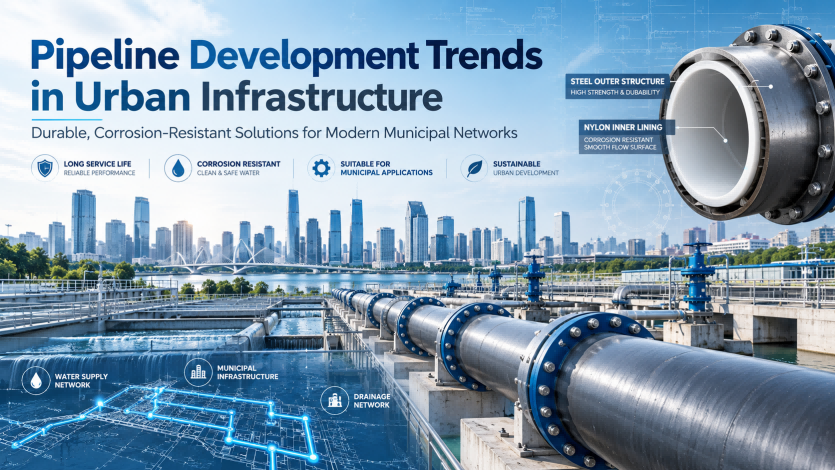
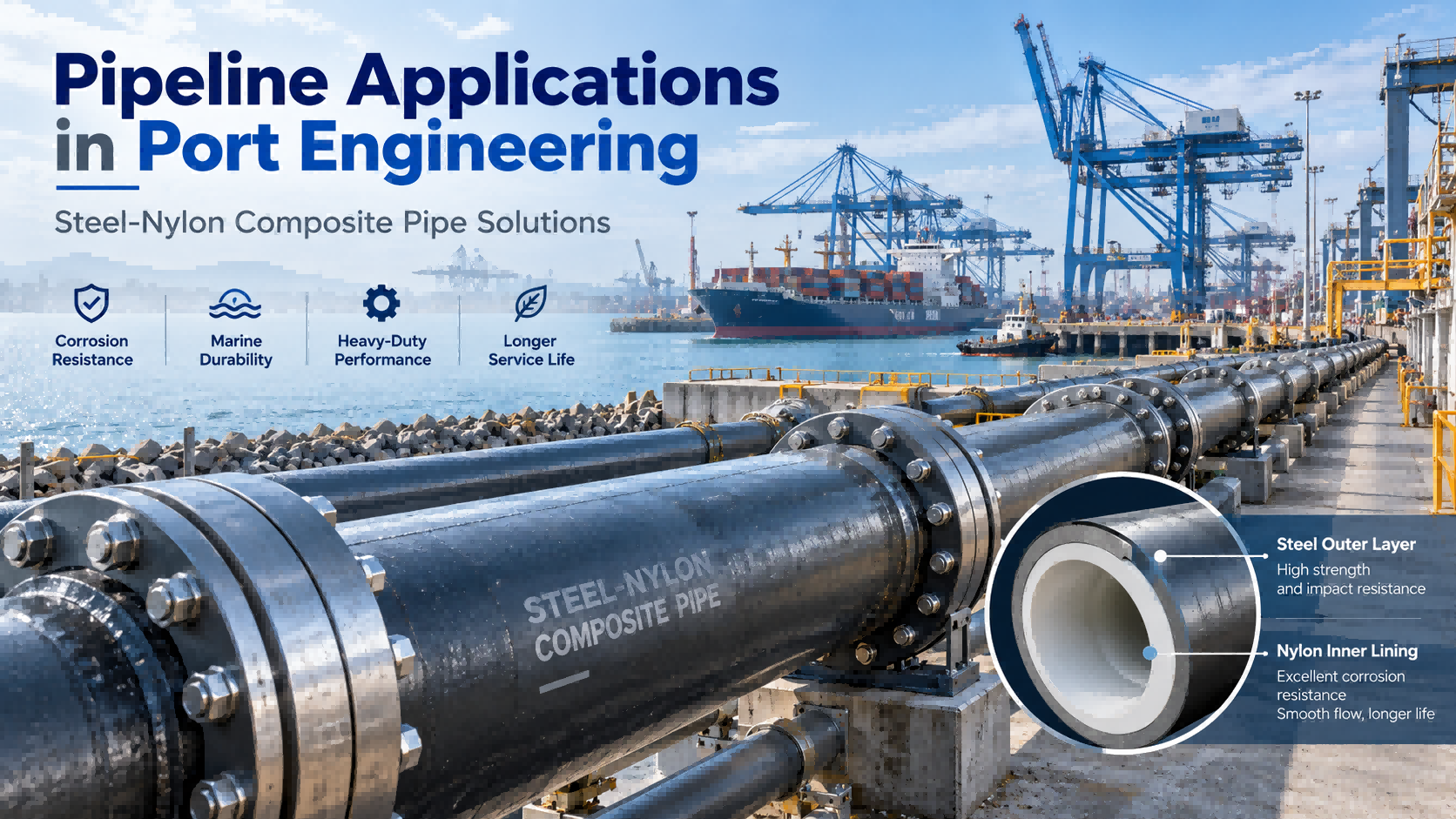
Steel–nylon composite pipes combine the structural strength of steel with the functional properties of engineered nylon materials.
Their design philosophy is based on using different materials to perform complementary functions.
The steel component provides important mechanical support, while the nylon layer provides a protective surface designed for selected corrosive and abrasive environments.
For municipal wastewater pressure mains, industrial drainage networks, pumping station discharge pipelines, and certain large-diameter drainage applications, this composite structure offers several potential engineering advantages.
3.1 Steel Reinforcement Provides Structural Strength and Pressure Resistance
Unlike piping structures that depend entirely on polymer walls for mechanical strength, steel–nylon composite pipes incorporate steel as a primary structural component.
This construction helps combine mechanical rigidity with internal protection against transported media.
Kejin steel–nylon composite pipes are available in product series covering nominal pressure ratings from 1.0 MPa to 4.0 MPa, depending on the product design and technical specifications.
For wastewater pumping stations, long-distance pressurized sewage transmission, and systems experiencing pressure fluctuations, these pipes can be evaluated as an alternative piping solution.
However, final material selection must consider:
-
Design operating pressure.
-
Maximum transient surge pressure.
-
Operating temperature.
-
Installation conditions.
-
Connection pressure ratings.
-
Applicable project design standards.
Nominal pressure ratings alone are not sufficient to confirm suitability for every drainage application.
3.2 Nylon Inner Layers Provide Corrosion Protection
Traditional carbon steel pipelines can suffer internal corrosion when exposed to certain aggressive wastewater environments.
Steel–nylon composite pipes use a nylon inner layer to separate the transported medium from the steel structure.
This design can help reduce direct exposure of the steel component to corrosive substances under suitable operating conditions.
Potential applications include wastewater containing dissolved salts, certain industrial effluents, and selected acidic or alkaline solutions.
The suitability of the nylon material must be confirmed according to actual operating conditions, including:
-
Chemical composition.
-
pH level.
-
Chemical concentration.
-
Operating temperature.
-
Long-term exposure conditions.
In addition, buried steel-containing pipelines may still require external corrosion protection and evaluation of stray-current risks.
Consequently, steel–nylon composite pipes should be viewed as an engineered corrosion-protection solution rather than a universally corrosion-proof material.
3.3 Wear-Resistant Internal Surfaces for Particle-Containing Wastewater
Wastewater and stormwater pipelines may transport sand, silt, and suspended solid particles.
These materials can create abrasive wear, particularly at high velocities and flow-direction changes.
Through appropriate nylon material modification and structural design, steel–nylon composite pipes can be optimized for selected abrasive operating environments.
Potential applications include:
-
Sand-containing wastewater pressure pipelines.
-
Industrial wastewater containing suspended particles.
-
Process pipelines associated with wastewater treatment facilities.
-
Selected pressurized stormwater transmission systems.
Actual wear resistance depends on particle hardness, particle size, solids concentration, flow velocity, and pipeline geometry.
For high-abrasion applications, laboratory testing or documented operating experience should be used to verify expected performance.
3.4 Smooth Internal Surfaces Help Maintain Hydraulic Efficiency
Pipeline transportation performance depends on more than nominal diameter.
Internal roughness, actual internal diameter, flow velocity, pipeline length, and local resistance all affect hydraulic efficiency.
In pressurized drainage systems, excessive friction losses increase the energy required for pumping.
The nylon inner surface of steel–nylon composite pipes can provide a relatively smooth flow passage.
If the internal surface maintains its condition and reduces the accumulation of corrosion products over time, it may help limit increases in hydraulic resistance.
However, energy savings must be evaluated through project-specific hydraulic calculations.
No pipeline material should be assumed to deliver a particular reduction in pumping energy without supporting engineering data.
3.5 Integrated Flange Connections Support Efficient Installation and Maintenance
Pipeline connections are critical components of drainage infrastructure.
Improperly designed or installed joints can become vulnerable points for leakage and maintenance problems.
Kejin emphasizes integrated molded flange technology and pipeline connection designs that can reduce the need for on-site welding.
For suitable pressure pipeline applications, these connection systems can offer advantages in prefabrication and modular construction.
Potential benefits include:
-
Reduced requirements for field welding.
-
Convenient connection to pumps and valves.
-
Easier installation of prefabricated pipeline sections.
-
Simplified disassembly during equipment maintenance.
-
Improved flexibility for localized pipeline replacement.
These benefits are particularly relevant to wastewater pumping stations, valve chambers, equipment connections, and targeted rehabilitation projects.
Nevertheless, flange connections require properly selected gaskets, bolts, pressure ratings, and installation procedures.
Pressure testing and leakage verification remain essential.
4. Comparing Traditional Drainage Pipe Materials with Steel–Nylon Composite Pipes
There is no single pipeline material that is ideal for every urban drainage application.
Material selection must consider whether the system operates under gravity or pressure, as well as wastewater composition, external loading, installation conditions, and lifecycle costs.
| Pipeline Material | Main Advantages | Key Engineering Considerations |
|---|---|---|
| Reinforced Concrete Pipe | Strong structural performance and established applications in large-diameter gravity sewers | Chemical attack in certain wastewater environments, joint sealing, structural deterioration |
| HDPE Pipe | Resistance to many corrosive substances, lightweight construction, flexible joining options | Temperature limitations, ring stiffness, long-term deformation, pressure rating |
| FRP/GRP Pipe | Relatively lightweight, resistance to many corrosive substances, smooth internal surfaces | Impact resistance, installation quality, joint reliability, loading conditions |
| Ductile Iron Pipe | High structural strength and established pressure pipeline applications | Internal and external corrosion protection, appropriate joint selection |
| Carbon Steel Pipe | High pressure capability and flexibility in complex engineering layouts | Corrosion protection and ongoing maintenance |
| Steel–Nylon Composite Pipe | Combines steel reinforcement with corrosion-resistant and wear-resistant nylon design | Chemical compatibility, long-term composite integrity, external corrosion protection, connection reliability |
For conventional low-pressure gravity sewers, reinforced concrete and HDPE pipes may offer practical and economical solutions.
However, for pressurized wastewater transportation, chemically demanding industrial drainage, localized abrasive conditions, and applications requiring structural strength, steel–nylon composite pipes deserve further technical evaluation.
The objective is not to replace every traditional pipeline material with one alternative.
Instead, the objective is to select the most appropriate material for each pipeline section and its actual operating environment.
5. Typical Applications of Steel–Nylon Composite Pipes in Urban Drainage Systems
Application 1: Municipal Wastewater Pumping Station Pressure Pipelines
Many urban wastewater collection systems cannot rely entirely on gravity flow.
Where terrain conditions or network configurations require additional hydraulic head, pumping stations are used to transport sewage under pressure.
These pressure pipelines require reliable mechanical strength, corrosion protection, and connection integrity.
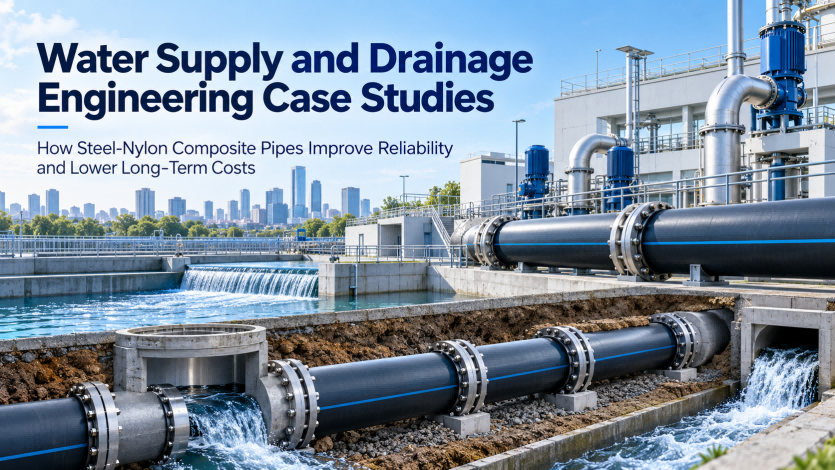
Steel–nylon composite pipes combine structural support with a protective internal layer, making them a potential candidate for selected wastewater pumping applications.
Special attention should also be given to pump start-stop operations, water hammer, check valve performance, pipe supports, and transient pressure conditions.
Application 2: Industrial Park Wastewater Collection and Transmission
Industrial parks may generate wastewater from several manufacturing processes.
Depending on the industries involved, this wastewater may contain dissolved salts, chemical compounds, suspended solids, or unusual pH levels.
Traditional carbon steel pipes without appropriate protection may experience accelerated corrosion under certain operating conditions.
Steel–nylon composite pipes can isolate the steel structure from the transported medium through their internal nylon layer.
This makes them a potential option for selected industrial wastewater pressure pipelines.
However, chemical compatibility must be verified for each specific industrial effluent, particularly when complex mixtures or aggressive chemical concentrations are involved.
Application 3: Localized Urban Drainage Pipeline Rehabilitation
Some municipal drainage networks do not require complete replacement.
Instead, specific sections may suffer severe corrosion, joint leakage, or structural deterioration.
For pressurized pipeline sections requiring replacement, prefabricated steel–nylon composite pipe sections may provide a practical rehabilitation option.
Appropriate transition fittings, flange connections, and temporary bypass arrangements can help reduce construction complexity.
For gravity sewers, engineers must first confirm that the proposed composite pipe structure and connections meet buried loading, external pressure, and gravity-flow design requirements.
Application 4: Large-Diameter Municipal Wastewater Transmission
Large urban wastewater transportation projects often require pipelines with substantial diameters.
Examples include:
-
Regional wastewater transmission systems.
-
Interdistrict sewage transportation.
-
Large wastewater pumping station discharge lines.
-
Connections between wastewater treatment facilities and major network infrastructure.
For these projects, corrosion resistance alone is not sufficient.
Engineers must also consider:
-
Manufacturing accuracy and dimensional stability.
-
Transportation and lifting requirements.
-
Internal and external loading.
-
Buried installation conditions.
-
Joint reliability.
-
Pipe support requirements.
-
Thermal expansion and contraction.
Kejin has manufacturing experience in large-diameter reinforced nylon and steel–nylon composite piping products.
The company has developed manufacturing capability for pipe sizes up to DN1600 and continues to explore technical solutions for ultra-large-diameter products of DN2000 and above.
Actual product availability, pressure ratings, production schedules, and project-specific dimensions should be confirmed during technical consultation.
6. How to Develop a Comprehensive Urban Drainage Upgrade Plan
A systematic drainage infrastructure modernization project can be divided into six implementation stages.
Stage 1: Existing Network Investigation and Risk Assessment
Collect pipeline asset information and conduct detailed inspections.
Identify high-risk sections and document historical leakage, corrosion, structural defects, and maintenance problems.
Prioritize sections where failure could have significant environmental, operational, or public safety consequences.
Stage 2: Hydraulic Capacity and Future Demand Analysis
Evaluate existing system capacity using historical rainfall data, actual wastewater flow, groundwater infiltration, design storm criteria, and projected urban development.
Hydraulic modeling can identify network bottlenecks and evaluate improvement alternatives.
Stage 3: Rehabilitation Technology Selection
Different pipeline conditions require different engineering approaches.
Available strategies may include:
-
Cleaning and preventive maintenance.
-
Trenchless pipeline rehabilitation.
-
Localized pipeline replacement.
-
Pipeline diameter adjustment.
-
New parallel transmission lines.
-
Pumping station upgrades.
The most suitable method should be determined by structural conditions, hydraulic requirements, construction constraints, and economic feasibility.
Stage 4: Pipeline Material and Connection Selection
For pressurized drainage applications, engineers should evaluate:
-
Nominal diameter and design flow rate.
-
Normal operating pressure and maximum surge pressure.
-
Wastewater chemistry and operating temperature.
-
Suspended solids concentration and abrasion risk.
-
Installation method and external loading.
-
Connection type and maintenance accessibility.
-
Applicable local regulations, engineering standards, and procurement specifications.
Steel–nylon composite pipes may be included in the evaluation when their structural and material properties match the application requirements.
Stage 5: Testing and Construction Quality Control
Before final installation, appropriate verification procedures should be established.
Depending on project requirements, these may include:
-
Chemical compatibility testing.
-
Abrasion resistance testing.
-
Hydrostatic pressure testing.
-
Connection leakage testing.
-
Dimensional inspection.
-
Manufacturing quality verification.
For composite pipelines, long-term structural integrity and the reliability of the interface between material layers should also be considered.
Stage 6: Operational Monitoring and Asset Management
After the upgrade is completed, operators should establish a monitoring and maintenance database.
Important performance indicators include:
-
Flow rate.
-
Operating pressure.
-
Leakage incidents.
-
Maintenance frequency.
-
Pumping energy consumption.
-
Pipeline condition trends.
Long-term operating records can support future maintenance planning and infrastructure investment decisions.
7. Why Lifecycle Cost Matters More Than Initial Pipe Price
Traditional pipeline procurement sometimes focuses heavily on the initial purchase price.
However, the real cost of an urban drainage pipeline extends far beyond the cost of the pipe itself.
A comprehensive life cycle cost (LCC) analysis should consider:
LCC = Initial Material Cost + Installation Cost + Operating Energy Cost + Maintenance Cost + Failure Repair Cost + Replacement Cost − Residual Value
For formal economic evaluations, future costs and residual values should be discounted to a common reference date.
Consider a pressurized wastewater transmission pipeline.
A composite pipe may have a higher initial purchase price than a conventional carbon steel alternative.
However, if the composite design demonstrably reduces corrosion-related repairs, extends replacement intervals, or maintains favorable hydraulic performance, it may offer better long-term economic value.
These benefits must be demonstrated through project-specific analysis rather than assumed from material characteristics alone.
For major municipal infrastructure investments, EPC contractors and asset owners can compare alternatives over a consistent 20-year or 30-year evaluation period.
Key evaluation factors should include:
-
Initial material and installation investment.
-
Expected maintenance intervals.
-
Corrosion and leakage risks.
-
Energy consumption.
-
Costs associated with operational disruption.
-
Expected replacement frequency and end-of-life costs.
This approach helps shift procurement decisions from the lowest initial price toward the most appropriate long-term engineering value.
8. Engineering Example: Upgrading a Municipal Wastewater Pressure Main
The following example is a hypothetical engineering scenario intended to illustrate the technical evaluation process. It is not a documented completed project.
Project Background
A municipality plans to upgrade a pressure pipeline connecting a wastewater pumping station to a treatment facility.
Preliminary project conditions are as follows:
| Parameter | Illustrative Design Condition |
|---|---|
| Application | Municipal wastewater pressure transmission |
| Pipeline Length | Approximately 1.5 km |
| Nominal Diameter | DN600 |
| Preliminary Nominal Pressure Rating | 1.6 MPa |
| Transported Medium | Municipal wastewater containing suspended solids |
| Main Engineering Risks | Internal corrosion, localized abrasion, joint leakage, water hammer |
| Upgrade Objective | Improve long-term reliability and reduce maintenance frequency |
Recommended Technical Evaluation
The first step is to inspect the existing pipeline and review operating pressure conditions.
Engineers should analyze wastewater composition, identify corrosion mechanisms, and evaluate transient pressures associated with pumping station operation.
Next, conventional pressure pipelines with appropriate corrosion protection should be compared with steel–nylon composite pipes.
For the steel–nylon composite option, the evaluation should focus on:
-
Chemical compatibility of the nylon inner layer.
-
Long-term stability of the composite structure.
-
Flange connection sealing performance.
-
External corrosion protection for buried installation.
-
Compliance with applicable engineering requirements.
Finally, the project team should compare material costs, installation expenses, expected maintenance requirements, potential service life, and overall operational risk.
Potential Engineering Benefits
If material testing, structural analysis, and economic evaluation confirm suitability, steel–nylon composite pipes may provide a practical solution for long-term wastewater pressure transmission.
Their potential value comes from combining internal protection, mechanical strength, and convenient connection design.
Actual cost savings, maintenance intervals, and service life must be established through engineering verification and operating experience.
9. Three Major Trends Shaping the Future of Urban Drainage Infrastructure
9.1 From Capacity Expansion to Infrastructure Resilience
Future urban drainage projects will increasingly emphasize system resilience.
Infrastructure must be capable of maintaining essential services during extreme rainfall, equipment failure, and localized pipeline disruption.
Network redundancy, stormwater detention, improved pumping station operations, and targeted material upgrades can all contribute to greater system reliability.
9.2 From Conventional Materials to Application-Specific Composite Solutions
As drainage operating environments become more demanding, using a single traditional material throughout an entire network may not always be the most effective approach.
Different pipeline sections face different combinations of:
-
Corrosion.
-
Abrasion.
-
Internal pressure.
-
External loading.
-
Temperature.
-
Maintenance requirements.
Advanced composite piping technologies provide opportunities to tailor material properties to specific engineering needs.
Steel–nylon composite pipes combine the mechanical advantages of steel with the functional properties of engineered nylon, creating additional options for municipal wastewater pressure systems and industrial drainage infrastructure.
9.3 From Reactive Maintenance to Data-Driven Asset Management
Digital technologies are changing how drainage systems are monitored and maintained.
Continuous monitoring of flow, pressure, liquid level, and equipment conditions can help operators identify abnormalities earlier.
Predictive maintenance strategies may reduce unexpected failures and improve resource allocation.
At the same time, selecting durable piping materials suited to actual operating conditions can provide a stronger foundation for reliable long-term infrastructure management.
10. How Kejin Supports Urban Drainage Infrastructure Upgrade Projects
As a manufacturer of reinforced MC nylon pipes and steel–nylon composite pipes, Guangdong Kejin New Materials Co., Ltd. (Kejin) focuses on the development and manufacturing of industrial piping products designed for demanding operating environments.
Kejin's product development emphasizes corrosion resistance, abrasion resistance, structural reliability, and practical engineering installation.
For municipal drainage upgrades and industrial wastewater transportation projects, the company can support customers in several areas.
Advanced Piping Material Solutions
Kejin offers steel–nylon composite piping solutions that combine steel structural support with engineered nylon internal protection.
These products can be evaluated for projects requiring a combination of pressure resistance, corrosion protection, and abrasion resistance.
Large-Diameter Pipe Manufacturing
With experience in large-diameter piping production, Kejin can support specification selection and project-specific technical evaluation for major wastewater transmission and infrastructure projects.
Optimized Connection Technology
Kejin develops integrated molded flange connection designs to improve installation convenience and reduce on-site welding requirements in suitable applications.
These features can be valuable in prefabricated pipeline systems, pumping station installations, and targeted pipeline replacement projects.
Project-Specific Engineering Support
Kejin works with customers to evaluate important operating parameters, including:
-
Transported medium.
-
Operating temperature.
-
Design pressure.
-
Pipe diameter.
-
Installation method.
-
Environmental conditions.
-
Connection requirements.
This technical approach helps customers assess whether a specific piping solution is appropriate for their project.
Support for International EPC Contractors and Infrastructure Developers
Kejin is committed to supporting international engineering contractors, municipal infrastructure companies, and industrial project owners.
The company can assist with technical communication, product specification confirmation, customized manufacturing evaluation, and project supply coordination.
For international municipal drainage projects, final product selection and installation must comply with the applicable local material, design, testing, and acceptance requirements.
Conclusion: Building More Reliable Urban Drainage Systems Through Long-Term Engineering Design
The purpose of urban drainage infrastructure modernization is not merely to solve existing problems such as pipeline blockages, corrosion, and insufficient hydraulic capacity.
The broader objective is to build infrastructure systems capable of meeting future demand while maintaining high reliability, manageable maintenance requirements, and sustainable lifecycle costs.
Achieving this objective requires coordinated consideration of hydraulic design, pipeline condition assessment, material performance, installation technologies, and operational management.
For conventional gravity drainage networks, proven materials that meet structural and economic requirements remain important.
However, for municipal wastewater pumping systems, industrial wastewater pressure transmission, and environments involving combined corrosion and abrasion, steel–nylon composite pipes offer a valuable material option for engineering evaluation.
By integrating steel reinforcement, nylon inner-layer protection, wear-resistant design, and practical connection technologies, these composite pipes can help address several challenges faced by modern drainage infrastructure projects.
The future performance of urban drainage networks will depend not only on construction capacity but also on long-term reliability, safety, and economic efficiency.
Selecting the right pipeline material for the actual operating environment is an important step toward developing stronger, more efficient, and more sustainable urban drainage infrastructure.
Contact Kejin – Urban Drainage Pipeline Solutions
Are you planning an urban drainage network upgrade, wastewater pumping main replacement, or industrial wastewater pipeline project?
Kejin provides reinforced MC nylon pipes and steel–nylon composite piping solutions for demanding industrial and infrastructure applications.
Our team can discuss:
-
Pipeline diameter and pressure requirements.
-
Wastewater chemical compatibility.
-
Corrosion and abrasion resistance.
-
Large-diameter pipe manufacturing.
-
Flange connection design.
-
Customized project specifications.
Website: //www.nylonpipeline.com
Contact Kejin today to discuss your technical requirements and explore suitable piping solutions for your next urban drainage infrastructure project.
Island Water Supply Case Study: Flanged PA6 Nylon Pipes
Large-Diameter Water Supply Pipe Selection: How to Balance Pressure Resistance, Corrosion Protection, and Lifecycle Costs