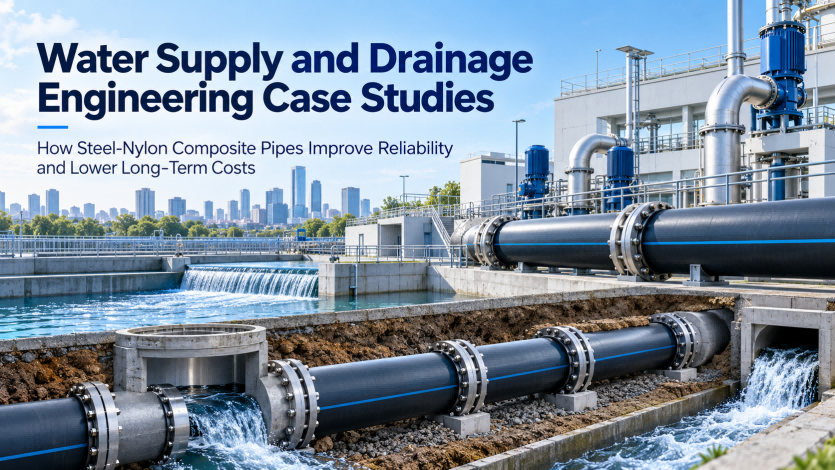
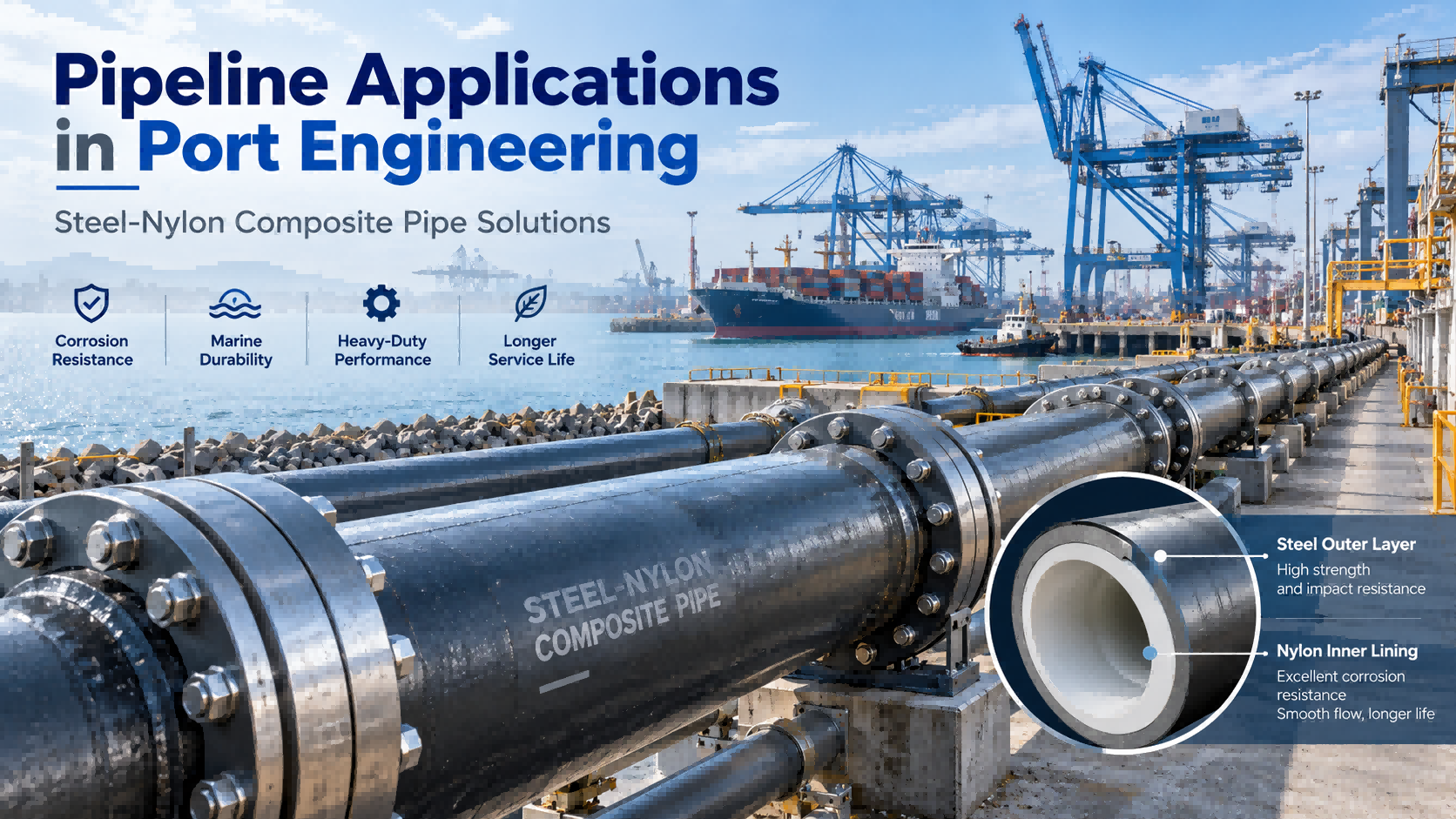
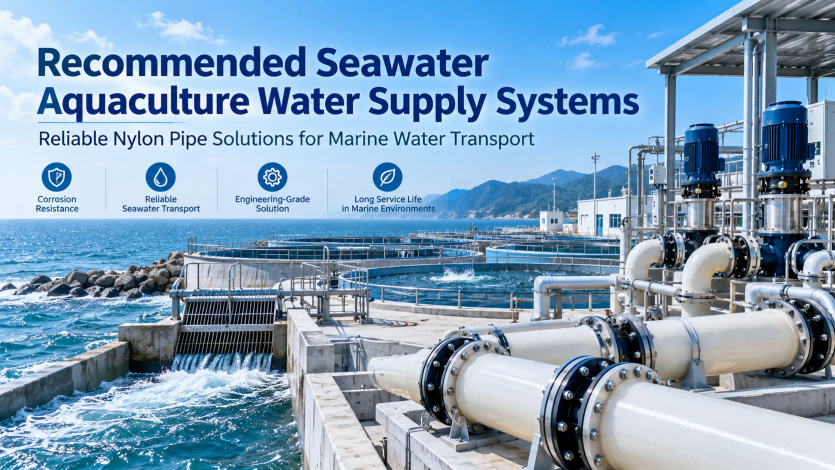
Urban Pipeline Trends | Steel-Nylon Composite Pipe Solutions
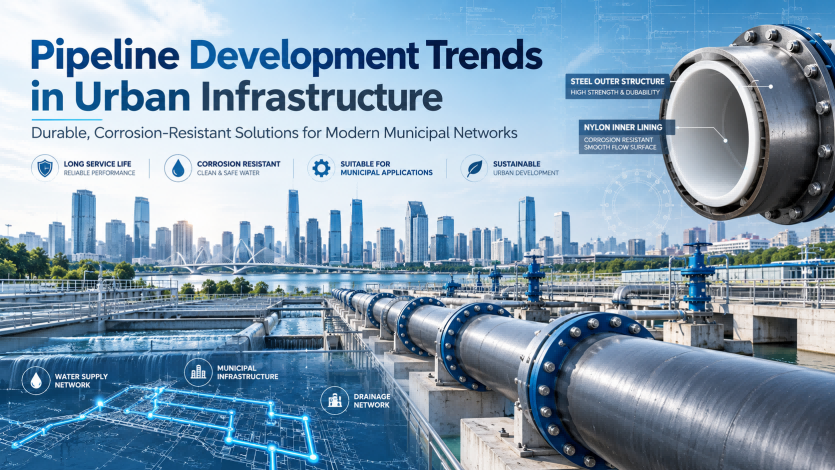
Pipeline Development Trends in Urban Infrastructure Construction
How Steel-Nylon Composite Pipes Are Supporting the Future of Durable, Corrosion-Resistant, and Low-Maintenance Urban Pipeline Infrastructure
Introduction: Urban Pipeline Infrastructure Is Entering a New Era of Development
As global urbanization continues, urban infrastructure construction is undergoing a significant transformation. In the past, municipal pipeline projects primarily focused on initial material costs, installation efficiency, and basic fluid transportation requirements. Today, long-term reliability, corrosion resistance, operational efficiency, and total lifecycle costs are becoming increasingly important factors in engineering design and procurement decisions.
This transformation is particularly evident in municipal water supply network upgrades, wastewater collection systems, underground infrastructure rehabilitation, industrial park development, and coastal urban construction.
On the one hand, aging pipeline networks face growing challenges related to corrosion, leakage, scaling, and structural deterioration, resulting in higher maintenance costs. On the other hand, modern cities are placing greater emphasis on water security, energy efficiency, and infrastructure resilience.
Government policies and industry research also reflect these changes.
In 2025, China introduced policies aimed at accelerating urban renewal, including the construction and rehabilitation of underground utility networks for water supply, drainage, wastewater, gas, and district heating.
Meanwhile, the U.S. Environmental Protection Agency (EPA), in its Seventh Drinking Water Infrastructure Needs Survey and Assessment, estimated that approximately $625 billion would be required for public drinking water infrastructure improvements over the following 20 years.
These developments demonstrate that the future municipal pipeline market requires more than additional pipeline capacity. It requires high-performance piping systems capable of delivering long-term reliability, reducing maintenance requirements, and adapting to increasingly complex operating environments.
Against this background, steel-nylon composite pipes are emerging as a promising solution for selected municipal and industrial pipeline applications.
By combining the structural strength of steel with the corrosion-resistant and wear-resistant characteristics of nylon lining, steel-nylon composite pipes offer a practical approach to addressing some of the challenges facing modern urban pipeline infrastructure.
1. Fundamental Changes in the Urban Pipeline Infrastructure Market
1.1 From New Pipeline Construction to Infrastructure Rehabilitation and Expansion
Historically, municipal pipeline demand was largely driven by real estate development, road construction, and the expansion of urban infrastructure.
However, as many cities enter a stage of infrastructure renewal, pipeline market demand is changing.
Future urban pipeline projects will increasingly focus on:
-
Replacement of aging municipal water supply networks and reduction of water leakage.
-
Rehabilitation and upgrading of urban wastewater collection systems.
-
Replacement of underground pipelines in highly corrosive environments.
-
Expansion of pipeline networks in industrial parks and residential areas.
-
Improvement of water supply reliability and emergency response capabilities.
For pipeline rehabilitation projects, replacement involves more than purchasing new pipes.
It may also require road excavation, traffic management, temporary water supply interruptions, construction restoration, and ongoing maintenance.
Consequently, pipeline service life and maintenance frequency have a significant influence on overall project economics.
The Value of Steel-Nylon Composite Pipes
Steel-nylon composite pipes combine a steel structural body with an internal nylon lining.
When properly designed and validated for the intended operating conditions, this composite structure provides both structural strength and internal corrosion protection.
For municipal water transmission pipelines exposed to internal corrosion risks and relatively demanding pressure conditions, the nylon lining helps reduce direct contact between the transported medium and the steel substrate.
This can significantly reduce certain internal corrosion mechanisms and improve the long-term reliability of the pipeline system.
1.2 From Initial Purchase Price to Total Lifecycle Cost Optimization
Traditionally, the unit price of pipeline materials has been one of the most important factors in procurement decisions.
However, the actual cost of operating a pipeline system extends far beyond its initial purchase price.
A comprehensive pipeline lifecycle cost assessment includes:
-
Material and fitting procurement costs.
-
Transportation, construction, and installation costs.
-
Energy consumption and operating expenses.
-
Inspection, maintenance, repair, and replacement costs.
-
Shutdown losses, accidents, and other indirect costs.
The lifecycle cost can be represented by the following simplified equation:
LCC = Cm + Ci + Ce + Cr + Cd
Where:
-
Cm: Material and fitting procurement costs.
-
Ci: Installation and construction costs.
-
Ce: Energy consumption and operational costs.
-
Cr: Maintenance, repair, and replacement costs.
-
Cd: Downtime, accidents, and other indirect costs.
For a more rigorous economic evaluation, future expenses should also be discounted to their present value.
For example, a conventional pipeline material may have a relatively low initial purchase price. However, if the pipeline experiences frequent corrosion, leakage, or internal scaling, its total operating cost may eventually exceed that of a higher-performance corrosion-resistant piping system.
By incorporating an internal nylon lining, steel-nylon composite pipes offer potential advantages in corrosion protection, wear resistance, and long-term hydraulic performance.
These characteristics can contribute to reduced maintenance requirements and more stable operating conditions.
For municipal water transmission mains, continuously operating industrial water systems, and infrastructure projects where shutdowns are costly, lifecycle economic performance is particularly important.
2. Eight Major Trends Shaping the Future of Municipal Pipeline Development
Trend 1: Corrosion-Resistant Pipeline Materials Are Becoming Increasingly Important
Corrosion remains one of the major factors affecting the reliability of municipal pipeline systems.
Underground pipelines are frequently exposed to moisture, groundwater, aggressive soil conditions, and complex chemical environments.
Meanwhile, dissolved oxygen, chlorides, acidic or alkaline components, and other substances in transported fluids may accelerate corrosion in certain metallic materials.
Corrosion protection is especially important in:
-
Coastal regions with high salinity.
-
Areas with chemically aggressive groundwater.
-
Industrial parks and chemical processing zones.
-
Municipal reclaimed water systems.
-
Underground pipeline networks exposed to persistent moisture.
Without appropriate protection, conventional carbon steel pipelines may experience internal corrosion, localized wall thinning, and eventual leakage.
How Steel-Nylon Composite Pipes Address Corrosion Challenges
Steel-nylon composite pipes use a steel structural body combined with a nylon inner lining.
The nylon layer acts as a protective barrier, separating the transported medium from the steel surface.
For fluids compatible with the selected nylon material, this structure can help reduce direct chemical exposure of the steel substrate and lower internal corrosion risks.
However, internal lining protection does not eliminate the need for external corrosion protection.
For buried steel-nylon composite pipelines, appropriate external coatings and corrosion protection measures should still be selected based on soil conditions, groundwater chemistry, and connection details.
Trend 2: Composite Pipes Combining High Strength and Durability Are Gaining Attention
Different pipeline materials offer different engineering advantages.
Conventional metallic pipes generally provide high structural strength, but certain metals require corrosion protection in aggressive environments.
Non-metallic pipes may offer excellent corrosion resistance in suitable conditions, although their pressure capacity, rigidity, temperature resistance, and installation requirements depend on material properties and structural design.
One important direction in pipeline technology is the development of composite materials that combine the advantages of different materials.
Steel-nylon composite pipes are an example of this engineering approach.
The steel component primarily provides structural support and pressure-bearing capacity, while the nylon lining improves the properties of the surface in contact with the transported fluid.
This combination can be useful in applications involving:
-
Water transmission systems with demanding pressure requirements.
-
Pipelines requiring enhanced internal corrosion protection.
-
Fluid transportation environments involving both corrosion and abrasive particles.
-
Infrastructure projects requiring long-term operational reliability.
Composite pipelines are not necessarily superior to every conventional material in all applications.
Instead, their value lies in using complementary material properties to address engineering challenges that may be difficult to solve using a single material.
Trend 3: Reducing Pumping Energy Consumption Is Becoming a Key Design Objective
Modern municipal water supply systems are placing increasing emphasis on energy efficiency.
For long-distance pressurized water transmission pipelines, internal friction affects pumping head requirements and long-term electricity consumption.
The main factors influencing pipeline friction losses include:
-
Internal pipe diameter.
-
Flow rate and velocity.
-
Internal surface roughness.
-
Pipeline length.
-
Fluid properties.
According to the Darcy-Weisbach equation:
hf = f × (L/D) × (v²/2g)
Where:
-
hf: Frictional head loss.
-
f: Darcy friction factor.
-
L: Pipeline length.
-
D: Internal pipe diameter.
-
v: Average flow velocity.
-
g: Gravitational acceleration.
In conventional metallic pipelines, internal corrosion and scaling can gradually increase surface roughness and reduce the effective flow area.
Steel-nylon composite pipes feature a relatively smooth internal nylon surface.
Under suitable operating conditions, the lining helps protect against corrosion-related roughening of the steel interior.
This can support more stable hydraulic performance over time.
However, actual energy savings depend on the effective pipe diameter, operating flow rate, fittings, pump performance, and the characteristics of transported fluids.
Therefore, specific energy-saving percentages should be established through engineering calculations or verified operational data rather than assumed from the pipe material alone.
Trend 4: Urban Drainage Systems Are Placing Greater Emphasis on Resilience and Environmental Adaptability
As cities face more complex drainage requirements, underground infrastructure development, and extreme rainfall risks, the reliability of drainage systems is becoming increasingly important.
Modern drainage pipelines must do more than transport stormwater or wastewater.
They must also address:
-
Hydraulic capacity under heavy rainfall conditions.
-
Chemical substances present in wastewater.
-
Abrasion caused by sand and suspended solids.
-
Long-term stability in underground environments.
-
Operational resilience and emergency recovery requirements.
In pressurized wastewater transmission systems, pumping station discharge pipelines, and selected industrial drainage applications, steel-nylon composite pipes may offer practical engineering advantages.
The steel structure provides pressure-bearing support, while the nylon lining can help protect the metal substrate from compatible corrosive fluids and improve resistance to certain abrasive conditions.
However, for conventional low-pressure gravity drainage systems, material selection should also consider concrete pipes, HDPE pipes, fiberglass-reinforced pipes, and other suitable alternatives.
Pipe diameter, loading conditions, installation methods, and project economics should determine the final material choice.
Trend 5: Installation Efficiency and Construction Disruption Are Becoming Important Procurement Factors
Urban pipeline projects frequently face restrictions related to construction space, traffic management, existing underground utilities, and project schedules.
In densely populated urban areas, prolonged excavation can generate substantial economic and social costs.
As a result, pipeline development is increasingly focused not only on material performance but also on installation methods and connection systems.
For steel-nylon composite pipelines using flanged connections, properly designed prefabricated pipe sections can reduce certain on-site fabrication requirements and support standardized installation procedures.
However, successful installation still requires evaluation of:
-
Pipe section length and lifting requirements.
-
Flange pressure ratings and sealing arrangements.
-
Axial and lateral loads.
-
Anchoring, thrust restraint, and thermal expansion.
-
Continuity of the internal lining and corrosion protection at joints.
The greatest installation benefits are achieved when high-performance materials are combined with practical prefabrication and standardized construction methods.
Trend 6: Smart Water Infrastructure Is Driving the Development of Monitorable Pipeline Networks
Municipal pipeline management is gradually shifting from reactive maintenance toward proactive monitoring and risk management.
Technologies such as pressure sensors, flow monitoring, district metering, leakage detection, and digital asset management platforms help utility operators understand the condition of pipeline networks.
For example, ISO 24516-1 provides guidance on asset management for drinking water distribution networks, emphasizing long-term infrastructure value, performance, and management practices.
This development suggests that pipeline suppliers will increasingly be expected to support comprehensive asset documentation.
Important records may include:
-
Pipe materials and specifications.
-
Connection methods.
-
Design pressures and operating conditions.
-
Inspection and testing records.
-
Product traceability information.
Steel-nylon composite pipes can serve as transportation components within smart water infrastructure.
However, the pipes themselves do not automatically provide intelligent monitoring functions. Such capabilities require appropriate sensors, communication systems, and digital management platforms.
Trend 7: Sustainability and Resource Efficiency Are Influencing Pipeline Material Selection
Sustainability is becoming an important consideration in future urban infrastructure projects.
The environmental impact of a pipeline system extends beyond material production.
It also includes transportation, installation, operating energy consumption, maintenance, replacement, and end-of-life treatment.
For steel-nylon composite pipes, potential environmental benefits should be evaluated from a lifecycle perspective.
For example:
-
Reduced maintenance and replacement requirements may lower associated construction resource consumption.
-
Improved hydraulic performance may reduce pumping energy consumption in suitable applications.
-
Longer reliable operating periods may reduce the need for repeated excavation and pipeline replacement.
However, steel production also consumes energy and produces greenhouse gas emissions.
In addition, separating and recycling different materials in composite structures may introduce additional challenges.
Therefore, environmental advantages should be demonstrated through lifecycle assessment (LCA) and verifiable project data rather than general assumptions about material types.
Trend 8: Pipeline Procurement Is Moving Toward Application-Specific Engineering Solutions
Modern municipal pipeline systems are becoming increasingly diverse.
Even pipelines with the same nominal diameter, such as DN500, may operate under substantially different conditions.
These differences may include:
-
Internal pressure.
-
Operating temperature.
-
Flow velocity.
-
Fluid chemistry.
-
Installation environments.
-
External loading conditions.
As a result, procurement teams are paying greater attention to whether a pipeline material is genuinely suitable for a specific application.
For steel-nylon composite pipes, material selection should carefully evaluate:
-
Structural properties of the steel carrier pipe.
-
Nylon lining thickness and material formulation.
-
Lining attachment or retention method.
-
Long-term chemical compatibility.
-
Connection and sealing details.
-
Relevant manufacturing and testing requirements.
Pipeline manufacturers capable of providing comprehensive technical documentation, application engineering support, and traceable quality inspection records will be better positioned to participate in demanding municipal infrastructure projects.
3. Steel-Nylon Composite Pipes vs. Conventional Municipal Pipeline Materials
Different pipeline materials serve different engineering purposes.
The following comparison provides a general overview for preliminary material selection rather than a definitive performance ranking for all pipe grades and manufacturing methods.
| Performance Factor | Carbon Steel Pipe | HDPE Pipe | Ductile Iron Pipe | Steel-Nylon Composite Pipe |
|---|---|---|---|---|
| Structural strength | Generally high | Depends on pressure rating and long-term strength design | Generally high | Steel structure provides substantial load-bearing potential |
| Internal corrosion resistance | Usually requires protective measures | Good in many water environments | Depends on lining and fluid conditions | Nylon lining provides an internal protective barrier |
| Abrasion resistance | Depends on fluid and surface conditions | Depends on material grade and operating conditions | Depends on lining type | Can benefit from nylon's wear-resistant characteristics |
| Pressure capability | Broad design range | Limited by pressure class, temperature, and pipe grade | Broad design range | Depends on steel structure, lining, and connection design |
| Installation methods | Welding, flanges, and other methods | Butt fusion, electrofusion, and mechanical connections | Push-on, mechanical, and flanged joints | Depends on product configuration; flanged connections are an option |
| Major considerations | Internal and external corrosion | Creep, temperature, and structural design | Lining, external corrosion, and joints | Lining integrity, sealing reliability, and external corrosion protection |
From an engineering perspective, the competitive advantage of steel-nylon composite pipes does not lie in replacing every conventional material.
Instead, they offer a targeted solution for pipeline applications where structural strength, internal corrosion resistance, and abrasion protection must work together.
4. Why Steel-Nylon Composite Pipes Deserve Consideration in Modern Urban Infrastructure
4.1 Steel Structure Provides a Strong Structural Foundation
Municipal water transmission mains, pumping station pipelines, and industrial park water systems often require pipes capable of withstanding internal pressure and external loading.
Steel-nylon composite pipes rely on the steel substrate for the primary structural function.
This allows the pipe system to be designed according to project-specific requirements, including pressure ratings, nominal diameters, and burial conditions.
For infrastructure projects requiring high structural capacity, this represents an important engineering advantage.
4.2 Nylon Lining Helps Reduce Internal Corrosion Risks
A defining technical characteristic of steel-nylon composite pipes is the use of an internal nylon layer to separate transported fluids from the steel structure.
When the nylon material is compatible with the operating environment, this protective barrier can reduce direct exposure of the steel surface to corrosive substances.
However, chemical compatibility must be verified for strong acids, powerful oxidizing agents, high-temperature water, and other aggressive media.
General corrosion resistance should never be interpreted as universal resistance to all chemicals.
4.3 Wear Resistance Supports Selected Particle-Containing Fluid Applications
Nylon materials offer useful toughness and abrasion-resistant characteristics.
Where municipal or industrial pipelines transport liquids containing sand, suspended solids, or other particles, appropriately designed nylon linings may provide favorable wear performance.
The actual suitability should be verified according to:
-
Particle hardness.
-
Solid concentration.
-
Flow velocity.
-
Impact and abrasion conditions.
-
Expected operating duration.
For demanding applications, project-specific abrasion testing is recommended.
4.4 Potential to Reduce Long-Term Maintenance Costs
Conventional metallic pipelines may require significant maintenance when internal corrosion becomes a recurring problem.
A properly selected nylon lining can help reduce certain corrosion-related failure risks.
This may contribute to lower repair frequency, fewer interruptions, and reduced replacement requirements.
However, long-term reliability also depends on external corrosion protection, connection sealing, lining integrity, and installation quality.
Therefore, the economic value of steel-nylon composite pipes should be assessed at the complete system level.
4.5 Suitable for a Range of Urban Infrastructure Applications
Subject to engineering verification, steel-nylon composite pipes may be considered for:
-
Municipal pressurized water transmission mains.
-
Rehabilitation of aging metallic water pipelines.
-
Pumping station connections and discharge pipelines.
-
Industrial park process water and circulating water systems.
-
Freshwater and selected seawater transmission applications in coastal regions.
-
Reclaimed water utilization projects.
-
Selected pressurized fluid transportation systems involving abrasive particles.
For drinking water applications, special attention must be given to the sanitary safety of materials in contact with potable water.
International projects may require compliance with regulations or certifications such as NSF/ANSI/CAN 61, which evaluates health-related effects of materials and products in contact with drinking water.
5. What Technical Factors Will Municipal Pipeline Buyers Prioritize?
For EPC contractors, engineering consultants, municipal utility operators, and international pipeline procurement teams, several technical criteria directly influence material selection.
| Key Indicator | Engineering Considerations | Steel-Nylon Composite Pipe Evaluation |
|---|---|---|
| Pressure performance | Design pressure, water hammer, pressure cycling | Steel pipe design and system pressure testing |
| Corrosion resistance | Fluid chemistry, water quality, soil corrosion | Nylon compatibility and external protection |
| Service life | Aging, fatigue, long-term degradation | Durability testing and failure risk assessment |
| Hydraulic performance | Internal diameter, roughness, pressure loss | Flow resistance and scaling behavior |
| Connection reliability | Leakage, sealing, axial loads | Joint testing and installation quality |
| Installation efficiency | Lifting, joining, site restrictions | Prefabrication and standardized installation |
| Lifecycle cost | Procurement, operation, maintenance, replacement | Project-specific LCC assessment |
| Quality traceability | Inspection records, production batches | Quality documentation and traceability systems |
It is also important to consider the moisture absorption characteristics, temperature limitations, and long-term environmental aging behavior of nylon materials.
High-quality composite pipe products should not be evaluated solely on their initial mechanical properties.
Long-term performance evidence is equally important.
6. How Will Competition in the Municipal Pipeline Industry Evolve Over the Next 5–10 Years?
Looking ahead, three major developments are likely to influence the municipal pipeline industry.
6.1 Competition Will Increasingly Focus on Engineering Value Rather Than Price Alone
Low purchase prices will remain important in many infrastructure projects.
However, growing attention to urban renewal, water supply continuity, and long-term maintenance responsibilities will encourage buyers to consider comprehensive economic performance.
Pipeline products that can demonstrate reduced failure risks, improved operational stability, and strong technical documentation will have meaningful competitive advantages.
6.2 Composite Pipeline Materials Will Continue to Expand in Suitable Market Segments
The future pipeline industry is unlikely to be dominated by a single material.
Carbon steel, stainless steel, ductile iron, HDPE, FRP, and different types of composite pipes will continue to serve applications according to their respective properties.
Within this diversified market, steel-nylon composite pipes have opportunities in pressurized fluid transportation systems that combine structural requirements with internal corrosion and abrasion challenges.
6.3 Manufacturers Will Evolve from Product Suppliers into Technical Solution Providers
International infrastructure projects increasingly require material suppliers to participate in early-stage engineering evaluations.
In addition to providing pipeline products, manufacturers must strengthen their ability to support:
-
Pipeline selection and operating condition assessment.
-
Material performance verification and quality inspection.
-
Connection system design.
-
Engineering drawings and technical documentation.
-
Installation and commissioning procedures.
-
Product traceability and quality assurance.
For steel-nylon composite pipe manufacturers seeking to enter international municipal infrastructure and EPC project supply chains, technical transparency and verified engineering performance will become increasingly important.
7. How to Select Steel-Nylon Composite Pipes for Urban Infrastructure Projects
When evaluating whether steel-nylon composite pipes are suitable for a particular municipal project, engineers and procurement teams should follow a systematic process.
Step 1: Define the Operating Conditions
Identify the transported medium, chemical composition, operating temperature, design pressure, flow rate, and suspended solid content.
Step 2: Evaluate Environmental and Failure Risks
Assess internal and external corrosion, abrasion, burial loads, water hammer, groundwater conditions, and geotechnical factors.
Step 3: Verify Product and Connection Performance
Review steel pipe specifications, nylon lining properties, connection sealing arrangements, applicable standards, and relevant test results.
Step 4: Assess Construction and Lifecycle Economics
Compare material costs, installation costs, operating energy consumption, maintenance requirements, replacement costs, and potential shutdown losses.
Step 5: Develop the Final Pipeline Material Selection Strategy
Select the most appropriate pipeline material after completing technical validation and lifecycle cost comparisons.
By following this process, project teams can better identify the operating conditions in which steel-nylon composite pipes provide meaningful advantages.
It also helps prevent procurement decisions based solely on initial purchase prices or generalized material claims.
8. Frequently Asked Questions About Municipal Steel-Nylon Composite Pipes
Q1: Are steel-nylon composite pipes suitable for municipal water supply systems?
Steel-nylon composite pipes may be considered for municipal pressurized water supply systems, especially applications requiring structural strength and internal corrosion protection.
However, for potable water applications, the product must satisfy relevant sanitary safety requirements, structural design criteria, and applicable certifications.
Q2: What is the difference between steel-nylon composite pipes and conventional steel pipes?
The main difference is the composite structure.
Conventional steel pipes primarily rely on steel for structural performance and fluid transportation.
Steel-nylon composite pipes incorporate an internal nylon lining that separates the transported medium from the steel surface.
This arrangement can improve internal corrosion protection and wear performance under suitable operating conditions.
Q3: Can steel-nylon composite pipes be used in underground municipal pipeline networks?
Yes, buried applications can be evaluated.
However, design considerations must include soil loads, external corrosion, groundwater conditions, joint sealing, and construction requirements.
The nylon lining does not replace the need for appropriate external corrosion protection of the steel pipe.
Q4: Are steel-nylon composite pipes better than HDPE pipes?
There is no universal answer.
HDPE pipes are suitable for a wide range of municipal water and drainage applications.
Steel-nylon composite pipes offer a different combination of steel structural support and nylon lining performance.
The most appropriate material depends on operating pressure, temperature, diameter, installation environment, and lifecycle economics.
Q5: Can steel-nylon composite pipes achieve a 50-year service life?
A fixed 50-year service life cannot be guaranteed based solely on the type of material.
Actual service life depends on material formulation, manufacturing quality, fluid chemistry, operating temperature, pressure cycling, corrosion conditions, and connection design.
Any long-term service life claim should be supported by relevant testing, operating experience, or engineering reliability assessments.
Q6: Why are more infrastructure projects considering composite pipeline materials?
Modern pipeline systems must address multiple performance challenges simultaneously, including structural loading, corrosion, abrasion, and maintenance costs.
Composite pipeline materials combine different material properties, providing additional engineering options for complex operating conditions.
9. Conclusion: Reliability, Corrosion Resistance, and Lifecycle Cost Will Shape the Future of Municipal Pipelines
The future development of municipal pipeline infrastructure will not be defined solely by increasing pipeline diameters or expanding total network length.
Instead, the industry is moving toward a more comprehensive approach to infrastructure modernization.
Corrosion resistance, energy efficiency, engineering adaptability, intelligent asset management, and lifecycle cost optimization will increasingly influence pipeline material selection.
In this evolving market, steel-nylon composite pipes combine the structural characteristics of steel with the protective properties of nylon lining, offering a competitive technical solution for selected municipal pressurized water and complex fluid transportation applications.
For municipal water supply, industrial parks, coastal infrastructure, and aging pipeline rehabilitation projects, properly selected steel-nylon composite pipes can potentially improve internal corrosion protection, enhance operational stability, and reduce certain long-term maintenance risks.
Ultimately, the most competitive pipeline solutions will be those that satisfy immediate pressure and transportation requirements while demonstrating long-term reliability, safety, and economic value.
The future of urban pipeline infrastructure is not simply about installing more pipes. It is about building stronger, more reliable, and more sustainable pipeline systems that can serve communities for decades.
Looking for Reliable Steel-Nylon Composite Pipes for Your Infrastructure Project?
We specialize in the manufacturing of steel-nylon composite pipes and related pipeline products, focusing on solutions that combine structural strength, corrosion resistance, abrasion resistance, and engineering adaptability.
Whether you are planning a municipal water transmission network, an aging pipeline rehabilitation project, an industrial park water system, or a coastal infrastructure development, we welcome the opportunity to discuss your project requirements.
Share your required nominal pipe diameter, operating pressure, transported medium, operating temperature, and installation conditions with our team.
We can help you evaluate the suitability of steel-nylon composite pipes for your specific application.
Explore our pipeline products and technical solutions:
Website: //www.nylonpipeline.com
References and Technical Considerations
This article discusses industry trends with reference to China's 2025 urban renewal policies, the U.S. Environmental Protection Agency's Drinking Water Infrastructure Needs Survey, the ISO 24516 series on water utility asset management, and NSF/ANSI/CAN 61 for drinking water system components.
Specific product capabilities, operating conditions, and compliance requirements should always be verified using actual test data, manufacturer technical documentation, and project-specific engineering requirements.
Water Supply & Drainage Case Studies | Steel-Nylon Solutions